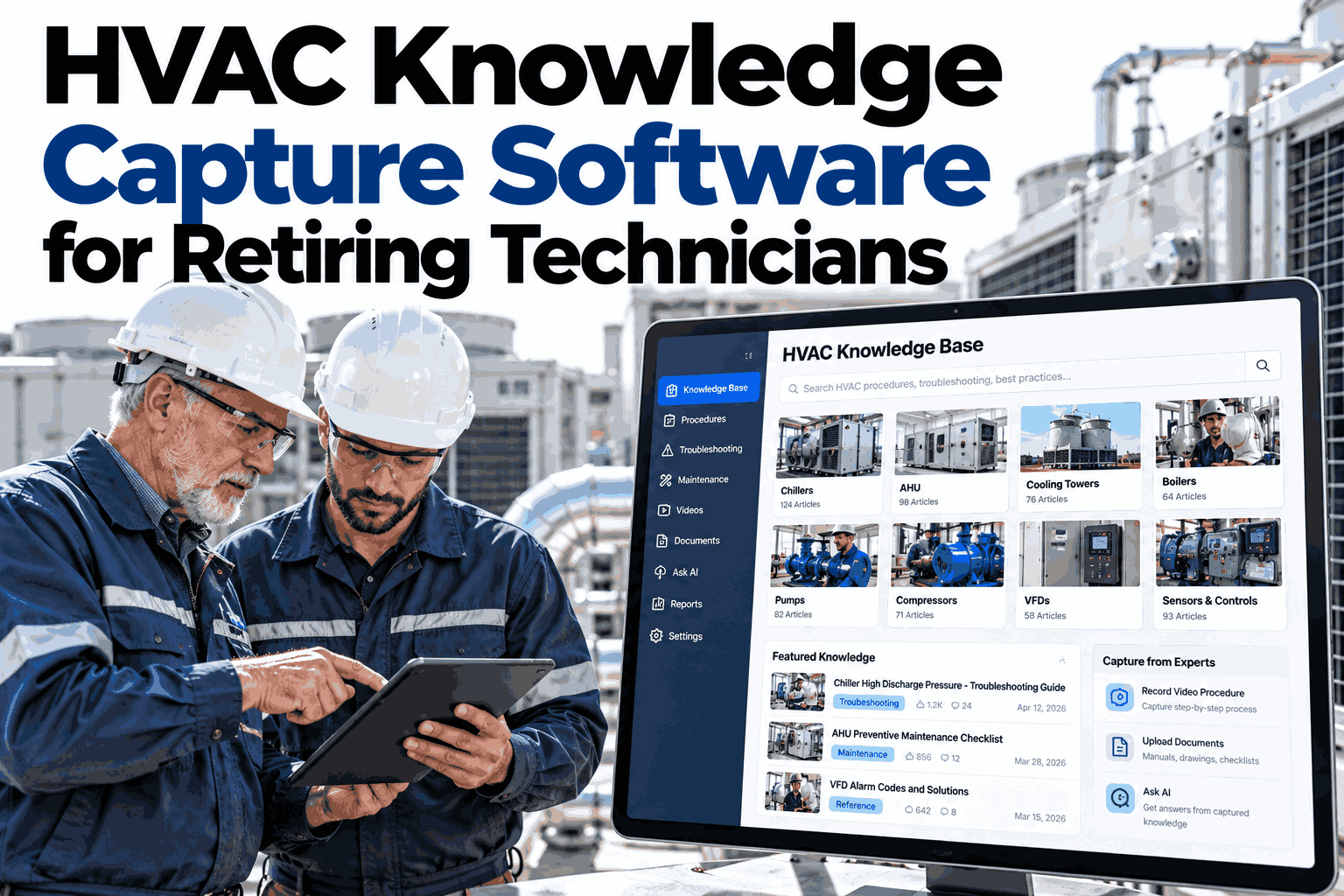
The technician who has serviced your chiller plant for twenty-eight years knows things that were never written down anywhere: which valve sticks in cold weather, which alarm is a false positive nine times out of ten, which sequence of steps actually gets that specific rooftop unit back online fastest. None of that lives in a manual. All of it walks out the door the day that technician retires, and operations directors across the industry are watching that day arrive faster than their pipeline of new talent can replace it. Workforce data consistently shows the skilled trades aging faster than they are being replenished, and HVAC is squarely in that pattern. AI-powered knowledge capture gives operations directors a way to preserve that expertise before it disappears. Book a Demo to see how iFactory turns decades of tribal knowledge into a searchable, transferable asset.
Capture Decades of Expertise Before It Retires
iFactory's AI-powered knowledge capture preserves building-specific equipment expertise and troubleshooting know-how from your most experienced technicians, turning it into a resource the next generation can actually use.
The Retirement Cliff Facility Teams Are Already Standing At
Operations directors do not need an industry report to know the skilled trades workforce is aging — they can see it on their own maintenance team roster. Three consequences of that shift are already showing up in day-to-day operations, whether or not a formal succession plan exists yet.
The Silent Exit Interview
A technician's last two weeks get spent on handover paperwork, not on transferring the specific quirks of the equipment they have serviced for decades.
The Rebuilt Wheel
New hires spend months re-discovering fixes their predecessor already knew, extending troubleshooting time on familiar problems.
The Widening Skills Gap
Incoming technicians often bring less hands-on field experience, making the loss of a senior mentor even more costly to team capability.
Five Ways AI Captures What Would Otherwise Be Lost
Conversational Knowledge Interviews
AI-guided interviews walk senior technicians through their most common troubleshooting scenarios, capturing know-how in their own words rather than forcing them to write a manual.
Equipment-Specific Knowledge Linking
Captured insights are tagged to the exact asset they apply to, so a note about "that rooftop unit's odd startup sequence" is findable by anyone servicing that specific unit later.
Work Order History Mining
Years of closed work orders are mined for recurring fixes and patterns, surfacing institutional knowledge that was never explicitly documented in the first place.
Searchable Knowledge Base for New Hires
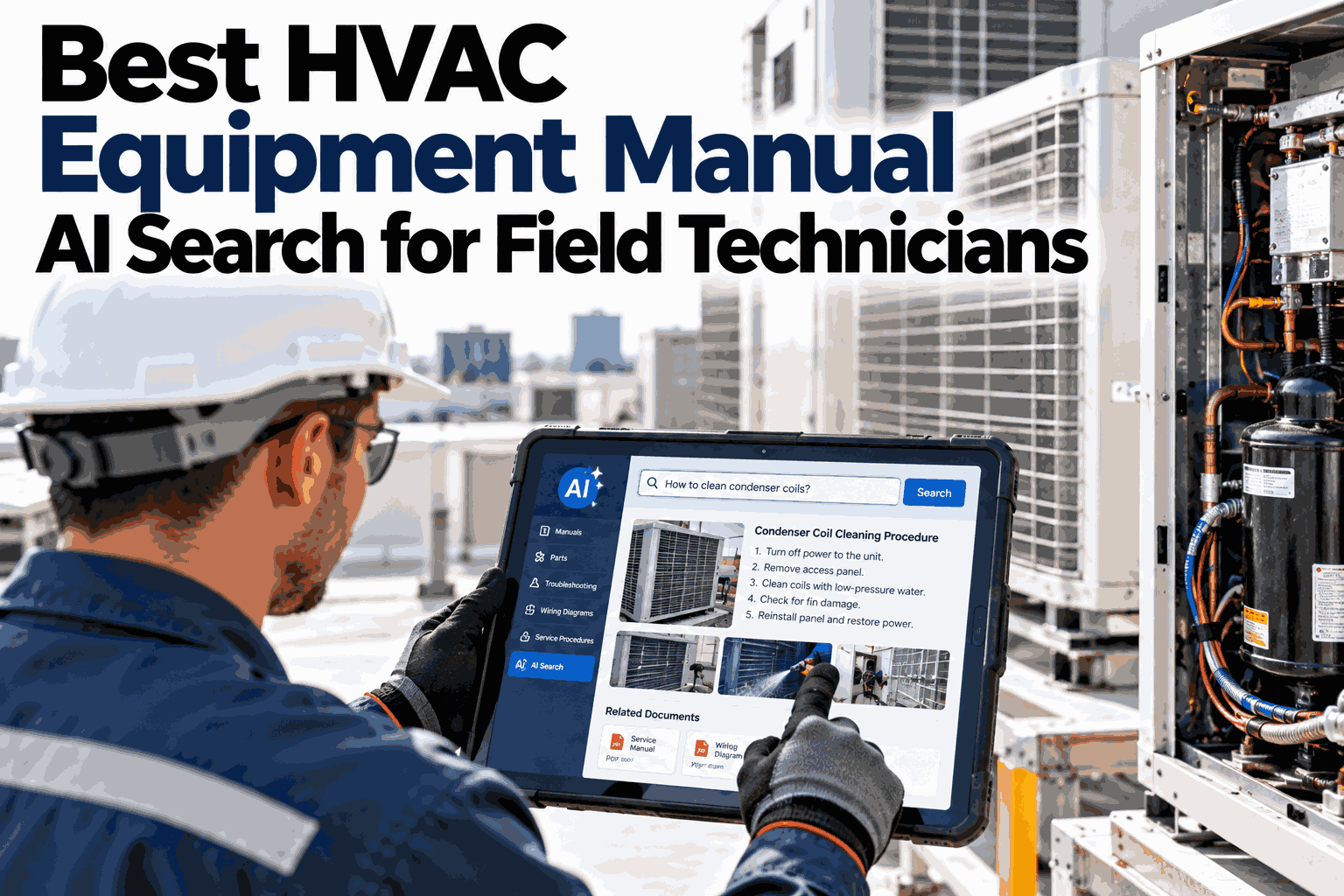
Captured expertise becomes instantly searchable, so a new technician facing an unfamiliar fault can find what a veteran colleague already learned about it.
Succession Readiness Scoring
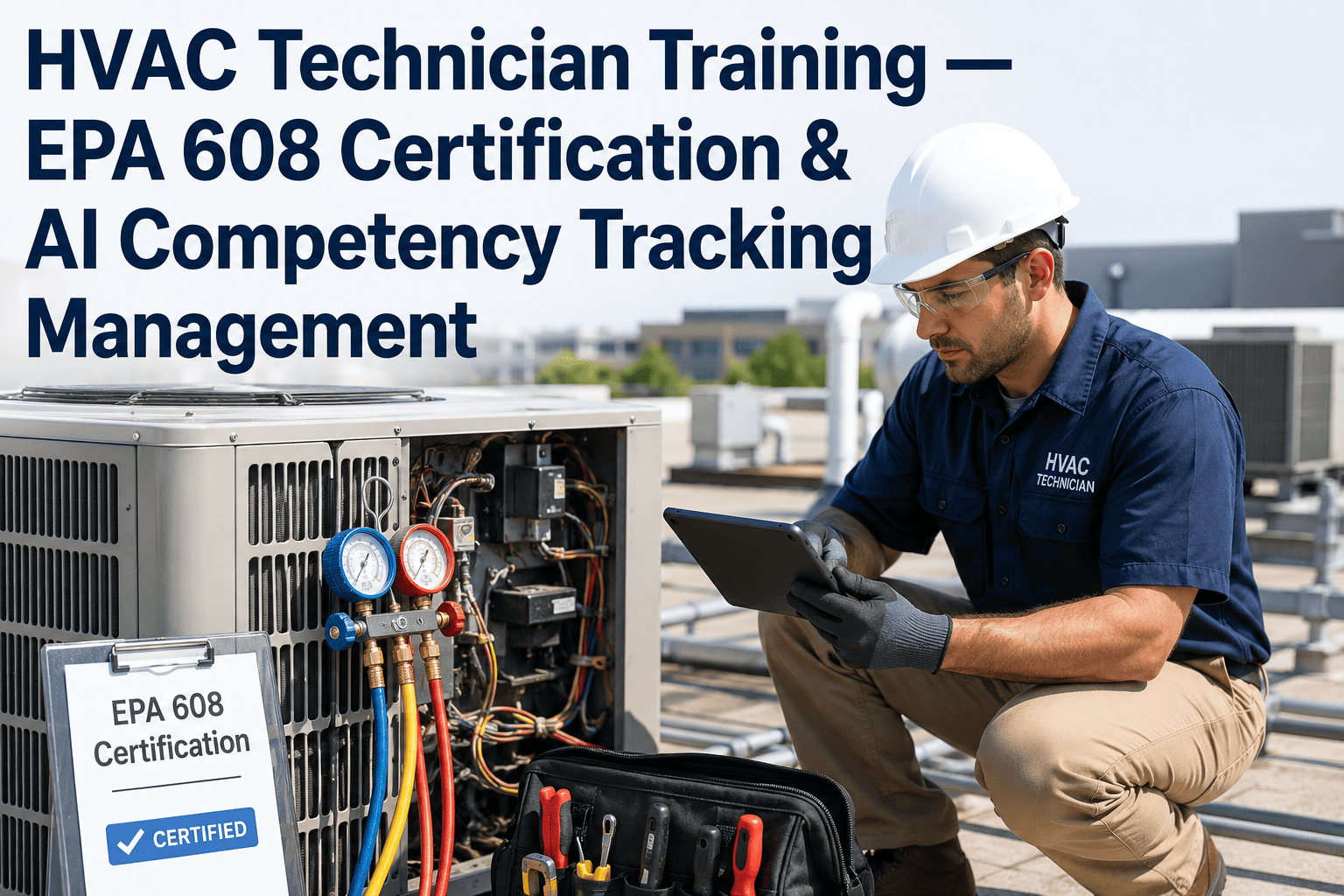
The platform tracks which qualifications and knowledge areas each junior technician has absorbed, giving managers a clear view of who is ready for more responsibility.
Knowledge Type vs. Capture Method
Not all institutional knowledge is the same kind of thing, and each type calls for a different capture approach. Schedule a Workforce Assessment to see where your team's biggest knowledge risk sits.
| Knowledge Type | Typical Source | Capture Method | Risk if Lost |
|---|---|---|---|
| Equipment Quirks | Senior Technician Memory | Guided AI Interview | High |
| Recurring Fault Fixes | Closed Work Orders | Historical Data Mining | Medium |
| Vendor/Contact Relationships | Informal Notes, Emails | Structured Directory Capture | Medium |
| Building-Specific Workarounds | Tribal Knowledge | Guided AI Interview | High |
| Formal Procedures | Existing Manuals | Digitization & Linking | Low |
Our lead technician retired after thirty-one years, and I was genuinely worried about what would happen the next time that old boiler acted up. We had already captured his troubleshooting knowledge through the interview process, and six months later a junior tech pulled it up and fixed the exact issue he used to handle personally. That was the moment I knew this was not just a nice-to-have.
From Interview to Institutional Knowledge
Capturing expertise is only useful if it reaches the technician who needs it, months or years later. Here is how that knowledge moves through the system.
Don't Let Retirement Take Your Best Knowledge With It
See how iFactory captures decades of technician expertise before it walks out the door for good.
What Actually Gets Lost When a Veteran Technician Retires
Operations directors often underestimate how much of a senior technician's value is invisible until it is gone. It is rarely the formal procedures that disappear — those are usually written down somewhere. What disappears is the judgment built from thousands of small decisions: knowing which alarm to trust and which to dismiss, knowing which vendor actually shows up on time versus which one to avoid for an emergency call, knowing that a particular rooftop unit needs to be restarted in a specific sequence because of a wiring quirk from an installation a decade ago. None of that shows up in a job description, and none of it transfers through a two-week handover period. Left uncaptured, it gets relearned the hard way, through repeated trial and error, at the cost of extended downtime and frustrated occupants while the new technician catches up to where their predecessor already was.
Month 1: Priority Identification
Technicians nearing retirement or holding unique building knowledge are identified and prioritized for capture.
Month 2: Guided Knowledge Capture
AI-guided interviews and work order mining begin building the searchable knowledge base for priority technicians.
Month 3: Team Rollout
The searchable knowledge base goes live for the full maintenance team, with usage tracked to identify gaps.
Ongoing: Continuous Capture
New knowledge is captured continuously as issues are resolved, keeping the base current rather than a one-time snapshot.
Frequently Asked Questions
How much time does a senior technician need to spend to capture their knowledge?
The guided AI interview process is designed to fit into short sessions rather than requiring technicians to write documentation on their own time. Most senior technicians complete meaningful knowledge capture across a handful of conversational sessions spread over a few weeks, working around their regular schedule rather than pulling them off the job for an extended period.
Can this work if the technician has already retired or left the organization?
Capture is most complete while the technician is still on staff and can walk through specific scenarios in detail, but the platform also mines historical work order data to reconstruct recurring patterns even after someone has left. Starting capture as early as possible before a planned retirement produces the richest results.
How is captured knowledge organized so a new technician can actually find it?
Every captured insight is tagged to the specific equipment, fault type, or building system it applies to, so a technician troubleshooting a particular unit can search directly for relevant history instead of browsing through unrelated notes. The system also surfaces related knowledge automatically based on the work order a technician is currently viewing.
Does this replace formal training or certification programs?
No. Knowledge capture complements formal training and certification tracking rather than replacing either. Formal programs build baseline competency and compliance, while captured institutional knowledge fills in the building-specific and equipment-specific expertise that no standardized training program can teach.
How do we get senior technicians comfortable participating in this process?
Most technicians respond well once they understand the process is a conversation about their expertise, not a performance evaluation, and that it positions them as the expert whose knowledge is worth formally preserving. Our Support team can help structure the rollout messaging for your specific team culture.
Preserve Your Team's Expertise Before It Walks Out the Door
iFactory captures decades of technician knowledge and makes it searchable for the next generation of your maintenance team.