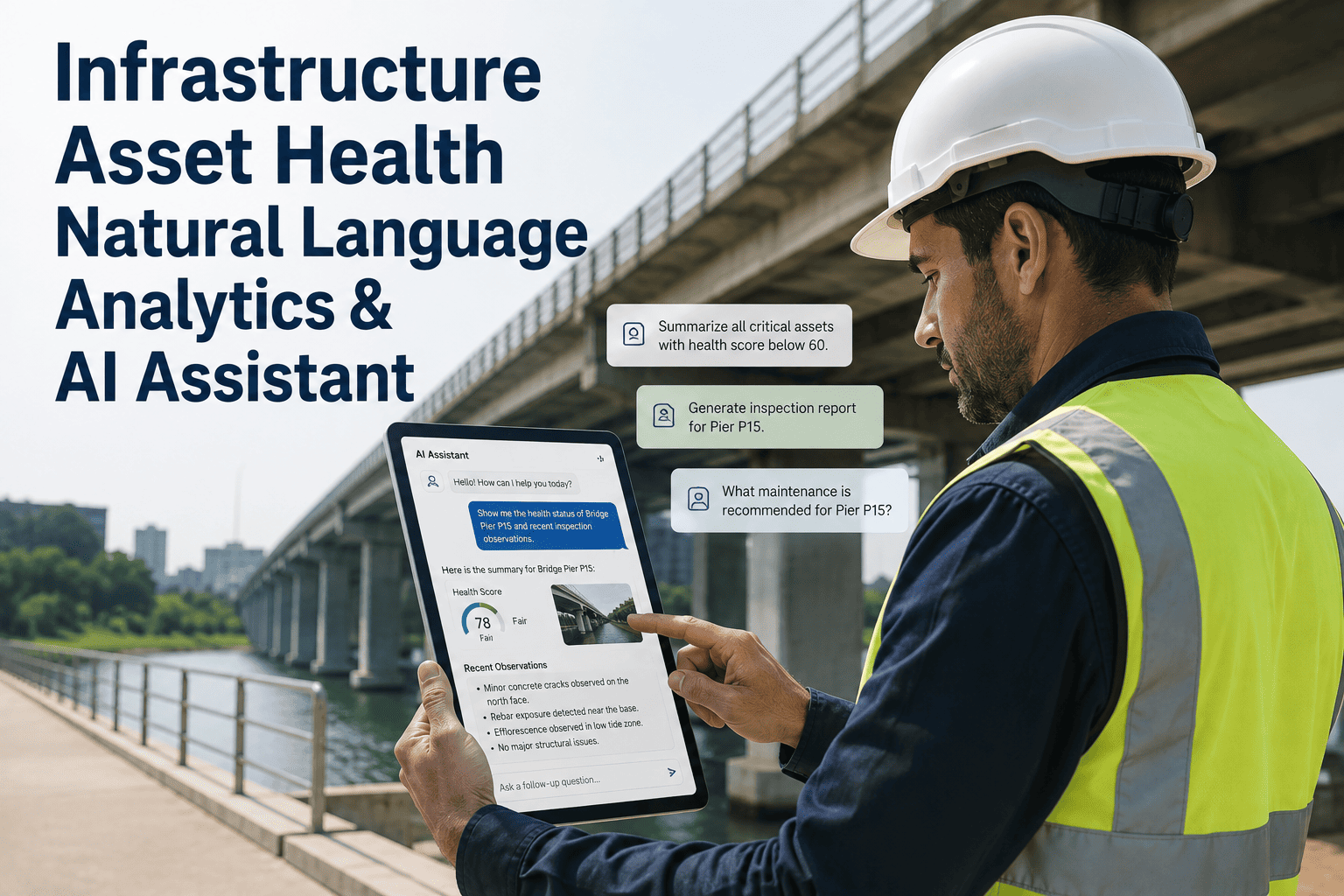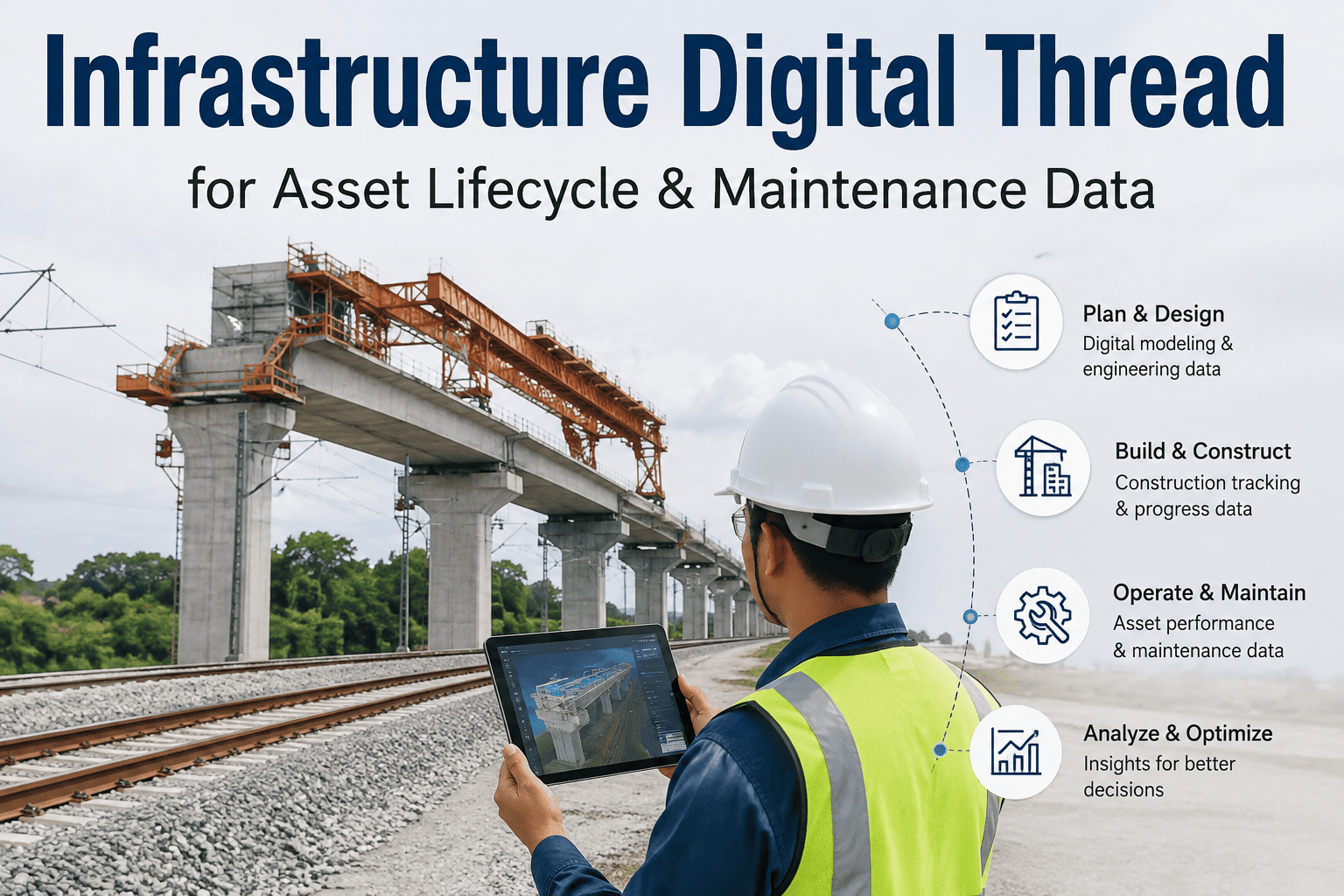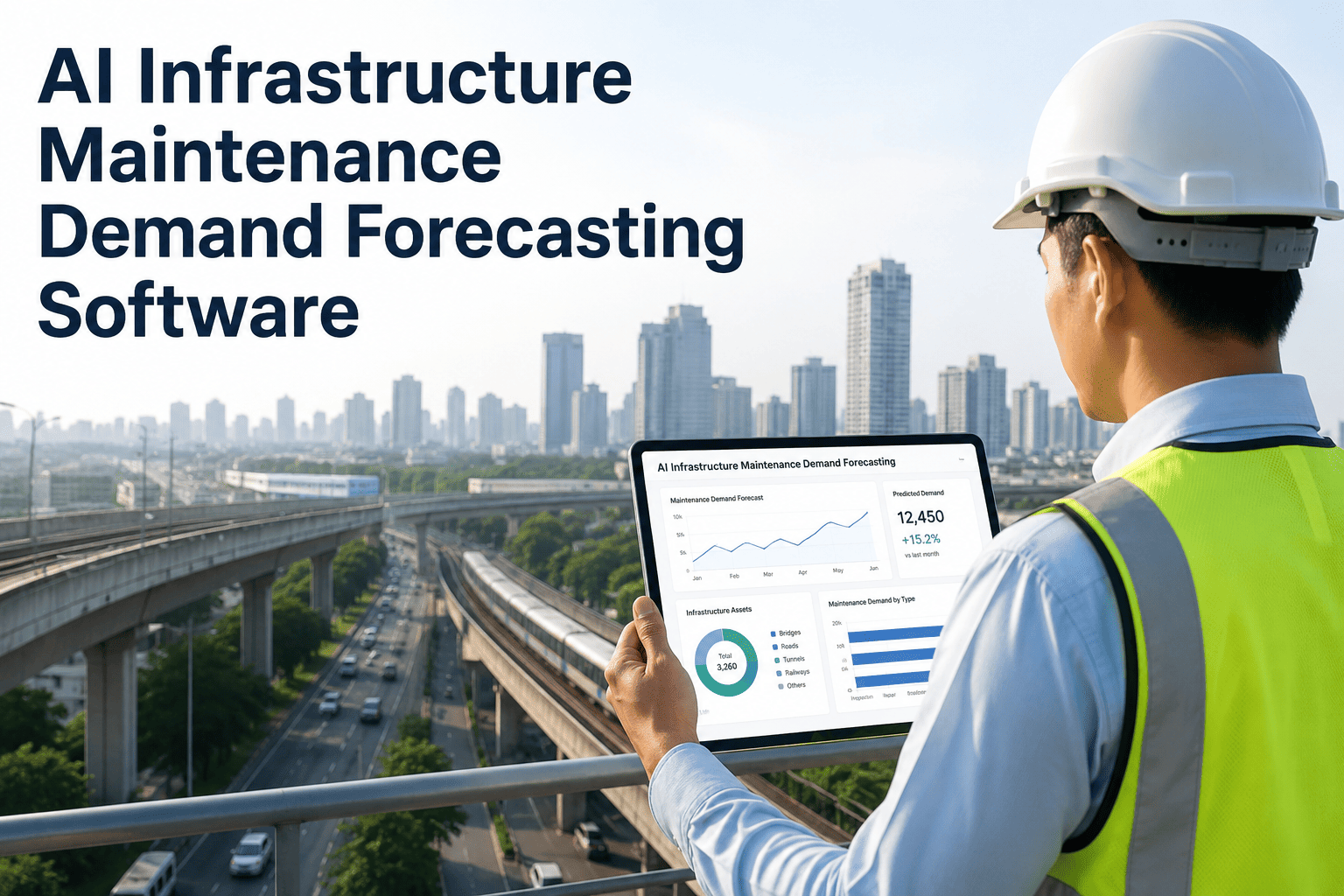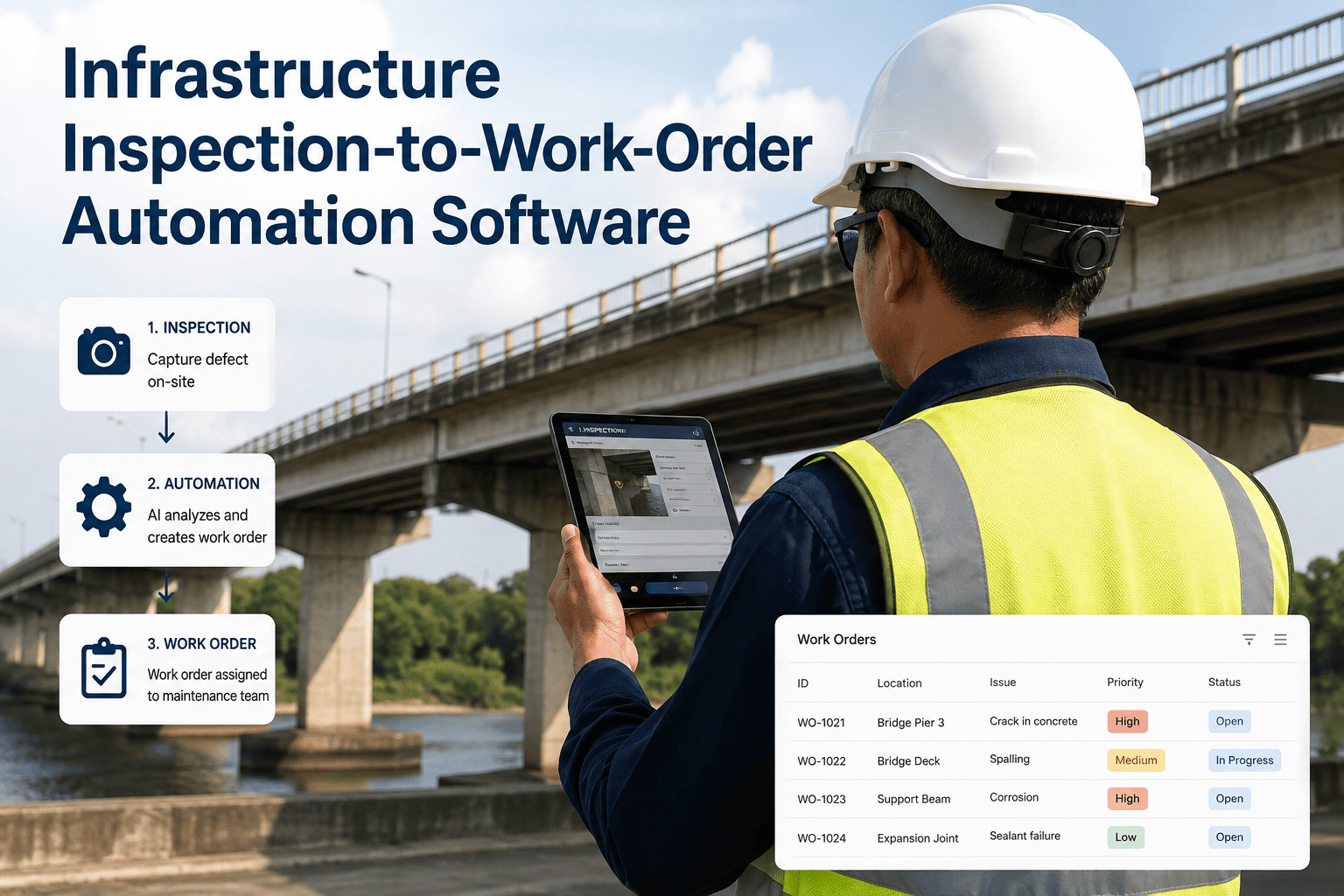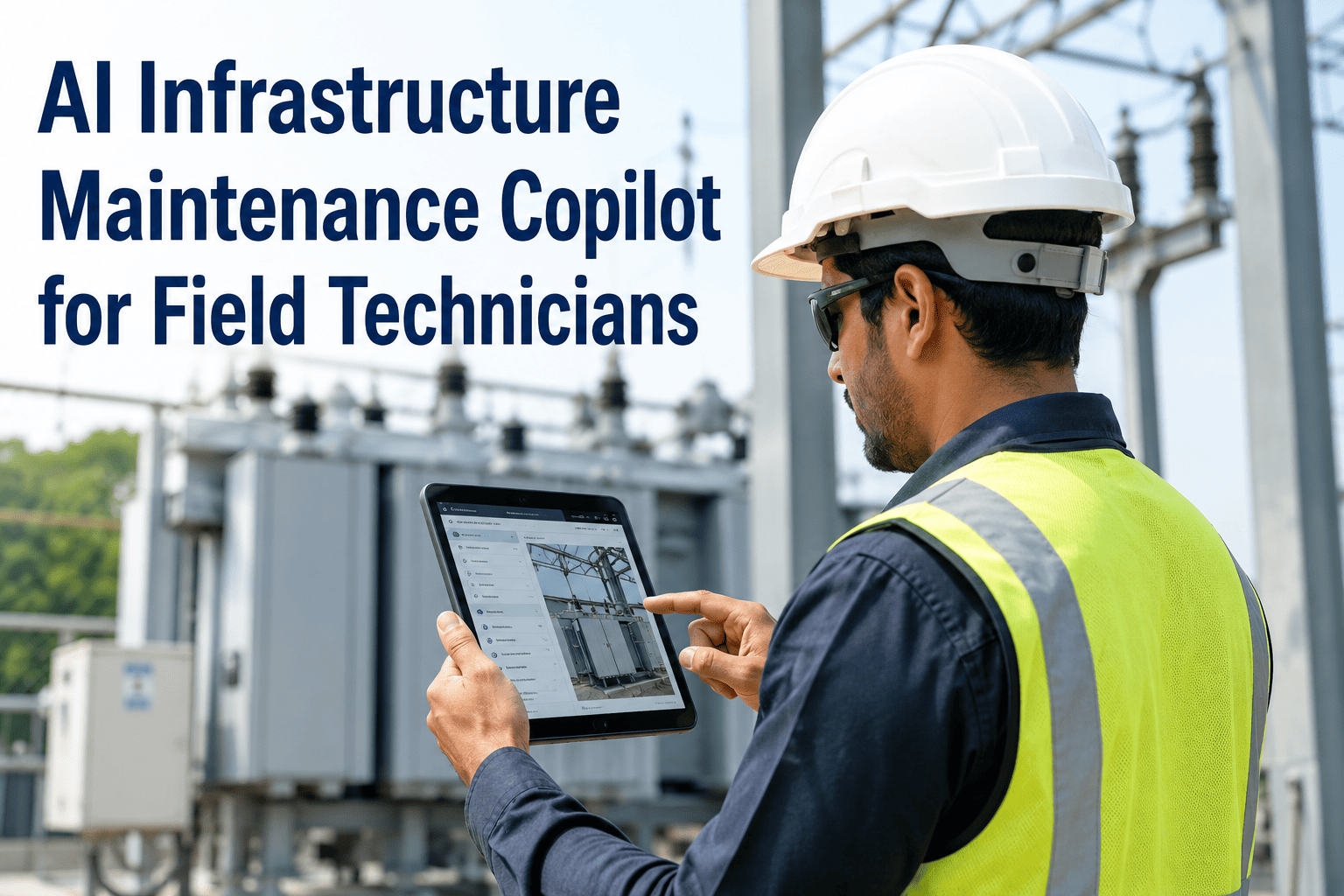
A field technician standing in front of a failed asset at 2 a.m. has always faced the same problem: the fix is known somewhere, but not to them. It might live in a retired engineer's memory, a scanned PDF nobody indexed, or a work order buried three systems deep. Industry data now puts a number on that gap — roughly 70 percent of unplanned downtime traces back to technical knowledge that exists but is not reachable at the point of failure. iFactory AI's Infrastructure Maintenance Copilot closes that gap by putting asset history, repair guidance, and inspection context directly into a technician's hands, in plain language, the moment they need it — see how it works with a quick demo.
Your best technician's judgment, available to every technician, on every asset, every shift.
The Infrastructure Maintenance Copilot reads your manuals, work order history, and inspection logs, then answers technician questions in plain language — no searching, no radio calls, no guessing at the panel.
Why infrastructure teams are moving to AI-assisted troubleshooting in 2026
Reliability leaders are not chasing a novelty. They are responding to a workforce shift: experienced technicians are retiring faster than knowledge is being documented, and the technicians replacing them are handed thicker manuals and less time to read them. The figures below summarize what independent field-service research is reporting across infrastructure and industrial maintenance teams this year.
The point-of-failure problem infrastructure teams keep running into
None of these are hypothetical. They are the recurring reasons infrastructure and utility maintenance teams miss first-time fix targets and burn through overtime budgets on repeat visits.
Institutional knowledge walks out the door with retirees
The technician who knew that a particular relay always fails the same way on a particular substation rarely writes that down anywhere searchable. When they retire, that diagnostic shortcut retires with them, and every technician after has to rediscover it the hard way.
Manuals are long, static, and disconnected from the asset in front of you
A 400-page OEM manual is not built for a technician standing in a trench or on a substation platform with a fault code and fifteen minutes before the next site. Finding the one relevant page costs more time than the actual repair.
Junior technicians escalate more than they need to
Without access to prior repair history, newer technicians default to calling a senior engineer or scheduling a second visit, both of which extend mean time to repair and pull experienced staff away from higher-value work.
Work order documentation is inconsistent across crews
Free-text notes from different technicians rarely describe the same failure the same way, which makes historical search nearly useless even when the record exists — the fix that worked twice before is effectively invisible.
Multilingual crews hit a language barrier at the worst moment
A safety-critical procedure written only in English does not help a technician who is more comfortable in Spanish or Polish, and that gap is a genuine safety risk, not just an inconvenience.
From a technician's question to a completed work order
Technician asks, in plain language
On a tablet or rugged handheld, the technician describes the symptom the way they would describe it to a colleague — no fault-code lookup tables required.
Copilot retrieves the relevant context
It pulls the asset's maintenance history, the last inspection result, open defects, and the specific page of the manual that applies to this exact model and fault.
Copilot cross-references failure patterns
It checks whether this fault has occurred on this asset or similar assets before, and what fix resolved it, ranked by how often that fix actually worked.
Technician gets steps, work order drafts itself
The technician receives a ranked set of probable causes and repair steps, and the copilot pre-fills the work order with parts used, time spent, and root cause.
Capabilities built specifically for technicians in the field, not just planners in the office
Most maintenance software is designed for the person scheduling the work, not the person doing it. The Infrastructure Maintenance Copilot inverts that — every capability below is built around what a technician needs standing next to the asset.
Conversational troubleshooting
Technicians describe symptoms in natural language and get ranked probable causes with confidence levels, drawn from your actual asset and repair history rather than generic OEM guidance alone.
Instant asset history recall
Before a technician even asks a question, the copilot can brief them: last five maintenance activities, open defects, most recent inspection result, and any active safety notice for that asset.
Digitized SOP and manual retrieval
OEM manuals, internal SOPs, and safety procedures are indexed at the paragraph level, so the copilot surfaces the exact section relevant to the fault instead of a generic document link.
Auto-drafted work orders
Parts consumed, labor time, and root cause are pre-populated from the diagnostic conversation, cutting paperwork time and improving the quality of the historical record for the next technician.
Multilingual, plain-language answers
The same English-language manual can be understood and acted on by a crew that speaks Spanish, Polish, or another language, removing a documented safety risk on mixed-language teams.
Offline-capable, rugged mobile access
Substations, pipeline right-of-ways, and remote pump stations rarely have reliable signal — the copilot caches relevant asset data locally so it keeps working when connectivity does not.
Troubleshooting before and after an AI copilot
The difference is not just speed — it is consistency. Every technician, regardless of tenure, gets access to the same diagnostic depth.
| Step | Without a copilot | With the Infrastructure Maintenance Copilot |
|---|---|---|
| Diagnosing the fault | Search a printed or PDF manual, or radio a senior technician | Ask in plain language, get ranked probable causes in seconds |
| Checking asset history | Log into a separate CMMS back at the office, if at all | Automatic briefing on arrival: history, defects, last inspection |
| Finding the right repair step | Flip through hundreds of manual pages for the right section | Exact paragraph surfaced, matched to the asset and fault |
| Language barrier | Depends on manuals being translated in advance, if ever | Answers generated in the technician's preferred language |
| Closing the work order | Manual entry of parts, time, and notes back at the office | Draft pre-filled from the diagnostic conversation |
| New technician ramp-up | Months of shadowing senior staff to build asset knowledge | Immediate access to the collective diagnostic history |
See the copilot answer a real question from your own asset data
Bring a fault code, a manual, or a recurring problem your team keeps re-diagnosing. We will show you what the Infrastructure Maintenance Copilot does with it, live, in under thirty minutes.
Sensor-driven alerts told a technician that something was wrong. What was missing was the next step — diagnosing why, and knowing what worked the last time this happened. A copilot that reads your SOPs, your manuals, and your own repair history and hands a technician a ranked set of likely causes is the difference between an alert and an answer. That shift is what is closing the skills gap on infrastructure teams facing a wave of retirements.
Three situations infrastructure teams run into every week
These scenarios repeat across substations, pipelines, and remote pump stations regardless of region or asset age, and each one is a place where a fifteen-minute diagnosis can turn into a half-day event without the right context in hand.
Substation relay trips with no clear cause
A technician arrives to a tripped relay with no visible fault. Instead of guessing, they ask the copilot what has caused this relay to trip historically at this substation — and get the answer along with the exact test sequence to confirm it.
Pipeline pressure sensor throws an intermittent fault
Intermittent faults are the hardest to diagnose because they are gone by the time someone arrives. The copilot pulls the sensor's full fault history and flags that this pattern matches three prior wiring-connector failures on similar assets.
New hire covers a route alone for the first time
A technician six weeks into the job is dispatched solo on a route they have never worked. The copilot briefs them on every asset before they arrive and walks them through unfamiliar repair steps in real time, reducing the need to call for backup.
Built to sit on top of what you already run, not replace it
Infrastructure teams rarely have the luxury of ripping out systems that already work. The Infrastructure Maintenance Copilot is designed as a layer that connects to your existing CMMS, asset registry, SCADA historian, and document library rather than asking you to migrate years of records into a new platform. Integration typically starts with your highest-failure asset classes, where the payoff from faster diagnosis is largest, and expands from there as more documentation is indexed.
Data security is treated as a first-class requirement, not an afterthought. Deployments run inside your network boundary, with role-based access so a technician sees only the assets and documentation relevant to their crew, and every conversation is logged for audit and continuous improvement of the diagnostic model. For utilities and infrastructure operators with strict compliance obligations, this architecture is the same on-premise-first approach used across iFactory's broader platform, so the copilot inherits the same security posture your team already trusts for monitoring and CMMS data.
Rollout is phased on purpose. A pilot crew and a small set of asset classes go live first, feedback from real fault calls tunes the ranking of suggested causes, and only then does the deployment expand to additional crews, regions, or asset types. This keeps risk low and gives supervisors a clear before-and-after comparison on first-time fix rate and mean time to repair before committing to a fleet-wide rollout.
What infrastructure and maintenance teams ask before deploying
Give every technician the knowledge of your best technician
The gap between what your team knows and what any one technician can access at the point of failure is costing you downtime and overtime every week. The Infrastructure Maintenance Copilot closes that gap.