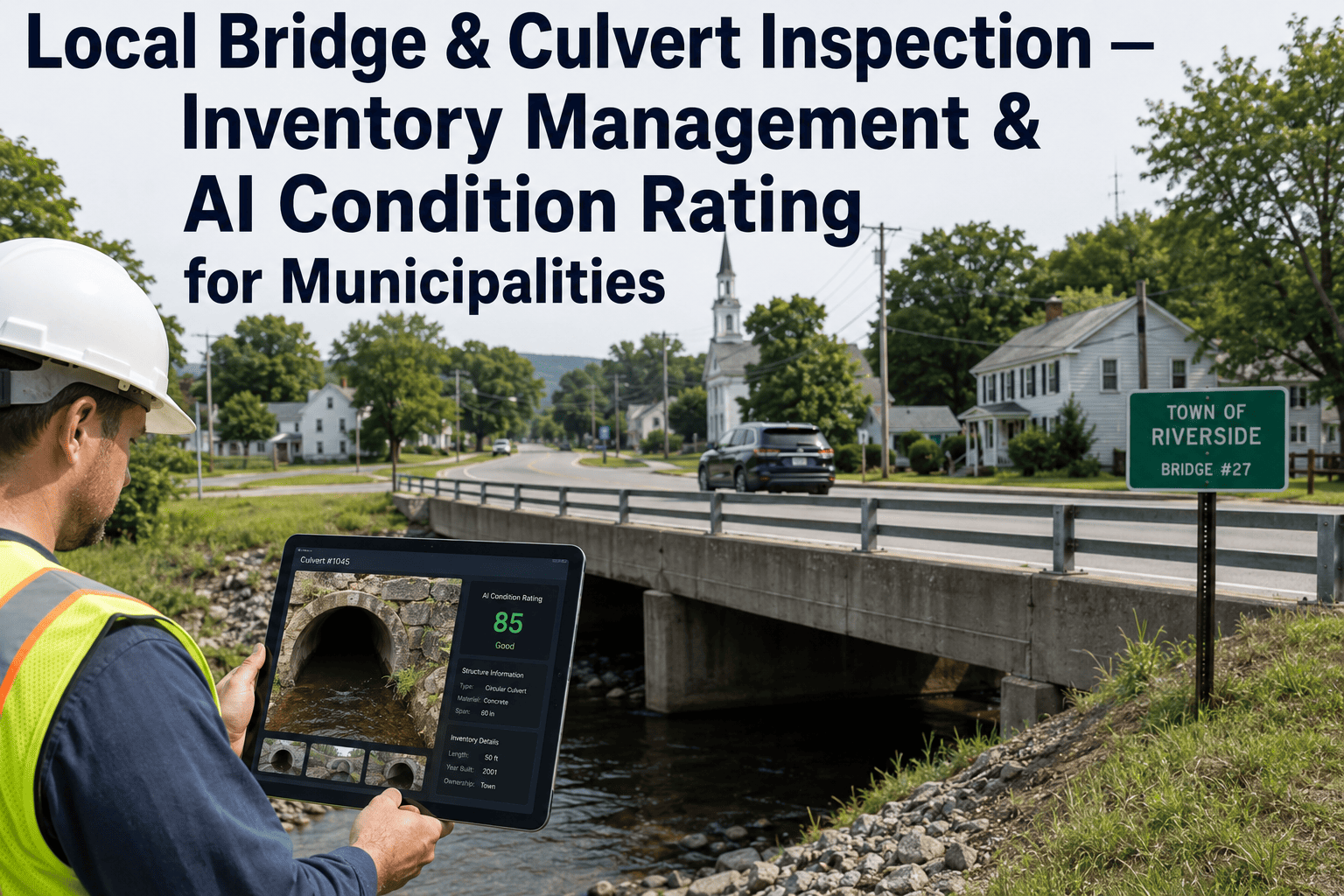
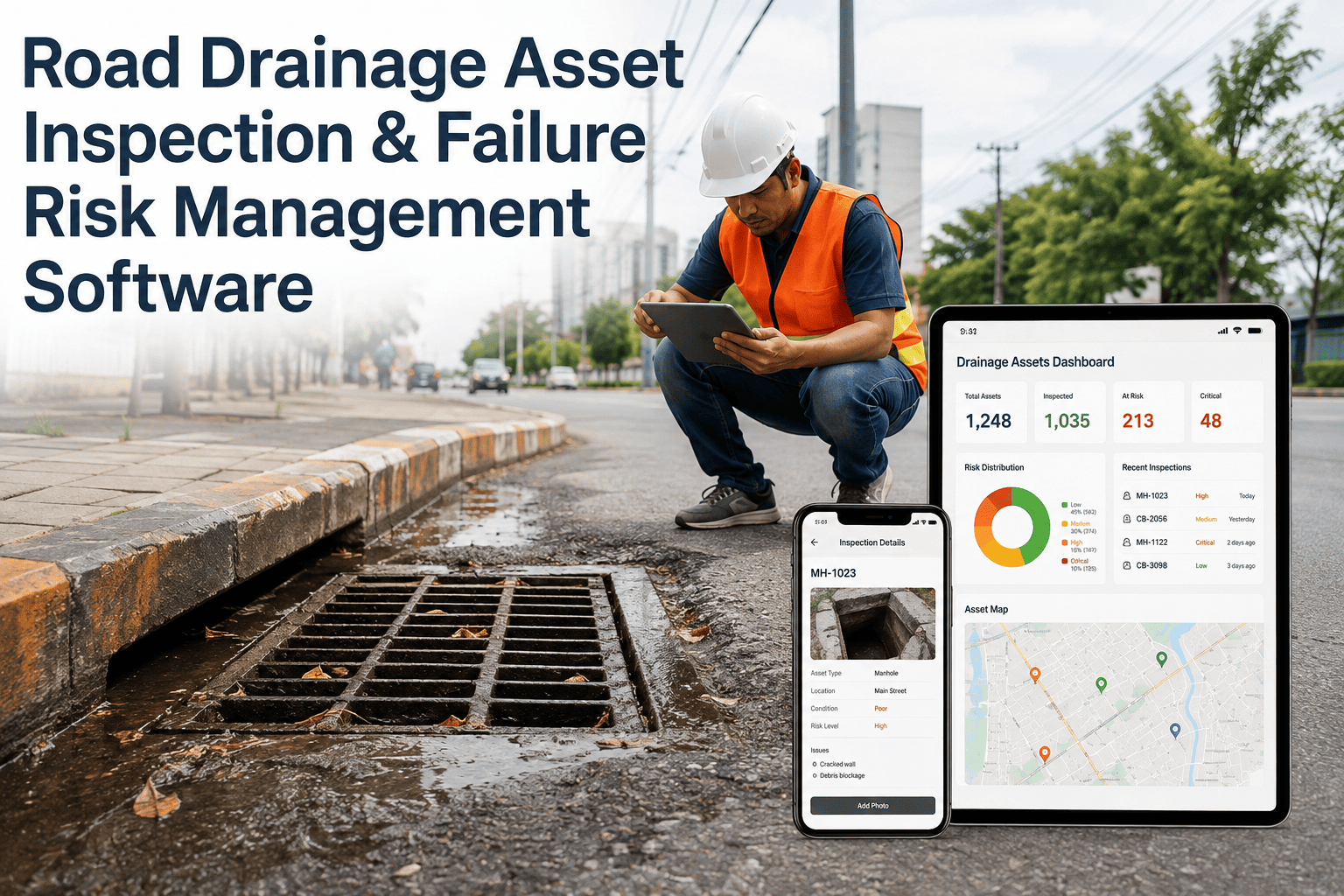
Local Bridge & Culvert Inspection — Inventory Management & AI Condition Rating for Municipalities
By Johnson on August 18, 2026
A county or city asset manager is usually responsible for a mix nobody envies: a handful of federally tracked bridges on the National Bridge Inventory, dozens of smaller locally owned structures that fall outside that system entirely, and a rotating two-year inspection clock that does not pause for staff turnover or budget season. Small bridges and culverts between six and twenty feet have historically gone uncounted in most state and federal databases, which means the condition data an asset manager actually needs often does not exist until someone builds it. That gap between what is legally required and what is realistically staffed is where most local inspection programs fall behind, and it is worth seeing how a working session could change that math for your municipality.
Focus Area · Road & Highway
AI Condition Rating and Inventory Management for Local Bridges and Culverts
Track every structure your municipality owns — federally tracked and locally owned alike — with AI-assisted condition rating, automated critical-finding alerts, and an inventory that stays current between inspection cycles instead of only on inspection day.
bridges nationwide are currently rated in Poor condition, out of roughly 620,000 tracked structures
50%
of the nation's bridges are locally owned rather than maintained by a state department of transportation
24 mo
is the standard federal inspection interval for qualifying bridges and culverts under NBIS
$105B
is the estimated deferred maintenance backlog across state and local roads and bridges nationally
Understanding the Rating Scale
What a Condition Rating of 4 Actually Means
Every bridge and culvert component gets a single number from 0 to 9, and that number quietly determines everything from funding eligibility to whether a structure needs an immediate follow-up inspection. Asset managers who inherit a spreadsheet full of these numbers without context often miss how much weight a single low rating carries against an otherwise sound structure.
A bridge's overall Good, Fair, or Poor classification is set by whichever component scores lowest, whether that is the deck, superstructure, substructure, or culvert rating. This means a structurally sound bridge with a single deteriorating component can be classified Poor overall, and it is precisely this kind of single-component risk that a live inventory needs to surface early rather than at the next scheduled inspection.
Scope
Which Structures Your Municipality Is Actually Responsible For
NBIS applies to any highway bridge over 20 feet in length on a public road, which includes culverts that carry vehicular traffic and measure more than 20 feet along the roadway centerline — a threshold that catches more locally owned drainage structures than most inventories account for. Structures shorter than that federal threshold are not automatically off the hook either: a growing number of states now require their own inspection and rating programs for small bridges and culverts between roughly six and twenty feet, precisely because these structures were historically invisible to both federal and state tracking systems until a state-level small structure program went looking for them.
Over 20 Feet
Falls under full NBIS requirements: biennial inspection, formal condition rating, and reporting into the National Bridge Inventory regardless of who owns the structure.
6 to 20 Feet
Outside federal NBIS scope in most states, but increasingly covered by state-level small structure inspection programs that municipalities are expected to participate in.
Culverts Specifically
Rated as a single component rather than the three-part deck, superstructure, and substructure breakdown used for open-span bridges, but the rating carries the same funding and safety weight.
Condition Rating
The Components an Inspection Actually Scores
Whether a structure is classified Good, Fair, or Poor comes down to the lowest score among a small number of components, and knowing where each one tends to fail helps an asset manager anticipate problems before the number itself drops.
Deck
The driving surface and structure directly beneath it. Deterioration typically shows up first as cracking, spalling, or exposed rebar, and is usually the easiest component to catch early with routine visual monitoring.
Superstructure
The beams, trusses, arches, or cables that carry traffic loads down to the substructure. Fatigue and section loss here are harder to spot from the ground and are a common source of missed early warning signs.
Substructure
Piers, abutments, and foundations that transfer load to the ground, where scour — erosion of supporting soil by moving water — is one of the most common and least visible causes of a low rating.
Culvert
A single overall rating for enclosed drainage structures rather than a three-part breakdown, which makes it especially important to track trend data over time since one number is carrying the whole condition story.
See Your Inventory Take Shape
Bring Your Current Bridge List, Even an Incomplete One
iFactory's team can walk through how AI-assisted condition rating and inventory tracking would apply to your specific mix of federally tracked and locally owned structures, including the small culverts most systems have never counted.
The federally mandated interval creates a hard deadline, but the structures most likely to surprise an asset manager are the ones that deteriorate quietly in the months between scheduled inspections. A live inventory extends visibility into that gap instead of leaving it dark until the next inspector visit.
1
Scheduled Inspection
A certified inspector rates each component, documents findings with photos, and logs the results — the baseline every downstream decision depends on.
2
Inventory Sync
Ratings, photos, and notes are entered into a structured inventory record instead of a standalone report, so the data is searchable and comparable to prior cycles immediately.
3
Trend and Risk Flagging
AI-assisted comparison against prior inspection cycles and similar structures flags components trending toward a lower rating before the next scheduled visit is due.
4
Critical Finding Escalation
Any condition consistent with a rating of three or below is routed for immediate follow-up rather than waiting for the standard reporting cycle to catch it.
5
Budget and Program Planning
Condition trends across the full inventory feed directly into capital planning, prioritizing the structures where deferred maintenance is closest to becoming a replacement.
Paper Files vs. Structured Inventory
Where Most Local Programs Are Losing Time
Many local bridge programs still run on a mix of PDF inspection reports, spreadsheets, and whatever the previous asset manager left behind. The comparison below reflects what changes when that record becomes a structured, searchable inventory instead.
Task
Paper and Spreadsheet Records
Structured AI Inventory
Finding a structure's rating history
Searching through past PDF reports by hand, often across different inspector formats
One record per structure with every past rating and photo attached in sequence
Spotting a declining trend
Only noticed if someone happens to compare two reports side by side
Flagged automatically when a component trends toward its next rating threshold
Reporting locally owned structures
Frequently excluded from state and federal databases entirely
Tracked in the same system as federally reported structures, regardless of ownership
Prioritizing limited repair budget
Based on which structure someone remembers looked bad last time
Ranked by current condition trend and proximity to a Poor classification
Field Perspective
“
Every asset manager I've worked with can tell you the condition of their five worst bridges from memory. It's the other forty or fifty structures, the ones nobody has thought about since the last inspection, where the real risk sits. Those small culverts under twenty feet were invisible to state and federal systems for decades in a lot of places, and just getting them into one inventory with a rating history attached changes what a limited repair budget can actually accomplish.
Municipal Infrastructure Asset Management Advisor
18 years in local transportation asset management and inspection program administration
Common Questions
Frequently Asked Questions
Do small culverts under 20 feet actually need to be tracked if they fall outside NBIS?
Federal NBIS requirements apply specifically to structures over 20 feet, but a growing number of states now run their own inspection and rating programs for smaller bridges and culverts precisely because these structures were left out of both federal and state tracking for years despite carrying real safety and liability risk. Even where no state program exists yet, tracking these smaller structures in the same inventory as federally reported bridges gives a municipality a complete picture of its actual exposure rather than only the fraction that federal rules require it to report. Talk to support about bringing sub-threshold structures into your inventory.
How does a condition rating actually translate into a Good, Fair, or Poor classification?
The overall classification is set by whichever rated component scores lowest — deck, superstructure, substructure, or the single culvert rating — with a score of 7 or above classified Good, 5 to 6 classified Fair, and 4 or below classified Poor. This means a bridge that is structurally sound in every other respect can still be classified Poor because of a single deteriorating component, which is exactly why trend tracking on individual components matters more than watching the overall classification alone.
Can this help our municipality apply for off-system or local bridge funding programs?
Current federal funding structures set aside a defined share of state bridge formula allocations specifically for off-system, locally owned bridges, often at a higher federal cost share than standard programs, and a documented, up-to-date condition inventory is typically part of what makes a strong grant application. Having consistent rating history and photo documentation across your full inventory, not just your worst structures, puts your municipality in a stronger position when a funding cycle opens. Book a demo to see how the inventory export supports grant documentation.
What actually triggers a critical finding and immediate follow-up inspection?
A critical finding is generally triggered when a deck, superstructure, substructure, or culvert component is rated three or below, or when a scour condition is rated serious or worse, since either condition indicates a structural or safety issue that cannot reasonably wait until the next scheduled inspection cycle. Getting ahead of that threshold, by tracking the trend in a component's rating before it actually crosses into critical territory, is what separates a planned repair from an emergency closure.
How much of our existing inspection history can be brought into a new inventory system?
Most municipalities have some combination of PDF inspection reports, spreadsheets, and older database exports, and that historical data can generally be consolidated into a single structured inventory rather than started over from scratch. The value of the trend flagging and risk ranking features actually depends on having that history in place, since a single current rating tells you far less than a rating compared against its own trajectory over the last several inspection cycles.
Every Structure You Own, In One Place
Stop Managing Bridges From Whatever the Last Person Left Behind
iFactory brings federally tracked and locally owned bridges and culverts into a single AI-assisted inventory, with condition trend flagging and critical finding alerts built around the two-year cycle you already have to meet.