The pitch for building AI in-house sounds compelling until an Operations Director lives through it. Hire a data science team. Commission a data architecture. Integrate with existing asset systems. Build monitoring pipelines. Maintain model accuracy as operational conditions drift. Retrain when new asset classes are added. Manage the 3 a.m. alert that nobody knows how to interpret. What starts as a technology investment quickly becomes a second operations function — one that competes with the core business for budget, leadership attention, and technical talent that the market says is already in short supply. MIT Technology Review's 2025 research found that just 2% of organisations rate their AI performance as delivering measurable business results. The technology is not the problem. The operational model for deploying it is. An AI managed service for infrastructure changes the equation entirely: the predictive intelligence is live, the monitoring runs around the clock, and the capability scales across a portfolio of assets without hiring a single data scientist.
AI Managed Service · 24/7 Remote Monitoring · Continuous Optimization · Infrastructure Intelligence
Predictive AI Across Your Entire Infrastructure Portfolio — Without Building a Data Science Team to Run It.
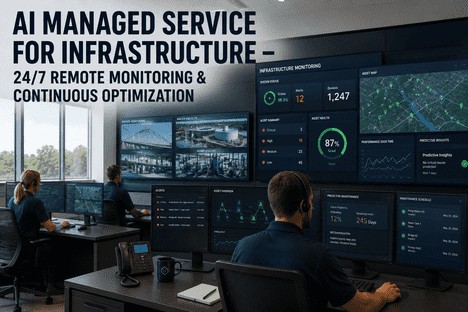
iFactory delivers AI condition intelligence as a fully managed service — 24/7 remote monitoring, continuous model optimization, and fleet-wide predictive analytics deployed across your asset portfolio from day one, with no internal data science or IT infrastructure investment required.
$210B
Managed infrastructure services market by 2030 — operators who shift to AI-managed models now capture the efficiency advantage before the market prices it in
Only 2%
Of organisations rate their in-house AI as delivering measurable results — the majority are still struggling to scale past pilots without a managed delivery model
60%+
Of businesses report difficulty recruiting qualified AI and data science staff — the skills gap makes the managed service model the only realistic path for most infrastructure operators
40–65%
Reduction in unplanned downtime reported by infrastructure operators deploying AI-powered predictive maintenance at portfolio scale
The In-House AI Build: Why It Looks Achievable and Why It Rarely Is
Operations Directors running infrastructure portfolios are not short of ambition when it comes to AI. The gap is between the ambition and the operational model needed to realise it. Building AI capability in-house requires assembling a set of capabilities that most infrastructure organisations do not have and that the talent market makes genuinely difficult to acquire.
The Talent Problem
The data scientists you need cost more than the infrastructure budget anticipated
Senior ML engineers and data scientists with domain experience in industrial infrastructure command compensation packages that infrastructure operators typically do not have in their technical salary bands. And even when hired, they require data engineering support, compute infrastructure, and model management tooling that add further layers of cost and complexity. Over 60% of businesses already cite difficulty recruiting qualified AI staff — in infrastructure-specific domains, that constraint is more acute.
The Data Problem
The data exists across systems that were never designed to talk to each other
Asset sensor feeds, CMMS records, work order histories, parts inventories, and environmental data live in separate systems with different data formats, update frequencies, and access protocols. Building the data pipelines that connect them into a coherent training and inference environment is a multi-month engineering project before a single AI model runs. Data quality issues, schema changes, and system upgrades then require ongoing maintenance of those pipelines indefinitely.
The Maintenance Problem
The model that works today degrades silently as operating conditions change tomorrow
AI models trained on historical asset behaviour drift when operational conditions change — new asset configurations, seasonal patterns, fleet additions, process modifications. Without continuous monitoring of model accuracy and a retraining workflow, predictive outputs become unreliable without any visible failure signal. Most in-house teams discover this six to twelve months post-deployment when the model's alert quality has quietly deteriorated. Managed AI avoids this by maintaining model performance as an ongoing service deliverable.
What In-House AI Actually Costs — The Components Most Project Plans Miss
Data pipeline engineering and maintenance
Ongoing cost — schemas change, systems update, new sources are added. Not a one-time project.
Model retraining and drift management
Models degrade silently. Monitoring accuracy and retraining requires dedicated engineering time on a continuous basis.
24/7 alert coverage and escalation management
Predictive alerts fire at any hour. Someone needs to be accountable for the 3 a.m. anomaly that needs a human response decision.
Infrastructure scaling as the portfolio grows
Adding new assets, sites, or asset classes means engineering work — not a configuration change. The cost scales with portfolio growth.
What a Fully Managed AI Service for Infrastructure Actually Delivers
iFactory's AI managed service model is not a software licence with an onboarding guide. It is an operational delivery model where the platform, the data integration, the model management, and the 24/7 monitoring are provided as a continuous service — and where the Operations Director's team consumes predictive intelligence outputs rather than managing the infrastructure that produces them.
Service Layer 01
24/7 Remote Monitoring With Human-Supervised Alert Triage — Not Just Automated Notifications
Always-On Coverage
iFactory's monitoring layer runs continuously across the full asset portfolio — reading sensor feeds, scoring condition against baseline models, and identifying anomaly patterns that indicate developing failures. The 24/7 coverage means that an abnormal vibration signature at 2 a.m. on a Sunday is captured, classified, and escalated through the same workflow as a weekday alert — without requiring an on-call engineer to review raw sensor data. The managed service layer includes alert triage: when the platform generates a condition flag, the output reaching the Operations Director's team is not a raw sensor reading but a classified condition report with the supporting trend data, the asset history context, and the recommended response action. This is the difference between a monitoring system that produces data and one that produces decisions.
Continuous sensor stream analysis
Classified condition reports, not raw alerts
24/7 escalation with response context
Service Layer 02
Continuous Model Optimization — AI That Improves as Your Fleet Operates, Not Just at Implementation
Ongoing Accuracy Management
Model accuracy management is the part of AI deployment that most in-house projects underestimate and most point-solution products do not include in their scope. iFactory's managed service includes continuous monitoring of model performance across every asset class and site — tracking prediction accuracy against actual outcomes, identifying drift caused by seasonal patterns, operational changes, or fleet configuration updates, and triggering retraining cycles before accuracy deteriorates below the threshold where outputs remain actionable. When a new asset type is added to the portfolio, the model extension is handled within the service — with the training data pipeline, feature engineering, and validation cycle completed by the iFactory team. The Operations Director receives a notification that the new asset class is now covered, not a project scope document requesting IT resource and a twelve-week timeline.
Prediction accuracy monitoring
Automated retraining on drift detection
New asset class onboarding within service scope
Service Layer 03
Portfolio-Level Intelligence — Every Site, Every Asset Class, Every Condition in One Managed View
Fleet-Wide Visibility
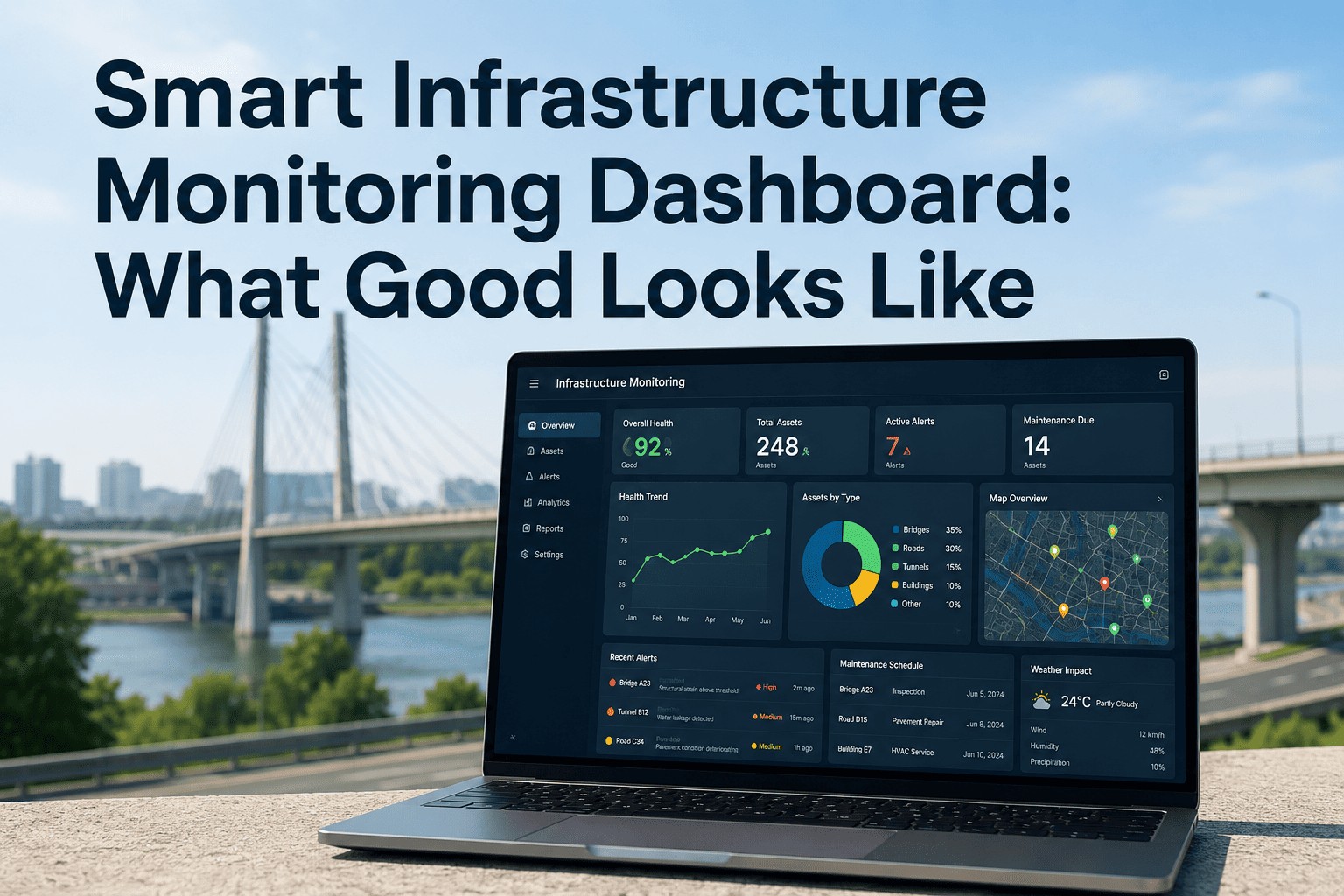
For Operations Directors managing infrastructure across multiple sites, the portfolio view is where managed AI delivers its most distinctive value. iFactory aggregates condition intelligence from every monitored asset across the full portfolio into a single network view — with site-level condition summaries, cross-site comparisons of asset health by class, and a ranked list of the highest-priority intervention candidates across the entire fleet. A director overseeing twenty sites no longer needs to synthesise reports from twenty separate systems or rely on individual site managers to escalate correctly. The portfolio dashboard surfaces the conditions that need director-level attention network-wide — distinguishing between the six sites operating within normal condition bounds and the two where developing anomalies require prioritised response — without requiring the director to query each site individually. This is the management leverage that portfolio-scale managed AI provides and that site-level point solutions cannot replicate.
Cross-site condition aggregation
Ranked fleet-wide intervention priority
Director-level network overview dashboard
Service Layer 04
Managed Data Integration — iFactory Owns the Pipeline, Not Your IT Department
Zero Internal IT Burden
The data integration work that typically consumes the majority of an in-house AI project's first year is handled within iFactory's managed service delivery. iFactory's integration team connects to existing asset sensor systems, CMMS platforms, SCADA feeds, and operational databases using standard industrial protocols — building and maintaining the data pipelines that keep the AI models current. When a source system is updated or a new data source is added, the pipeline maintenance is handled by iFactory, not escalated to the Operations Director's IT team as a project request. For infrastructure operators already stretched across multiple systems and sites, this removal of data pipeline ownership from internal scope is often the single largest operational relief the managed service delivers — and the capability that makes portfolio-scale AI deployment achievable without adding headcount.
Managed sensor and CMMS integration
Pipeline maintenance within service scope
No internal IT project required
Building AI In-House Takes 12–24 Months and a Team You Have Not Yet Hired. iFactory's Managed Service Goes Live in Weeks.
24/7 remote monitoring, continuous model optimisation, portfolio-level condition intelligence, and managed data integration — delivered as a service, not as a build project your operations team has to own.
Managed Service vs. In-House Build vs. Software Licence — How the Models Compare Across What Operations Directors Actually Care About
Operations Directors evaluating AI for infrastructure typically consider three delivery models. The differences across the dimensions that matter most — time to value, internal resource requirement, and scalability as the portfolio grows — are significant enough to determine whether the capability is ever actually deployed at operational scale.
AI Delivery Model Comparison — Across the Dimensions Operations Directors Prioritise
Dimension
iFactory Managed Service
In-House AI Build
Software Licence Only
Time to first value
Weeks — data integration and baseline modelling handled within service delivery
12–24 months — pipeline build, team hire, model development, deployment
3–6 months — integration and configuration managed internally
Internal headcount required
None for AI/data function — operational teams consume outputs
3–8 FTEs minimum — data engineers, ML engineers, data scientists, platform ops
1–2 FTEs for integration and internal platform management
Model accuracy over time
Maintained continuously — drift detection and retraining within service scope
Degrades without dedicated MLOps resource to manage it
Degrades unless the operator purchases and manages retraining workflows internally
Portfolio scalability
New sites and asset classes onboarded within service — no internal engineering project
Each addition is a new engineering project — cost and time scale with portfolio size
Requires internal integration work for each addition — partial scalability
24/7 coverage
Included — monitoring, alert triage, and escalation management within service
Requires on-call rota — additional headcount or after-hours support cost
Platform runs 24/7 but alert response requires internal coverage
"
We spent fourteen months trying to build our predictive maintenance AI internally. We had a data scientist, a data engineer, and a platform licence. What we did not have was a clear path from sensor data to operational decisions that our maintenance managers would actually act on. By month twelve we had a model that worked in the lab. By month fourteen we had realised the model needed constant tending that our team did not have bandwidth for. We transitioned to a managed service model and had network-wide condition monitoring live across eleven sites within eight weeks. The capability we had been trying to build for over a year was running before the quarter ended.
— Operations Director, Industrial Infrastructure Group — 22 Years Multi-Site Asset Management
Who the Managed Service Model Is Built For — and What Portfolio Profiles It Fits Best
AI managed services for infrastructure are not the right model for every organisation. They are the right model for specific operational profiles — and the fit is strong enough in those profiles to make managed delivery definitively superior to the alternatives.
Strong Fit — Managed Service Definitively Wins
Operations Directors managing five or more sites who need portfolio-level visibility that site-level point solutions cannot provide without a manual aggregation layer
Infrastructure operators who need predictive capability within months rather than quarters — where the window to demonstrate ROI before the next budget cycle does not accommodate an in-house build
Organisations with mixed asset fleets where different asset classes require different model approaches — and where the internal team does not have domain expertise across all types
Operations teams where the current headcount does not support adding AI/data engineering roles — and where the business case for new technical hires is harder to approve than a service contract
Growing Fit — Managed Service Accelerates What In-House Would Delay
Organisations mid-way through an in-house AI build that has stalled — where transitioning the operational monitoring to a managed service frees the internal team to focus on the proprietary modelling work that actually requires bespoke development
Operators expanding into new geographic markets or asset classes who need monitoring coverage active immediately at new sites without waiting for internal capability to be built for each location
Infrastructure groups where the board has mandated AI adoption but the operational leadership has not yet secured the technical headcount needed to build it — and needs a deployable solution to present at the next review
Organisations with existing CMMS and sensor infrastructure that generates data no one is currently analysing — where the managed service layer is the fastest path to extracting the intelligence that is already there
Conclusion
The managed infrastructure services market is heading toward $210 billion by 2030 because the operational reality for most infrastructure operators is not a choice between building AI and buying AI — it is a choice between deploying AI as a managed service and not having it at operational scale at all. The talent constraints are real. The data pipeline complexity is real. The model maintenance burden is real. And the window between when AI capability is needed and when an in-house build would be complete is typically long enough to make the in-house path operationally unacceptable.
For Operations Directors managing infrastructure portfolios who need predictive intelligence live across their full asset fleet — without hiring a data science team, without managing a data pipeline, and without running a 24/7 alert triage function internally — the managed service model is not the compromise position. It is the right operational architecture. The organisations deploying this model now are building the portfolio-level condition intelligence that will define maintenance performance benchmarks across every infrastructure sector through the next decade.
iFactory's AI managed service delivers 24/7 remote monitoring, continuous model optimisation, managed data integration, and fleet-wide condition intelligence across infrastructure portfolios — as a service, live within weeks, and without requiring a single internal data science or IT infrastructure hire. Book a demo to see how the managed service maps to your portfolio's asset types and site count, or talk to an expert about your current monitoring environment and what a transition to managed AI would look like.
Frequently Asked Questions
Your Infrastructure Data Is Already There. iFactory Manages the AI That Turns It Into Decisions.
24/7 remote monitoring, continuous model optimisation, managed data integration, and portfolio-level condition intelligence — delivered as a fully managed service for Operations Directors who need AI at scale without building the team to run it.