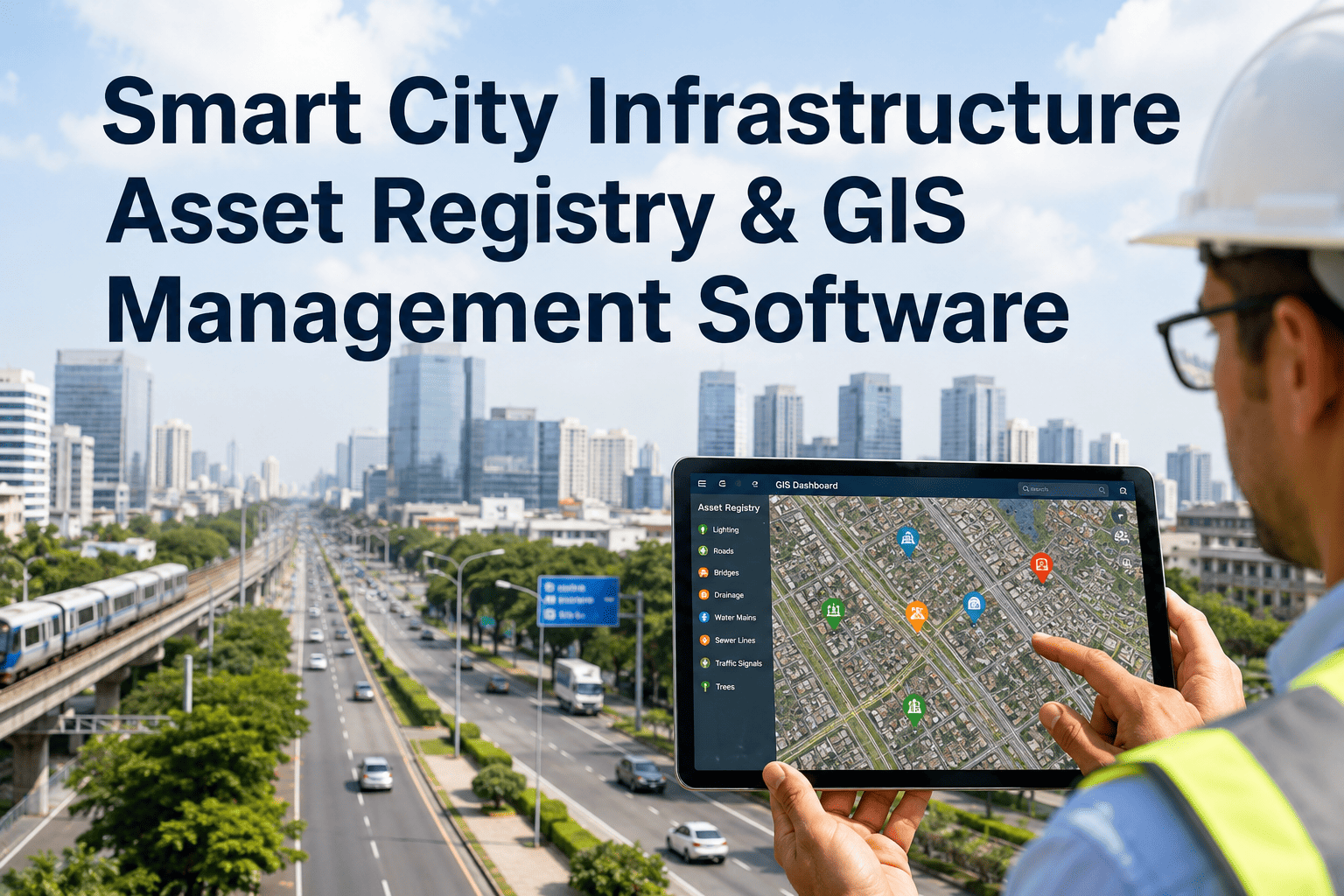
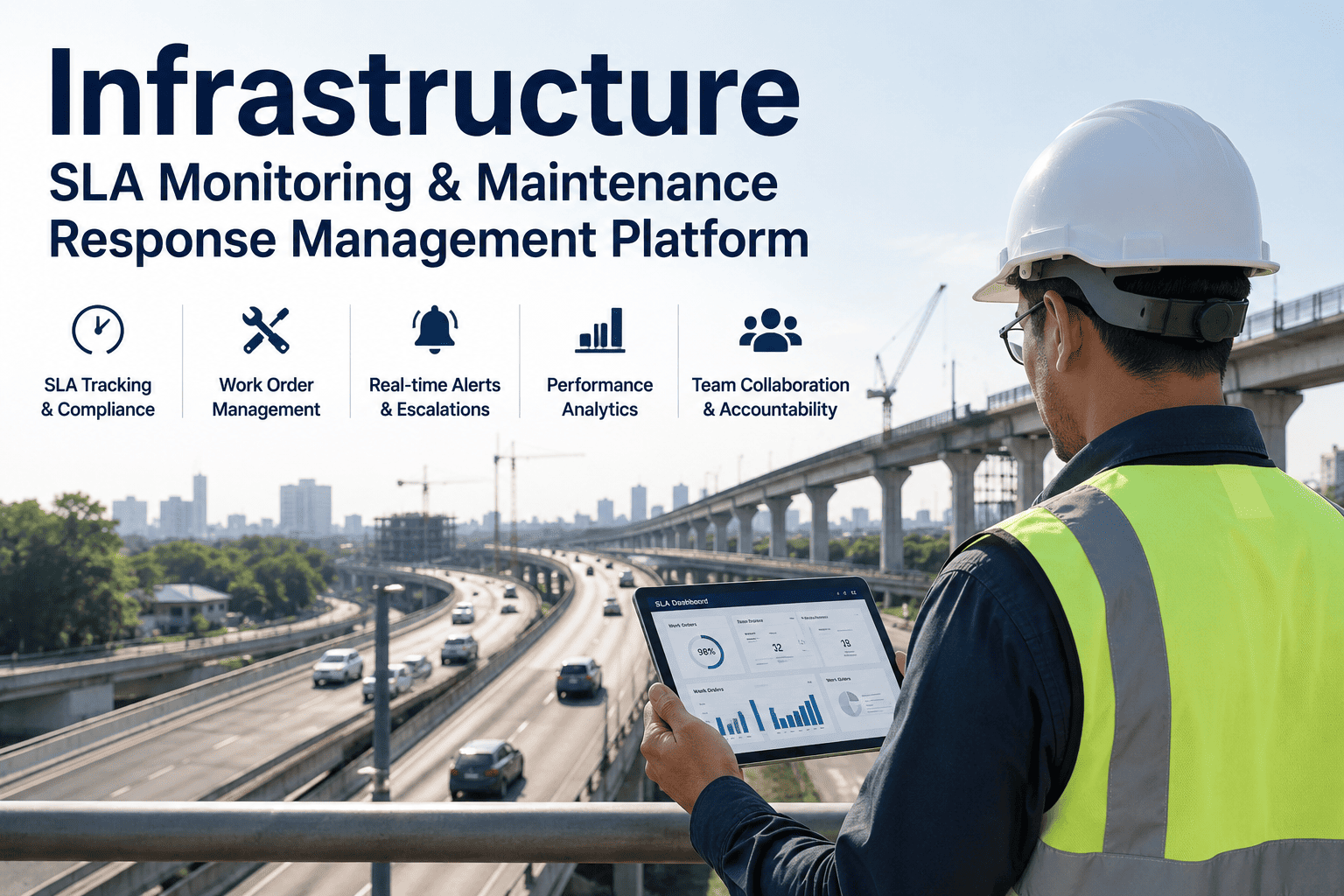
Infrastructure management in 2026 is no longer a question of whether to adopt advanced tools — it is a question of which tools to deploy in which sequence to close the performance gap before the deferred maintenance backlog becomes financially unrecoverable. The right platform stack converts aging assets from compounding liabilities into proactively managed, grant-competitive, and net-zero-capable infrastructure programs. The wrong stack — or no stack at all — means calendar-based maintenance absorbing 30–40% budget waste while emergency repair premiums run 3–5x higher than planned interventions. This guide maps every essential tool category for 2026, evaluates what each delivers, and shows how iFactory integrates all of them into one connected platform — eliminating the data silos, manual bridges, and fragmented dashboards that define most current-generation infrastructure programs. Municipalities deploying iFactory report 400% ROI on proactive care, 25% extended asset service life, and 28% improvement in first-fix rates. If your organization is still evaluating disconnected point solutions, book a free assessment with iFactory to see what a unified platform delivers versus a fragmented stack.
Step 1: Understand the Four Tool Categories Defining Infrastructure Management in 2026
Before selecting any specific platform or vendor, infrastructure managers need a clear map of the four tool categories that collectively define advanced infrastructure management in 2026. Each category addresses a distinct operational gap — and the organizations achieving the strongest outcomes are deploying all four in an integrated architecture rather than cherry-picking individual point solutions.
AI Predictive Maintenance Tools
Machine learning models trained on asset-specific sensor history detect failure precursor patterns weeks before critical thresholds. The top tools in 2026 auto-generate work orders, prioritize by consequence, and improve accuracy continuously as operating data accumulates.
IoT Monitoring Platforms
IoT platforms connect vibration sensors, thermal cameras, current transformers, and environmental monitors into a continuous data stream. In 2026, the essential capability is protocol-agnostic ingestion — connecting any field instrument without custom middleware or hardware replacement.
Digital Twin Simulation Tools
Digital Twin platforms construct virtual replicas of physical infrastructure fed by live IoT data — enabling capital investment scenarios, maintenance option modeling, and deferral cost projections before any physical or budget decision is made.
CMMS and Workforce Optimization
Modern CMMS tools in 2026 go beyond work order management — they capture institutional knowledge through guided workflows, match technician skill profiles to asset requirements, and reduce MTTR as the workforce demographic shifts toward less experienced staff.
Not sure which tool category has the highest ROI impact for your portfolio? Book a free infrastructure assessment with iFactory to map the highest-priority gaps in your current program.
Step 2: Compare the Top Infrastructure Management Tools by Capability
Not all infrastructure management tools deliver equivalent capability — and the gap between threshold-alert SCADA and AI-driven predictive platforms is wider than most evaluation matrices capture. The comparison below maps each tool tier to its core mechanism, key limitation, and the measurable outcome gap that separates basic from best-in-class in 2026.
The Integration Advantage: Organizations running separate IoT, CMMS, and reporting tools consistently lose 20–30% of the value of each tool to data translation gaps, manual bridges, and siloed dashboards. iFactory's architecture eliminates this loss by running all four capability layers — AI Asset Health Scoring, Digital Twin Simulation, Mobile Workforce Optimization, and Real-Time Sustainability Monitoring — on a single data model with no manual data bridges between systems.
Want a side-by-side comparison of iFactory against your current tool stack? Talk to our infrastructure specialists for a no-obligation capability gap assessment.
Step 3: Evaluate Infrastructure Management Tools Against Your Program Requirements
Tool selection should be structured against four evaluation dimensions that determine which platform will generate the highest long-term ROI for your specific portfolio — asset risk profile, integration complexity, compliance requirements, and workforce capability. Here is the framework for evaluating every infrastructure management tool against these dimensions.
Evaluate Against Your Asset Risk Profile
Map your highest-consequence assets — those whose failure triggers service disruption, public safety risk, or regulatory notification — against each tool's failure prediction capability. A threshold-alert tool is adequate for low-consequence secondary assets. AI predictive platforms are required for any asset whose emergency repair cost exceeds $50K or whose failure triggers a compliance event. The tool's ability to differentiate performance by asset criticality tier is the first gate in any evaluation.
Score Integration Compatibility With Your Existing Systems
Assess Compliance and Grant Documentation Capability
In 2026, the infrastructure management tools with the highest strategic value are those that generate compliance documentation — ISO 55001, OSHA PSM, EPA environmental records — and federal grant evidence packages as a byproduct of daily operations, not as a separate reporting effort. Evaluate whether each tool produces AI-verified condition histories, Digital Twin scenario outputs, and climate vulnerability assessments that can be submitted directly to FEMA HMGP, BRIC, and Infrastructure Canada DMAF grant programs without manual compilation.
Evaluate Workforce Adoption and Knowledge Capture Capability
With 50% of public works staff approaching retirement, infrastructure management tools must capture institutional knowledge — asset-specific failure patterns, intervention procedures, and seasonal performance profiles — before it walks out the door permanently. Score each tool on its guided workflow depth, technician skill-matching capability, and ability to turn experienced field observations into searchable digital records accessible to every incoming staff member. Tools that only manage work orders without capturing the knowledge context behind them compound the Silver Tsunami risk rather than mitigating it.
Step 4: Understand the Four Maturity Levels of Infrastructure Tool Deployment
Infrastructure management tools deliver different value profiles depending on deployment depth. Understanding the four maturity levels helps infrastructure managers set realistic ROI timelines, sequence deployment correctly, and identify which capabilities unlock the compound return on advanced platform investment.
Connected & Visible
Capabilities Unlocked:
- Real-time asset condition visibility
- Threshold alerts replacing manual checks
- Digital work order creation and tracking
Condition-Responsive
Capabilities Unlocked:
- Anomaly detection vs. asset baseline
- Condition-based PM scheduling
- Automated work order generation
Predictive & Optimized
Capabilities Unlocked:
- 30-day failure prediction with confidence score
- Digital Twin capital scenario modeling
- Skill-matched dispatch with knowledge capture
Grant-Competitive & Net-Zero
Capabilities Unlocked:
- Auto-generated federal grant evidence packages
- Net-zero compliance dashboard reporting
- Full 400% ROI on proactive investment
See All Four Maturity Levels in Action — In One Platform
iFactory deploys across all four maturity levels without switching platforms, adding middleware, or purchasing separate tools. One deployment path takes your infrastructure program from Level 1 visibility to Level 4 grant-competitive intelligence.
Step 5: Map Your Tool Stack to Capital Planning, Grant, and Compliance Systems
The highest-value infrastructure management tools in 2026 are not those that reduce maintenance cost in isolation — they are the platforms whose outputs feed capital budget submissions, federal grant applications, and net-zero compliance reporting automatically. iFactory's integration architecture connects every asset condition data stream to these downstream systems without manual compilation.
Live Platform Inputs
- IoT sensor condition streams
- AI Asset Health Score histories
- Field inspection and work order records
- Energy and carbon meter feeds
- Climate risk and GIS overlay data
iFactory Unified Platform
Funded Outputs
- Risk-ranked condition work orders
- State of Good Repair reports
- Federal grant evidence packages
- Net-zero compliance dashboards
- Council capital briefing data
Infrastructure Tool Selection Checklist for 2026
Need help mapping iFactory to your existing GIS, capital planning, or compliance reporting systems? Book a technical integration session with our implementation team.
Step 6: Build the Continuous Improvement Loop That Compounds Tool ROI Over Time
The infrastructure management tools with the highest long-term ROI are not those that deliver the largest single-event gain — they are the platforms that compound value over time as AI models accumulate condition data, Digital Twin simulations incorporate additional operating cycles, and workforce skill profiles improve. Structuring a continuous improvement protocol from deployment day one ensures the platform's ROI trajectory continues upward rather than plateauing after initial gains.
Want a structured continuous improvement roadmap built into your iFactory deployment from day one? Our implementation specialists design the full improvement protocol as part of every onboarding engagement.
Expert Perspective
"The infrastructure management tool landscape in 2026 is bifurcating sharply. On one side are organizations running integrated AI platforms where every sensor reading, work order, and inspection record feeds a single intelligence layer — generating condition-based maintenance decisions, grant-ready documentation, and net-zero compliance reporting without any additional effort from already-stretched teams. On the other side are organizations still assembling a fragmented stack of point solutions and spending 20–30% of their platform value on the manual bridges between them. The gap between these two approaches compounds every year — not because the integrated platforms are adding capabilities faster, but because the fragmented stack never escapes the administrative overhead of its own architecture. Choosing a unified infrastructure management platform in 2026 is not a technology decision. It is an operational architecture decision that determines the quality of every capital, compliance, and maintenance outcome for the next decade."
Conclusion
The top infrastructure management tools for 2026 are defined not by individual feature depth but by integration breadth — the ability to connect AI predictive engines, IoT monitoring, Digital Twin simulation, and CMMS workforce optimization into one unified data architecture that feeds capital planning, grant applications, and compliance reporting automatically. Organizations evaluating point solutions against this standard will find that the most capable individual tools still impose a 20–30% integration tax that erodes their standalone value. Organizations deploying iFactory's unified platform avoid this tax entirely — running all four capability layers on a single data model that compounds ROI from first deployment through every subsequent operating year. The tool selection decisions made in 2026 will determine which infrastructure programs lead and which fall further behind on deferred maintenance, grant competitiveness, and net-zero compliance through the decade.
Schedule your iFactory demo to see AI Asset Health Scoring, Digital Twin Simulation, Mobile Workforce Optimization, and Real-Time Sustainability Monitoring in action — or connect with our infrastructure specialists for a custom program design session.
Stop Paying the Fragmentation Tax — Deploy One Unified Infrastructure Platform
iFactory integrates AI Asset Health Scoring, Digital Twin Simulation, Mobile Workforce Optimization, and Real-Time Sustainability Monitoring in one cloud-native platform — delivering 400% ROI on proactive infrastructure care without data silos, manual bridges, or fragmented dashboards.
Deploy iFactory in 2026 — The Unified Platform That Replaces Your Fragmented Tool Stack
Join municipalities and infrastructure operators across the US and Canada using iFactory to predict failures, justify capital investment, capture workforce knowledge, and meet net-zero mandates — all from one connected platform.