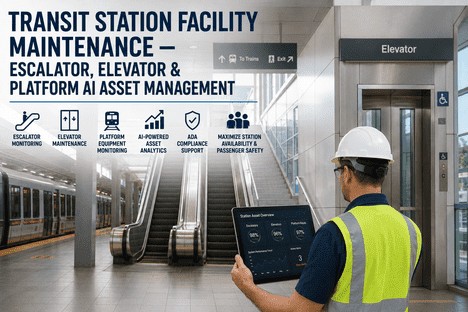
Transit Station Facility Maintenance — Escalator, Elevator & Platform AI Asset Management
By Grace on June 22, 2026
A single elevator outage at a downtown rail hub during morning peak can strand thousands of passengers, trigger ADA compliance violations, and cascade into a bottleneck that takes three hours to clear — all while the maintenance team is still searching for the service history on a different floor. For facility managers responsible for transit stations, the challenge is not that escalators, elevators, and platform equipment break down. It is that when they do — in a network where one station's escalator is on a different maintenance schedule from the same model at the next station, where elevator outage data lives in a separate system from the work order queue, and where platform equipment faults are discovered by passengers before the facility team — the operational and reputational cost multiplies with every passing minute. The MTA alone is replacing 78 elevators and 66 escalators under its current capital plan, with 42 subway stations made ADA accessible since 2020. Across North America, transit agencies managing hundreds of stations face the same fundamental problem: the maintenance infrastructure for passenger-facing equipment has not kept pace with the ridership demands and regulatory standards those stations operate under.
Escalator AI Monitoring · Elevator Predictive Maintenance · ADA Compliance · Platform Equipment · Station Asset Management
Every Escalator, Elevator, and Platform Asset in Your Station Network Should Be Monitored Before a Passenger Reports a Problem. iFactory Manages Every Station Asset from a Single View.
iFactory's AI-driven transit facility management module integrates escalator and elevator condition monitoring, ADA compliance tracking, platform equipment maintenance, and station-wide asset intelligence into a single platform — giving facility managers real-time visibility into every passenger-impacting asset across every station in the network.
of escalator and elevator downtime in transit stations is caused by reactive repairs that predictive condition monitoring would have prevented with early intervention
70%
of transit stations experience conflicting maintenance schedules that create negative passenger flow impacts and compromise ADA-accessible route availability during peak hours
53%
of escalator and elevator service events can be addressed proactively when AI-driven predictive monitoring is deployed — before the equipment fails and passengers are affected
$4,200
Average direct operational cost per passenger-impacting equipment failure at a transit station — before factoring in reputational damage and regulatory exposure
The Real Problem with Transit Station Maintenance Is Not the Equipment Age — It Is the Coordination Gap
Every transit agency has a maintenance programme for station assets. Most have work order systems, inspection checklists, and vendor service contracts. The failure is almost never the absence of maintenance activity — it is the absence of coordination between maintenance activities, between stations, and between the maintenance team and the operations centre that deals with the passenger impact when equipment fails unannounced. The gap is not in the work being done. The gap is in knowing which work matters most at which station at which time.
How Disconnected Station Maintenance Operations Fail — and Why Passengers Bear the Cost
The ADA Compliance Exposure
An elevator outage at a key station is not a maintenance issue. It is a civil rights liability the moment a passenger with a disability is denied access.
Under ADA Title II and DOT regulations, transit agencies must maintain accessible routes at all stations served by their systems. When an elevator is out of service, the agency is legally obligated to provide equivalent alternative transportation — and documenting each outage, the alternative provided, the duration, and the corrective action taken is a regulatory requirement, not an operational preference. Agencies that manage elevator maintenance through siloed work order systems with no centralised outage log, no automated ADA compliance reporting, and no real-time visibility into elevator status across the station network are operating with significant regulatory exposure. A pattern of outages without documented equivalent access can trigger DOT compliance reviews and civil penalties.
Regulatory Liability + Missing Documentation
The Escalator Availability Trap
A single escalator failure at a platform-to-mezzanine junction during peak ridership causes dangerous passenger congestion within minutes.
Escalators in transit stations operate under conditions that accelerate wear beyond the design assumptions of the original equipment: 20-hour service days, exposure to moisture and de-icing chemicals from passenger footwear, high particulate loading from brake dust and track debris, and load cycles that far exceed the typical retail or office installation. A step chain failure on a transit escalator can strand hundreds of passengers on the wrong side of a fare gate. Without condition-based monitoring that tracks vibration signatures, motor current draw, and step integrity in real time, the first sign of trouble is the machine stopping with passengers on it — an event that costs the agency in emergency service dispatch, passenger injury liability, and the operational chaos of rerouting thousands of commuters through a single remaining access point.
Passenger Safety Risk + Service Disruption
The Siloed Vendor Management Problem
Escalators under one contract, elevators under another, platform systems under a third. When they all fail at the same station, nobody owns the coordination.
Most transit agencies manage escalator maintenance through one service contract, elevator maintenance through another, and platform equipment through a third — often with different vendors, different response time SLAs, and different reporting formats. When a critical elevator and an adjacent escalator fail simultaneously, the facility manager becomes the real-time coordinator between two vendors who do not share a work order system, a parts inventory, or a passenger impact assessment framework. The result is duplicated inspection visits, extended outage durations, and a maintenance coordination burden that falls entirely on the facility team — who should be managing the station infrastructure, not chasing vendor response times across disconnected service contracts.
Vendor Coordination Overhead + Extended Outages
The Preventive Maintenance Blind Spot
Scheduled preventive maintenance on an escalator takes the equipment out of service for hours. Without coordination, the PM creates a self-inflicted outage.
One of the most common failure modes in transit station maintenance is the well-intentioned preventive maintenance action that creates an operational crisis. An escalator is taken offline for its quarterly PM at 10 AM on a weekday — the same time another escalator on the same platform is already out for a part replacement, and the elevator serving that platform is in its scheduled inspection window. The facility manager did not coordinate these because the escalator PM is in the vendor's system, the part replacement is in the facility team's work order queue, and the elevator inspection is on the contractor's calendar. Three separate schedules, one inaccessible platform, thousands of angry passengers. The preventive maintenance was correct. The coordination was absent. And the passenger paid the price for a failure that was not a failure of any single maintenance action — it was a failure of the coordination layer that should have connected them.
Escalator Intelligence · Elevator Monitoring · ADA Compliance · Platform Asset Management · Station Coordination
Managing Escalators, Elevators, and Platform Equipment Through Separate Contracts Is Not Station Management. It Is Multiple Single-Asset Problems. iFactory Manages the Station.
A single platform view of every station asset's condition, every vendor's service activity, every ADA compliance requirement, and every maintenance schedule — updated in real time, without coordinating across disconnected systems, without the morning scramble to figure out which equipment is down at which station.
What iFactory's Transit Station Facility Management Module Actually Does
iFactory is not a work order system that shows you what maintenance has been completed. It is a unified station asset intelligence platform that ingests condition data from escalators, elevators, platform equipment, and station systems — then produces a coordinated, prioritised maintenance plan that keeps every passenger-impacting asset available during the hours the station is in use, while optimising vendor deployment, maintenance window allocation, and ADA compliance documentation across the entire station network.
Capability 01
Escalator and Elevator Condition Monitoring — Predict Failures Before They Strand Passengers
Vertical Transport Intelligence
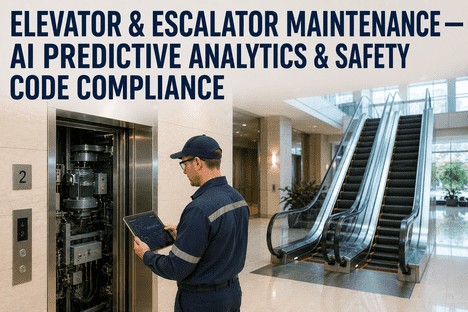
iFactory integrates with existing elevator and escalator controller telemetry, IoT vibration sensors, and motor current monitoring systems to provide continuous condition assessment of every vertical transport asset in the station network. The platform analyses door timing consistency, flight time variation, vibration signatures, motor current draw patterns, and brake wear indicators to detect developing faults weeks before they result in an equipment stoppage. When an escalator step chain shows early signs of elongation or an elevator door operator begins drawing inconsistent current, the system generates a predictive alert with the recommended maintenance window, estimated remaining service life, and specific component requiring attention. Facility managers see every vertical transport asset on a station map, colour-coded by health status, with predicted failure timelines that enable maintenance scheduling during planned low-traffic periods rather than emergency response during peak commute hours.
Real-time vertical transport health monitoring
Predictive failure alerts with lead time
Component-level degradation tracking
Capability 02
ADA Compliance Tracking and Automated Documentation — Stay Compliant Without Manual Outage Logs
Compliance Automation
iFactory automatically tracks every elevator and accessible route outage across the station network and generates ADA-compliant documentation for each event — including outage start and end timestamps, cause classification, alternative transportation provided, corrective action taken, and regulatory notification status. The platform maintains a continuous compliance dashboard showing elevator availability by station, mean time between outages for each unit, and a rolling history of every ADA-relevant service interruption. When an elevator outage exceeds the agency's established response time threshold, the system escalates the notification to facility management and generates the required documentation for DOT compliance reporting. This transforms ADA compliance from a manual log-keeping exercise that is always behind into an automated, audit-ready documentation system that is always current.
Automated ADA outage documentation
Real-time compliance dashboard
Threshold breach escalation alerts
Capability 03
Multi-Vendor Maintenance Coordination — One Platform for Every Contractor at Every Station
Vendor Management
iFactory serves as the unified coordination layer for all station maintenance vendors — escalator service contractors, elevator maintenance providers, platform equipment technicians, and station systems engineers. Each vendor receives work orders, accesses asset histories, logs service activity, and updates equipment status through role-based access within the same platform. Facility managers see every vendor's scheduled activities, current work orders, and completion status across every station in the network — eliminating the coordination burden of managing vendor activity through separate phone calls, emails, and contractor portals. When a vendor schedule change creates a potential equipment availability gap at a station, the platform alerts the facility manager before the gap becomes a passenger impact event. Over time, the platform tracks vendor performance metrics — response time, first-time fix rate, mean time to repair — enabling data-driven contract management and performance-based vendor selection.
Unified multi-vendor coordination
Performance tracking across contracts
Schedule conflict prediction alerts
Capability 04
Station-Wide Asset Dashboard and Passenger Impact Assessment — Prioritise Every Intervention by Ridership Impact
Station Intelligence
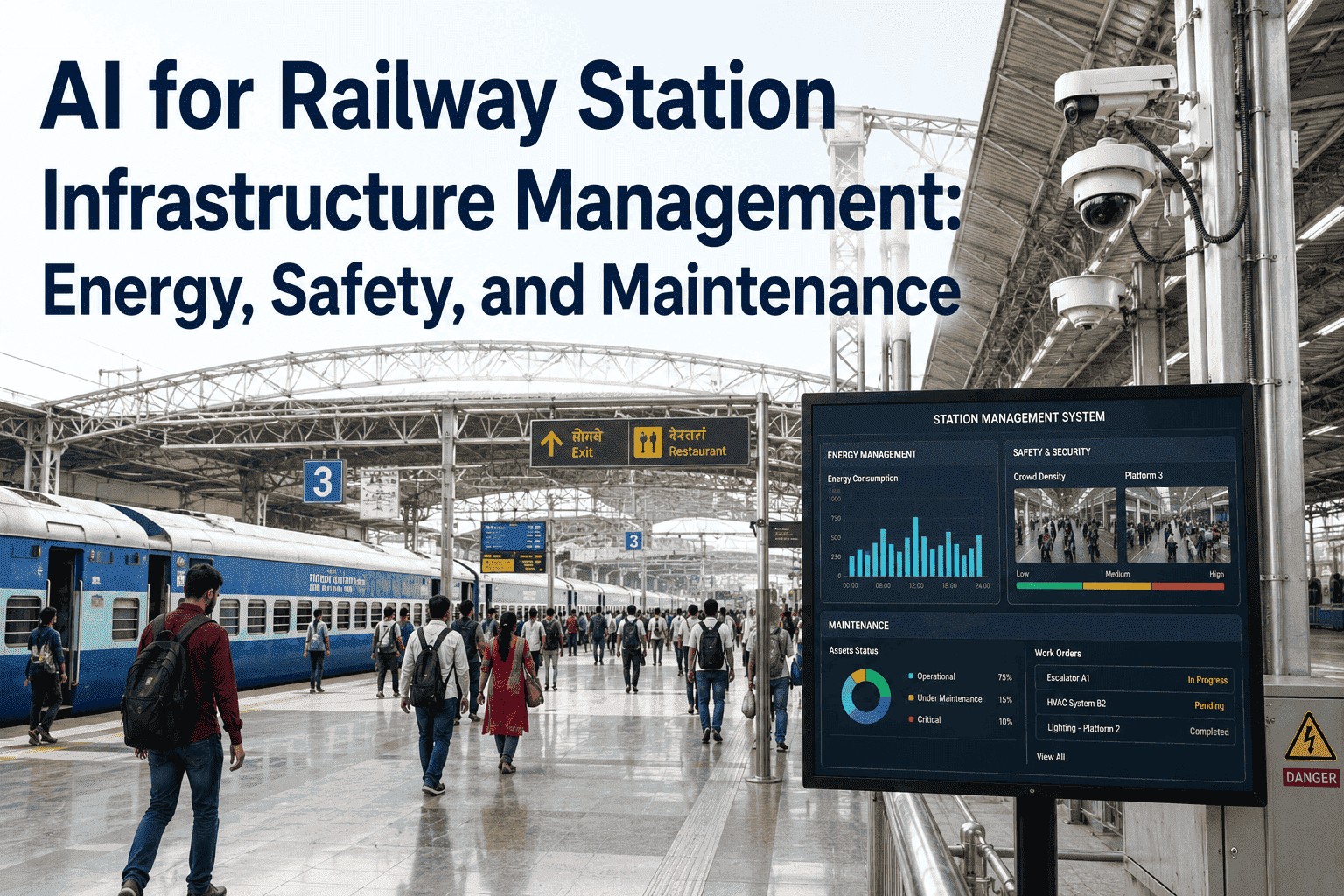
iFactory's station-level dashboard aggregates every asset's condition, every vendor's activity, and every maintenance schedule into a single view — with passenger impact scoring that tells facility managers which equipment outage or maintenance activity will affect the most passengers at which time of day. A scheduled escalator PM during off-peak hours on a low-ridership platform receives a different priority score than the same PM on the primary vertical circulation asset at the system's busiest transfer station during morning peak. The platform ingests ridership data by station, by platform, and by time of day, enabling maintenance scheduling decisions that are calibrated to actual passenger impact rather than arbitrary priority labels. Facility managers see the entire station network on a map, with each station colour-coded by the combined availability status of its critical passenger assets — green for fully accessible, yellow for partial impact, red for critical route interruption — enabling immediate operational awareness without scanning through work order lists.
Ridership-calibrated impact scoring
Multi-station network availability map
Time-of-day maintenance optimisation
Every Transit Station Asset Category iFactory Monitors — With Maintenance Priority and AI Detection Capability
Asset Category
Passenger Impact & Regulatory Priority
iFactory AI Monitoring Capability
Station Elevators
ADA compliance critical. Outage directly blocks accessible route. Regulatory documentation mandatory per DOT Part 37. Every minute requires alternative transport provision.
Door timing consistency monitoring, flight time analysis, motor current tracking, brake wear prediction, vibration signature analysis, automated ADA event logging
Escalators
High passenger congestion risk. Step chain failure endangers rider safety. 20-hour operating days accelerate wear. Multiple escalator outage at same platform creates dangerous bottleneck.
Step chain elongation tracking, drive motor current monitoring, handrail speed verification, vibration pattern analysis, thermal monitoring of drive components, predictive bearing failure alerts
System connectivity health checks, display operational verification, audio output level monitoring, door cycle tracking, network-connected asset status polling
Station Systems
HVAC, lighting, fire life safety, sump pumps, drainage. Failure during operation creates passenger comfort, safety, and health hazards that require immediate station closure assessment.
HVAC performance trend analysis, lighting system fault detection, fire panel communication monitoring, pump cycle analysis, environmental condition tracking
"
Before iFactory, my morning routine was calling every station to find out which elevators and escalators were down, then manually cross-referencing that against the vendor schedules to figure out when they would be fixed and whether any other maintenance activity was conflicting. I spent more time coordinating information than coordinating maintenance. The first day we went live with iFactory, I opened the station network dashboard and saw every elevator and escalator in the system colour-coded by operational status, every open work order with vendor response times, and a red flag on a station where an elevator PM and an escalator part replacement were both scheduled for the same morning window — which would have left that station's only ADA-compliant platform access route completely unavailable for four hours. We rescheduled one of them before any passenger was affected. On the old system, we would have discovered that conflict when passengers started calling to complain.
— Director of Station Facilities, Major Metropolitan Transit Authority — 18 Years Transit Infrastructure Management
50%
Reduction in Unplanned Equipment Downtime
Transit agencies deploying AI-driven predictive monitoring for escalators and elevators report unplanned downtime reductions as condition-based intervention replaces reactive repair
29%
Improvement in Days Between Equipment Failures
Predictive maintenance programmes for vertical transport equipment achieve measurable increases in mean time between failures as early fault detection enables timely intervention
80%
Reduction in Station Safety Incidents
Transit agencies that integrate facility diagnostics with coordinated maintenance management report significant safety incident reductions as equipment failures are predicted before they cause harm
Conclusion
Transit station maintenance is not a collection of independent equipment service contracts. It is a single coordinated infrastructure system where the availability of every escalator, every elevator, and every platform asset determines whether thousands of passengers complete their journeys safely, whether the agency meets its ADA compliance obligations, and whether the facility team is managing the station or constantly reacting to the last failure. The maintenance data already exists in every vendor's service logs, every contractor's work order system, and every equipment controller's telemetry feed. What has been missing is the coordination layer that connects them — the unified view that tells a facility manager which asset at which station needs attention at which time, and what the passenger impact will be if it is not addressed.
iFactory's transit station facility management module connects every elevator, escalator, platform system, and station asset into a single real-time intelligence platform — with predictive condition monitoring, automated ADA compliance documentation, multi-vendor coordination, and ridership-calibrated maintenance prioritisation that transforms station facility management from a reactive, vendor-dependent function into a centrally managed, predictively optimised infrastructure operation. Book a Demo to see how the platform maps to your specific station network and equipment portfolio, or talk to an expert to begin your station asset intelligence assessment and get your first predictive monitoring dashboard live.
Frequently Asked Questions
iFactory is designed to work with existing equipment infrastructure. Most modern escalators and elevators already have controller telemetry, diagnostic ports, and IoT-capable monitoring interfaces that the platform can connect to through software-level integration. For older equipment without digital output capability, iFactory supports integration via compatible IoT sensor gateways that monitor vibration, motor current, door operation, and ride quality parameters without requiring equipment modification or OEM-specific adapters. The platform is vendor-agnostic and works across all major OEM equipment — Otis, KONE, TK Elevator, Schindler, Mitsubishi, and others. Talk to an expert to assess your current equipment portfolio and determine the integration path for your specific station inventory.
The platform automatically documents every elevator outage event across the station network with timestamped start and end records, cause classification, alternative transportation arrangements provided, corrective actions taken, and regulatory notification status. This documentation is structured to meet DOT Part 37 and ADA Title II record-keeping requirements for accessible route availability. The compliance dashboard provides real-time elevator availability metrics per station, mean time between outages, and rolling documentation history that is audit-ready for DOT inspections. When an outage exceeds the agency's internal response threshold, the system generates escalation alerts and automatically completes the required compliance documentation. Book a Demo to see the ADA compliance module configured for your agency's reporting requirements.
Yes. This is one of the most common deployment scenarios iFactory is designed for. The platform maintains a unified asset register that accommodates equipment from any OEM, with make, model, serial number, installation date, service contract reference, and maintenance history attached to each asset record. Each vendor is granted role-based access to their assigned assets, with the ability to receive work orders, log service activity, and update equipment status within the same platform. Facility managers see every vendor's activity across every station in a single view — regardless of which contractor serves which equipment type. Vendor performance metrics, contract compliance data, and SLA adherence tracking are standard platform features. Book a Demo to configure the multi-vendor view for your specific service contract structure.
For a typical transit authority with 20 to 50 stations, the standard implementation sequence covers: weeks one to two for station asset inventory configuration and equipment register setup; weeks three to four for IoT sensor integration and controller telemetry connections for the initial station cohort; weeks five to six for vendor onboarding, role-based access configuration, and ADA compliance documentation framework setup; and weeks seven to eight for facility team training, dashboard configuration, and full network go-live. The first predictive condition monitoring dashboard for vertical transport assets is typically available within the first thirty days, with AI prediction accuracy improving continuously as the system accumulates operational data. Book a Demo to build the implementation plan specific to your agency's station count, equipment mix, and current vendor landscape.
Your Station Assets Are the Backbone of Every Passenger Journey. Keeping Them Available Should Be One Coordinated Operation, Not a Patchwork of Disconnected Contracts.
iFactory's transit station facility management module — predictive escalator and elevator monitoring, automated ADA compliance documentation, multi-vendor coordination, ridership-calibrated maintenance prioritisation, network-wide station availability dashboard. The coordination layer every transit facility manager has been missing.