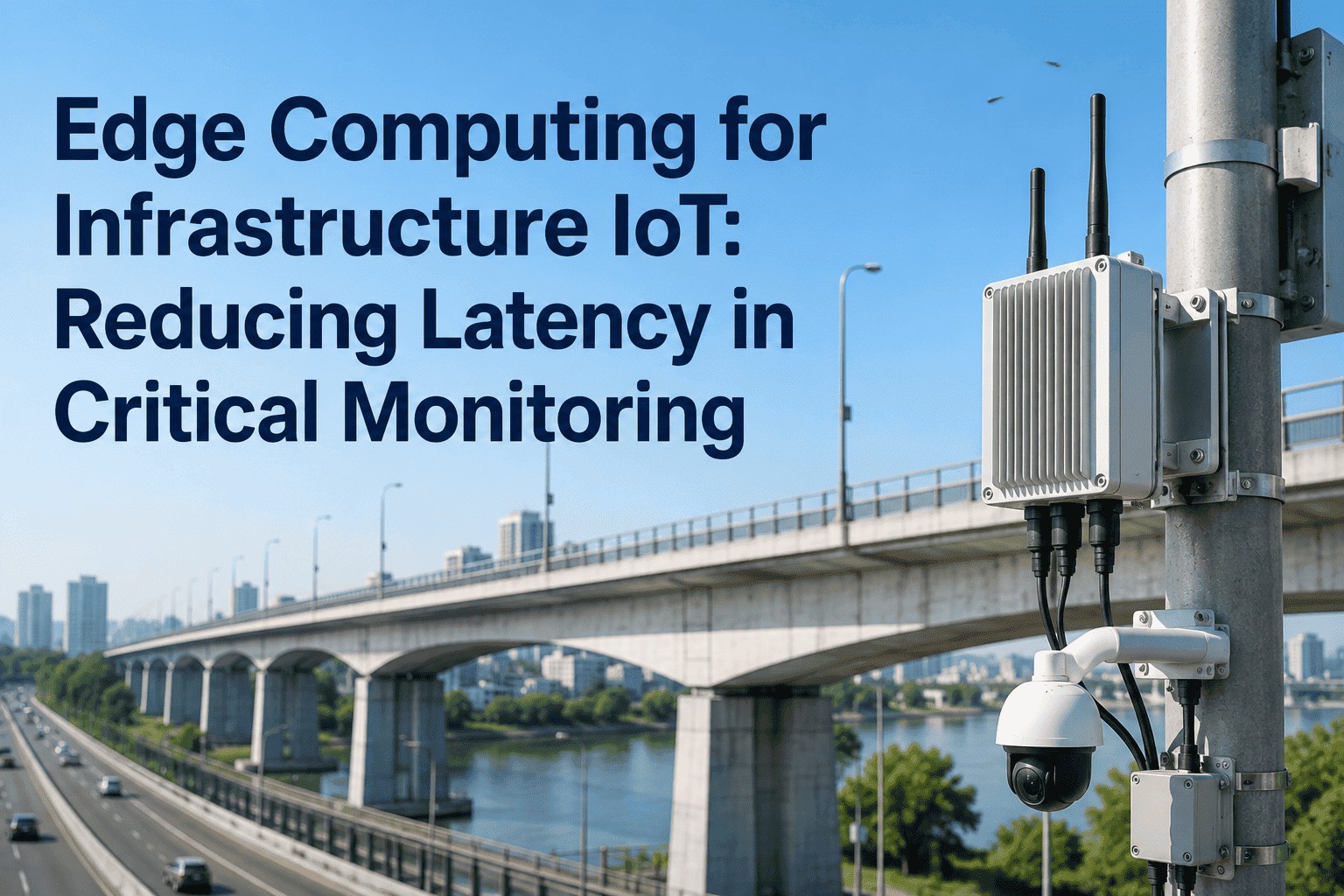
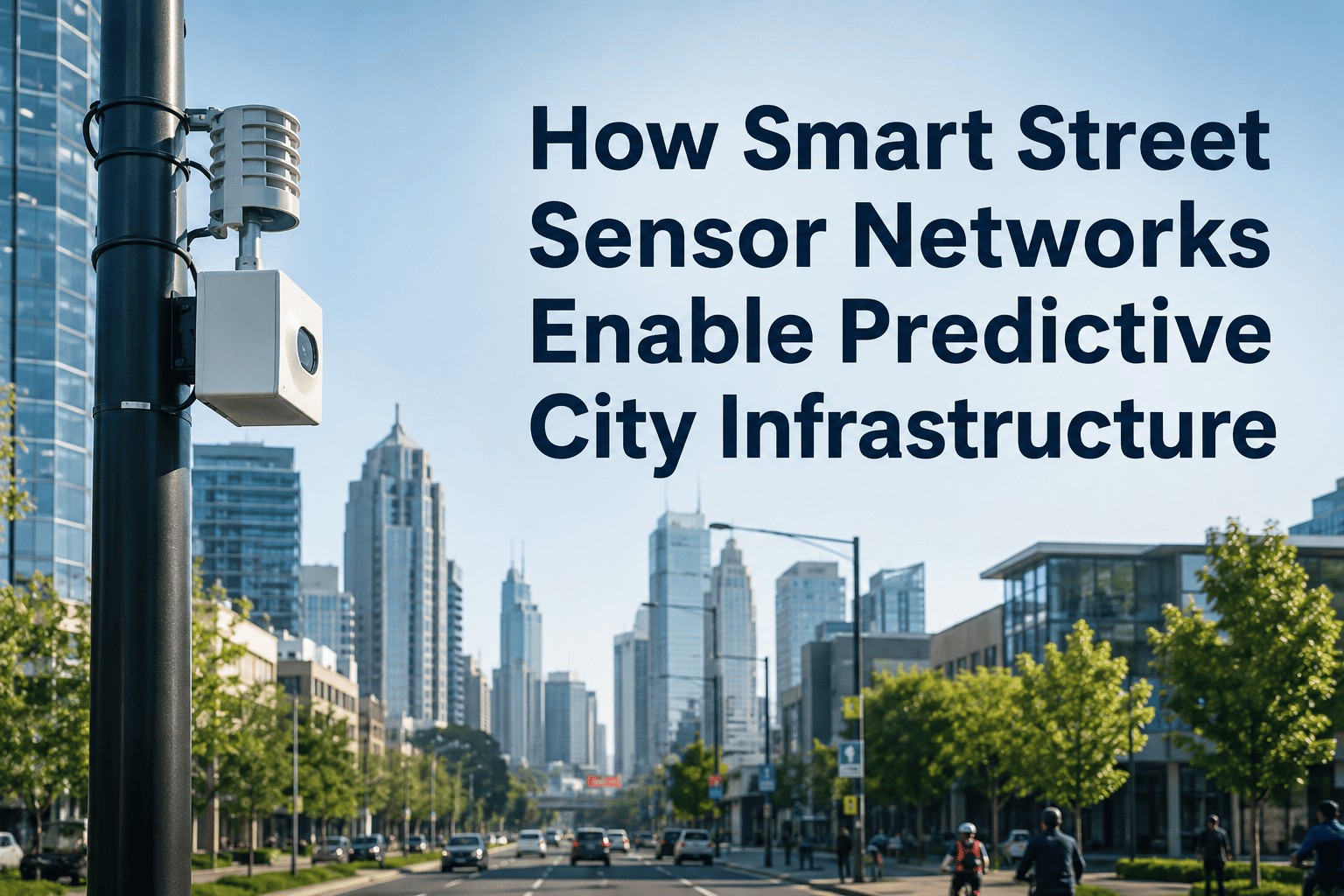
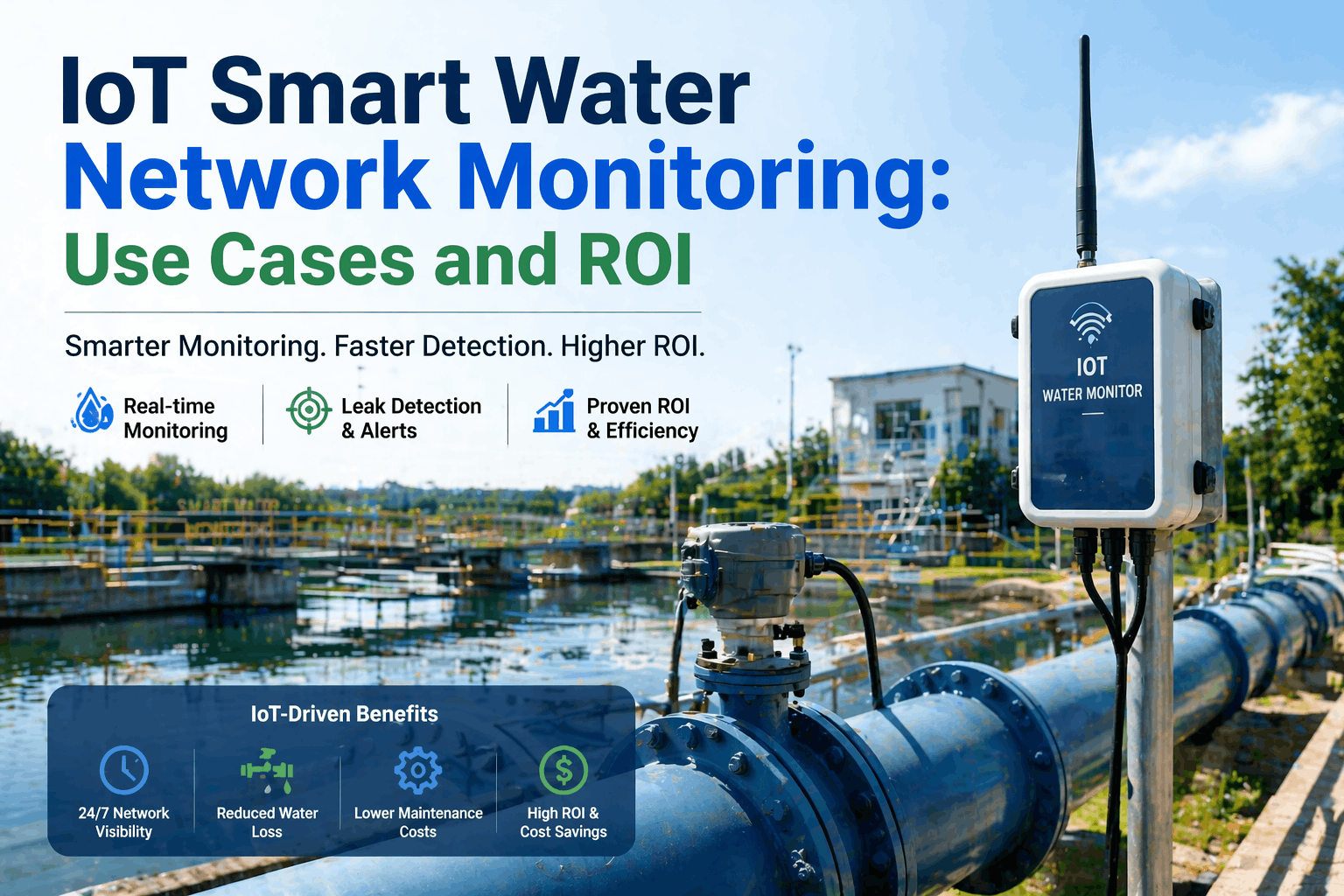
The United States has over 615,000 bridges. More than 46,000 of them are structurally deficient. Drinking water systems need $1.2 trillion in repairs over the next two decades. Industrial facilities lose an average of $260,000 per hour to unplanned equipment downtime. The common thread across all of these infrastructure categories is not a lack of monitoring technology — it is the absence of a deployable, integrated approach that connects IoT sensor data to AI-driven decision-making at the edge. Building owners, public works directors, and facility operators have access to sensors, cameras, and computing hardware that can detect structural vibration, water quality deviation, temperature anomaly, and equipment degradation in real time. The gap is not the hardware. The gap is the integration, the deployment speed, and the analytics layer that turns raw sensor data into a decision. iFactory's turnkey AI infrastructure solution closes that gap with pre-configured IoT sensor networks, NVIDIA edge computing hardware, and an analytics dashboard that puts predictive infrastructure monitoring within reach of any operations team — deployed and producing insights in eight to twelve weeks.
Turnkey AI Infrastructure · IoT Sensor Network · NVIDIA Edge · Predictive Monitoring · Facility Operations
You Have the Infrastructure. You Need the Intelligence. iFactory Deploys Both in One Integrated System.
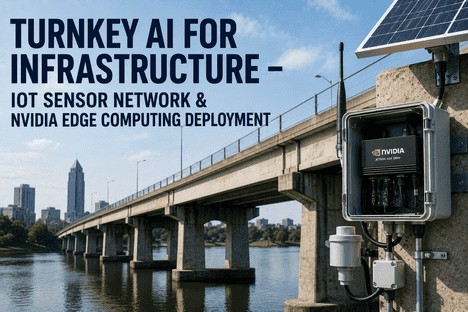
iFactory's turnkey AI infrastructure solution brings together industrial IoT sensors, NVIDIA Jetson edge computing, and a unified analytics dashboard — pre-configured, pre-integrated, and ready to deploy across bridges, water facilities, and industrial sites.
46,000+
U.S. bridges are structurally deficient according to ASCE's 2025 report — aging infrastructure that demands real-time monitoring rather than periodic manual inspection
$1.2T
Estimated cost of U.S. drinking and clean water system repairs over 20 years — IoT-based predictive monitoring is the only scalable approach to managing this liability
$260K
Average cost of unplanned downtime per hour in industrial facilities — edge AI cuts this by detecting equipment degradation weeks before failure
8-12
Weeks from sign-off to live insights with iFactory's turnkey AI deployment — versus 12-18 months for traditional custom infrastructure analytics projects
Why Most Infrastructure Monitoring Projects Stall — and What the Data Reveals
The pattern is consistent across bridge authorities, water utilities, and facility management organisations that attempt to deploy AI-powered infrastructure monitoring: they begin with a proof of concept, invest in sensors and hardware, and then stall during the integration phase. The sensors collect data but the data does not reach a decision interface. The edge computing hardware runs but the analytics models are not deployed. Six to eighteen months later, the project is either abandoned or reduced to a compliance reporting function. Three root causes appear in nearly every case — and each one is a deployment and integration problem, not a technology capability problem.
01
Sensor-To-Analytics Integration Was Treated as an IT Problem, Not an Operational One.
Infrastructure monitoring projects routinely underestimate the engineering effort required to connect field sensors — vibration monitors, water quality probes, thermal cameras — to an edge computing platform that processes the data and surfaces actionable alerts. Each sensor type uses a different protocol. Each data stream requires calibration, normalization, and threshold configuration. When integration responsibility passes between IT teams, engineering consultants, and hardware vendors without a single accountable system integrator, the project timeline extends indefinitely and the analytics layer never reaches the operator's dashboard.
02
Edge Computing Was Deployed Without the AI Inference Layer That Makes It Valuable.
Installing an NVIDIA Jetson or similar edge device at a bridge or water facility is necessary but insufficient. The hardware is a platform. The value is in the AI models that run on it — the computer vision model that detects crack propagation in concrete, the anomaly detection algorithm that identifies pump cavitation from vibration data, the classification model that flags water contamination from sensor readings. Without pre-deployed, infrastructure-specific AI inference models, edge hardware is an expensive data logger rather than a decision engine. Most monitoring projects deploy the hardware and never complete the model deployment phase.
03
The Dashboard Was Designed for Data Scientists, Not for Operations Teams.
Infrastructure monitoring dashboards are frequently configured by data engineers who prioritize data completeness over decision relevance. Operations teams — bridge engineers, water plant supervisors, facility managers — do not need raw sensor time-series data. They need threshold breach alerts, trend comparisons, anomaly flags, and maintenance recommendations in a single view. When the dashboard requires interpretation by a data-literate specialist to be useful, the operations team defaults back to periodic manual inspection and the monitoring investment generates ignored reports rather than changed decisions.
Edge AI · IoT Sensors · NVIDIA Jetson · Infrastructure Analytics · iFactory Turnkey
Pre-Integrated. Pre-Configured. Production-Ready in Weeks. Not Months.
iFactory delivers the full stack — IoT sensors, NVIDIA edge computing, AI inference models, and an operations-focused dashboard — as a single turnkey deployment with no multi-vendor integration delays.
The Turnkey AI Infrastructure Stack — Three Layers That Make Infrastructure Monitoring Deployable at Scale
A turnkey AI infrastructure solution is not a single product. It is an integrated stack of three technology layers that are pre-configured to work together, pre-tested against infrastructure monitoring use cases, and deployed as a unified system rather than assembled from components. Each layer is independently powerful. Together, they eliminate the integration delays and deployment failures that have historically prevented AI-powered infrastructure monitoring from reaching production.
Layer 01
Industrial IoT Sensor Network
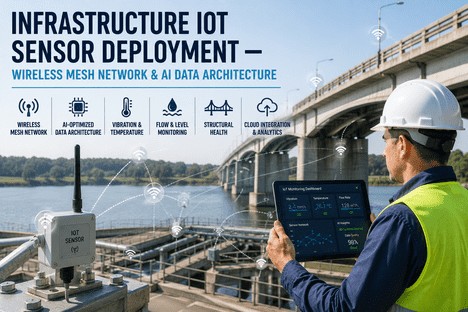
Pre-selected sensor suites for three infrastructure categories — structural, water, and facility — with industrial-grade vibration, temperature, pressure, flow, humidity, and acoustic sensors that are pre-calibrated and pre-configured to stream data to the edge computing layer.
Bridges and structures: accelerometers, strain gauges, tilt sensors, crack propagation monitors
Water facilities: pH, turbidity, chlorine residual, flow rate, pressure, and leak detection sensors
Industrial facilities: thermal cameras, vibration monitors, power consumption meters, air quality sensors
Layer 02
NVIDIA Edge Computing with AI Inference
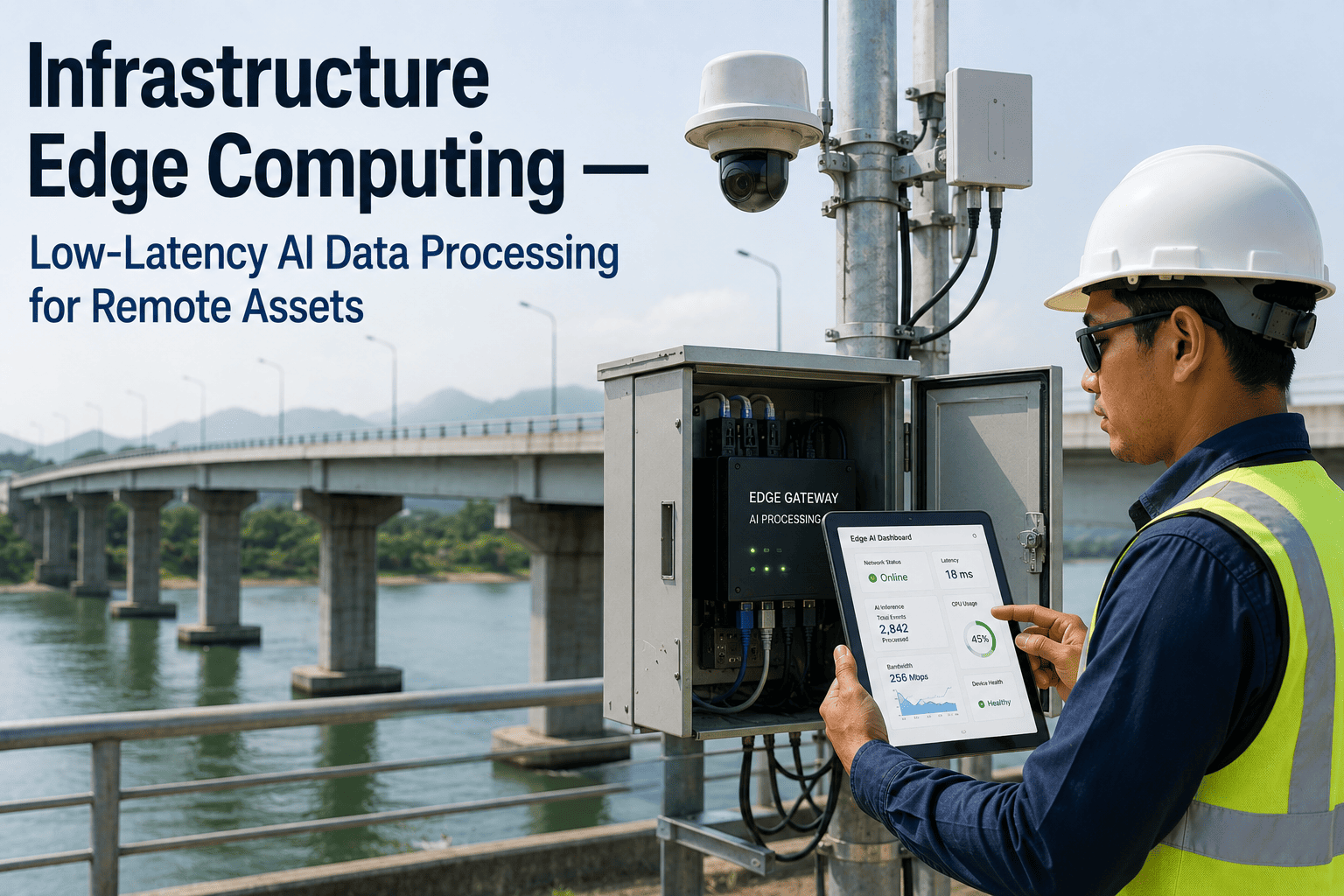
NVIDIA Jetson and IGX Orin edge devices running pre-deployed AI inference models — computer vision for structural defect detection, anomaly detection for equipment vibration patterns, and classification models for water quality deviation — all processing data at the edge with sub-100ms latency.
GPU-accelerated inference with TensorRT optimization for real-time infrastructure monitoring
Pre-trained AI models for crack detection, vibration anomaly, water contamination, and equipment fault classification
Edge-local processing ensures data privacy, reduces bandwidth cost, and maintains operation during connectivity loss
Layer 03
Unified Analytics and Alerting Dashboard
A single dashboard surface that serves infrastructure operators, facility engineers, and executive leadership with role-specific views — threshold breach alerts, trend analytics, asset health scores, and maintenance recommendations — configured per infrastructure category.
Real-time threshold alerts with SMS, email, and in-app notifications routed to the responsible team member
Trend analytics showing asset condition progression, alert frequency, and maintenance intervention effectiveness
Export-ready compliance reports for regulatory bodies, board reporting, and infrastructure audit documentation
Traditional Infrastructure Monitoring vs. iFactory Turnkey AI Deployment — The Time-to-Insight Comparison
Phase
Traditional Custom Approach
iFactory Turnkey AI Approach
Phase 1
Sourcing and Procurement
Independent RFPs for sensors, edge hardware, and analytics platform. Vendor evaluation, compatibility validation, and procurement cycles consume 8-16 weeks.
Pre-selected, pre-tested sensor and hardware bundles with validated integration. Procurement is a single purchase order. Deployed in 1-2 weeks.
Phase 2
Integration and Configuration
Custom API development, protocol bridging between sensors and edge devices, manual AI model training, and dashboard build-out. 12-24 weeks of engineering effort.
Pre-integrated sensor-to-edge data pipeline. Pre-trained AI models for infrastructure use cases. Dashboard configured with role-based views at deployment. 2-4 weeks.
Phase 3
Testing and Calibration
On-site testing reveals integration gaps. Sensor calibration drift, data pipeline failures, and model accuracy issues require iterative fixes. 8-16 weeks of remediation.
Factory-calibrated sensors, pre-validated data pipelines, and benchmarked AI model accuracy. On-site deployment focuses on physical installation only. 1-2 weeks.
Total time to first operational insight: 36-72 weeks. Total cost: 3-8x the hardware investment. Risk of abandonment before completion: high.
Total time to first operational insight: 8-12 weeks. Fixed-price deployment. Risk of abandonment: near zero. Production data and alerts from day one of commissioning.
The Infrastructure AI Maturity Model — Four Stages Every Infrastructure Operator Passes Through
Understanding where your infrastructure monitoring capability sits on the AI maturity curve determines the deployment approach that will succeed. The majority of bridge authorities, water utilities, and facility operators are at Stage 1 or Stage 2. The organisations that consistently prevent failures, extend asset life, and reduce maintenance expenditure are operating at Stage 3 or Stage 4. The difference is not the technology available — it is the completeness of the deployment and the integration of AI-driven monitoring into daily operational workflow.
Stage 1
Manual Inspection
Periodic manual inspections by engineers. No continuous data stream between inspection events.
Paper logs, spreadsheet records, and photograph archives. No trend data across inspection cycles.
Deploy the first sensor layer. Start collecting continuous data on critical assets.
IoT sensors deployed but data is reviewed manually — weekly log downloads or monthly dashboard reviews. No automated alerting on threshold breaches.
Sensor data exists in a standalone portal. No integration with maintenance workflow or work order system.
Add edge computing and AI inference. Move from data collection to automated analysis and alerting.
Edge AI continuously monitors sensor streams. Automated alerts triggered on anomaly detection. Maintenance interventions are data-driven rather than calendar-driven.
Real-time dashboard with role-based views. Threshold alerts routed to responsible team members. Asset health trends tracked over time.
Integrate alert data with existing CMMS and work order systems. Close the loop from detection to resolution.
AI models predict failure weeks before visible symptoms appear. Maintenance is scheduled based on predicted remaining useful life. Capital replacement decisions are data-informed.
Multi-asset predictive analytics. Remaining useful life estimation. Cost-benefit optimization for replacement vs. repair decisions. Benchmarking across asset portfolio.
Expand to full asset portfolio. Use predictive data for capital planning and budget forecasting.
The Tiered KPI Framework for Infrastructure AI Monitoring — What to Measure at Every Level
Every KPI in an effective infrastructure monitoring framework connects to a decision, a decision-maker, and a response threshold. iFactory's analytics dashboard surfaces the right metrics at every level of the operations hierarchy — from the field technician inspecting a bridge pier to the VP of operations reviewing quarterly asset performance. The following KPI taxonomy is structured by decision layer, not by data source.
Active sensor alerts requiring on-site verification — prioritized by severity and asset criticality
Asset health score — composite indicator from vibration, temperature, and acoustic sensor data streams
PM schedule adherence — percentage of preventive maintenance tasks completed on time vs. deferred
Alert frequency trend — number of threshold breaches per asset per week with month-over-month comparison
Mean time between alert events — are anomaly intervals shortening or lengthening for each monitored asset?
False positive rate — percentage of alerts that did not correspond to verifiable asset degradation
Unplanned intervention rate — percentage of maintenance events that were reactive vs. predicted by the AI monitoring system
Asset remaining useful life trend — predicted replacement horizon for each critical asset in the portfolio
Infrastructure cost per monitored unit — total monitoring investment divided by assets under active AI surveillance
"
We spent fourteen months and nearly three million dollars trying to build a custom bridge monitoring system with off-the-shelf sensors, a third-party edge computing vendor, and an analytics consultant. At month fourteen, we had vibration data in one portal, camera feeds in another, and no alerting system that connected either to our maintenance team. With iFactory's turnkey deployment, we had sensors installed, NVIDIA edge devices running AI models, and a single dashboard with threshold alerts — all live and producing operational insights — in nine weeks from the first site survey. The difference was not the hardware. It was that someone had already done the integration work for us. We were not building a system. We were deploying one.
— Director of Infrastructure Operations, State Transportation Authority — 22 Years Civil Infrastructure Leadership
Conclusion
The gap between the monitoring data that infrastructure produces and the decisions that data could drive is not a technology gap. It is a deployment and integration gap. IoT sensors are available, mature, and cost-effective. NVIDIA edge computing platforms are proven in production across industrial, transportation, and utility environments. AI inference models for anomaly detection, defect classification, and predictive maintenance are accurate and deployable today. What has been missing is the integration layer that connects these components into a single, deployable system — pre-configured, pre-tested, and ready to produce operational insights from the day of installation.
iFactory's turnkey AI infrastructure solution closes that gap with integrated IoT sensor suites, NVIDIA Jetson and IGX edge computing with pre-deployed infrastructure AI models, and a unified analytics dashboard that serves field operators, engineers, and executives with the metrics relevant to their decisions. With the predictive maintenance market projected to reach $80.6 billion by 2035 and over 46,000 U.S. bridges alone requiring active structural monitoring, the organisations that deploy integrated AI infrastructure monitoring now will lead on safety, cost efficiency, and asset longevity for the next two decades. Book a Demo to see how the turnkey AI stack maps to your infrastructure category and asset profile, or talk to an expert about configuring a deployment for your specific infrastructure monitoring requirements.
Frequently Asked Questions
46,000 Bridges Are Structurally Deficient. $1.2 Trillion in Water Repairs Await. The Only Scalable Answer Is AI-Powered Monitoring at the Edge.
iFactory gives infrastructure operators, engineers, and executives the turnkey AI monitoring stack that replaces integration complexity with deployment speed — IoT sensors, NVIDIA edge computing, AI inference, and unified analytics in a single system ready to deploy in eight to twelve weeks.