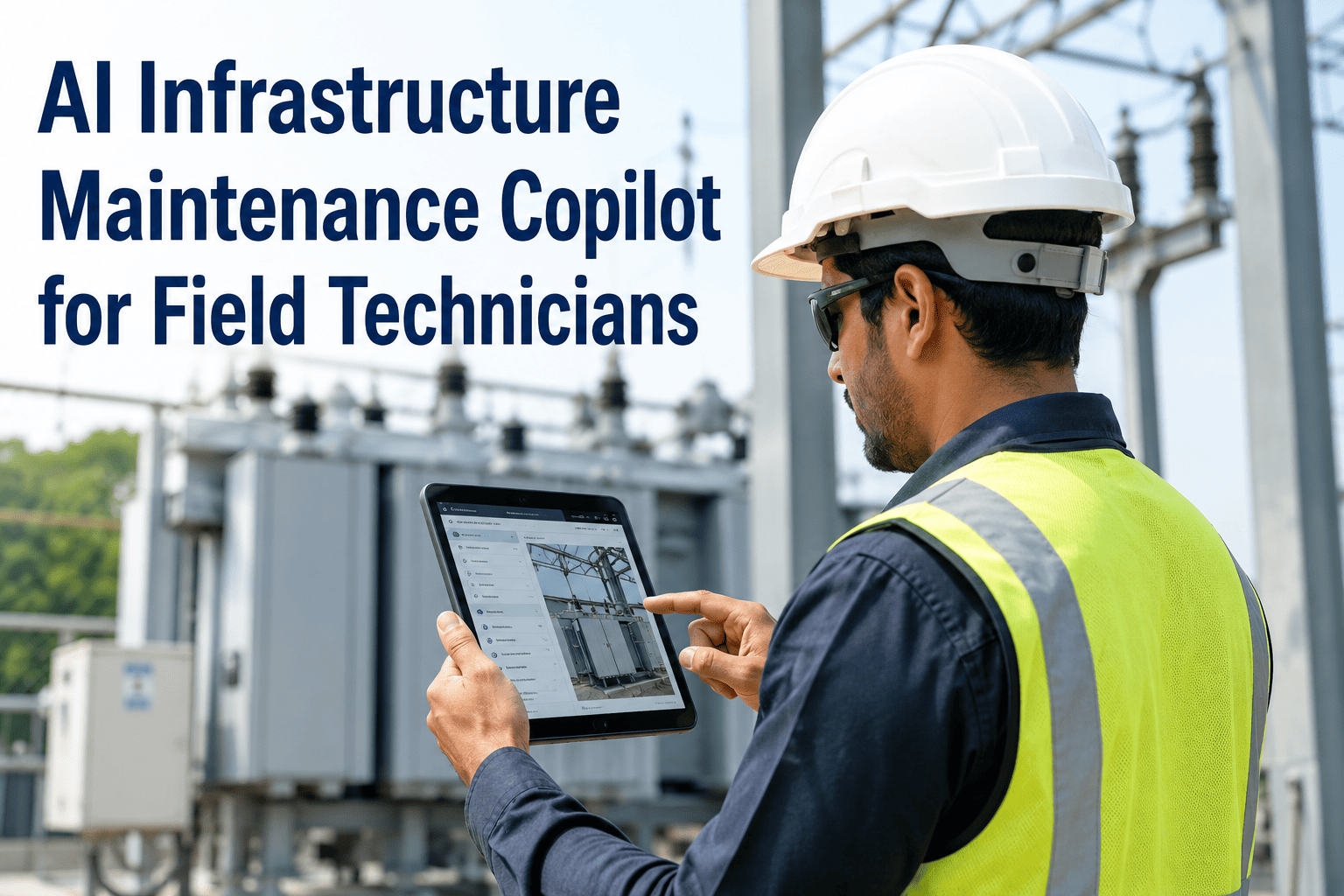
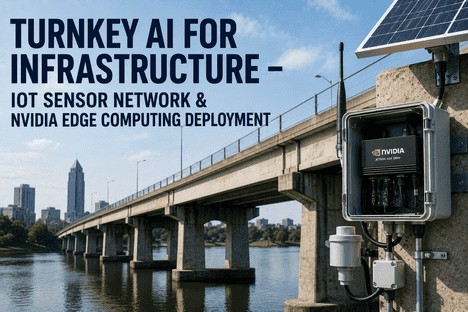
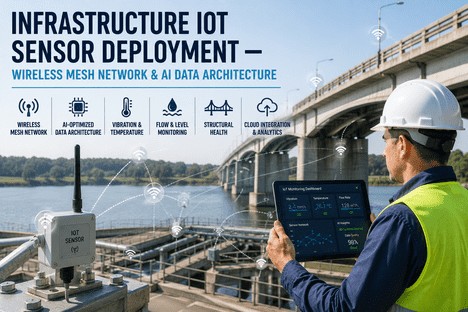
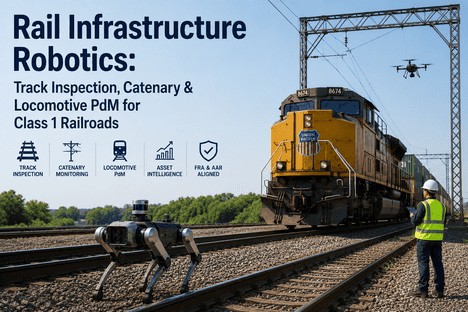
A state DOT wants to deploy AI-based crack detection on 200 bridges. The conventional route runs like this: issue an RFP for a custom system, wait six months for a system integrator to design the hardware spec, order cameras and compute separately, install everything site by site over another six months, spend a year training defect models on local data because generic models fail on regional pavement materials and weather conditions, debug edge cases for another six months, and finally — three years and two to three million dollars later — produce a system that works on sunny days but misses cracks in shadows. This pattern is not hypothetical. It is how the vast majority of infrastructure AI deployments still proceed. And it is why the infrastructure sector has one of the lowest AI adoption rates of any asset-heavy industry. The alternative is a fundamentally different model: a pre-configured, rack-mountable NVIDIA AI server loaded with pre-trained infrastructure defect models, delivered with cameras, cabling, on-site installation, operator training, and 24x7 support — and deployed from order to first inspection report in 12 weeks. This is the technical guide to how infrastructure turnkey AI robotics with pre-configured NVIDIA AI server, 12-week deployment, mobile cabling, training, and 24x7 support actually works, and why state DOTs, transit agencies, and infrastructure operators who adopt it are achieving production AI results in the time it takes most agencies to complete a procurement cycle.
Custom AI Takes Years. Turnkey AI Takes Weeks.
Every infrastructure agency faces the same decision: build a custom AI system from scratch or deploy a pre-integrated turnkey platform. The difference is not just in timeline. It is in risk, cost, and whether the system delivers production-grade results on day one rather than after years of iterative fixes.
The Complete Turnkit: Hardware, Software, and Services Delivered as One Unit
A turnkey AI deployment is not a collection of parts shipped in separate boxes with separate setup instructions. It is a single integrated system — compute, cameras, AI models, connectivity, and services — tested together before it arrives and ready to operate from the moment the installation team powers it on.
From Order to First Inspection Report in One Quarter
The 12-week timeline is not aspirational. It is the standard deployment cadence for pre-integrated turnkey AI systems, and it is achievable because every element — hardware configuration, software stack, model weights, CMMS connectors, and installation procedures — is pre-built and validated before the order is placed.
What Turnkey AI Delivers in Production
What Infrastructure Agencies Ask About Turnkey AI
What exactly is included in a turnkey AI deployment?▼
A turnkit includes three layers delivered as one integrated system. The hardware layer comprises a pre-configured NVIDIA IGX Thor or IGX Orin rack-mountable server, industrial PTZ cameras with IR illumination, pre-terminated armoured cabling, and an edge bridge node for RTSP/ONVIF camera connectivity. The software layer includes the iFactory infrastructure AI platform with pre-trained defect models (crack, corrosion, spalling, delamination, exposed rebar, section loss), NVIDIA AI Enterprise runtime with TensorRT-optimised inference, and pre-configured CMMS connectors for Maximo, SAP PM, Oracle, and Infor EAM. The services layer covers on-site installation, 2-day operator training, a transfer learning session to fine-tune models to local conditions, 24x7 technical support, and annual model refreshes. Every component is tested together before shipment so the system is ready to operate from power-on.
How are pre-trained defect models different from custom-trained models?▼
Pre-trained models are trained on 1M+ infrastructure defect images spanning multiple geographies, material types, weather conditions, and lighting environments. They arrive with known accuracy baselines for each defect class and do not require months of local data collection before they can detect defects. Custom-trained models start from scratch — they require 6-18 months of data collection, annotation, and iterative training before reaching production-grade accuracy. Transfer learning on a pre-trained model uses 500-1,000 site-specific images to adapt to local conditions in 2-3 weeks, combining the breadth of the pre-trained dataset with the specificity of local validation. The Oklahoma Department of Transportation's experience preparing 30 years of bridge inspection data for AI demonstrates that even a well-resourced agency requires 6 months of dedicated data preparation before custom model training can begin — time that turnki eliminates entirely.
Can the turnkey system work with our existing cameras and infrastructure?▼
Yes, if your existing cameras support RTSP or ONVIF video streams — which includes virtually all cameras installed on highways, bridges, and tunnel networks in the last 10 years. The edge bridge node connects to existing camera feeds and transforms them into AI-powered defect detection streams without camera replacement. For agencies with mixed camera infrastructure, the system supports hybrid configurations: new industrial PTZ cameras for critical coverage zones and existing camera feeds for secondary areas. The NVIDIA IGX server processes all video streams simultaneously — up to 10+ defect detection models running in parallel on the same hardware. The installation team assesses existing camera infrastructure during the week 1-2 site survey and specifies any supplemental camera requirements before hardware shipment.
What happens if connectivity is lost at a remote bridge or tunnel site?▼
The system is designed for offline-first operation. The NVIDIA IGX server performs all AI inference locally on-site — defect detection, classification, severity scoring, and alert generation continue uninterrupted during complete internet outages. Raw video never leaves the edge server. Detection metadata (defect type, severity score, GPS coordinates, timestamp, annotated image) is queued locally and synchronised to the central dashboard when connectivity is restored. Local storage buffers 72+ hours of continuous detection data. This architecture eliminates the single biggest operational risk of cloud-dependent AI systems: catastrophic blind spots during connectivity loss on rural bridges, mountain tunnels, and remote highway gantries where outages are routine rather than exceptional.
How does the 12-week timeline compare to traditional AI procurement?▼
A 12-week turnkey deployment from order to first inspection report compares to 12-36 months for a traditional custom AI system. The difference comes from three factors. First, pre-integration: the hardware and software stack is pre-configured and tested before the order is placed — no system integrator design phase, no hardware compatibility testing, no software stack assembly. Second, pre-trained models: defect models arrive with production-grade accuracy, eliminating the 6-18 month data collection and model training phase that consumes the majority of custom AI project timelines. Third, pre-built workflows: CMMS connectors, dashboard templates, and inspection report formats are pre-configured — the 8-14 month gap between inspection finding and maintenance action documented in state DOT systems is closed to same-day automated work order generation. For agencies that have experienced the multi-year cycle of custom AI deployment, the turnkey model represents a fundamentally different approach to infrastructure technology adoption — one that delivers measurable operational results within a single fiscal quarter.