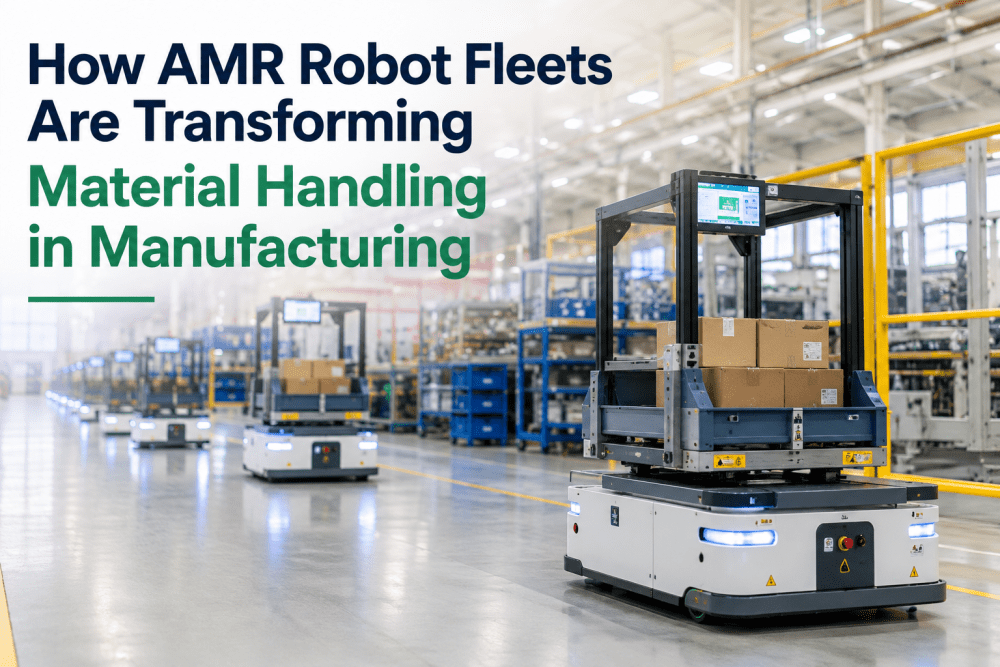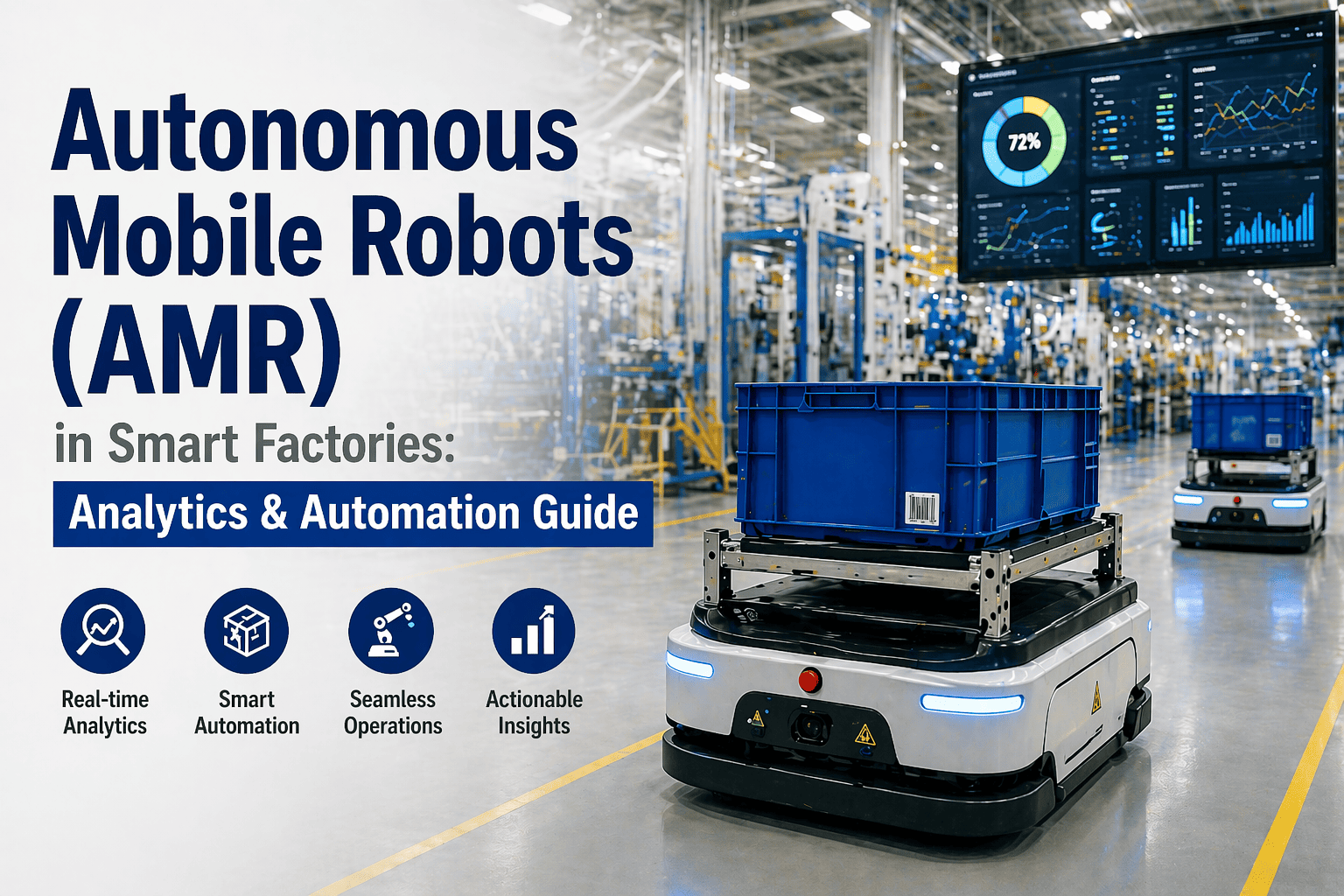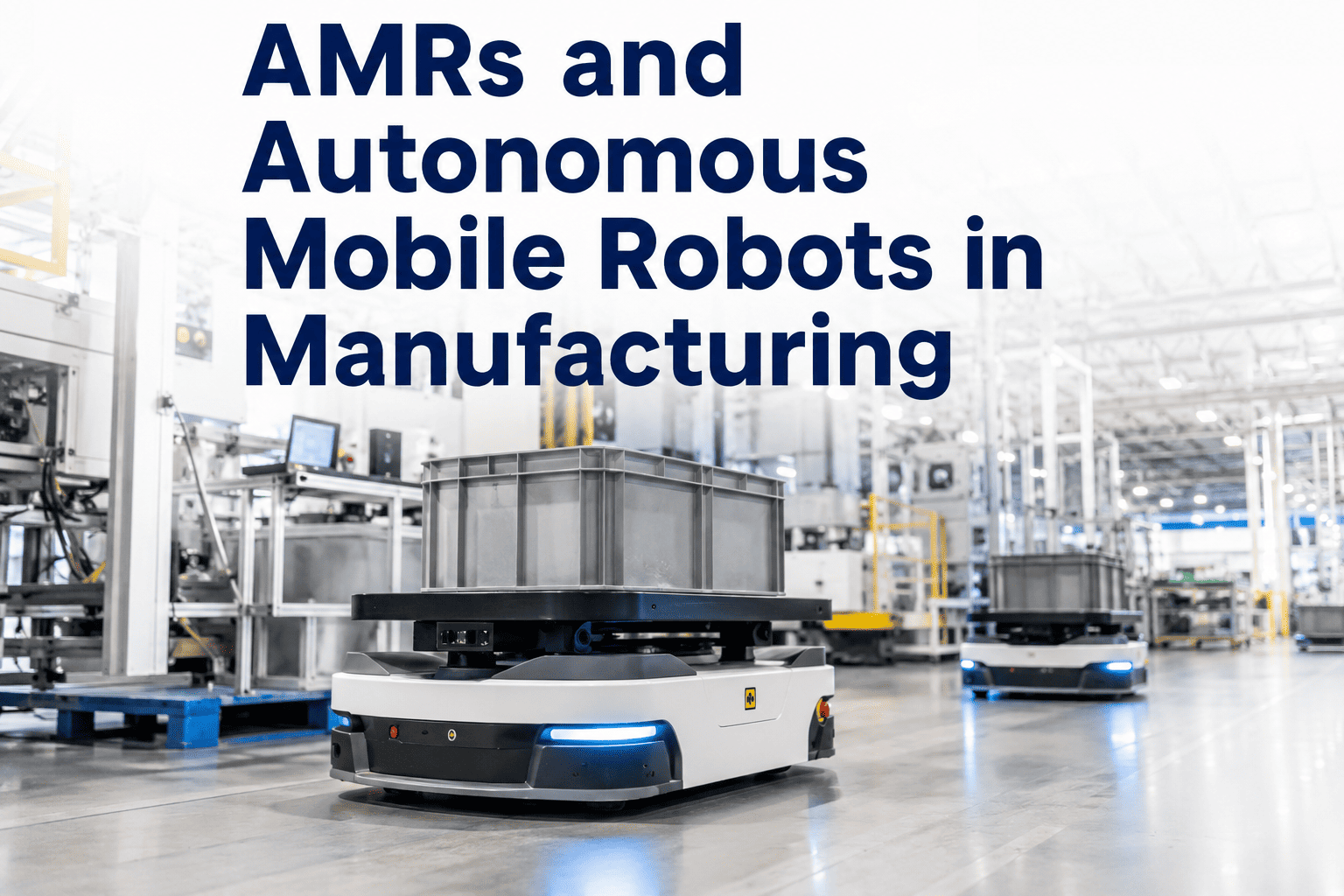
Most plants that bought AGVs in the last decade are now watching them get replaced, not repaired. The reason is not that automated guided vehicles broke down more often — it's that a fixed magnetic strip or floor wire cannot follow a production layout that changes every quarter. Autonomous Mobile Robots read the floor with LiDAR and cameras instead of tape, which means a Logistics Lead can move a pick-up point, add a new work cell, or reroute around a forklift without calling an integrator. That flexibility is why AMRs now account for the majority of new mobile robot deployments in manufacturing, and why more teams are starting their evaluation at ifactory support.
An AGV is only as smart as the tape or wire buried in your floor. Every time a Logistics Lead needs to open a new pick face, relocate a kitting station, or add a temporary line for a promotional SKU, that physical infrastructure has to be redone, and production has to pause while it happens. AMRs remove that constraint entirely. They build a live map of the facility using onboard sensors, localize themselves against that map continuously, and replan their route the moment a pallet, a person, or a parked cart blocks the original path. The practical result is that a plant running AMRs can reconfigure its material flow as often as the production schedule demands, without an integrator on site and without a maintenance window.
This matters most in plants that used to treat layout changes as a capital project. Contract manufacturers switching between customer programs, automotive suppliers adjusting to sequencing changes, and food and beverage plants running seasonal SKUs all share the same pain: the material handling system needs to keep up with a schedule that was finalized last week, not last year. Fixed-path automation was built for stable, high-volume lines. Dynamic navigation was built for exactly the kind of change Logistics Leads are dealing with now.
Load-carrying AMRs move finished pallets from a work cell to a staging lane or dock door on a continuous loop, freeing forklift operators for higher-value transport tasks that actually need a licensed driver.
Tugger-style AMRs pull carts of components to assembly stations on a just-in-time cadence set by the MES, cutting the work-in-process inventory that used to sit at each station as a buffer against late deliveries.
Forklift-form AMRs handle full pallet loads between racking and production, operating on the same aisles as human-driven forklifts under the same safety governance rather than a segregated zone.
Incoming raw material gets moved from receiving to the correct staging lane automatically, matched against the production schedule so the right components arrive at the right cell without a expediter chasing pallets.
| Dimension | AGV (Fixed Path) | AMR (Dynamic Navigation) |
|---|---|---|
| Navigation method | Magnetic strip, wire, or floor tape | LiDAR, cameras, and SLAM mapping |
| Reroute around obstacle | Stops and waits for the path to clear | Replans a new route in real time |
| Redeployment to new zone | Days to weeks, requires infrastructure work | Hours, largely a software update |
| Upfront infrastructure cost | Higher, tied to track installation | Lower, no fixed guideway required |
| Best fit | Stable, high-volume repetitive routes | Facilities with frequent layout change |
Most successful AMR deployments start smaller than plant leadership expects, and that is by design. A single loop connecting two or three high-traffic points gives the Logistics Lead a controlled environment to validate traffic rules, charging cadence, and how the fleet behaves during a shift change before scaling to the rest of the floor. Facilities that skip this step and deploy a large fleet on day one tend to spend the first month firefighting bottlenecks at charging stations and elevator-style chokepoints that a smaller pilot would have surfaced immediately.
Very few plants replace every forklift and tugger overnight. Most run AMRs alongside human-driven equipment for months or years, which means the fleet management software has to coordinate with people, not just robots. The plants that get the most value are the ones that treat traffic rules, charging schedules, and priority logic as an ongoing tuning exercise rather than a one-time configuration they set at go-live and never touch again.
AMR adoption is not evenly distributed across manufacturing, and knowing where the fastest paybacks are showing up helps a Logistics Lead benchmark expectations before building an internal business case. High-mix electronics and automotive suppliers tend to see the quickest returns because their layouts already change often enough that the flexibility argument sells itself, while food and beverage plants are catching up fast as seasonal SKU swings make fixed infrastructure a recurring cost rather than a one-time investment.
Sequencing changes and just-in-time delivery windows make tugger-style AMRs a natural fit for feeding assembly stations without the buffer inventory a fixed system would need.
Frequent product changeovers reward a system that can be reconfigured in hours, since a fixed-path AGV would require a rebuild every time the line switches programs.
Seasonal SKU swings and sanitation-driven layout resets make dynamic navigation a better match than infrastructure that has to be relaid every time the floor plan shifts.
Order profiles change by the week, and AMR fleets scale up during peak season and back down afterward without leaving idle fixed infrastructure on the balance sheet.
AMRs operating around people are governed by industrial mobile robot safety standards such as ANSI/RIA R15.08, which sets requirements for how a robot must sense, slow, and stop around workers in shared aisles. A vendor should be able to show how their sensor suite and stopping behavior are certified against this standard rather than relying on a generic safety claim, since this certification is what your EHS team and insurer will want documented before robots share floor space with people. It is also worth confirming how the system logs near-miss events, since that data becomes valuable for tuning traffic rules once the fleet is live and running at scale.


.png)