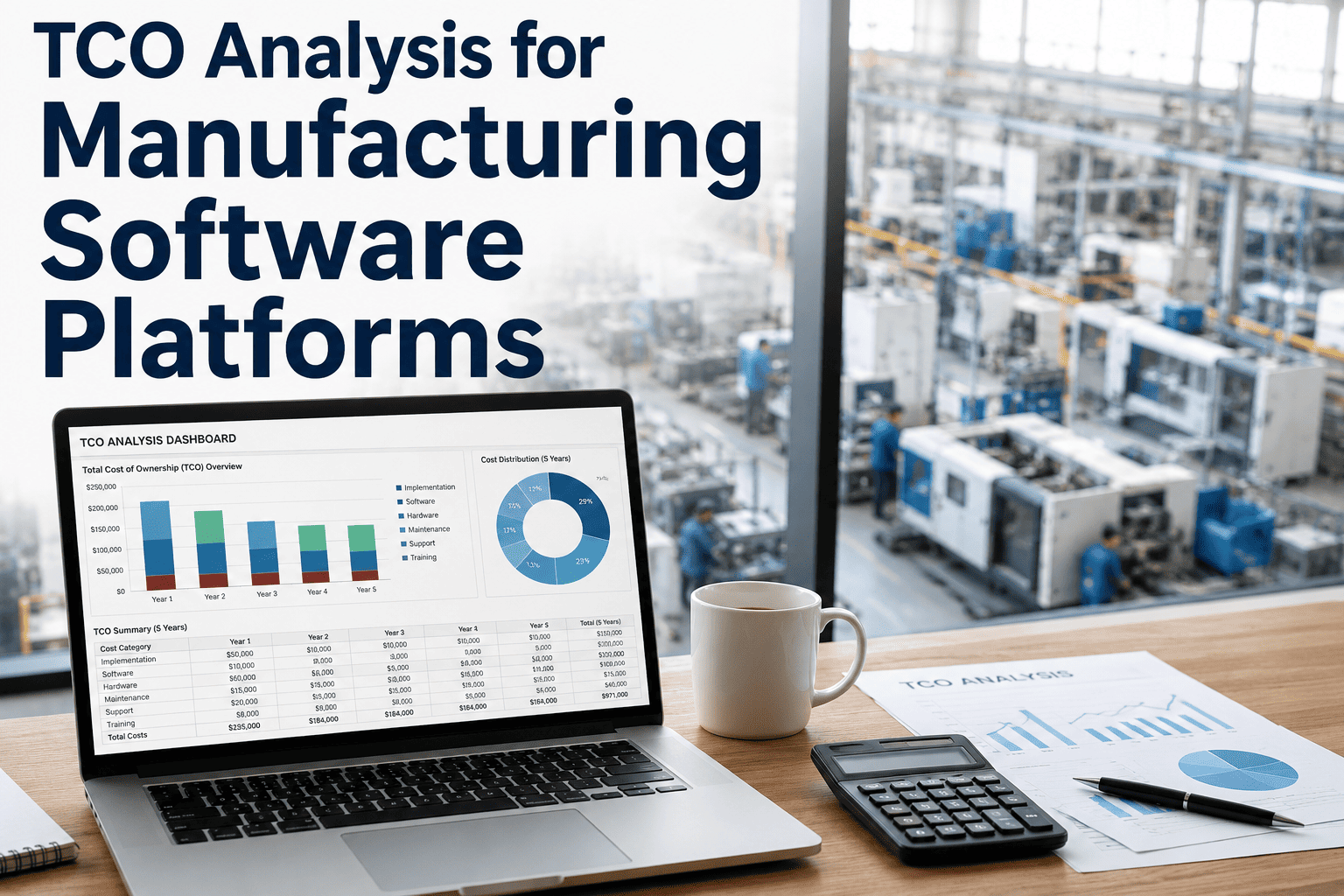
The purchase order for AR smart glasses usually gets approved on one number, the price tag stamped on the device itself, and that is exactly where most budgets start running into trouble six months later. Software licenses renew annually, support contracts get billed separately, batteries and lenses need replacing faster than anyone planned for, and the real per-user cost ends up looking nothing like the number that got the project approved. iFactory builds AR workflows around a total cost model from day one, so the number you plan around is the number you actually pay. You can book a demo to walk through a realistic cost breakdown for your own deployment size.
AR TOTAL COST OF OWNERSHIP · HARDWARE · SOFTWARE · SUPPORT
The Sticker Price Is the Smallest Number in the Whole Deployment
Hardware is only the visible part of what an AR smart glasses rollout actually costs. Software licensing, support contracts, replacement cycles, and onboarding time make up the larger share sitting underneath, and iFactory helps you plan for all of it before a single unit ships.
ABOVE THE SURFACE
Hardware Purchase Price
What most budgets are built around
BELOW THE SURFACE
Software Licensing
Support Contracts
Replacement Cycles
Training & Onboarding
WHY THE FIRST INVOICE IS NEVER THE LAST ONE
A Device Price Tells You About 70% of What You Will Actually Spend
Industrial-grade AR glasses span a wide price range depending on ruggedization, optics, and certification needs, and that range alone makes budgeting hard enough. What catches most teams off guard is everything that gets added after the hardware line item is approved, the accessories, the subscriptions, and the support contract that was assumed to be included but was not. Planning against total cost rather than sticker price is what separates a pilot that scales cleanly from one that quietly blows its budget in year two.
~30%
Typical share of total device spend that comes from accessories, protection plans, and subscriptions layered on after the hardware purchase
12-24 Mo
Common service level agreement term enterprise buyers negotiate to lock in firmware updates, replacement parts, and support pricing
60-90 Day
Typical pilot rental window used to validate a use case and measure real cost per resolved incident before committing to a full purchase
THE FOUR COST COMPONENTS THAT MAKE UP TOTAL COST
Every AR Deployment Budget Breaks Down Into the Same Four Buckets
Regardless of which device or vendor a plant chooses, the same four cost categories show up in every deployment. Understanding what typically falls into each one is what makes a budget defensible instead of a guess.
Hardware
The device itself, plus mandatory accessories like cases, spare batteries, and prescription lens inserts that most fleets end up needing per unit.
Software Licensing
Per-seat or per-device annual fees for the connected worker platform, remote collaboration tools, and any workflow software running on the headset.
Support and Maintenance
Service contracts covering firmware updates, technical support, and repair turnaround, typically priced as a percentage of hardware value annually.
Replacement and Refresh
Scheduled device replacement as batteries degrade and hardware ages out, plus unplanned replacement from drops, damage, or loss on the floor.
PER-USER ANNUAL COST BY DEPLOYMENT TIER
What Total Cost Actually Looks Like at Different Fleet Sizes
The economics of an AR deployment shift meaningfully depending on how many units you are running and what tier of hardware and support the use case demands. These ranges reflect typical industrial deployments rather than any single vendor's pricing, and are meant as a planning starting point.
| Cost Factor |
Basic Deployment |
Mid-Tier Deployment |
Enterprise Deployment |
| Device Price Range |
$800 - $1,800 per unit |
$1,800 - $3,000 per unit |
$3,000 - $5,000+ per unit |
| Software License per User |
$150 - $300 per year |
$300 - $600 per year |
$600 - $1,200 per year |
| Support Contract |
Not always included |
10-15% of hardware annually |
15-20% of hardware annually |
| Typical Replacement Cycle |
18-24 months |
24-30 months |
30-36 months |
| Estimated Annual Cost per User |
$500 - $900 |
$900 - $1,600 |
$1,600 - $2,800 |
Get a Cost Model Built Around Your Actual Deployment, Not a Generic Estimate
iFactory helps you plan hardware, software, and support costs together from the first pilot instead of discovering the real number after rollout. Book a demo and walk through a cost model sized to your fleet.
THE COSTS THAT NEVER MAKE IT ONTO THE PURCHASE ORDER
Five Line Items That Show Up Later Instead of Upfront
Beyond the four core cost buckets, a handful of secondary costs consistently get left off the first budget draft and show up as surprises in the months following deployment.
Accessories and Protective Cases
Hard cases, light shields, spare nose pads, and extra cables are close to mandatory for daily industrial use and are rarely bundled into the base device price.
Network and Infrastructure Upgrades
Live video streaming and remote sessions can strain wifi coverage in older facilities, sometimes requiring access point upgrades before a rollout scales past a pilot.
Training and Onboarding Time
Hours spent getting technicians comfortable with the device and workflow software are a real cost even when no invoice is generated for them.
Damage and Loss Replacement
Drops, cracked lenses, and misplaced units on a busy floor happen more often than pilot programs typically plan for in their first year.
IT Management Overhead
Someone has to manage device enrollment, firmware updates, and access permissions across a growing fleet, which is time that competes with other IT priorities.
CHOOSING A BUYING MODEL
How You Acquire the Hardware Changes the Whole Cost Curve
Total cost of ownership is not fixed, it shifts significantly depending on whether devices are purchased outright, leased alongside software, or rented for a pilot before any long-term commitment is made.
Pilot Rental
Rent a small batch of devices for 60 to 90 days to validate a specific use case and measure real cost per resolved incident before buying anything outright.
Outright Purchase
Lowest long-term cost per unit for organizations confident in the use case and ready to manage support contracts and replacement cycles themselves.
Software-Bundled Lease
A predictable monthly cost that bundles hardware, software licensing, and support into one line item, trading a higher total cost for budget simplicity.
Enterprise Fleet Agreement
Volume pricing on hardware combined with a negotiated support and refresh schedule, best suited to organizations deploying across many sites at once.
FREQUENTLY ASKED QUESTIONS
Questions Finance and Operations Teams Ask Before Approving a Budget
Is it better to buy AR glasses outright or lease them with the software included?
Outright purchase generally produces the lowest total cost over a two to three year horizon for organizations that are confident in the use case and have the internal capacity to manage support and replacement themselves. A software-bundled lease trades some of that long-term savings for predictable monthly costs and reduced internal management burden, which often makes sense during the first year of a rollout. The right choice usually depends more on organizational readiness than on the hardware itself. You can
book a demo to model both approaches against your expected fleet size.
How much should we budget for replacement in the first year of deployment?
Unplanned replacement from drops, damage, or loss tends to run higher in the first year than in later years, simply because technicians are still adjusting to wearing and handling new hardware on the floor. Budgeting a modest contingency on top of the scheduled replacement cycle for that first year is a reasonable planning approach, and that contingency typically shrinks once handling habits settle in. Our
support team can share typical first-year replacement patterns from comparable deployments.
Do support contracts actually cover the repairs we would expect, or is there fine print to watch for?
Coverage varies significantly by vendor, and the details worth checking closely are what counts as accidental damage, how fast a replacement unit actually ships, and whether firmware updates are included or billed separately. Negotiating a clear service level agreement upfront, rather than assuming standard coverage, is what prevents a support contract from becoming a second unplanned cost center. Book a demo and we can walk through what to look for when comparing support contract terms.
Does starting with a rental pilot actually save money, or does it just delay the real cost?
A rental pilot adds a modest short-term cost compared to jumping straight to purchase, but it typically saves far more by preventing a full fleet purchase against a use case that turns out not to fit as well as expected. The data gathered during a pilot, actual incidents resolved, actual time saved, also strengthens the budget case when it comes time to request funding for a larger rollout. Contact
our support team to discuss structuring a pilot that produces usable cost data.
How do we account for IT management time when we build the total cost model?
IT management overhead is easy to underestimate because it rarely shows up as a separate invoice, but device enrollment, firmware updates, and access permission management across a growing fleet does consume real hours that could otherwise go toward other priorities. Estimating this as a rough percentage of an IT staff member's time, rather than ignoring it entirely, produces a far more honest total cost figure. Book a demo and we can help estimate a realistic IT overhead figure for your fleet size.
Plan the Full Cost Now So There Are No Surprises Later
iFactory helps you model hardware, software, support, and replacement costs together before you commit to a single device. Book a demo and see a total cost breakdown built around your own rollout plan.