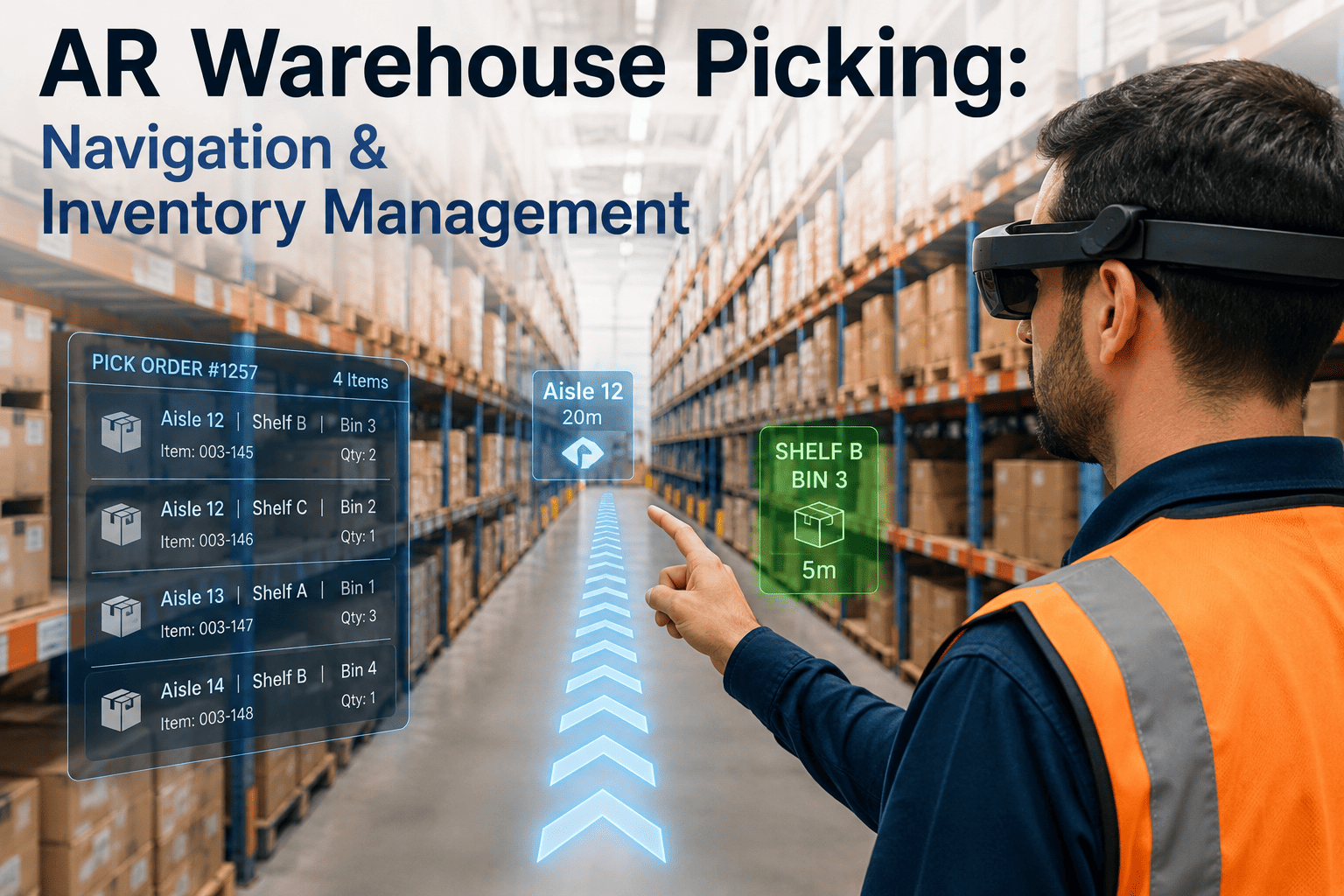
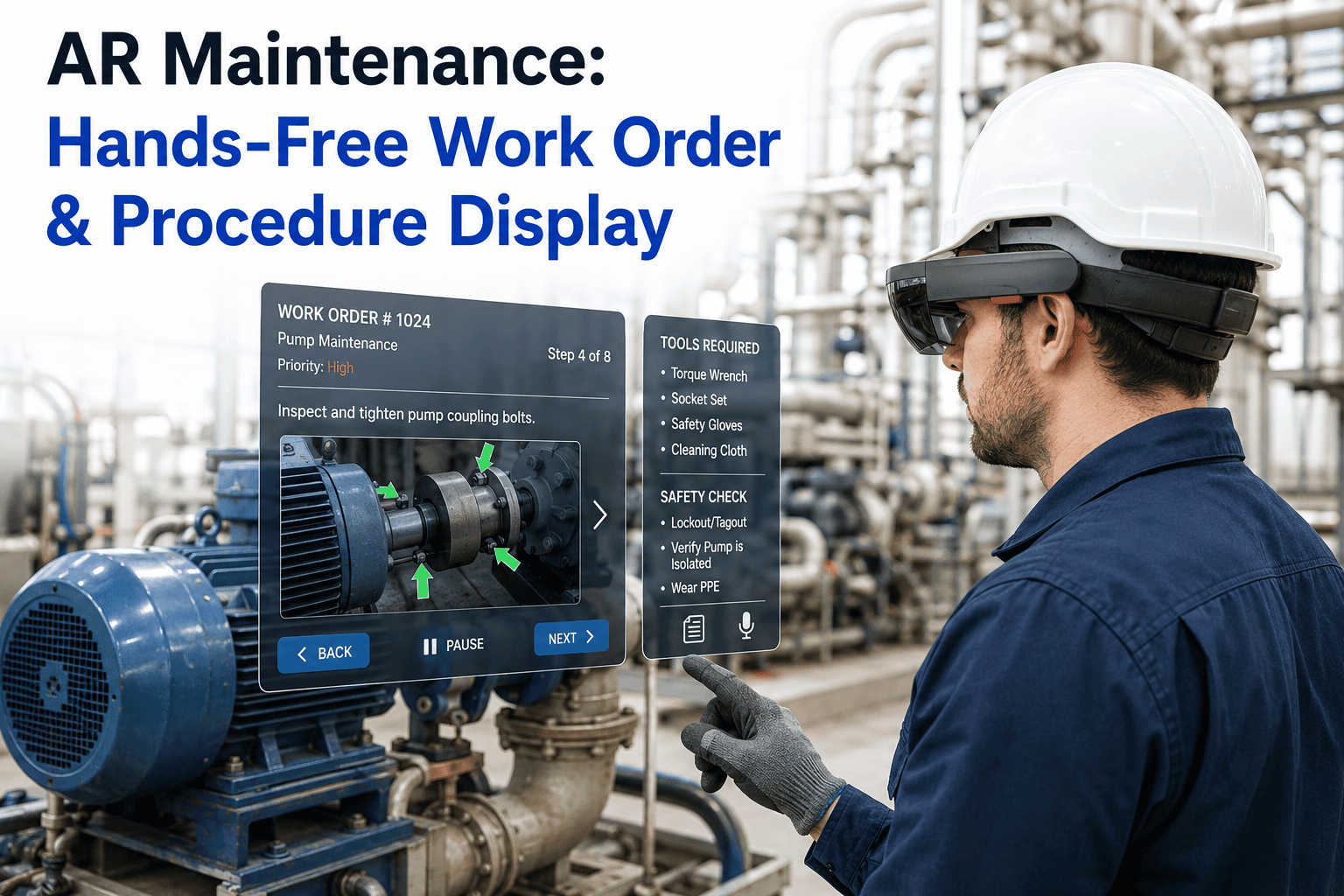
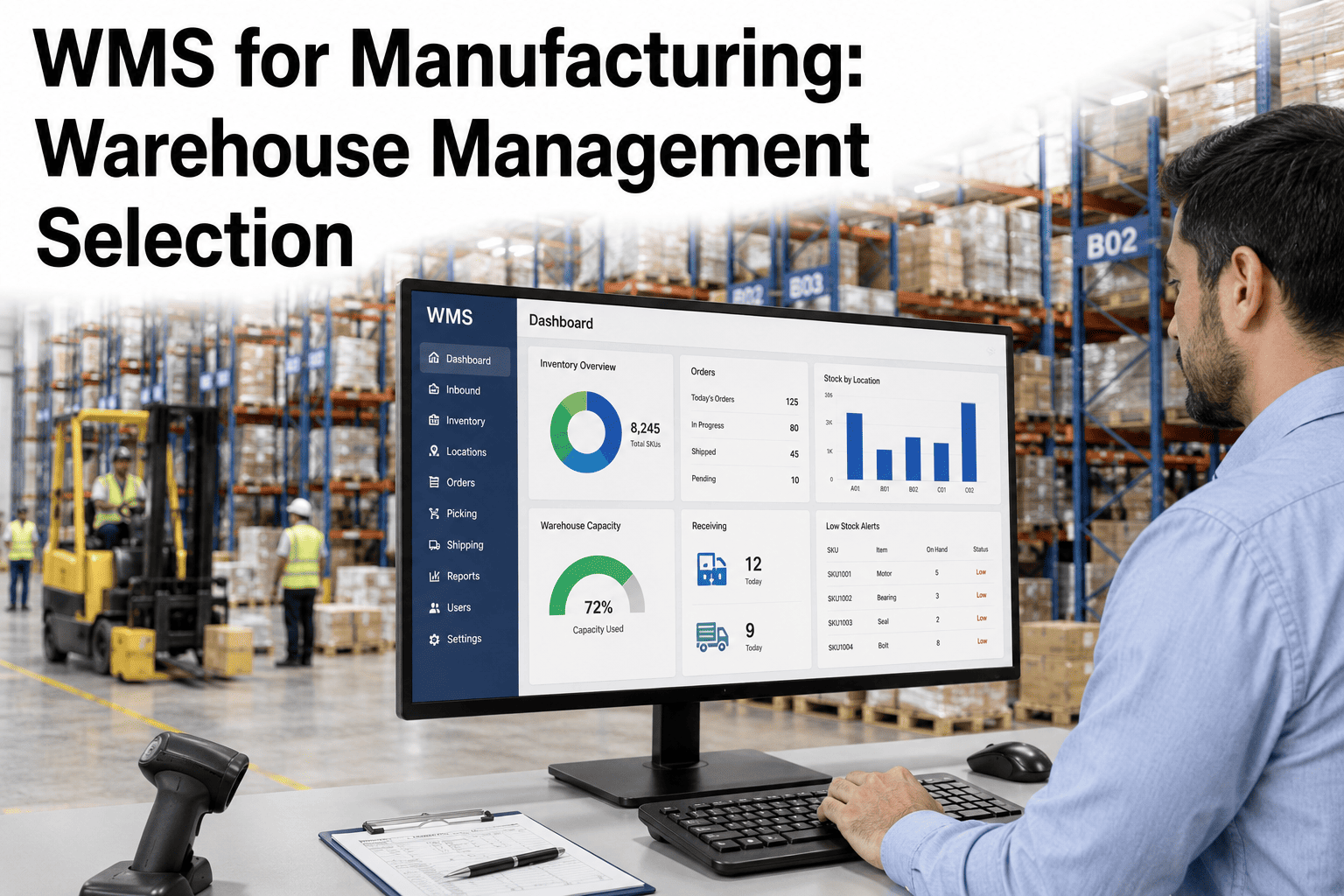
A warehouse picker walking an aisle with a paper list or a handheld scanner is doing three jobs at once: reading instructions, navigating to a location, and physically handling the item, all while one or both hands are occupied by something that isn't the product. That split attention is where picking errors and lost seconds both come from. AR smart glasses remove the split. Instructions appear directly in the worker's line of sight, both hands stay free for the actual pick, and confirmation happens through a built-in scanner rather than a separate device fumbled for at every stop. Warehouses running mature vision picking programs report accuracy above 99% and productivity gains in the double digits. To see this running against your own pick paths, book a demo.
AR SMART GLASSES · WAREHOUSE PICKING · INVENTORY MANAGEMENT
Put the Pick List in the Worker's Line of Sight, Not In Their Hands
iFactory deploys AR smart glasses for hands-free picking, with visual navigation to the correct bin, automatic pick verification, and real-time inventory counting built into a single headset connected to your WMS.
THE RESULTS ARE ALREADY IN
What Vision Picking Has Delivered at Scale
AR picking has moved past the pilot stage. Large logistics operators have run it across dozens of facilities long enough to publish real production numbers, not projected ones, and those numbers are why the technology keeps spreading.
15%
Productivity Gain
DHL Supply Chain expanded its vision picking program after measuring this productivity increase, alongside error rates falling to just 0.1% in production use.
99.99%
Picking Accuracy
Coca-Cola HBC's AR order picking rollout across 29 warehouses reached this accuracy rate, alongside a 10 percent productivity increase across the network.
25-30%
Single-Pick Speed Increase
Samsung SDS measured this speed gain on single picks using a ring scanner paired with smart glasses, exceeding their original 20% target.
These aren't isolated case studies from small pilots, they're production deployments across dozens of facilities, which is exactly the kind of evidence that turns a technology from promising to proven.
THE HANDS-FREE PROBLEM
Why Paper and Handheld Scanners Cost You More Than They Seem To
A paper pick list or a handheld scanner feels like a minor inconvenience until you count what it actually costs across a shift: the seconds spent looking down to read, the hand that isn't available to steady a box, the mental context-switch every single time a worker moves from reading to walking to picking.
Divided Attention
Reading a list or a screen and navigating the aisle at the same time means neither task gets full attention, which is exactly where wrong-bin and wrong-quantity errors come from.
One Hand Always Occupied
A handheld device ties up a hand that could otherwise be stabilizing a load or picking a second item, a small tax on every single pick that adds up across a shift.
Slow Onboarding
New workers memorizing a warehouse layout from a paper map or a screen take meaningfully longer to reach full productivity than workers guided by a visual cue in their line of sight.
Physical Strain Over a Shift
Repeatedly looking down at a device, reaching for it, and re-reading it adds up to real physical strain over an eight or ten hour shift, a factor that shows up directly in worker fatigue and turnover.
See what hands-free picking would look like on your floor
iFactory can walk your actual pick paths with a demo unit so you see the navigation and verification flow against your own layout, not a generic demo.
HOW A PICK ACTUALLY WORKS
From Order to Confirmed Pick
Vision picking follows a consistent sequence from the moment an order enters the system to the moment a pick is confirmed, and each step replaces something a worker used to have to do manually with something the glasses now handle automatically.
1
Order Syncs
The glasses connect to your WMS and pull the order details the moment a picking task is assigned, with no separate device or printed list required.
→
2
Visual Navigation
Turn-by-turn guidance appears in the worker's line of sight, directing them through the fastest path to the correct aisle and bin, the way GPS navigation guides a driver.
→
3
Bin Highlighted
Once the worker reaches the aisle, the system highlights the exact bin and item, removing the guesswork of scanning a shelf full of similar-looking SKUs.
→
4
Pick Confirmed
A built-in scanner confirms the barcode at the point of selection, eliminating errors right where they'd otherwise happen instead of catching them later at packing.
→
5
Inventory Updates
The count updates in real time the moment the pick is confirmed, keeping your inventory records accurate without a separate reconciliation step at end of shift.
PAPER VS SCANNER VS AR
How the Three Picking Methods Actually Compare
AR glasses aren't competing against nothing, they're replacing two established methods that most warehouses already run today. The comparison is worth seeing side by side rather than taking on faith.
| Factor |
Paper Pick List |
Handheld Scanner |
AR Smart Glasses |
| Hands Free |
No, one hand holds the list |
No, one hand holds the device |
Yes, both hands free throughout |
| Navigation Guidance |
None, worker relies on memory or a static map |
Limited, usually text-based location codes |
Turn-by-turn visual guidance in line of sight |
| Error Confirmation |
Manual check-off, prone to skipped steps |
Barcode scan, requires stopping to scan |
Barcode scan without breaking pick motion |
| Training Time |
Longest, relies on memorizing layout |
Moderate, still requires layout familiarity |
Shortest, visual cues reduce memorization need |
| Real-Time Inventory |
No, requires separate reconciliation |
Yes, but only at point of scan |
Yes, continuous update through the shift |
The pattern across every row is the same: AR glasses don't just add a feature the other two methods lack, they remove a step the other two methods require the worker to manage manually.
THE MARKET IS MOVING FAST
Why This Isn't a Niche Technology Anymore
The growth numbers behind AR in warehousing tell their own story about how quickly this has shifted from experimental to expected.
$3.5 Billion Market
The global AR in warehousing and logistics market was valued at this figure and is forecast to grow at an 18.5% compound annual rate, a pace that reflects proven ROI rather than speculative adoption.
4 Million Shipments by 2030
Industry analysts forecast smart glasses shipments in logistics reaching this figure, with vision picking specifically identified as the leading enterprise use case driving that growth.
50% Faster Onboarding
Facilities running mature vision picking programs report training time cut roughly in half, since new workers follow visual cues instead of memorizing a warehouse layout from scratch.
TURNKEY DELIVERY
How iFactory Deploys AR Picking on Your Floor
iFactory connects AR smart glasses to your existing WMS, maps navigation paths to your actual warehouse layout, and trains your team on a system built around your SKUs and your pick paths rather than a generic template.
What Gets Built
WMS and ERP integration for real-time order sync and inventory updates
Visual navigation mapped to your actual aisle and bin layout
Barcode-based pick verification built into the headset workflow
Real-time inventory counting synced continuously through each shift
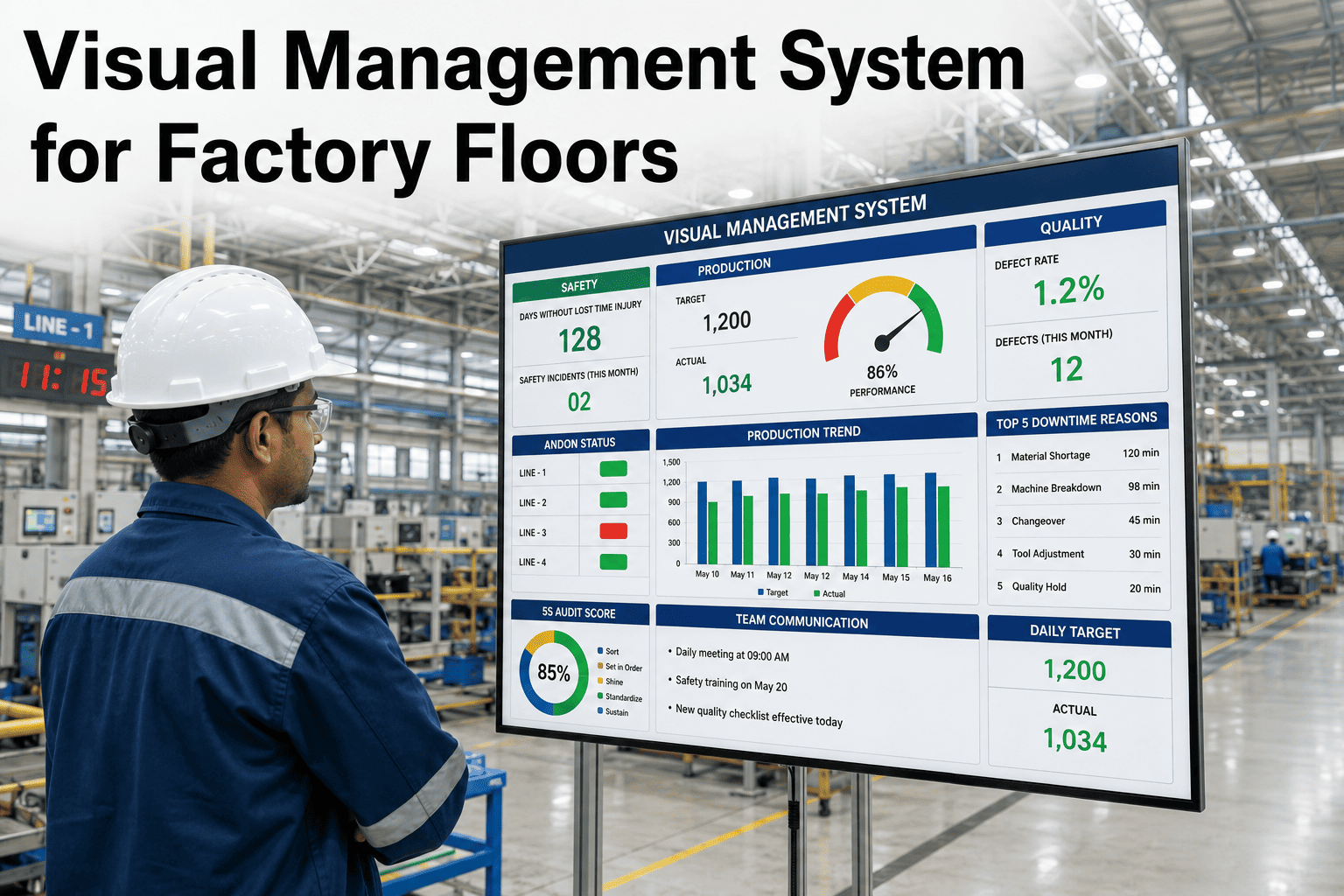
24x7 remote monitoring with performance dashboards for supervisors
Deployment Timeline
Weeks 1-4: Layout mapping, WMS integration, pilot zone selection
Weeks 5-8: Pilot rollout, accuracy validation, worker feedback and tuning
Weeks 9-12: Full-floor rollout, supervisor dashboard go-live, team training
FREQUENTLY ASKED QUESTIONS
What Warehouse Operators Ask Before Deploying AR Picking
Do AR glasses actually improve accuracy, or just speed?
Both, and the accuracy gains are often the more striking number. Production deployments have reported picking accuracy as high as 99.99% across dozens of facilities, with error rates falling to a fraction of a percent compared to paper or handheld methods, because barcode verification happens at the exact point of selection rather than being caught later at packing or shipping. Speed gains typically run in the 15-30% range depending on the specific workflow, but the accuracy improvement is what most operations notice first since it directly reduces costly mis-ships and returns.
Book a demo to see accuracy performance benchmarked against your current picking method.
How long does it take new workers to get comfortable with AR picking?
Considerably less time than learning a warehouse layout from a paper map or memorizing location codes on a handheld scanner, since the visual cues in the glasses guide the worker directly rather than requiring them to hold a mental model of the facility. Facilities running mature vision picking programs report training time cut by roughly half compared to traditional onboarding methods. New hires and seasonal or temporary workers, who are common in warehousing and typically the hardest group to train quickly, tend to benefit the most from this shift.
Contact our support team to discuss onboarding timelines for your seasonal staffing patterns.
Will this integrate with our existing WMS, or do we need to replace our current system?
No replacement needed, AR picking is designed to connect to your existing warehouse management and ERP platforms rather than requiring a separate inventory system running alongside them. The glasses pull order and location data directly from your WMS the moment a picking task is assigned, and pick confirmations and inventory updates flow back into that same system in real time. This is what makes deployment realistic on an operating floor rather than a disruptive rip-and-replace project.
Book a demo to review compatibility with your specific WMS platform.
Are AR glasses comfortable enough for workers to wear through a full shift?
Modern warehouse-grade smart glasses are built specifically for extended wear, considerably lighter and more ergonomic than earlier generations of the technology, and workers consistently report preferring AR guidance over paper or handheld devices because it actually reduces physical strain rather than adding to it. Removing the repetitive motion of looking down at a separate device and freeing both hands for the actual pick task is a meaningful ergonomic improvement over a full shift, not just a productivity one. Lower physical strain also connects directly to worker satisfaction and reduced turnover in an industry with historically high churn.
Contact our support team to discuss hardware options suited to your shift lengths.
What's a realistic timeline to see productivity gains after rollout?
Most deployments reach full floor rollout within twelve weeks, with the pilot phase in weeks five through eight typically being where accuracy and speed gains first become measurable against your baseline picking data. Large-scale deployments across dozens of facilities have shown that productivity gains and error-rate reductions tend to compound as the system tunes to your specific SKU mix and pick paths, meaning the numbers you see at pilot completion often continue improving through the following months as more picking data accumulates.
Book a demo to map a realistic rollout timeline against your facility size.
HANDS-FREE, EYES-UP, ERROR-FREE
Give Your Pickers a System That Guides Instead of Instructs
iFactory deploys AR smart glasses for visual navigation, hands-free pick verification, and real-time inventory management, connected directly to your existing WMS.