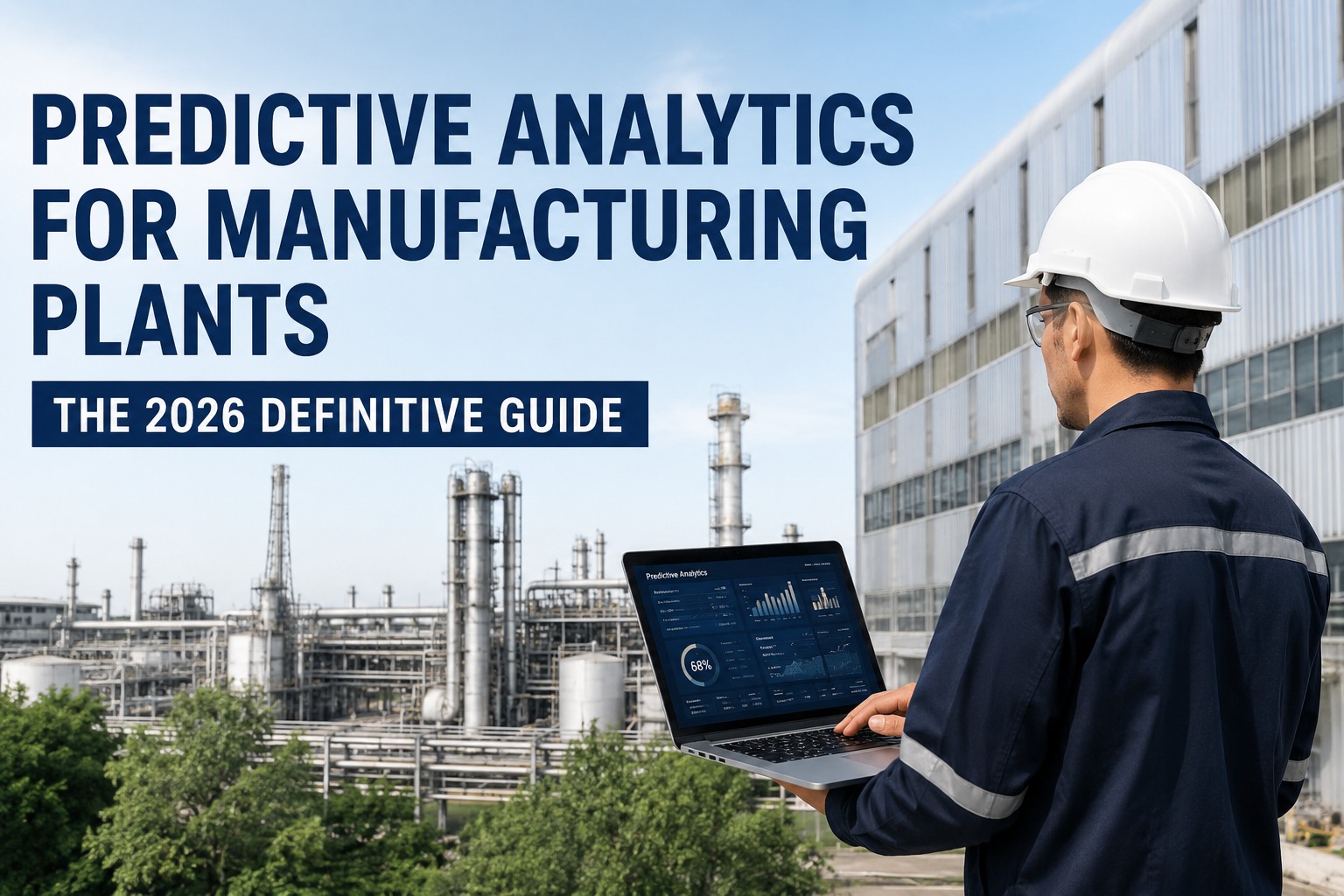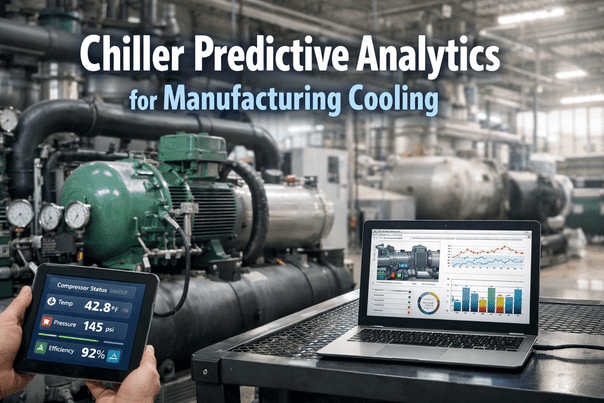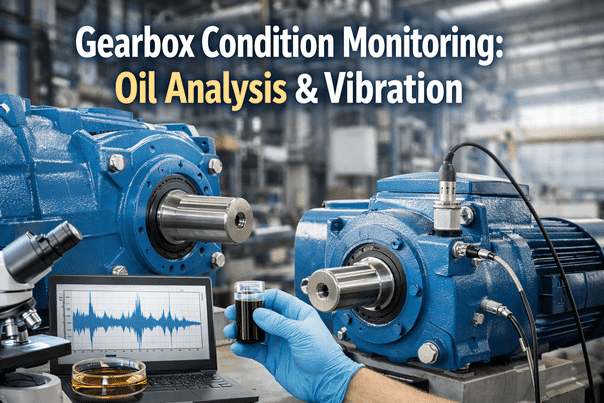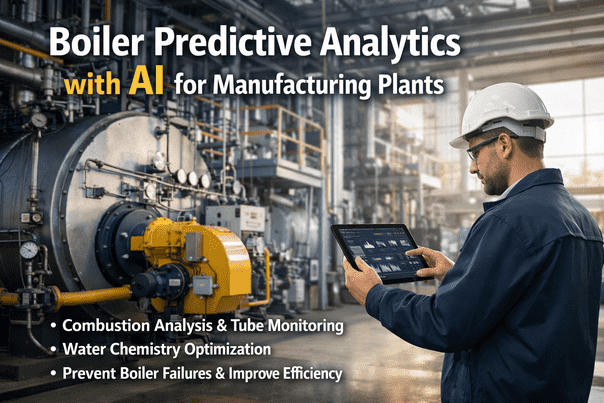
Industrial boilers are among the highest-consequence assets in a manufacturing plant. A tube failure in a 20-ton per hour fire tube boiler can shut down an entire process line for 3 to 14 days, cost $80,000 to $400,000 in emergency repairs, and create a safety incident that triggers regulatory inspection across the entire facility. The root causes of boiler tube failure, including scale buildup, oxygen pitting, caustic attack, and thermally induced fatigue, are all detectable weeks and months before a tube fails if the right monitoring is in place. iFactory's AI platform applies continuous combustion analytics, water chemistry trending, tube wall monitoring, and steam system performance tracking to manufacturing boilers of all types, generating condition-based work orders that prevent tube failures, optimize fuel efficiency, and maintain regulatory compliance without manual data collection. Book a free boiler health assessment for your plant today.
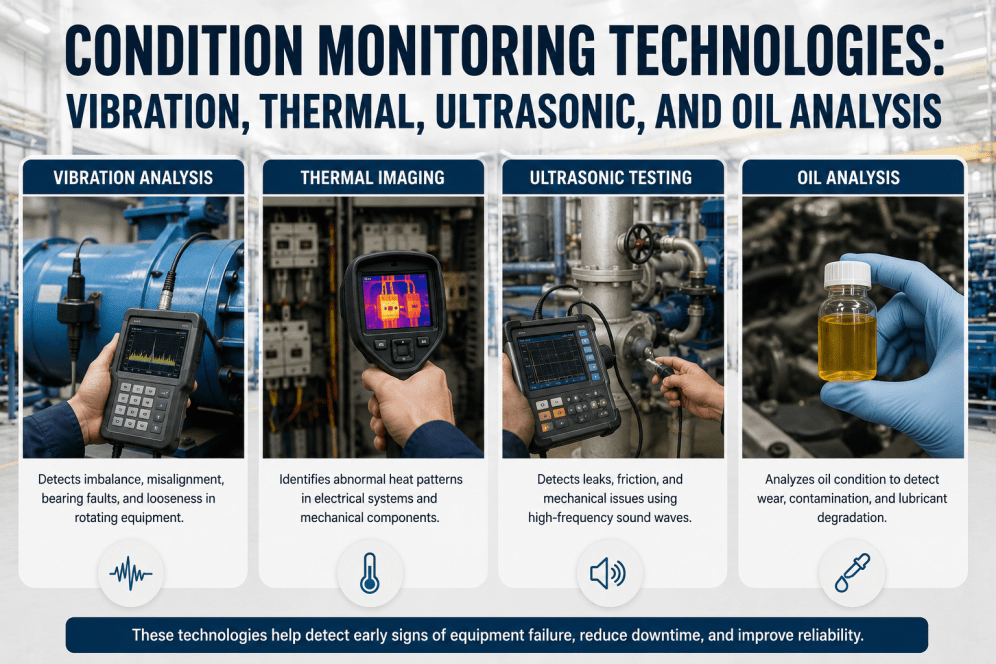
iFactory monitors manufacturing boilers across four continuous data streams: combustion analytics (flue gas O2, CO, CO2, stack temperature, and excess air ratio); water chemistry trending (pH, conductivity, hardness, dissolved oxygen, and silica); tube wall monitoring through ultrasonic thickness sensors or AI vision inspection; and steam system performance tracking (pressure, temperature, and specific enthalpy trending against design). All four streams feed one AI model that generates condition-based work orders for chemical dosing, blowdown scheduling, tube inspections, and burner tuning automatically.
The 4-Domain Boiler Monitoring Framework iFactory Deploys
No single monitoring technology covers all boiler failure modes. iFactory combines four specialized monitoring domains into one integrated AI model, so a water chemistry trend that indicates scaling risk triggers earlier combustion monitoring for hot-spot signatures before tube overheating becomes irreversible. Book a demo to see all four domains configured for your boiler type and rating.
How Boiler Tube Failures Develop: The 5-Stage Degradation Pathway
Boiler tube failures almost never happen without warning. They follow a predictable degradation sequence that iFactory detects at the earliest detectable stage, providing weeks or months of planning time rather than a sudden emergency shutdown. Understanding each stage shows why monitoring all four domains simultaneously is the only way to catch every failure pathway.
Feedwater hardness rises above target, dissolved oxygen increases from deaerator inefficiency, or pH drifts outside the protective range. No tube damage has occurred yet, but the conditions for corrosion and scale deposition are active.
Scale deposits on tube inner surfaces act as thermal insulators, forcing tube metal temperature above design limits to transfer the same heat load. Oxygen pitting corrosion begins at the feedwater inlet and economizer sections. Neither is visible without internal inspection.
Tube metal temperature exceeds the creep threshold for the tube material. Corrosion pits deepen toward the tube wall midpoint. The tube is weakening progressively with each firing cycle but is still containing full operating pressure.
Micro-leaks begin. Steam pressure fluctuation at constant load becomes detectable. Feedwater flow demand increases to compensate for steam loss through the developing leak. Combustion gas temperature drops slightly as steam quenches the combustion zone near the failing tube.
Tube ruptures under operating pressure. Boiler trips on low water level. Emergency shutdown. Cost: $80,000 to $400,000 in repairs and lost production, plus regulatory inspection and insurance review. With iFactory monitoring through Stages 1 to 4, this stage is prevented in the majority of cases.
iFactory's continuous four-domain monitoring catches the water chemistry drift, scale deposition signals, and thermal hot spots that precede every major tube failure. Planned intervention at Stage 1 costs 20 to 30 times less than emergency repair at Stage 5, and eliminates the production loss entirely.
iFactory vs Competing Boiler Monitoring Platforms
Most boiler monitoring platforms address combustion efficiency or CMMS work orders, but not the combination of water chemistry trending, tube wall monitoring, and AI-driven combustion optimization in one on-premise deployable system. Book a demo to compare iFactory against your current boiler monitoring approach.
| Capability | iFactory | TRACTIAN | Siemens Insights Hub | MaintainX | Fiix (Rockwell) | C3 AI Mfg | SafetyCulture | Limble CMMS |
|---|---|---|---|---|---|---|---|---|
| Boiler-Specific Monitoring | ||||||||
| Continuous combustion analytics (O2, CO, efficiency) | Real-time with AI burner tuning recommendations | No | Via SCADA integration | No sensor layer | No sensor layer | Via data connectors | No sensor layer | No sensor layer |
| Water chemistry trending (pH, DO, hardness, TDS) | Continuous multi-parameter with dosing WO | No | Via data connectors | Manual lab entry | Manual records | Via models | No | Manual records |
| Tube wall thickness monitoring and corrosion rate | Ultrasonic sensors plus AI vision inspection | No | No | No | No | No | No | No |
| Steam trap condition monitoring | Failed-open and failed-closed detection | Acoustic only | Via integration | No | No | Via models | No | No |
| Maintenance Operations and Deployment | ||||||||
| Multi-domain AI: all 4 streams in one model | Combustion, water, tube, steam correlated | Vibration only | Partial via SCADA | No AI | No AI | Via custom models | No AI | No AI |
| Auto work order with fault type and root cause | Full WO: domain, fault, root cause, action | Alert only | Via SAP PM | Yes (manual trigger) | Yes | Via CMMS | Yes | Yes |
| On-premise: no cloud dependency | Full on-premise AI, air-gap available | Cloud primary | Cloud or hybrid | Cloud SaaS | Cloud SaaS | Cloud primary | Cloud SaaS | Cloud SaaS |
Based on publicly available documentation as of Q1 2025. Verify capabilities with each vendor before procurement decisions.
Regional Compliance: Boiler Inspection and Safety Records
Industrial boilers are classified as high-risk pressure vessels in every major jurisdiction, subject to mandatory inspection, documentation, and certification requirements. iFactory's continuous monitoring audit trail provides the evidence required by each region's boiler and pressure vessel regulations.
| Region | Key Standards | Boiler Compliance Requirement | iFactory Coverage |
|---|---|---|---|
| USA | ASME Boiler and Pressure Vessel Code (BPVC Section I) / NBIC (National Board Inspection Code) / OSHA 1910 (general industry) / OSHA PSM 1910.119 / EPA MATS / EPA Clean Air Act / ISO 55001 | ASME BPVC Section I inspection records, NBIC annual external inspection evidence, OSHA PSM mechanical integrity records for process boilers, EPA MATS and CEMS emissions documentation, water treatment program records | ASME/NBIC inspection records, OSHA PSM boiler integrity trail, EPA emissions monitoring and reporting, water chemistry program documentation, ISO 55001 decision audit trail, combustion efficiency records |
| UAE | ADNOC Asset Integrity Standards / AGES pressure vessel requirements / ASME BPVC (adopted) / UAE OSHAD-SF / Abu Dhabi Quality and Conformity Council / ISO 55001 / UAE Net Zero 2050 | ADNOC/AGES boiler inspection and integrity records, ASME BPVC-aligned maintenance documentation, OSHAD-SF pressure vessel safety evidence, UAE energy efficiency reporting for boiler combustion systems | ADNOC and AGES boiler integrity records, ASME BPVC maintenance documentation, OSHAD-SF safety compliance, UAE Net Zero energy reporting, ISO 55001 audit trail, Arabic platform support, ICV efficiency data |
| UK | PSSR 2000 (Written Scheme of Examination) / HSE COMAH / RIDDOR / EN 12952 / EN 12953 / COSHH (water treatment chemicals) / HSE Energy Management / ISO 55001 / UK ETS | PSSR Written Scheme of Examination compliance records, HSE annual boiler inspection evidence, COMAH major hazard boiler documentation, EN 12952/12953-aligned inspection records, COSHH water treatment records, UK ETS emissions reporting | PSSR Written Scheme inspection evidence, COMAH boiler maintenance documentation, EN 12952/12953 records, COSHH water chemistry program, UK ETS combustion emissions reporting, ISO 55001 audit trail |
| Canada | ASME BPVC (adopted by provinces) / Provincial Boiler and Pressure Vessel Acts / TSSA (Ontario) / Technical Safety BC / CSA B51 / CSA Z1000 / ISO 55001 | ASME BPVC-compliant inspection records, provincial boiler registration and annual inspection evidence, TSSA Certificate of Inspection documentation, water treatment program records per provincial requirements | Provincial boiler inspection records, TSSA and Technical Safety BC Certificate of Inspection evidence, CSA B51 documentation, water chemistry program records, bilingual (EN/FR) platform, ISO 55001 and CSA Z1000 audit trail |
| Germany / EU | EU PED (Pressure Equipment Directive 2014/68/EU) / TRD (Technische Regeln Dampfkessel) / BetrSichV / TUV inspection requirements / EU EED / EU ETS / GDPR / IEC 62443 / ISO 55001 | PED boiler inspection and certification records, BetrSichV operational safety documentation, TUV annual inspection evidence, EU EED boiler efficiency audit data, EU ETS combustion emissions reporting, GDPR-compliant monitoring data handling | EU data residency option, GDPR-compliant architecture, PED and BetrSichV boiler records, TUV inspection evidence, EU EED efficiency and EU ETS emissions documentation, IEC 62443 OT security, ISO 55001 trail |
| Australia | AS 1228 (pressure equipment manufacture) / AS 3788 (pressure equipment inspection) / AS 2593 (boiler attendants) / State Boiler and Pressure Vessel Acts / Safe Work Australia / NGER Act / ISO 55001 | AS 3788-compliant boiler inspection and registration evidence, State Boiler Act annual inspection records, AS 2593-compliant boiler attendant competency documentation, NGER Act combustion emissions reporting, Safe Work boiler incident records | AS 3788 boiler inspection records, State Act registration evidence, AS 2593 competency documentation, NGER combustion emissions data, Safe Work maintenance records, ISO 55001 audit trail |
iFactory's immutable boiler monitoring audit trail provides ASME NBIC, PSSR, PED, ADNOC, and ISO 55001 compliance documentation without manual data collection before inspections or audits. Records are retrievable in seconds, permanently timestamped, and organized by the exact audit trail structure each regulation requires.
Results: Manufacturing Plants Running iFactory Boiler Analytics
Manufacturing plants with iFactory continuous four-domain boiler monitoring report zero unplanned tube failures after the 12-month mark, compared to 1.2 average tube failures per boiler per year in the industry baseline for similar boiler types and ages.
AI combustion optimization lowers excess air ratio to the minimum safe level for the current fuel and load, recovering 3 to 8 percent fuel efficiency. On a 20-ton per hour gas-fired boiler, this translates to $40,000 to $120,000 per year in direct fuel cost savings.
Condition-based blowdown scheduling and real-time chemical dosing recommendations replace calendar-based chemical programs. Most plants reduce water treatment chemical consumption by 50 to 60 percent while achieving better chemistry targets than the previous fixed-dose program.
iFactory's boiler monitoring audit trail provides the complete combustion records, water chemistry log, inspection evidence, and maintenance history required for ASME, PSSR, PED, and ADNOC compliance in a retrievable format, replacing 14 days of manual preparation before each statutory inspection.
iFactory's combined water chemistry, stack temperature, and tube metal temperature monitoring provides 4 to 12 weeks of advance warning before tube failure becomes probable, providing full planning time for a controlled inspection and planned repair at the next available outage window.
Every combustion reading, water chemistry measurement, tube thickness scan, AI alert, work order, and maintenance action permanently timestamped in iFactory's immutable audit trail for ASME NBIC, PSSR, PED, ADNOC, and ISO 55001 compliance without manual compilation.
iFactory Boiler Monitoring: Deployment Roadmap
Four phases from sensor installation to full four-domain AI monitoring with compliance automation. No boiler shutdown required at any phase. First combustion efficiency improvements visible within 7 days of sensor deployment. Book a demo to receive your plant-specific boiler monitoring deployment plan.
Combustion analyzers, water chemistry sensors, and tube temperature probes installed and connected. PLC and SCADA data connected read-only via OPC-UA or Modbus. No boiler shutdown.
AI establishes combustion efficiency baseline and water chemistry normal ranges. First excess air optimization recommendations generated by day 7. First blowdown schedule optimization by day 14.
Tube wall monitoring active. Predictive alert thresholds calibrated per boiler type, age, and operating pressure. Compliance audit trail configured to the specific statutory format required by your jurisdiction.
Monthly combustion reports, water chemistry program reports, and inspection evidence packages generated automatically. ROI tracking compares fuel savings and prevented failures against deployment cost monthly.
Frequently Asked Questions
Continue Reading
Continuous combustion analytics, water chemistry trending, tube wall monitoring, and steam system performance tracking in one AI model. Condition-based work orders generated before the degradation cascade reaches the point where tube replacement is the only option. First fuel efficiency improvements within 7 days of deployment.