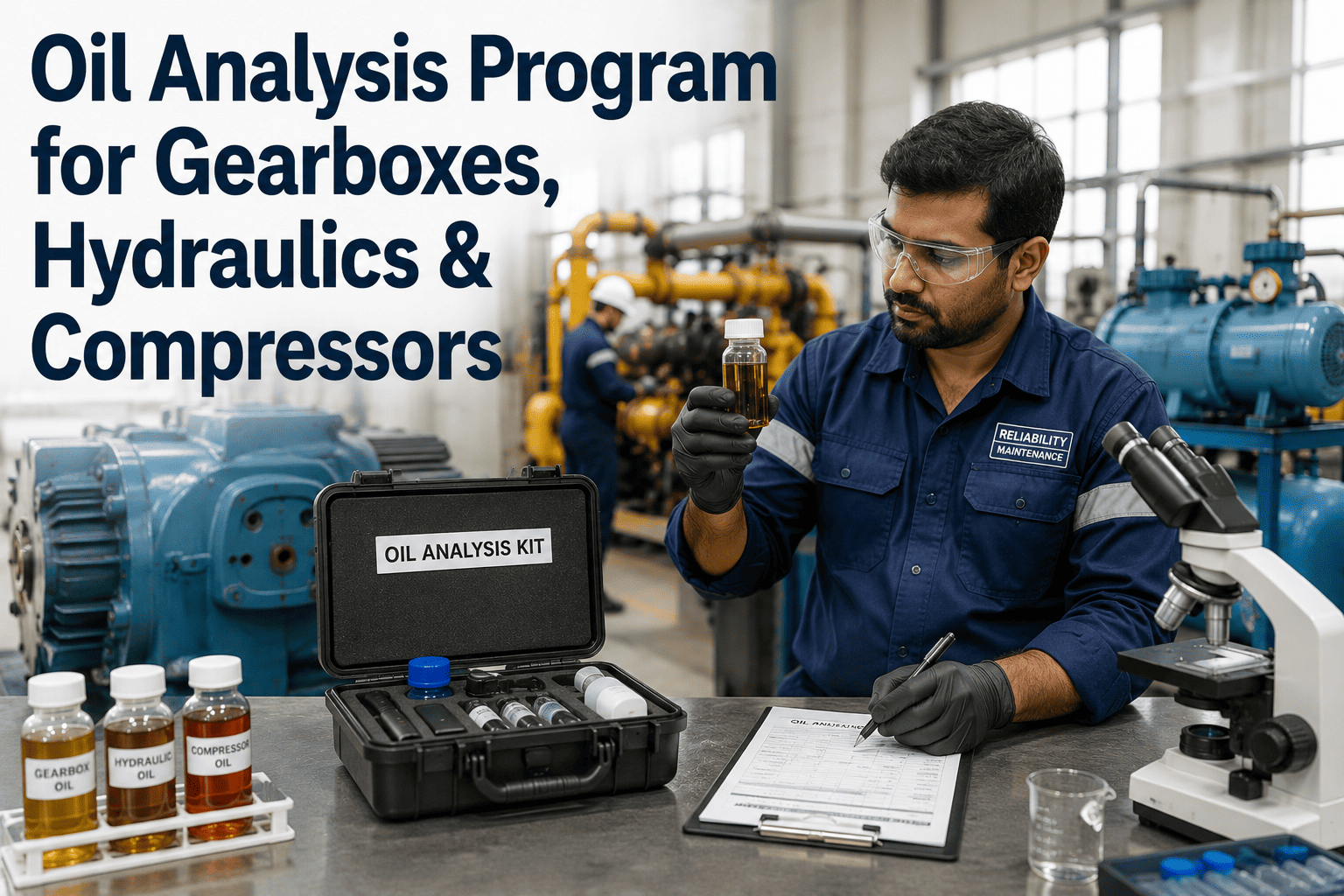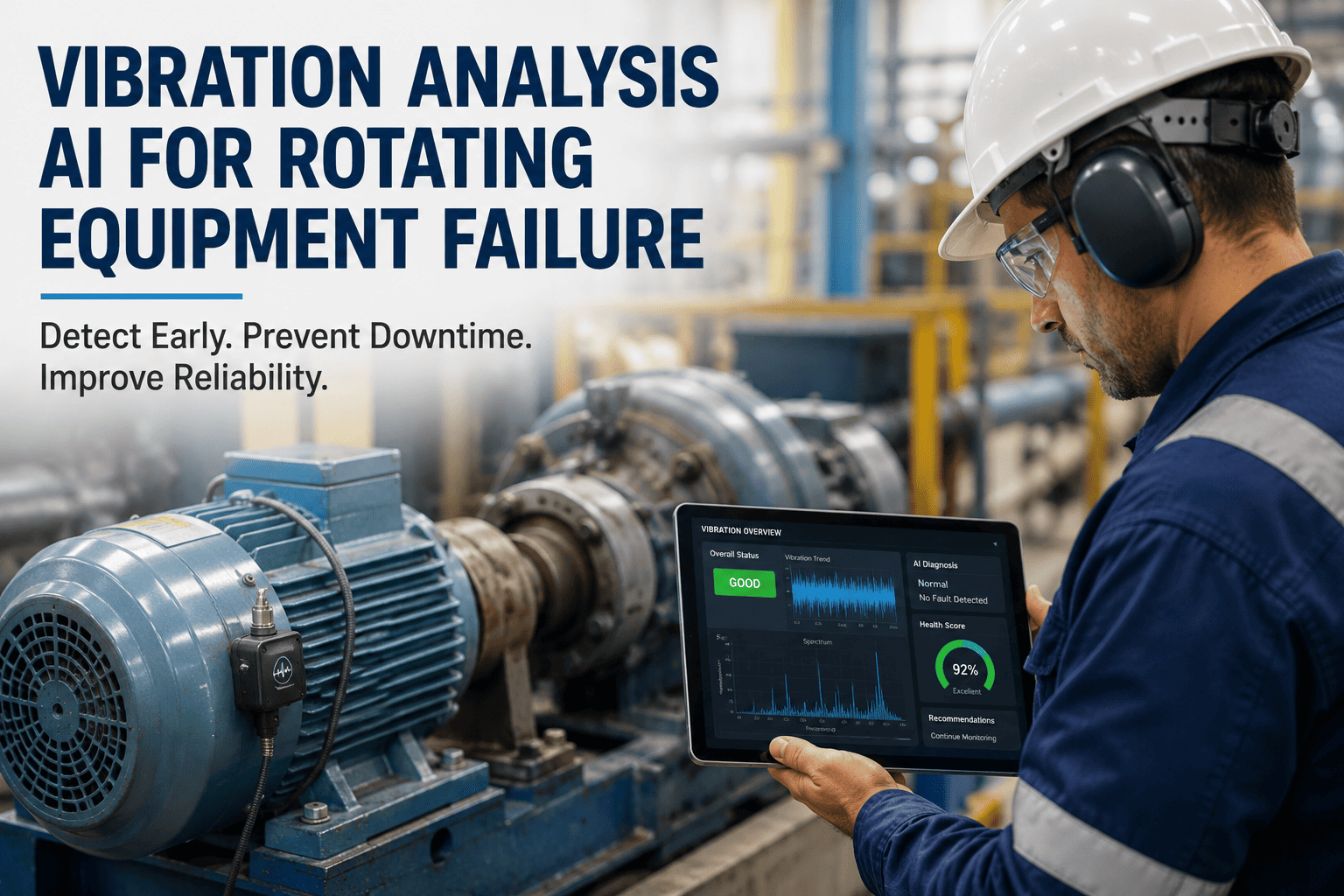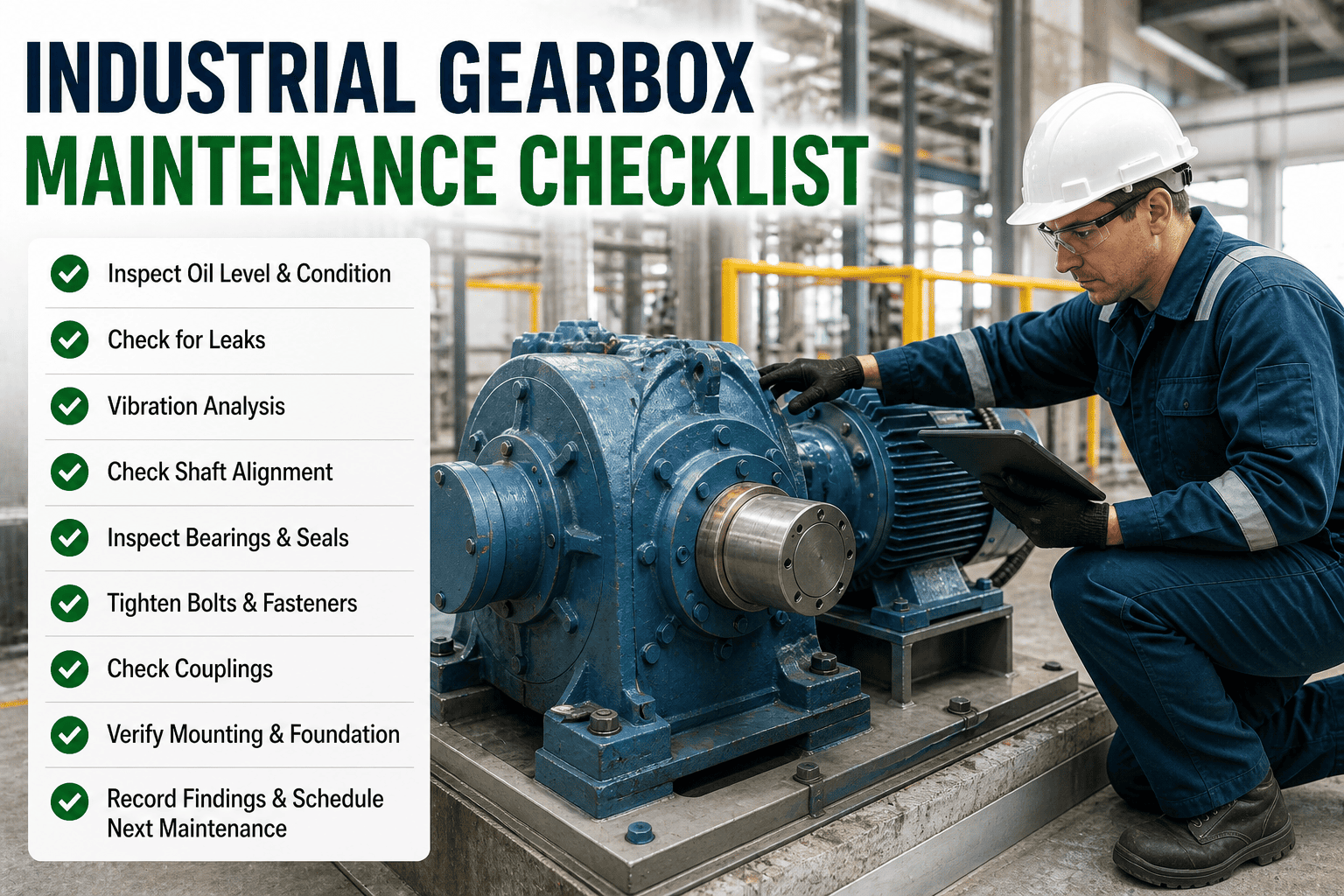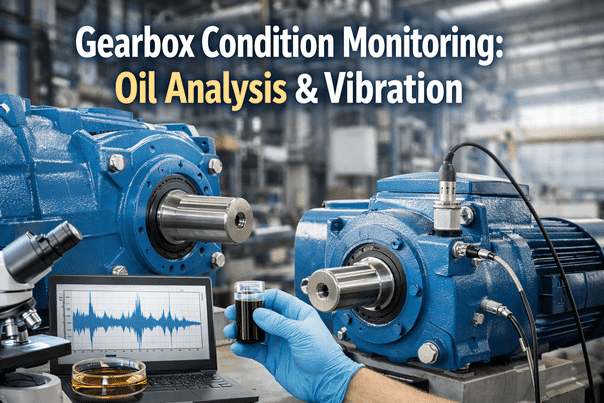
Industrial gearboxes are among the most expensive assets in a manufacturing plant to replace, and among the most predictable to maintain. Gear tooth wear, bearing degradation, and lubrication failure all produce measurable signals weeks and months before catastrophic failure. iFactory's AI platform applies a two-layer monitoring approach to industrial gearboxes: continuous vibration analysis at gear mesh and bearing defect frequencies, combined with oil analysis particle tracking to detect wear that is invisible to vibration sensors. Together, these two monitoring streams give operations teams 30 to 90 days of advance warning across every gearbox category in a manufacturing plant. Book a free gearbox health assessment for your plant.
iFactory monitors industrial gearbox health through two complementary data streams: continuous vibration analysis tracking gear mesh frequency (GMF) amplitude and sidebands, plus bearing defect frequencies at input and output shafts; and oil analysis particle count and composition tracking to detect subsurface gear wear weeks before vibration signals change. Both streams feed one AI model that generates condition-based work orders automatically when developing faults are identified.
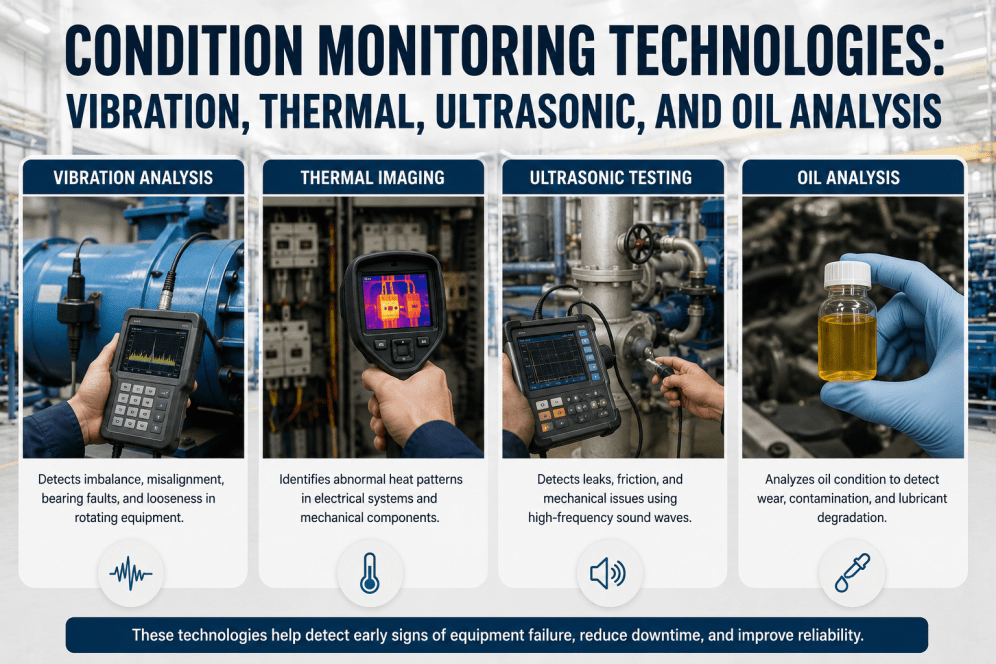
Oil Analysis and Vibration: The Two-Layer Gearbox Defense
Each monitoring technique catches different failure stages and different fault types. Oil analysis excels at detecting subsurface wear before it creates vibration changes. Vibration analysis excels at localizing faults to specific gear stages and bearing components once damage has progressed to the raceway surface. Together, they provide complete gearbox health coverage from the earliest detectable stage through critical fault classification.
The Gearbox Failure Progression: What iFactory Detects at Each Stage
Gearbox failure follows a predictable degradation path. Understanding which monitoring technique fires first at each stage shows why combining both streams provides the earliest possible warning and the most actionable fault classification. Book a demo to see both monitoring streams configured for your gearboxes.
| Failure Stage | Time Before Failure | Oil Analysis Signal | Vibration Signal | iFactory Action |
|---|---|---|---|---|
| Stage 1: Subsurface Fatigue | 4-12 weeks | Ferrous particle count rises above baseline. Fatigue spheres appear. | No detectable vibration change at this stage. | Oil analysis alert fires. Next sampling interval shortened. Vibration watch mode activated. |
| Stage 2: Surface Crack Formation | 2-6 weeks | Particle count accelerating. Particle size increasing. Wear mode changes from fatigue to mixed. | Early envelope analysis signal at bearing or GMF frequency. Kurtosis rising. | Combined alert: oil and vibration both confirm developing fault. Maintenance planning begins. |
| Stage 3: Progressive Spalling | 1-3 weeks | High particle count. Large particles visible. Metals identified to specific component. | Clear GMF sidebands or bearing frequencies. Cepstrum identifies affected shaft. | Alert escalated. Work order issued. Parts pre-staged. Planned maintenance window confirmed. |
| Stage 4: Advanced Damage | Days to 1 week | Critical particle count. Large chunks. Emergency sample triggered automatically. | Strong GMF harmonics and sidebands. Overall vibration significantly elevated. | Critical severity alert. Emergency maintenance recommended. Production supervisor notification. |
6 Root Causes iFactory Identifies in Every Gearbox Alert
Every gearbox fault alert from iFactory includes root cause classification, not just a severity level. This means your maintenance team knows what to fix, not just that something is wrong.
Wrong lubricant viscosity, lubricant degradation, contamination, or lubricant starvation. Oil analysis detects viscosity deviation, additive depletion, and contamination. iFactory triggers a lubrication inspection task with the specific oil analysis parameters as evidence.
Operating torque exceeding gear tooth design rating causes accelerated fatigue. iFactory monitors motor current load trending against the gearbox rated torque and detects sustained overloading conditions. Root cause alert includes the overloading magnitude and duration as evidence for process correction.
Input shaft or output shaft misalignment creates cyclic loading that accelerates both gear tooth and bearing fatigue. iFactory detects misalignment through elevated 2x vibration in the axial direction and phase analysis across the coupling, distinguishing angular from parallel misalignment.
Water ingress, abrasive particles, or process fluid contamination causes abrasive and corrosive wear. Oil analysis distinguishes contamination wear particles (flat, angular) from fatigue particles (spherical) in the particle morphology report. iFactory identifies contamination-driven wear early through particle type classification.
Incorrect gear backlash setting or assembly errors create uneven load distribution across tooth width. iFactory detects improper backlash from commissioning baseline vibration: a newly installed gearbox with incorrect backlash shows characteristic vibration pattern differences from the design specification baseline.
Gearboxes that have operated correctly within design parameters reach their fatigue life limit. iFactory tracks cumulative load exposure through motor current history, estimating remaining gear life based on the actual loading history versus design rated life. Replacement is scheduled before fatigue failure occurs.
iFactory's combined oil analysis and vibration monitoring identifies not just that a gearbox is degrading, but which component is affected and what caused the damage. Your maintenance team arrives with the right parts and the right repair procedure the first time.
iFactory vs Competing Gearbox Monitoring Platforms
Most monitoring platforms deliver either vibration or oil analysis, but not both integrated into one AI model. iFactory unifies both monitoring streams plus automatic work order generation in a single on-premise system. Book a demo to benchmark iFactory against your current gearbox monitoring approach.
| Capability | iFactory | TRACTIAN | Augury | Fracttal | Siemens Insights Hub | MaintainX | Fiix (Rockwell) | Limble CMMS |
|---|---|---|---|---|---|---|---|---|
| Gearbox Monitoring Capability | ||||||||
| Gear mesh frequency (GMF) tracking | Auto-calculated per gear tooth count | Yes | Yes | No | Partial | No sensor layer | No sensor layer | No sensor layer |
| Cepstrum and sideband analysis | Full cepstrum + sideband classification | Partial | Partial | No | Partial | No | No | No |
| Oil analysis integration | Particle count, type, viscosity, contamination | No | No | Manual entry | Via integration | Manual records | Manual records | Manual records |
| Oil plus vibration fusion in one model | Unified AI: both streams combined | Vibration only | Vibration only | No AI fusion | Partial | No | No | No |
| Maintenance Operations and Deployment | ||||||||
| Root cause identification in alert | 6 cause types classified automatically | Basic | Basic | No | Via models | No | No | No |
| Auto work order with parts list | Full WO: fault, root cause, parts | Alert only | Alert only | Yes | Via SAP PM | Yes | Yes | Yes |
| On-premise: no cloud dependency | Full on-premise AI | Cloud primary | Cloud primary | Cloud SaaS | Cloud or hybrid | Cloud SaaS | Cloud SaaS | Cloud SaaS |
Based on publicly available documentation as of Q1 2025. Verify capabilities with each vendor before procurement decisions.
Regional Compliance: Gearbox Maintenance Records
iFactory's gearbox monitoring audit trail meets the maintenance documentation requirements for every major industrial compliance framework across your operating regions.
| Region | Key Standards | Gearbox Maintenance Requirement | iFactory Coverage |
|---|---|---|---|
| USA | OSHA 1910 / API 677 (general purpose gear units) / AGMA standards / OSHA PSM / ISO 55001 | PSM mechanical integrity records for process gearboxes, AGMA-aligned inspection documentation, oil analysis program records for covered process units | OSHA PSM gearbox integrity records, oil analysis trending logs, AGMA inspection documentation, ISO 55001 decision audit trail |
| UAE | ADNOC Asset Integrity / AGES rotating equipment / API 677 / ISO 55001 / UAE Vision 2030 smart manufacturing | Gearbox condition monitoring evidence per ADNOC/AGES, oil analysis program records, asset integrity assurance documentation for major process gearboxes | ADNOC-aligned gearbox monitoring records, oil analysis documentation, AGES rotating equipment evidence, ISO 55001 decision trail, Arabic platform support |
| UK | PUWER 1998 / HSE COMAH / BS ISO 6336 (gear strength) / ISO 55001 / HSE guidance on mechanical integrity | PUWER-compliant gearbox inspection records, COMAH major hazard gearbox maintenance evidence, HSE mechanical integrity documentation for process gearboxes | PUWER gearbox maintenance records, COMAH mechanical integrity evidence, oil analysis program documentation, ISO 55001 audit trail |
| Canada | CSA Z1000 / OHS Provincial Acts / CSA-AGMA gear standards / ISO 55001 | OHS-compliant gearbox maintenance documentation, rotating equipment inspection records per provincial requirements, oil analysis program records | CSA Z1000 gearbox records, provincial OHS documentation, oil analysis trending logs, bilingual (EN/FR) platform, ISO 55001 audit trail |
| Germany / EU | EU Machinery Directive / BetrSichV / DIN 3990 (gear capacity) / GDPR / IEC 62443 OT security / ISO 55001 | BetrSichV operational safety records, DIN gear standards compliance documentation, GDPR-compliant gearbox monitoring data handling, ATEX gearbox inspection evidence in hazardous zones | EU data residency option, GDPR-compliant architecture, BetrSichV gearbox records, DIN 3990 inspection documentation, IEC 62443 OT security |
| Australia | WHS Act / AS/NZS 4024 (safeguarding of machinery) / Safe Work Australia / State OHS Acts / ISO 55001 | WHS plant inspection records for gearboxes, AS/NZS safeguarding compliance evidence, Safe Work Australia reporting for high-risk plant gearboxes | WHS-compliant gearbox maintenance records, AS/NZS inspection evidence, Safe Work documentation, ISO 55001 audit trail |
iFactory's immutable gearbox monitoring and work order records provide OSHA PSM, ADNOC, PUWER, BetrSichV, and ISO 55001 compliance documentation without manual preparation before audits. Records are retrievable in seconds, not days.
Results: Manufacturing Plants Running iFactory Gearbox Monitoring
Average reduction in unplanned gearbox failures across iFactory manufacturing plant deployments, measured over 12 months versus pre-deployment baseline.
Average time between first iFactory alert (oil analysis or vibration) and confirmed gearbox fault requiring maintenance, providing full planning time for parts and shutdown.
Condition-based oil change scheduling replaces calendar-based intervals. Oil is changed when analysis shows actual degradation, not on a fixed schedule that over-services good oil.
Early intervention at Stage 1 or 2 degradation prevents the cascade damage that forces full gearbox replacement. Timely maintenance of the specific worn component extends service life by an average of 60 percent.
Measured accuracy across gear mesh, bearing, misalignment, and lubrication fault classification using combined oil analysis and vibration data after the 21-day baseline learning period.
Every oil analysis result, vibration reading, AI alert, work order, and maintenance action permanently timestamped in iFactory's immutable audit trail for OSHA, ADNOC, PUWER, and ISO 55001 compliance.
Frequently Asked Questions
Continue Reading
Oil particle counts and vibration frequency signatures encode gearbox health 30 to 90 days before failure forces an emergency repair. iFactory captures both signals, classifies the fault type and root cause, and delivers a specific maintenance recommendation before damage cascades to full gearbox replacement.