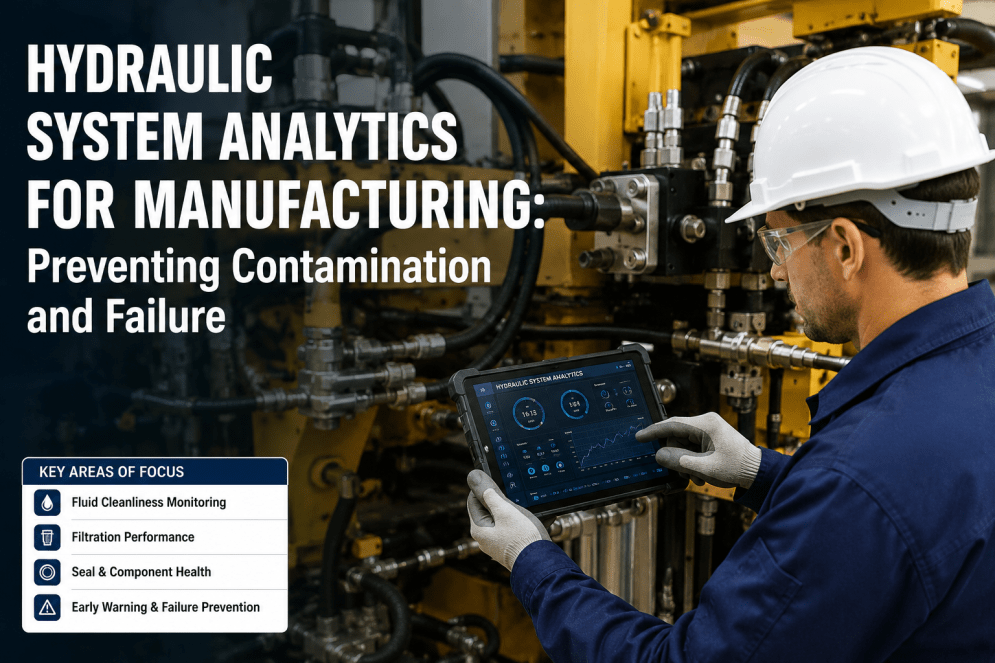
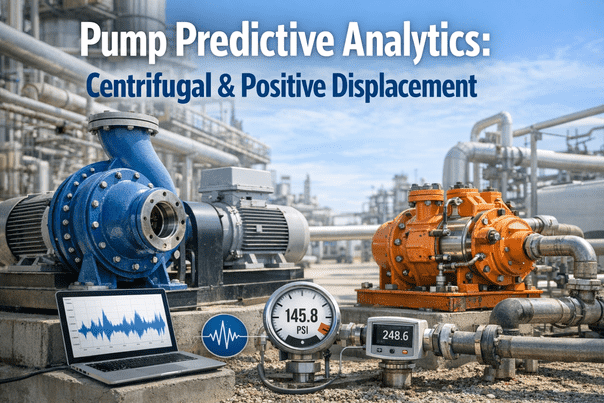
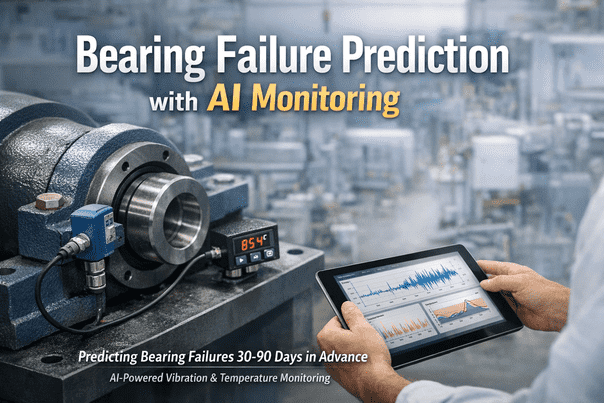
Hydraulic systems are the muscle of manufacturing plants, driving presses, injection moulding machines, die casting equipment, CNC machine tool clamping, and heavy material handling. They are also among the most failure-sensitive systems in a facility: operating at pressures from 100 to 350 bar, hydraulic component wear is invisible until a seal fails, a pump cavitates, or a directional control valve sticks mid-cycle and stops production entirely. iFactory monitors hydraulic system health through continuous pressure analytics, fluid contamination particle tracking, temperature trending, and flow analytics, generating condition-based maintenance work orders before contamination damage cascades into component replacement and unplanned downtime. Book a free hydraulic system health assessment for your plant today.
iFactory monitors hydraulic system health through four continuous data streams: fluid contamination particle counts (ISO 4406 cleanliness level trending), system and differential pressure analytics, reservoir and return line temperature monitoring, and flow analytics that detect internal component leakage from actuator cycle time deviation. All four streams feed one AI model that generates condition-based work orders for fluid changes, filter replacements, and component maintenance before contamination or thermal damage forces an emergency failure.
The Hydraulic Failure Triangle: 3 Root Causes That Drive 95% of Hydraulic Downtime
Hydraulic failures appear sudden, but they are almost never caused by a single isolated event. Three root causes account for 95 percent of all hydraulic system failures, and they interact with each other: contamination accelerates thermal degradation, thermal degradation degrades seals and allows ingress, and pressure overloads accelerate both wear and leak paths. iFactory monitors all three simultaneously. Book a demo to see all three monitoring streams active for your hydraulic systems.
Particulate matter, water, and air entrained in hydraulic fluid cause abrasive wear on pump pistons, valve spools, and cylinder bores. A system running at ISO 4406 cleanliness level 21/19/16 (typical for unmonitored plants) reduces pump life to less than 10 percent of its rated life compared to a well-maintained system at 15/13/11.
Hydraulic fluid operating above its rated temperature degrades viscosity, accelerates oxidation, and damages seals and O-rings. Every 10 degrees Celsius above the rated operating temperature halves fluid service life. Overheated fluid loses its lubrication film, causing pump and valve component wear that would not occur at correct operating temperature.
Pressure spikes from water hammer, rapid valve switching, or blocked return lines create instantaneous pressure surges that exceed hose, fitting, and seal ratings. Chronic over-pressurization above relief valve settings accelerates fatigue failure in cylinders, hoses, and manifolds. iFactory detects pressure spike frequency and amplitude as early indicators of developing system fault.
Hydraulic Fluid Contamination: ISO 4406 Cleanliness and Component Life
The relationship between fluid cleanliness and hydraulic component life is direct and quantifiable. iFactory tracks the ISO 4406 cleanliness code continuously, alerting when the contamination level drifts toward life-limiting territory for specific components in your system. The table below shows the multiplier effect of cleanliness level on rated component life.
| ISO 4406 Cleanliness Level | Particle Count (per 100ml at 4/6/14 micron) | Piston Pump Life | Proportional Valve Life | Cylinder Seal Life | iFactory Status |
|---|---|---|---|---|---|
| 21/19/16 | Very high contamination: typical unmonitored plant | Under 10% of rated life | Under 5% of rated life | Under 15% of rated life | Critical alert generated |
| 18/16/13 | Elevated contamination: filter maintenance needed | 25-40% of rated life | 15-30% of rated life | 30-50% of rated life | Warning: filter change WO |
| 17/15/12 | Moderate: acceptable for general industrial systems | 50-70% of rated life | 40-60% of rated life | 60-80% of rated life | Advisory: monitor trend |
| 15/13/11 | Target for servo and proportional valve systems | 90-100% of rated life | 90-100% of rated life | 90-100% of rated life | System healthy |
5 Hydraulic Component Failure Modes iFactory Monitors and Predicts
Each hydraulic component produces a specific sensor signature as it degrades. iFactory identifies all five failure types across your hydraulic system inventory, generating component-specific work orders with advance warning time sufficient for planned repair.
Pump wear produces increasing metal particle count in oil analysis, audible noise increase at high frequency, flow rate reduction at constant pressure, and motor current increase as internal efficiency drops. iFactory combines particle count trending with flow analytics and current monitoring to detect wear at Stage 1, 30 to 90 days before efficiency loss becomes operationally significant.
External rod seal failure causes visible fluid leakage and rod contamination ingress. Internal piston seal failure causes internal bypass, which appears as reduced actuator force, slow or drifting position, and increased cycle time. iFactory detects internal leakage through cylinder cycle time analytics: a cylinder that requires progressively more time to reach full extension at the same pressure is bypassing internally across the piston seal.
Valve spool wear from contamination causes internal leakage and reduced flow control precision. A proportional valve with increasing spool wear shows degrading position accuracy and increasing current demand for the same flow output. Relief valves that cycle frequently indicate system over-pressurization or downstream restriction. iFactory tracks valve solenoid current signatures, cycle frequency, and pressure response curves to detect developing valve degradation before complete spool seizure.
High-pressure hose fatigue and fitting loosening are difficult to detect with vibration alone. iFactory detects developing hose and fitting issues through differential pressure drops across circuit segments that indicate increasing flow restriction from internal hose lining delamination, and through pressure spike frequency analysis that identifies water hammer stress causing fitting fatigue. Oil consumption trending flags external leakage accumulation before a hose rupture causes a safety or environmental incident.
Oil cooler fouling causes progressive temperature rise across operating conditions that correlates with ambient temperature and production load. iFactory detects fouling through return temperature trending normalized against ambient and load conditions, distinguishing genuine cooler degradation from normal temperature variation. Accumulator bladder failure appears as loss of pressure cushioning: the system shows increasing pressure spike amplitude and frequency at stroke end because the accumulator is no longer absorbing hydraulic shock.
iFactory combines fluid contamination tracking, pressure analytics, temperature monitoring, and cycle time analysis into a single hydraulic health model that generates work orders automatically before any component reaches emergency failure stage. First alerts within 21 days of sensor deployment.
iFactory vs Competing Hydraulic Monitoring Platforms
Most CMMS and condition monitoring platforms address hydraulic systems through scheduled maintenance records or reactive work orders. iFactory is the only on-premise platform that combines continuous contamination monitoring, pressure analytics, thermal trending, and cycle time analysis in one AI model with automatic work order generation. Book a demo to compare iFactory against your current hydraulic maintenance approach.
| Capability | iFactory | TRACTIAN | Augury | MaintainX | Fiix (Rockwell) | Fracttal | Limble CMMS | Siemens Insights Hub |
|---|---|---|---|---|---|---|---|---|
| Hydraulic-Specific Monitoring | ||||||||
| Continuous oil contamination tracking (ISO 4406) | Real-time particle count and cleanliness level | No | No | Manual lab entry | Manual records | Manual records | Manual records | Via integration |
| Cylinder internal leakage via cycle time analytics | Cycle time deviation auto-detected | No | No | No | No | No | No | Via PLC data |
| Pressure spike detection and water hammer | High-frequency pressure sampling | No | No | No | No | No | No | Via SCADA |
| Temperature normalized against load and ambient | Load and ambient corrected thermal trending | Basic temperature alerts | Basic temperature alerts | Manual records | No | No | No | Via models |
| Maintenance Operations and Deployment | ||||||||
| Auto work order with fault and root cause | Full WO: component, fault type, root cause | Alert only | Alert only | Yes (manual trigger) | Yes | Yes | Yes | Via SAP PM |
| On-premise: no cloud dependency | Full on-premise AI | Cloud primary | Cloud primary | Cloud SaaS | Cloud SaaS | Cloud SaaS | Cloud SaaS | Cloud or hybrid |
Based on publicly available documentation as of Q1 2025. Verify capabilities with each vendor before procurement decisions.
Regional Compliance: Hydraulic System Maintenance and Safety Records
Hydraulic systems are classified as pressure equipment and high-risk plant in every major industrial jurisdiction. iFactory's monitoring audit trail provides the maintenance documentation required by each region's pressure equipment and workplace safety regulations.
| Region | Key Standards | Hydraulic System Requirement | iFactory Coverage |
|---|---|---|---|
| USA | OSHA 1910 (general industry) / NFPA 99 / ANSI/B11 machine safety standards / OSHA PSM for high-pressure hydraulics in covered processes / ISO 4413 (hydraulic safety) / ISO 55001 | ISO 4413-compliant hydraulic safety records, OSHA 1910 inspection documentation, ANSI/B11 machine guarding evidence for hydraulic press and machine tool hydraulics, PSM mechanical integrity records for covered process hydraulics | ISO 4413 hydraulic inspection records, OSHA 1910 documentation, ANSI/B11 compliance evidence, PSM mechanical integrity trail, ISO 55001 decision audit trail, oil analysis program records |
| UAE | ADNOC Asset Integrity / AGES rotating and pressure equipment / ISO 4413 / ISO 55001 / UAE OSHAD-SF / ADNOC machine safety standards | ADNOC-aligned hydraulic system condition monitoring records, AGES pressure equipment integrity documentation, ISO 55001 asset management evidence, OSHAD-SF machinery safety compliance records | ADNOC and AGES hydraulic inspection records, ISO 55001 audit trail, OSHAD-SF compliance documentation, Arabic platform support, ICV energy efficiency reporting for hydraulic system optimization |
| UK | PUWER 1998 / PSSR 2000 (pressure systems) / HSE COMAH (hydraulics in major hazard plants) / ISO 4413 / ISO 55001 / DSEAR (flammable fluid hydraulics) | PUWER-compliant hydraulic inspection records, PSSR Written Scheme of Examination evidence for hydraulic pressure systems, COMAH major hazard hydraulic maintenance documentation, DSEAR compliance for plants using flammable hydraulic fluid | PUWER hydraulic records, PSSR Written Scheme evidence, COMAH mechanical integrity documentation, DSEAR compliance records, ISO 55001 and ISO 4413 audit trail |
| Canada | CSA Z432 (machine safety) / Provincial OHS Acts / TSSA (Ontario pressure systems) / CSA B51 / ISO 4413 / ISO 55001 | CSA Z432-compliant hydraulic machine safety records, provincial OHS-compliant inspection documentation, TSSA pressure system inspection evidence for hydraulic systems in Ontario | CSA Z432 and B51 hydraulic records, provincial OHS documentation, TSSA inspection evidence, bilingual (EN/FR) platform, ISO 4413 and ISO 55001 audit trail |
| Germany / EU | EU Machinery Directive 2006/42/EC / EU PED (Pressure Equipment Directive) / BetrSichV / ISO 4413 / ATEX (hydraulics in hazardous zones) / GDPR / IEC 62443 / ISO 55001 | Machinery Directive-compliant hydraulic circuit inspection records, PED pressure equipment maintenance documentation, BetrSichV operational safety records, ATEX-compliant hydraulic system evidence for Ex zones | EU data residency option, GDPR-compliant architecture, PED and BetrSichV hydraulic records, ATEX zone inspection evidence, Machinery Directive documentation, IEC 62443 OT security, ISO 55001 trail |
| Australia | WHS Act / AS 4024 (safeguarding of machinery) / AS 3788 (pressure equipment inspection) / State high-risk plant registration Acts / Safe Work Australia / ISO 4413 / ISO 55001 | WHS-compliant hydraulic plant inspection records, AS 3788 pressure equipment inspection and registration evidence for high-risk hydraulic plant, AS 4024 safeguarding compliance for hydraulic machines | WHS and AS 3788 hydraulic inspection records, high-risk plant registration evidence, AS 4024 safeguarding documentation, Safe Work records, ISO 4413 and ISO 55001 audit trail |
iFactory's immutable hydraulic monitoring audit trail provides OSHA, ADNOC, PUWER, PSSR, BetrSichV, PED, WHS, and ISO 4413 compliance documentation without manual preparation. Your compliance team has the complete records for any audit in seconds, not days.
Results: Manufacturing Plants Running iFactory Hydraulic Analytics
Average reduction in unplanned hydraulic system failures across iFactory manufacturing plant deployments, measured over 12 months versus pre-deployment baseline for the same hydraulic system population.
Continuous ISO 4406 monitoring with automatic filter change work orders brings system cleanliness from a typical 20/18/15 to target 16/14/11 within 90 days, extending component life toward design rated life.
Maintaining target ISO cleanliness levels and managing thermal conditions through iFactory monitoring extends hydraulic pump and proportional valve service life to 3 to 5 times unmonitored system averages.
iFactory's 21-day baseline learning period per hydraulic system produces the first actionable contamination, thermal, or pressure alerts within three weeks of sensor deployment, before any scheduled maintenance interval would have identified the issue.
Measured accuracy across pump wear, cylinder leakage, valve degradation, cooler fouling, and accumulator fault classification after the 21-day baseline learning period completes per hydraulic circuit.
Every ISO 4406 cleanliness reading, pressure event, temperature exceedance, AI alert, work order, and maintenance action permanently timestamped in iFactory's audit trail for OSHA, ADNOC, PUWER, PED, and ISO 4413 compliance.
Frequently Asked Questions
Continue Reading
ISO 4406 cleanliness trending, pressure spike detection, load-normalized thermal monitoring, and cylinder cycle time analytics all running simultaneously on your hydraulic system population. Work orders generated automatically when contamination, temperature, or performance deviates from the healthy baseline. First actionable alerts within 21 days of deployment.