Most quality teams can trace a defective part forward, from raw material through the production line to the customer who received it. Very few can trace it backward with the same confidence, starting from a customer complaint and landing on the exact shift, machine setting, or raw material lot that caused it. That gap is why the same complaint often resurfaces two or three times before anyone connects it to a production change that quietly drifted out of spec. iFactory's quality platform is built to close that loop automatically, and a short walkthrough can show how a complaint filed today can reach the right production record within minutes instead of weeks.
Turn Customer Complaints Into Production Corrections, Not Just Case Numbers
A complaint that sits in a CRM ticket without ever reaching the production floor is a complaint waiting to repeat. Closing the loop means every complaint automatically connects to the process data that can explain and fix it.
Why a Complaint Filed in Week One Rarely Reaches the Production Floor by Week Two
In most plants, a customer complaint enters a CRM or quality ticketing system, gets acknowledged, and starts a review process owned by a quality engineer working largely from memory and email threads. Production, meanwhile, keeps running the same recipe, the same tool wear schedule, and the same operator practices that may have caused the issue, because nobody has connected the complaint back to a specific production record yet.
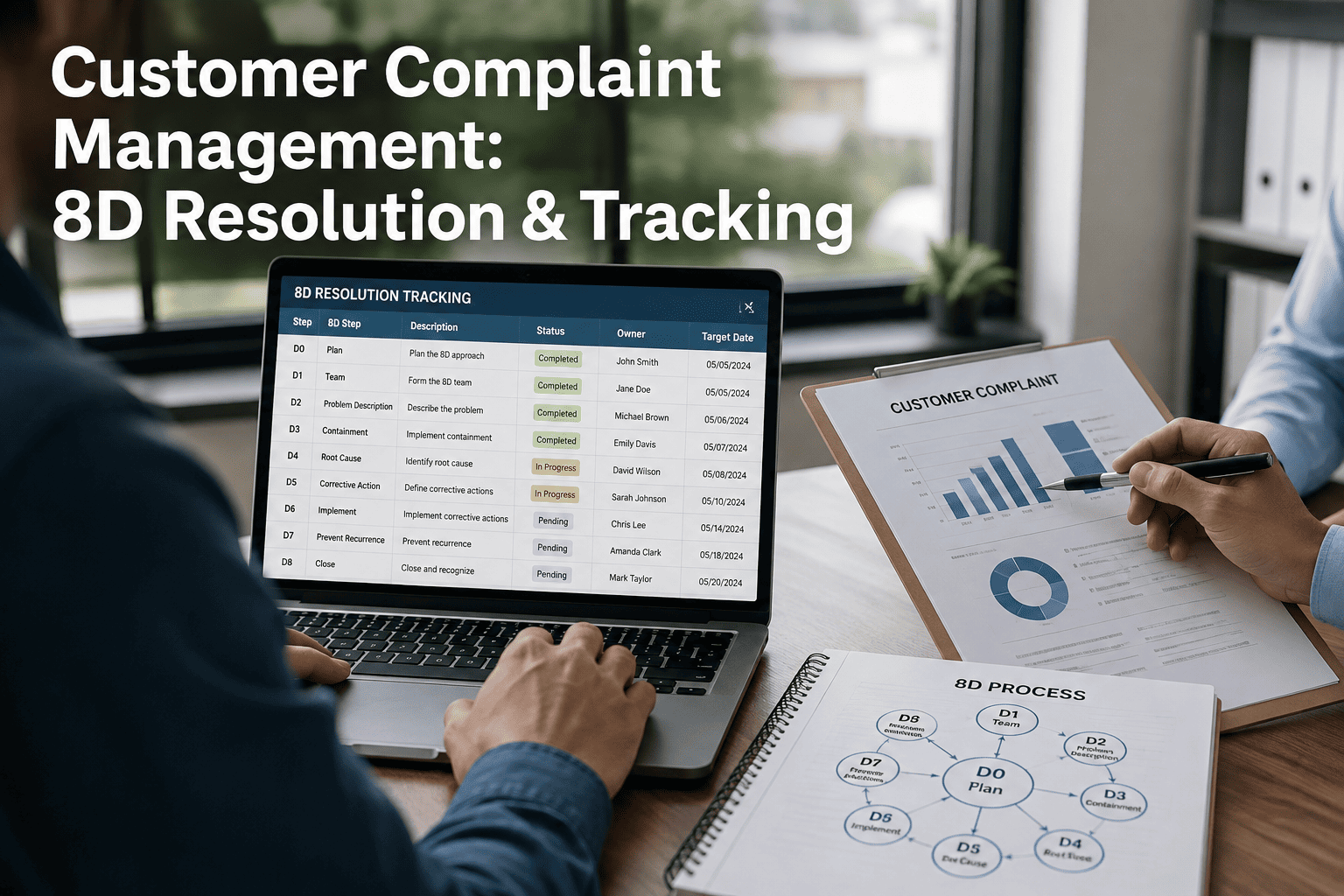
By the time an 8D report is finished and a corrective action is approved, several more lots may have shipped with the same underlying condition. The loop is not missing a step, it is missing the connective tissue between the complaint record and the production data that could explain it in hours rather than weeks.
What a Genuinely Closed Loop Looks Like From Complaint to Correction
A closed loop is not a single tool, it is a connected sequence where each stage automatically feeds the next one instead of waiting for a person to manually carry information from one system to another.
Every one of these five stages already exists in some form in most plants. What is usually missing is the automatic handoff between them, which is exactly where weeks of investigation time get lost.
Sorting Complaints Correctly Is the First Step Toward Finding a Real Root Cause
Complaints that get lumped into a generic "quality issue" bucket are almost impossible to correlate with production data. A consistent categorization scheme, applied automatically at intake, is what makes pattern detection possible later in the loop.
| Complaint Category | Typical Example | Most Common Root Cause Area |
|---|---|---|
| Dimensional | Part out of tolerance, poor fit with mating component | Tooling wear, machine calibration drift |
| Cosmetic | Surface finish, color variation, visible marks | Material lot variation, process temperature swings |
| Functional | Product fails to perform its intended function | Assembly sequence error, component substitution |
| Packaging | Damage in transit, incorrect labeling | Packaging line settings, handling procedure gaps |
| Documentation | Missing certificate, incorrect batch paperwork | Manual data entry error, disconnected records systems |
See How a Real Complaint Traces Back to a Production Record
iFactory can walk through an actual complaint-to-root-cause trace using a sample of your own production and quality data structure.
Manual 8D Investigation vs AI-Assisted Correlation, Side by Side
The classic 8D or 5-Why investigation format still applies inside a closed-loop system. What changes is how quickly the investigation team gets to a supported hypothesis, because the correlation step that used to take days of manual data pulling now happens automatically.
| Investigation Step | Manual Approach | AI-Assisted Approach |
|---|---|---|
| Pulling the affected production record | Manual lookup across MES, ERP, and paper logs | Automatic lookup by lot or serial number in seconds |
| Comparing process parameters across lots | Spreadsheet exports manually compared by an engineer | Automated comparison against a baseline of unaffected lots |
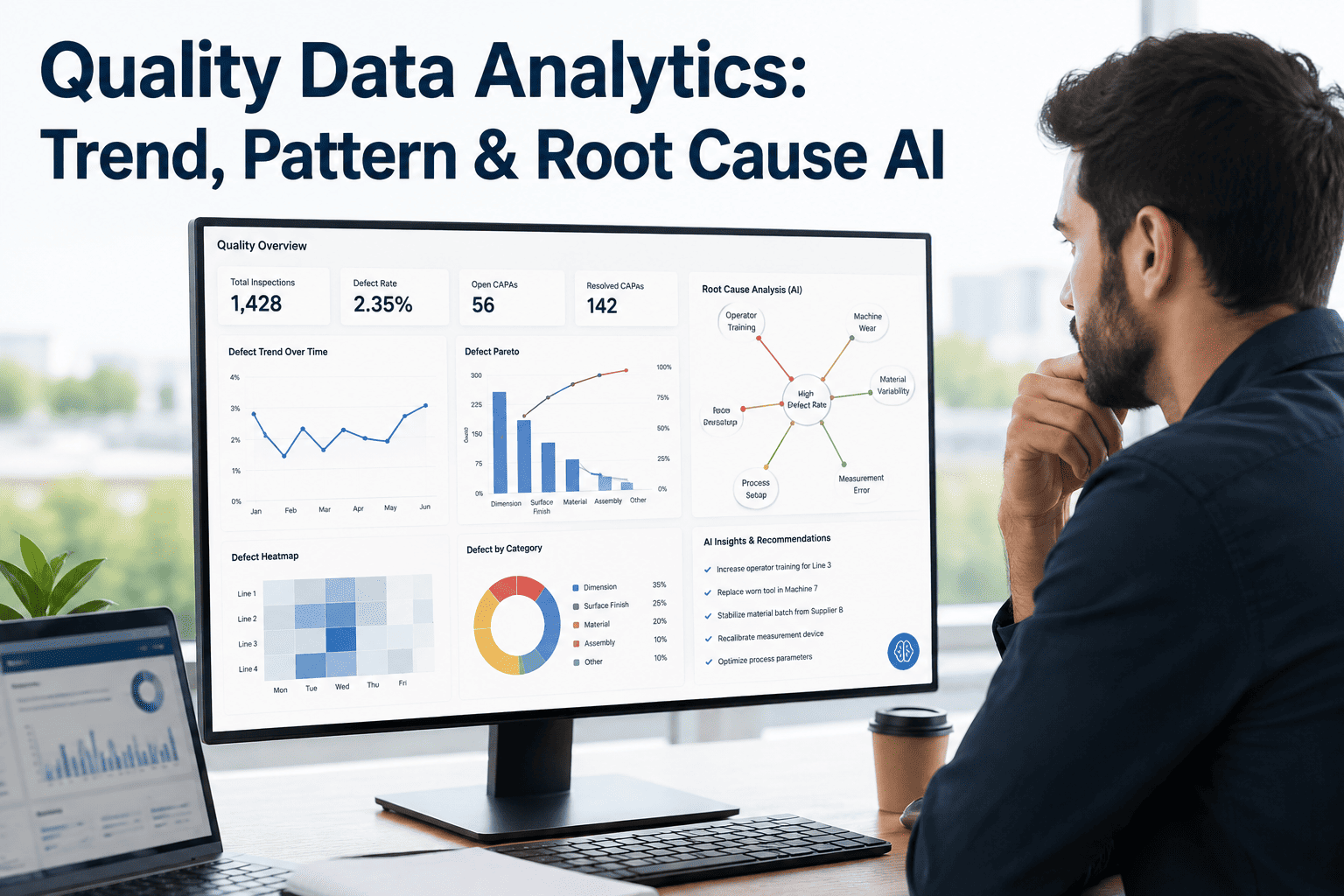
| Identifying the most likely variable | Relies on engineer experience and hypothesis testing | Statistical correlation ranks candidate variables automatically |
| Confirming the corrective action worked | Waits for future complaint volume to drop or not | Tracks the specific process metric on every lot after the change |
Where the Weeks Actually Get Spent in a Typical Investigation
Most of the delay in a complaint investigation is not the analysis itself, it is the time spent locating and assembling the data before analysis can even begin. Closing the loop mainly compresses this data-gathering stage.
Four Capabilities That Separate a Closed Loop From a Complaint Log
What Changed When One Manufacturer Connected Complaints to Production Data
Four Steps to Building a Closed Loop From Your Existing Systems
Common Questions About Closed-Loop Complaint and Production Quality
Stop Investigating the Same Complaint a Third Time
iFactory connects your complaint records to the production data that explains them, so corrective actions target the actual cause instead of a best guess.