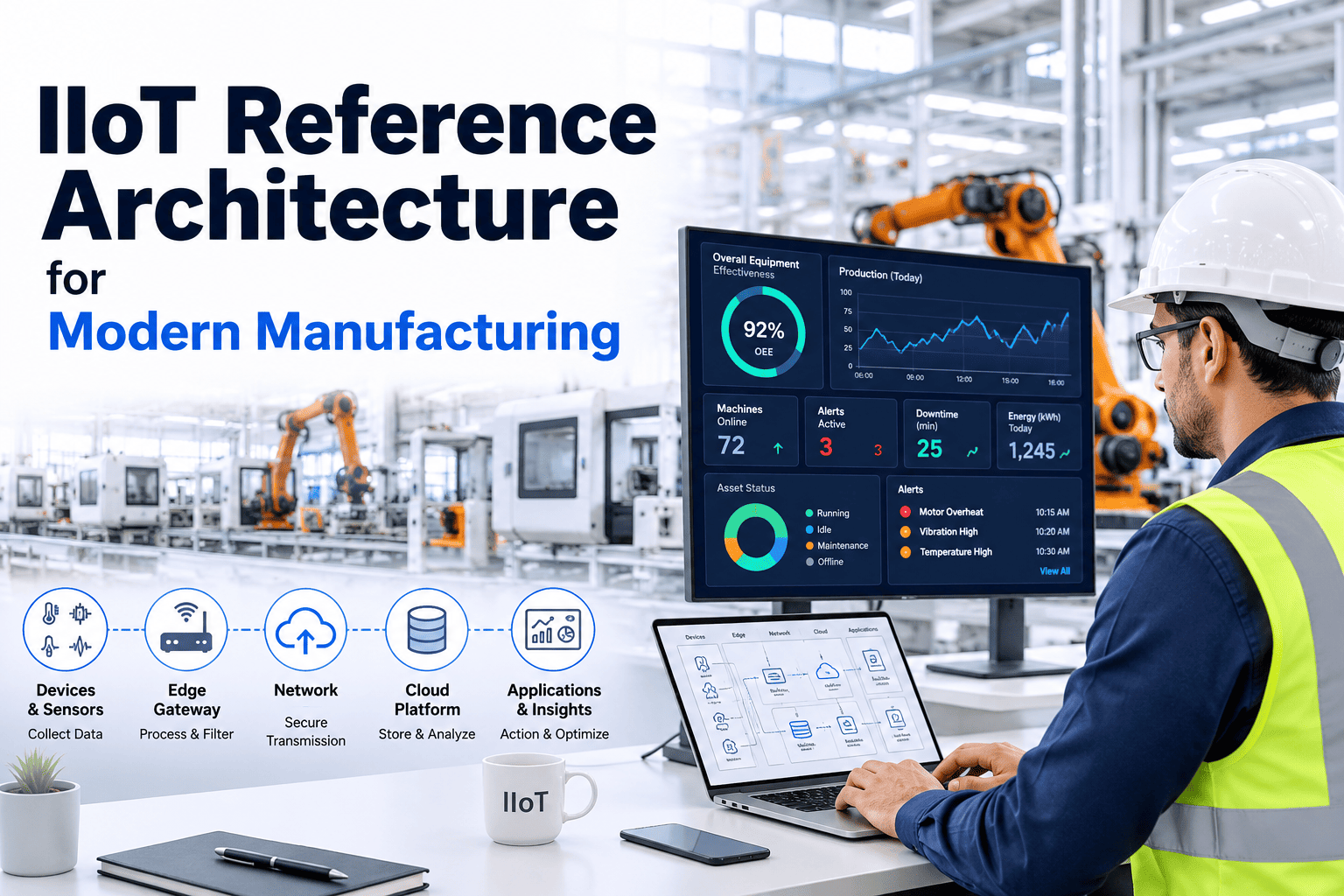
Manufacturing plants lose $50 billion annually to disconnected equipment systems generating terabytes of sensor data that never reaches decision-makers, production managers reviewing yesterday's downtime reports while machines fail in real-time, and maintenance teams blindly responding to breakdowns because SCADA, MES, and ERP systems operate in isolated silos without unified intelligence bridging operational technology and business systems. A single unplanned production line stoppage costs $22,000 per hour in lost throughput plus emergency repair expenses, yet 68% of plants still manage operations through manual shift logbooks, disconnected spreadsheets, and reactive troubleshooting that responds after production impact occurs rather than predicting failures 30-60 days before equipment degradation stops assembly lines. iFactory's AI-powered industrial IoT platform transforms manufacturing connectivity by unifying SCADA, PLC, MES, and ERP data into intelligent predictions that prevent equipment failures 30-60 days in advance, automatically generate maintenance work orders with failure diagnosis and required parts, provide real-time OEE visibility across every production line, and eliminate manual shift handovers through AI digital logbooks that capture tribal knowledge while maintaining complete compliance audit trails. Book a Demo to see how iFactory deploys industrial IoT intelligence across your manufacturing operations within 8 weeks.
87%
Unplanned downtime reduction through predictive equipment monitoring
$2.8M
Average annual production value preserved per manufacturing plant
34%
OEE improvement from real-time visibility and AI optimization
8 wks
Full deployment from equipment audit to live AI monitoring go-live
Disconnected Systems Are Bleeding Production Value. AI Connectivity Stops It at the Source.
The Complete AI Platform for Manufacturing Operations unifies SCADA, PLC, MES, and ERP data into predictive intelligence that prevents failures, optimizes production lines, and automates maintenance across your entire plant—24/7, without manual intervention or data blind spots.
How iFactory AI Solves Industrial IoT Connectivity for Manufacturing
Traditional IoT platforms deliver sensor dashboards and historical data visualization without actionable intelligence. iFactory replaces fragmented connectivity with unified AI models trained on manufacturing equipment data that Predict Failures Before They Stop Production, not after downtime reports reveal losses. See a live demo of iFactory detecting bearing failures and motor degradation across production lines.
01
AI Predictive Maintenance
AI That Turns Downtime Into Planned Maintenance. Machine learning analyzes vibration signatures, motor current patterns, temperature trends, and process variables from production equipment to predict bearing failures, motor winding degradation, hydraulic system leaks, and conveyor belt wear 30-60 days before breakdown thresholds. Automatically generates maintenance work orders with failure diagnosis, required spare parts, and recommended intervention timing synchronized to production schedules.
02
Real-Time OEE Tracking
Real-Time Visibility Into Every Production Line. Calculates Overall Equipment Effectiveness by integrating availability from PLC downtime logs, performance from cycle time analysis, and quality from inspection system defect rates. Identifies optimal production speeds balancing throughput gains against quality degradation costs. Alerts operators when running lines faster creates more scrap expense than production value, providing data-driven recommendations optimizing profit contribution per shift.
03
Digital Shift Logbooks
Eliminate Manual Logs with AI Digital Shift Logbooks. Automatically captures production events, equipment status changes, quality issues, and operator actions from SCADA and PLC systems without manual data entry. AI analyzes shift handover patterns identifying recurring problems, knowledge gaps requiring training, and tribal knowledge from experienced operators that gets documented and preserved. Mobile interface enables shift supervisors to add context and photos while AI structures information for next shift visibility and management reporting.
04
SCADA/PLC Integration
Connects to Your Existing SCADA/PLC Systems including Siemens, Allen-Bradley, Schneider Electric, and Mitsubishi via OPC-UA, Modbus, and native protocols. Integrates with manufacturing execution systems (SAP MES, Siemens Opcenter, Rockwell FactoryTalk) correlating IoT sensor data with production orders, material lots, and operator assignments. Pulls equipment health metrics from condition monitoring systems, quality data from inspection stations, and utility consumption from energy meters into unified intelligence platform.
05
Work Order Automation
When AI detects equipment degradation trends indicating maintenance needs, system automatically generates work orders in CMMS (IBM Maximo, SAP PM, Fiix) with complete diagnostic context: which sensor measurements are degrading, predicted timeline until failure thresholds, affected production volumes at risk, and estimated downtime if intervention delayed. Integrates mobile interface for technicians receiving work assignments, accessing repair procedures, and documenting completion with photo evidence for compliance audit trails.
06
Knowledge Capture System
Captures tribal knowledge from experienced operators and maintenance technicians through AI analysis of shift notes, work order comments, and problem resolution patterns. Identifies recurring equipment issues requiring design modifications, common failure modes needing improved preventive maintenance procedures, and operator techniques achieving superior performance metrics. Builds searchable knowledge base accessible to new employees learning equipment operation and troubleshooting, reducing training time 40-60% while preserving institutional knowledge before skilled workers retire.
How iFactory Is Different from Generic IoT Platforms
Most industrial IoT vendors deliver generic connectivity dashboards without manufacturing-specific intelligence. iFactory is Built for Manufacturing Plants, Not Generic CMMS, from the sensor integration layer up, specifically for production environments where equipment reliability, OEE optimization, and shift coordination determine what operational excellence actually means. Talk to our manufacturing specialists and compare your current IoT approach directly.
| Capability |
Generic IoT Vendors |
iFactory Platform |
| Model Training |
Generic industrial datasets. No manufacturing equipment failure mode training. High false positive alert rates operators learn to ignore. |
Models pre-trained on 12 manufacturing equipment failure modes (bearing wear, motor winding degradation, hydraulic leaks, conveyor belt damage, gearbox tooth wear, pneumatic valve failures, sensor drift, lubrication breakdown). Manufacturing-specific fine-tuning in weeks. |
| Integration Coverage |
Single-parameter sensor monitoring. No multi-source fusion across SCADA, MES, quality systems, and utilities creating isolated data silos. |
Fuses SCADA process data, PLC equipment status, MES production orders, quality inspection results, energy consumption, and maintenance history into unified operational intelligence updated every 60 seconds across entire plant. |
| Actionable Intelligence |
Generic dashboards showing historical trends. No predictive recommendations for operators or maintenance planners on what actions to take. |
Real-time equipment health predictions with maintenance timing recommendations, production speed optimization guidance, quality issue root cause identification, and shift handover priority alerts ranked by production impact and implementation urgency. |
| System Integration |
Requires new sensor installation, gateway hardware deployment, or custom middleware development. Integration timelines of 6-12 months per facility. |
Native OPC-UA, Modbus, and MQTT connectors for all major SCADA/PLC vendors plus MES and CMMS integration via REST APIs. Leverages existing instrumentation in 85% of deployments. Integration complete in under 2 weeks. |
| Manufacturing Focus |
Generic industrial monitoring without production line specifics. No OEE calculation, shift intelligence, or manufacturing workflow integration. |
Manufacturing-first design with real-time OEE tracking, digital shift logbooks, production schedule integration, quality system correlation, and maintenance planning synchronized to production downtime windows. Optimized for batch manufacturing, discrete assembly, continuous processing, and hybrid operations. |
| Deployment Timeline |
6-18 months to full production deployment. High integration consulting costs. No fixed go-live date. Requires extensive sensor infrastructure additions. |
8-week fixed deployment program. Pilot results in week 4. Full production monitoring by week 8. Leverages existing SCADA/PLC infrastructure without new sensor installation in most cases. |
iFactory AI Implementation Roadmap
iFactory follows a fixed 6-stage deployment methodology designed specifically for manufacturing plant IoT connectivity, delivering pilot results in week 4 and full production monitoring by week 8. No open-ended implementations. No scope creep.
01
Equipment Audit
Critical equipment assessment & existing sensor inventory mapping
02
System Integration
SCADA/PLC/MES connection via OPC-UA, Modbus, MQTT protocols
03
Model Baseline
AI training on historical production & equipment health data
04
Pilot Validation
Live monitoring on 2-3 critical production lines or equipment
05
Alert Calibration
Prediction threshold refinement & team training completion
06
Full Production
Plant-wide AI IoT monitoring go-live, 24/7 across all lines
8-Week Deployment and ROI Plan
Every iFactory engagement follows a structured 8-week program with defined deliverables per week and measurable production improvements beginning from week 4 of deployment. Request the full 8-week deployment scope document tailored to your manufacturing operations.
Weeks 1-2
Infrastructure Setup
Critical equipment audit identifying highest-downtime production assets and existing sensor infrastructure across assembly lines, machining centers, packaging equipment
SCADA, PLC, and MES system connection via OPC-UA, Modbus, MQTT protocols leveraging existing instrumentation without new sensor installation in 85% of cases
Historical production data, downtime logs, maintenance records, and quality metrics ingestion for AI baseline model training covering seasonal variations and product mix changes
Weeks 3-4
Model Training and Pilot
AI model trained on your plant's specific equipment types, production processes, operating modes, shift patterns, and historical failure signatures unique to your operations
Pilot monitoring activated on 2-3 critical production lines or highest-downtime equipment accounting for 30-45% of total plant production value at risk
First equipment failures predicted and prevented ROI evidence begins here with maintenance interventions scheduled during planned downtime rather than emergency stops
Weeks 5-6
Calibration and Expansion
Alert thresholds refined based on pilot prediction accuracy validation and false positive rate minimization ensuring operator trust in AI recommendations
Coverage expanded to full plant equipment inventory including utilities, material handling, quality inspection stations, and support systems beyond primary production lines
Operations and maintenance team training completed on digital shift logbooks, predictive alert interpretation, and work order mobile interface with standard operating procedures activated
Weeks 7-8
Full Production Go-Live
Full plant AI IoT monitoring live all production lines, all equipment, all shifts, 24/7 continuous predictive intelligence and OEE tracking across entire facility
Compliance reporting activated for maintenance audit trails, shift handover documentation, quality traceability, and regulatory inspection readiness with automated record generation
ROI baseline report delivered downtime reduction quantification, OEE improvement tracking, maintenance cost savings analysis, and production value preservation metrics trending
ROI IN 6 WEEKS: MEASURABLE RESULTS FROM WEEK 4
Manufacturing plants completing the 8-week program report an average of $320,000 in avoided downtime and emergency repair costs within the first 6 weeks of full production monitoring with unplanned stoppage reduction of 42-68% detected by week 4 pilot validation on critical production equipment.
$320K
Avg. savings in first 6 weeks
42-68%
Downtime reduction by week 4
82%
Equipment failures predicted before production impact
Full AI Industrial IoT Platform. Live in 8 Weeks. ROI Evidence in Week 4.
One Platform for Smart Manufacturing with AI-Powered Maintenance, OEE, and Operations. iFactory's fixed-scope deployment program means no open timelines, no extensive sensor installation projects, and no months of integration before you see production improvements.
Use Cases and KPI Results from Live Deployments
These outcomes are drawn from iFactory deployments at operating manufacturing plants across three industrial IoT application categories. Each use case reflects 6-month post-deployment performance data. Request the full case study report for the IoT application most relevant to your plant.
A mid-size food manufacturing plant operating 6 high-speed packaging lines was experiencing 8-12 unplanned bearing failures monthly causing 4-hour emergency repairs at $88,000 per incident in lost production plus expedited spare parts procurement. Legacy vibration monitoring generated threshold alarms only after bearing damage progressed to audible noise levels requiring immediate shutdown. iFactory deployed multi-parameter sensor fusion analyzing vibration signatures, motor current patterns, and bearing temperature trends across all packaging line motors, conveyors, and rotary equipment. Within 4 weeks of go-live, AI detected 9 bearing degradation patterns 45-60 days before failure thresholds, scheduling replacements during planned weekend maintenance windows.
Zero
Emergency bearing failures in 6 months vs. 48-72 annually pre-AI
$1.9M
Annual production value preserved from downtime elimination
87%
Reduction in unplanned maintenance interventions
A discrete manufacturing facility operating 18 CNC machining centers was achieving only 62% overall equipment effectiveness due to untracked micro-stoppages, sub-optimal cycle times, and quality rework loops invisible in daily production reports. Manual OEE calculation from shift logs provided weekly averages 5-7 days after production occurred, preventing real-time optimization. iFactory's real-time OEE tracking integrated PLC machine status, cycle time analysis, and quality inspection results, identifying that running certain part numbers at 95% versus 88% of maximum spindle speed increased scrap 18% while only improving throughput 7%, destroying profit contribution despite higher output volumes.
34%
OEE improvement from 62% baseline to 83% sustained performance
$1.2M
Annual profit contribution increase from optimized production speeds
Real-time
OEE visibility vs. 5-7 day delayed weekly reports
An automotive components manufacturer operating continuous 3-shift production was losing $540K annually in repeated problem-solving efforts traced to inadequate shift handover communication and tribal knowledge loss when experienced operators retired. Manual shift logbooks required 15-20 minutes per handover with inconsistent documentation quality varying by supervisor experience and shift workload intensity. iFactory's AI digital shift logbooks automatically captured production events, equipment status changes, and quality issues from SCADA systems, while mobile interface enabled supervisors to add context photos and operator notes. Tribal knowledge from 25-year veteran operators got structured and preserved in searchable knowledge base accessible to new hires.
$540K
Annual savings from eliminated repeated problem investigations
78%
Reduction in shift handover time from 15-20 min to 3-5 min
60%
Faster new employee training leveraging knowledge capture
Results Like These Are Standard. Not Exceptional.
Every iFactory deployment is scoped to your specific manufacturing processes, equipment types, and production constraints so you get results calibrated to your operations, not a generic benchmark.
What Manufacturing Operations Teams Say About iFactory
The following testimonials are from plant managers and maintenance directors at facilities currently running iFactory's AI industrial IoT platform.
We eliminated unplanned downtime entirely on our packaging lines without replacing equipment. iFactory tells us exactly which bearing needs replacement, when degradation will reach failure threshold, and optimal maintenance timing. Our production planning has never been this predictable.
Director of Manufacturing Operations
Food & Beverage Plant, USA
The manual shift logbooks were missing 80% of critical handover information until problems repeated across multiple shifts. Within three weeks of iFactory going live, shift transitions became seamless because AI captured everything automatically and supervisors just added context. That visibility alone prevented four production quality issues our team caught in post-mortem reviews.
VP of Plant Operations
Discrete Manufacturing Facility, Germany
Integration with our Siemens SCADA and SAP MES took 11 days end-to-end. I was expecting months based on previous IoT platform vendors. The iFactory team understood both manufacturing processes and industrial protocol integration. Deployment speed genuinely different here.
Head of Plant Engineering
Automotive Components Manufacturer, India
We prevented a critical gearbox failure in month two. The iFactory system flagged vibration pattern changes 52 days before failure threshold our maintenance team calculated post-detection. We scheduled replacement during planned production changeover, not an emergency weekend callout. That outcome alone justified the investment.
Plant Maintenance Manager
Process Manufacturing Facility, UAE
Frequently Asked Questions
Does iFactory require new sensors or IoT hardware to be installed across the plant?
In most deployments, iFactory leverages existing SCADA, PLC, and MES infrastructure via OPC-UA and Modbus protocols without new sensor installation. Where measurement gaps are identified during Week 1-2 equipment audit, iFactory recommends targeted sensor additions only (typically 6-12 sensors per plant for critical equipment vibration or temperature monitoring), not a full IoT infrastructure overhaul. Integration is complete within 2 weeks in standard manufacturing environments.
Book a demo to see integration approach for your systems.
Which SCADA, PLC, MES, and CMMS systems does iFactory integrate with?
iFactory integrates natively with Siemens WinCC/TIA Portal, Allen-Bradley FactoryTalk, Schneider Electric EcoStruxure, Mitsubishi iQ-F, and GE iFIX SCADA systems via OPC-UA and Modbus. For MES, iFactory connects to SAP MES, Siemens Opcenter, Rockwell FactoryTalk, and Dassault DELMIA. For CMMS, iFactory supports IBM Maximo, SAP PM, Oracle EAM, and Fiix via REST APIs. Custom integration support available for legacy systems. Integration scope confirmed during Week 1 equipment audit.
How does iFactory handle different production processes and equipment types across the same plant?
iFactory trains separate sub-models per equipment class accounting for operational differences between assembly lines (cycle time optimization, quality correlation), machining centers (tool wear prediction, spindle health), packaging equipment (bearing monitoring, conveyor tracking), and process systems (batch control, recipe management). Multi-process manufacturing operations are fully supported within single deployment. Equipment-specific prediction parameters configured during Week 3-4 model training phase based on your plant's unique asset mix and production characteristics.
What compliance and audit documentation does iFactory's IoT platform provide?
iFactory auto-generates compliance reports for maintenance audit trails (equipment service history, work order completion documentation), shift handover records (digital logbook archives with supervisor signatures), quality traceability (inspection results correlated to production lots), and safety compliance (lockout-tagout procedures, equipment permits). Report templates pre-configured for ISO 9001, IATF 16949, FDA 21 CFR Part 11, and industry-specific regulatory frameworks. Generated automatically at configurable intervals without manual documentation compilation.
How long does it take before the AI model produces reliable equipment failure predictions?
Baseline model training on historical production and equipment health data typically takes 5-7 days using 60-90 days of plant operating history covering production mix variations and seasonal patterns. First live predictions are validated during Week 3-4 pilot phase on critical equipment. Full model calibration with prediction accuracy exceeding 85% is achieved within 6 weeks of deployment for standard manufacturing equipment. Continuous learning improves accuracy to 92-96% over 12-month period as AI refines predictions from actual failure outcomes.
Can iFactory optimize operations across multiple manufacturing plants or is it facility-specific only?
Yes. iFactory supports multi-site deployments with centralized visibility across all facilities while accommodating plant-specific configurations for equipment types, production processes, and local operational practices. AI models trained at one facility can transfer learnings to similar equipment at other plants, accelerating deployment and improving initial prediction accuracy through cross-facility knowledge. Enterprise dashboards provide corporate-level OEE trending, maintenance cost benchmarking, and best practice identification across entire manufacturing network.
Talk to specialist about multi-plant deployment.
Stop Production Losses from Disconnected Systems. Deploy AI Industrial IoT in 8 Weeks.
iFactory gives manufacturing operations teams unified AI intelligence connecting SCADA, PLC, MES, and ERP data into predictive maintenance, real-time OEE tracking, digital shift logbooks, and automated compliance reporting fully integrated with your existing systems in 8 weeks, with production improvements starting in week 4.
87% unplanned downtime reduction through AI predictions
SCADA/PLC/MES integration in under 2 weeks
Real-time OEE visibility across every production line
Auto-generated compliance and audit documentation