A quality manager pulls the defect escape report after a customer return and finds the flaw sitting in a photo from the inspection station, clearly visible once you know where to look, on a part that a trained inspector cleared an hour before the shift ended. Nobody did anything wrong in the way a disciplinary conversation would define wrong, the inspector was tired, the defect was subtle, and human vision simply was not built to catch a 0.3 millimeter inconsistency at the two-hundredth part of a repetitive shift. Machine vision systems do not get tired, do not lose focus at hour six, and evaluate the two-hundredth part with exactly the same scrutiny as the first one, which is why manufacturers increasingly ask not whether automated inspection is more accurate than a human but by how much, and what that gap actually costs when it goes uncorrected month after month. The honest answer involves real numbers on both sides of the comparison, not a marketing claim that humans are obsolete, and getting that comparison right is the first step before you book a demo to see where automated inspection would help your own line most.
Machine Vision vs Human Inspection: What the Accuracy Numbers Actually Show
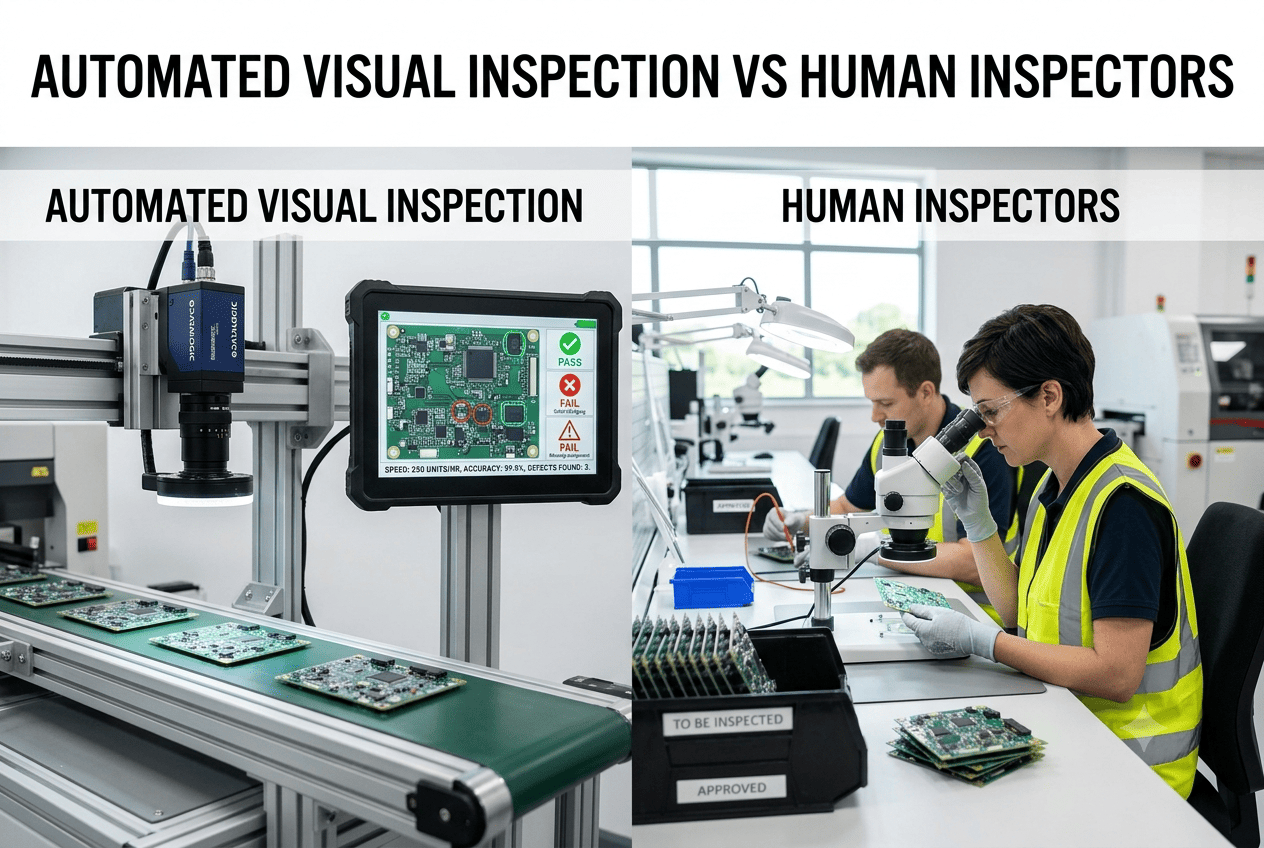
Detection rate, consistency, speed, and total cost tell four different parts of the same story, and a fair comparison has to look at all four before a plant decides where to automate and where to keep a trained eye on the line.
The Limits Aren't About Skill, They're About Physiology
A trained inspector with years of experience is not failing to catch defects because they lack ability, they are running into physical limits that no amount of training fully overcomes on a fast-moving line, and understanding those limits is the starting point for any honest comparison rather than a critique of the people doing the work.
What Independent Research Actually Measured
These figures come from published research and documented deployments rather than vendor marketing claims, and the gap between the two approaches is larger than most quality teams expect until they see it laid out side by side against their own production volume.
How a Vision System Sees What a Human Eye Cannot
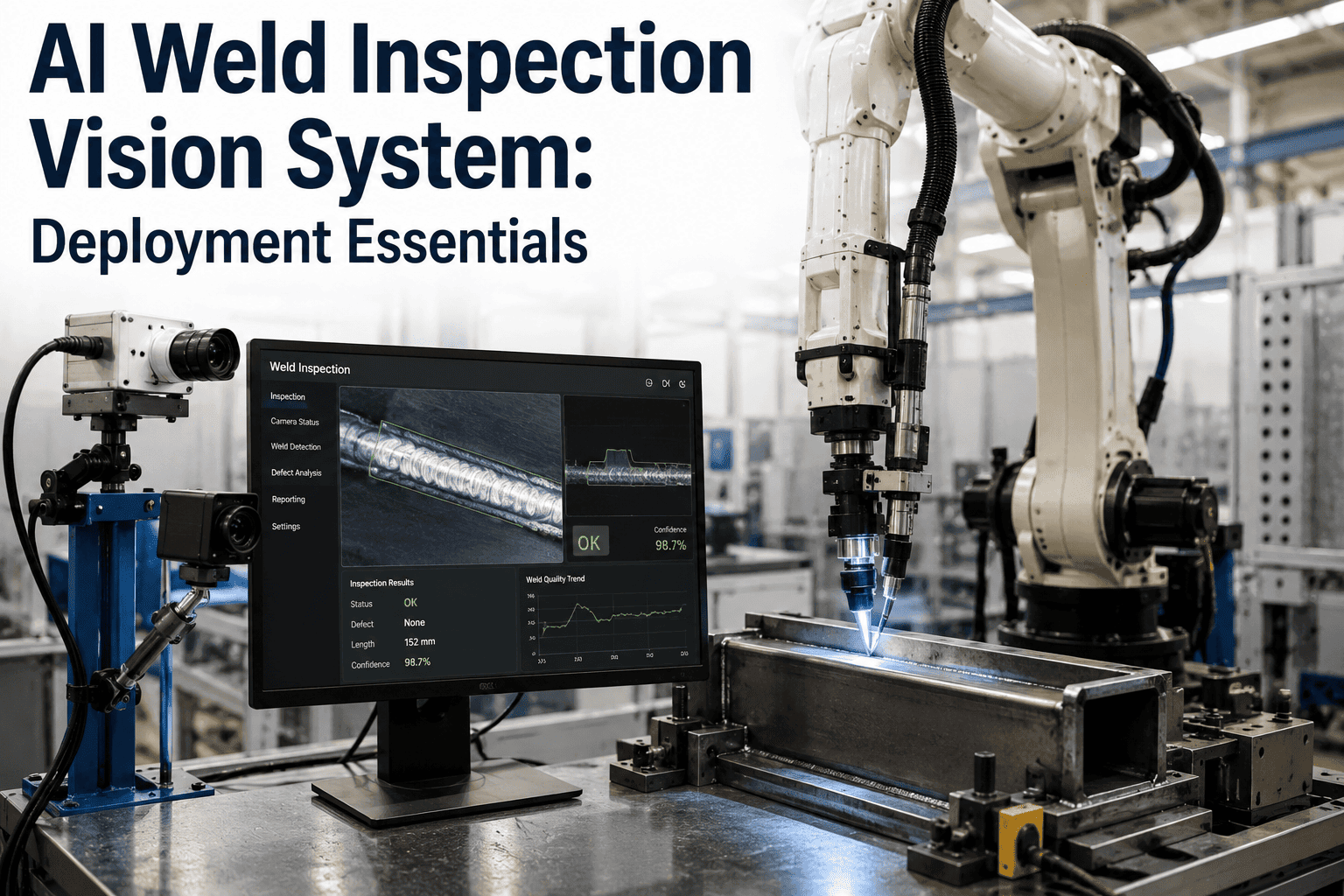
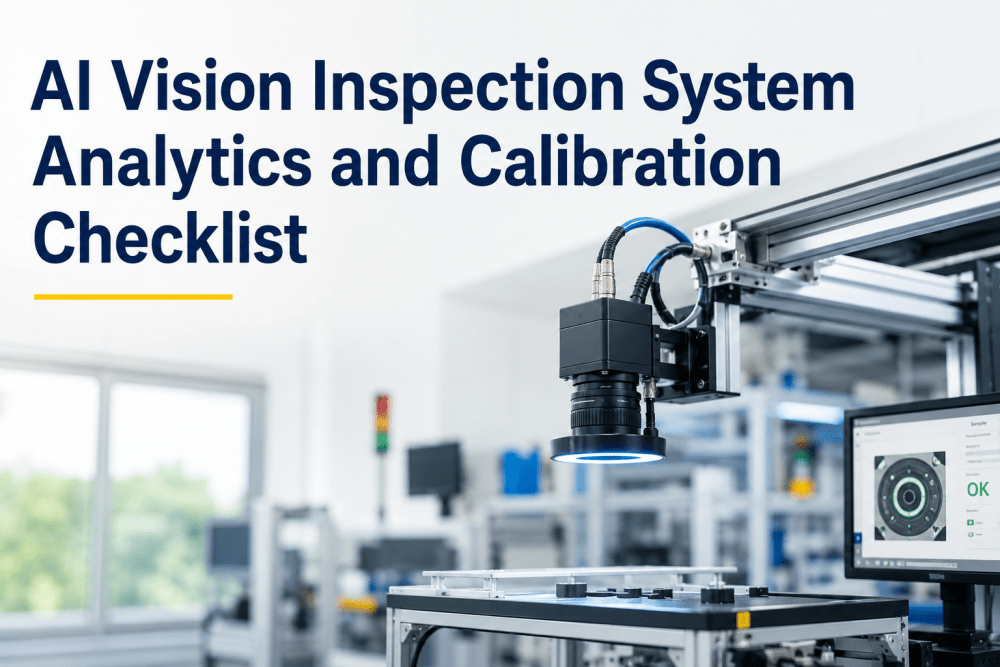
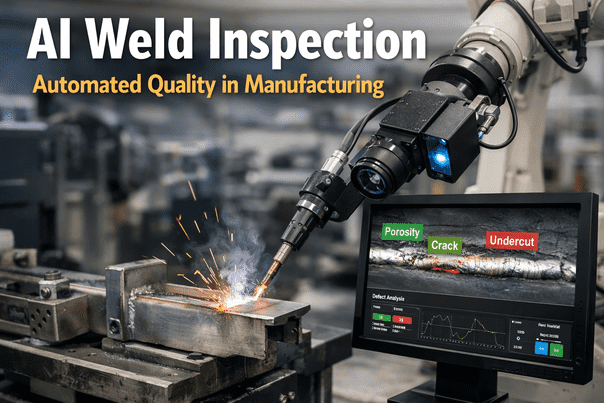
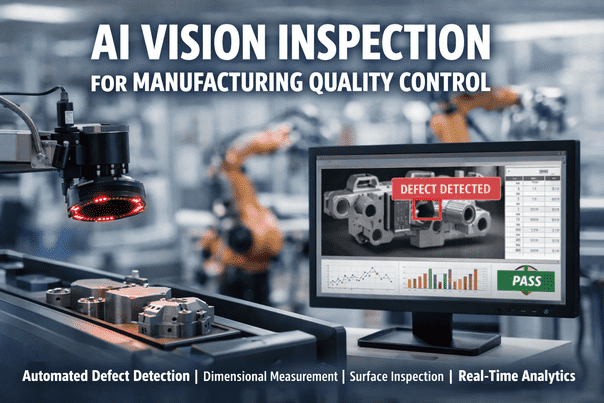
Machine vision inspection combines industrial cameras, engineered lighting, and image processing software that captures a frame of a part, compares it against a trained model of what a defect-free version looks like, and flags deviations in milliseconds as the part continues down the line without stopping. That comparison happens the same way every single time, whether it is the first part run that morning or the ten-thousandth part run right before shift change, because the system has no concept of fatigue, no attention that drifts, and no bad mood carried over from a difficult commute. The camera also sees wavelengths and resolves detail well beyond what the human eye can register under factory lighting, which is why a system can reliably catch a hairline crack or a sub-millimeter dimensional deviation that would require an inspector to stop the line and examine the part under a magnifier to even notice.
None of this makes the underlying defect logic mysterious. A quality engineer still defines what counts as a defect, sets the tolerance thresholds, and reviews edge cases the system flags as uncertain, so the technology augments a quality program's judgment rather than replacing the standards behind it. What changes is how consistently and how quickly those standards get applied across every single part that moves down the line.
The Real Price of an 80 Percent Detection Rate
An 80 percent detection rate sounds respectable until it is translated into what the remaining 20 percent means for a plant shipping thousands of units a week to customers who expect every single one to be defect-free. Every defect that slips past inspection becomes a customer complaint, a warranty claim, a field failure, or in safety-critical industries, something considerably more serious, and the cost of catching that same defect rises sharply the further downstream it travels before anyone notices. A flaw caught at the inspection station might cost a few cents in scrap or rework, the same flaw caught by a customer can cost a returned shipment, a damaged relationship, and in some sectors a regulatory reporting obligation. That escalating cost curve is the real argument for closing the detection gap, not simply the appeal of a higher accuracy percentage on a spec sheet.
The math also compounds over time in a way that is easy to underestimate. A plant running two shifts and shipping a few thousand units a day that improves detection from 80 percent to 98 percent is not preventing a handful of extra escapes, it is preventing hundreds of them every month, each carrying its own downstream cost in returns, rework, and reputation. Framed that way, the accuracy comparison stops being an abstract statistic and becomes a direct input into a plant's cost of quality.
See Your Own Defect Escape Rate Before and After
iFactory's quality monitoring pairs machine vision data with your production records so you can measure the accuracy gap on your own line instead of relying on industry averages alone.
Detection Rate Is Only One Part of the Comparison
A complete comparison has to account for consistency and speed as well as raw accuracy, since a system that catches more defects but cannot keep pace with the line, or cannot explain why it flagged a part, creates a different set of operational problems for a quality team already stretched thin.
| Factor | Human Inspection | Machine Vision |
|---|---|---|
| Detection Rate | Roughly 60 to 85 percent depending on fatigue, experience, and defect complexity | Roughly 97 to 99.5 percent under properly configured, consistent conditions |
| Consistency | Varies by inspector, shift, and time on task, with accuracy dropping over a shift | Identical scrutiny applied to the first part and the millionth part alike |
| Inspection Speed | Limited by human reaction time and visual processing, often the throughput bottleneck | Can inspect hundreds of parts per minute, matching or exceeding line speed |
| Minimum Detectable Defect | Generally reliable down to about half a millimeter under good conditions | Capable of consistently resolving defects below 0.1 to 0.2 millimeters |
| Upfront Cost | Low upfront cost, ongoing labor and training cost per inspector | Higher upfront investment in cameras, lighting, and integration |
| Adaptability to Novel Defects | Strong, can recognize an unfamiliar defect type immediately using judgment | Limited until the model is retrained on examples of the new defect type |
Machine Vision Isn't Infallible Either
A fair comparison has to acknowledge where automated inspection still struggles, since overselling the technology is what leads plants to deploy it in the wrong place and then blame the system when it underperforms instead of adjusting where and how it was applied.
Why Some Machine Vision Projects Underdeliver
The technology behind modern machine vision is mature, yet a meaningful share of pilots never progress past a prototype stage, and the reason rarely traces back to the underlying detection algorithm itself. Most stalled deployments trace back to lighting that was never properly engineered for the specific surface and defect types being inspected, a training dataset too small or too narrow to cover real production variation, or an integration effort that underestimated how much work it takes to connect a vision system's output to the line's reject mechanism and quality records. Plants that treat the first deployment as a scoped pilot on a single line, with a clear definition of success and a feedback loop for retraining, consistently see better results than plants that attempt a plant-wide rollout on day one.
The other underestimated factor is change management on the floor itself. Inspectors who fear the technology is there to replace them tend to disengage from the process and withhold the very feedback that would improve the model, while inspectors who understand they are being freed from the most fatiguing, repetitive part of their job to focus on judgment calls and process improvement tend to become the deployment's strongest advocates. That distinction in framing often matters as much as the technical setup in determining whether a pilot becomes a permanent part of the quality process.
The Best Answer Is Usually Both, Deployed in the Right Place
Most plants that get real value from automated inspection do not eliminate human inspectors, they redeploy them to the judgment calls machine vision handles poorly while automating the repetitive, high-volume detection work that erodes human accuracy over a shift, and that redeployment tends to raise both morale and overall detection quality at the same time.
Questions Quality Teams Ask Before Automating Inspection
Find Out Where Machine Vision Would Help Your Line Most
iFactory connects real-time inspection data with your production and quality records so you can see the accuracy, speed, and cost tradeoffs on your own parts before committing to a full rollout. Book a demo and bring your current defect escape data into the conversation.