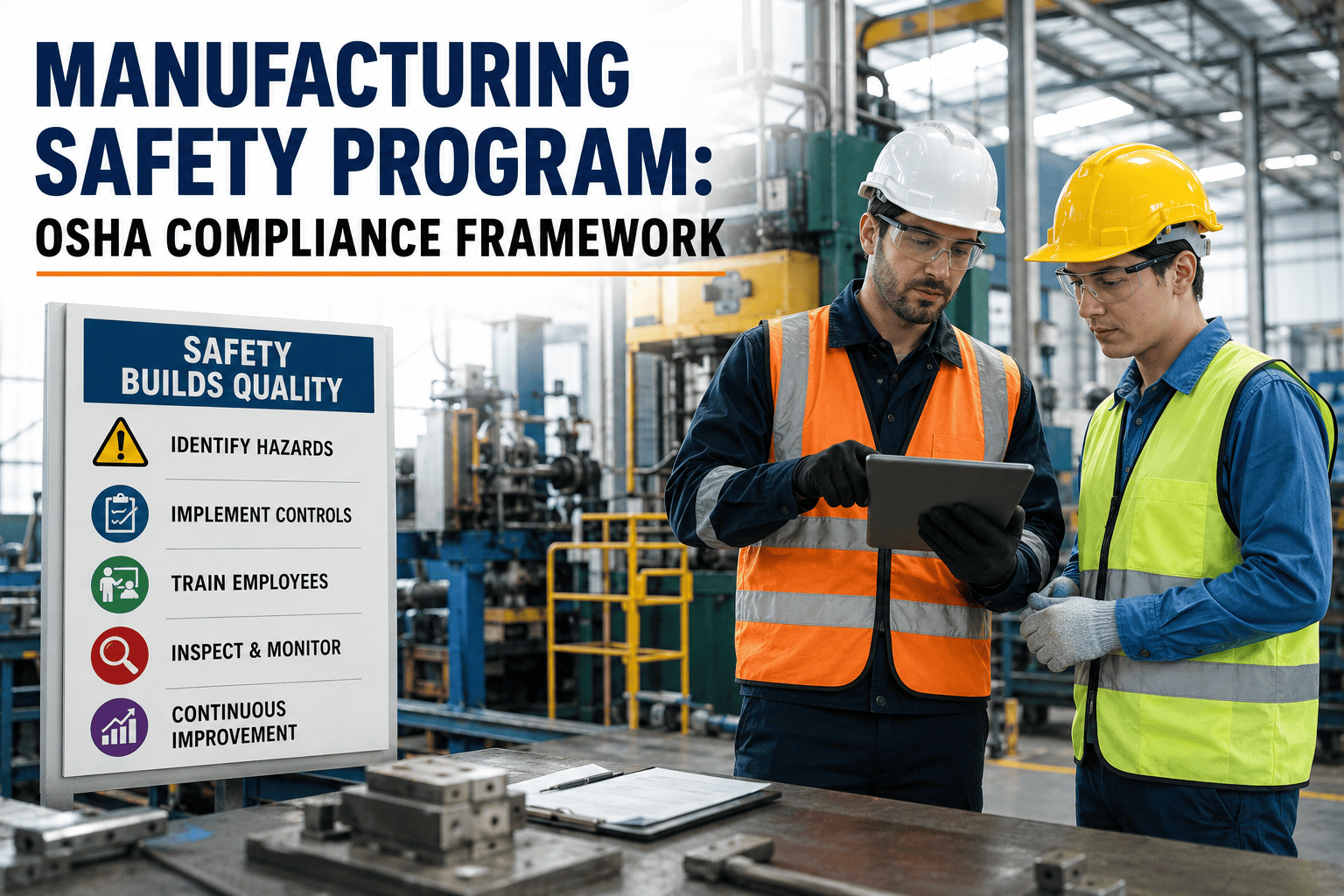
Manufacturing Safety Program: OSHA Compliance Framework

By Johnson on August 21, 2026

manufacturing-safety-program-osha-compliance-framework

A machine guard comes off for a five minute adjustment and never goes back on. A lockout procedure exists on paper but a technician skips the tag because the job is only supposed to take a minute. These are not rare failures, they are the everyday gaps that show up in OSHA's citation data year after year, long before an inspector or an injury report reveals them. Hazard communication, lockout and tagout, and machine guarding together account for most citations issued to manufacturers, which is why iFactory built continuous monitoring for these exact risk areas, and you can book a demo to see it running on a real floor.

SAFETY & EHS · OSHA COMPLIANCE · MANUFACTURING

The Three OSHA Standards Responsible For Most Manufacturing Citations

Hazard communication, lockout and tagout, and machine guarding are not just line items on a checklist, they are the standards inspectors find violated most often on manufacturing floors, and each one maps directly to a preventable injury pattern that a structured compliance framework can catch before it becomes a citation or a claim.

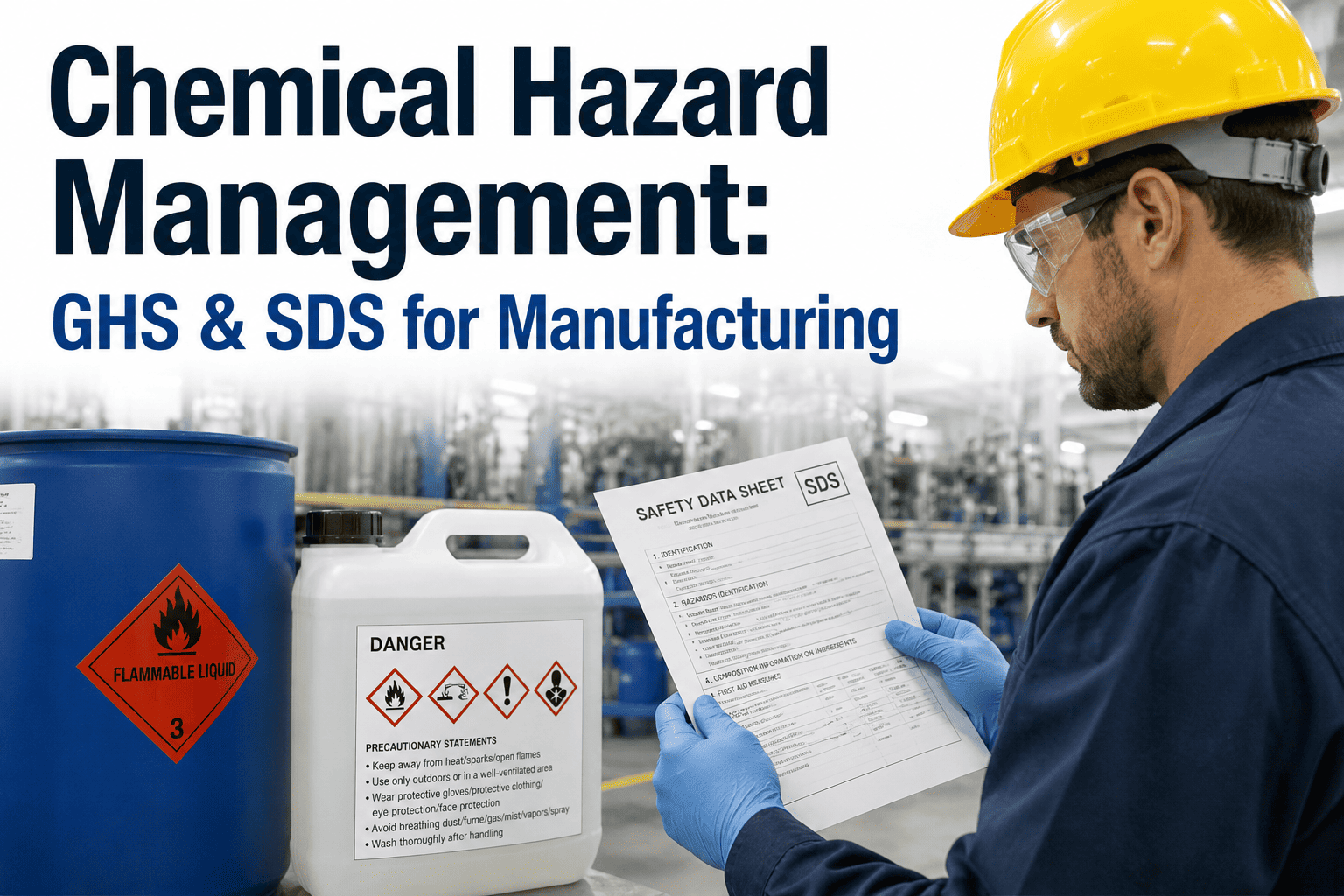
Hazard Communication (1910.1200)
2,546 citations
Lockout / Tagout (1910.147)
2,177 citations
Respiratory Protection (1910.134)
1,953 citations
Powered Industrial Trucks (1910.178)
1,826 citations
Machine Guarding (1910.212)
1,239 citations
WHY THESE THREE KEEP RECURRING

The Pattern Behind Every Repeat Citation

OSHA's most cited standards do not change much from year to year, and that consistency is the real story. It is not that manufacturers are unaware of these requirements, it is that a written program on file and a program actually followed on the floor drift apart quietly over months, and nobody notices until an inspector, an audit, or an injury forces the gap into view. Lockout and tagout alone is estimated to prevent roughly 120 fatalities and 50,000 injuries a year when it is actually followed, which gives some sense of what is at stake when a single procedure gets skipped because a job seemed too quick to bother with a lock and a tag.

Programs Written Once, Never Revisited
A hazard communication or lockout program built during initial certification rarely gets updated as new chemicals, equipment, or process changes are introduced, so the written program and the actual floor conditions diverge over time.
Guards Removed And Not Restored
Machine guards are frequently removed for a quick adjustment, jam clearance, or cleaning cycle, and restoring them afterward depends entirely on an operator remembering to do it before the next production run starts.
Training Happens Once, Not Continuously
New hire orientation covers lockout and hazard communication requirements, but refresher training, especially after a near miss or equipment change, is the step most likely to get skipped when the schedule is tight.
Audits Are Periodic, Not Continuous
Annual or quarterly internal audits catch conditions on the day of the walk-through, but the gaps that lead to citations and injuries usually exist for weeks or months before that scheduled review ever happens.

The common thread across all four patterns is time. A program that was compliant on the day it was written, a guard that was in place on the day of the last audit, a training session that covered every requirement three years ago, none of these facts tell you anything about whether the plant is compliant right now, today, on this shift. OSHA does not cite plants for what their program looked like at some point in the past, it cites plants for the condition inspectors actually find when they walk the floor, which means the real question every safety manager should be asking is not whether a program exists, but whether anyone would know if it quietly stopped being followed.

THE FRAMEWORK

Five Layers Of A Manufacturing Safety Program That Actually Holds Up

A compliance framework that only exists in a binder will not survive its first real audit. The five layers below build on each other, starting with the paperwork every plant is required to have, and ending with the continuous monitoring that keeps the first four layers honest between audits. Building the layers in this order matters, because trying to add continuous monitoring on top of a hazard communication or lockout program that is not already sound just gives you faster visibility into a problem you have not fixed yet.

1
Hazard Communication Program
Written program, current safety data sheets, correct container labeling, and documented training covering every chemical actually present on the floor, not just the ones on the original inventory list.
2
Machine Guarding
Fixed and adjustable guards in place at every point of operation, nip point, and rotating part, with a defined process for reinstalling guards after any service or cleaning event.
3
Lockout / Tagout Program
Machine-specific written procedures, individually assigned locks, verified zero-energy checks before servicing, and annual inspections for every authorized employee.
4
PPE And Respiratory Protection
Task-specific PPE requirements, a written respiratory protection program where exposure limits apply, and current fit testing and medical evaluations on file for every affected employee.
5
Continuous Monitoring And Audit
Ongoing visibility into guard status, PPE compliance, and near misses between formal audits, which is the layer most plants are missing and the one that keeps the other four from quietly drifting out of compliance.

Notice that the first four layers of this framework are not new or unusual, almost every manufacturing plant already has some version of each one on file. The reason citations keep recurring is not that these programs do not exist, it is that nothing sits above them checking whether they are still being followed once the ink on the last audit report has dried. That fifth layer is what separates a program that looks compliant in a binder from one that actually holds up when conditions change, a new hire joins the floor, or an inspector arrives unannounced.

The First Four Layers Are Standard, The Fifth Is What Protects Them

Most plants already have a hazard communication binder, a lockout program, and machine guards in place. What they are missing is continuous visibility into whether those controls are actually being followed on every shift, not just the day of the audit.

SELF-AUDIT CHECKLIST

Eight Questions That Predict How An OSHA Inspection Would Go

Before scheduling a formal audit, walk through the checklist below honestly. Most plants that fail an inspection can trace the failure back to one or two of these items being true on paper but not true on the floor, and the exercise is far more useful done candidly by your own team than discovered for the first time by an OSHA compliance officer standing in your break room.


Written hazard communication program is updated within the last twelve months and reflects every chemical currently on site.

Safety data sheets are accessible to every shift, including night and weekend crews, without needing to track down a supervisor.

Every machine with hazardous energy has its own written lockout procedure, not a single generic procedure applied across equipment.

Annual lockout and tagout inspections have been completed and documented for every authorized employee this year.

Machine guards removed for service or cleaning are reinstalled before the equipment returns to production, every time.

Training records are dated, current, and cover refreshers, not only new hire orientation from years ago.

Respiratory protection program includes current fit testing and medical evaluations for every affected employee.

Internal audits generate corrective actions with a named owner and a deadline, not just a list of observations.

If more than one or two of these items would come back false on your floor today, the gap is rarely a lack of policy, it is a lack of visibility into whether the policy is being followed between the audits your team already schedules.

WHERE THE RISK CONCENTRATES

The Plants Where This Framework Matters Most

Every manufacturing floor carries some exposure to these three standards, but the risk concentrates fastest in a specific set of conditions. Checking how many apply to your own operation is a faster way to gauge urgency than waiting for the next scheduled audit.

High Equipment Turnover Or Frequent Servicing
Lines with frequent changeovers, jam clearance, or maintenance events see guards removed and lockout procedures performed far more often, multiplying the number of moments where a shortcut can slip through unnoticed.
Multiple Shifts With Limited Supervisor Coverage
Night and weekend shifts often run with fewer supervisors on the floor, which means conditions that would be caught immediately during the day shift can persist for hours before anyone notices.
Facilities With A Growing Chemical Inventory
Plants that have added new coatings, solvents, or cleaning agents over time without a formal process for updating the hazard communication program are carrying hidden gaps between the written program and the floor.
Sites That Have Not Been Inspected Recently
Facilities that have gone several years without an OSHA inspection often assume that absence reflects strong compliance, when in many cases it simply means the drift described earlier has not yet been caught.

None of these four conditions are unusual, most manufacturing plants meet at least two of them without thinking twice, which is part of why hazard communication, lockout and tagout, and machine guarding remain at the top of the citation list year after year regardless of industry trends or economic conditions. Recognizing which of these apply to your own facility is a useful exercise before your next scheduled audit, not because it changes what OSHA requires, but because it tells you where a continuous monitoring layer would close the largest gap first.

HEAD TO HEAD

Reactive Safety Audits vs Continuous AI Safety Monitoring

The comparison below covers the dimensions that determine whether a safety gap is caught the moment it appears or discovered weeks later, either by an inspector or by an injury report.

Safety Dimension Periodic Manual Audit iFactory Continuous Monitoring
Guard Status Visibility Confirmed only during scheduled walk-throughs Monitored continuously across every shift
PPE Compliance Spot-checked by a supervisor when available Detected automatically at defined checkpoints
Near-Miss Capture Relies on employees self-reporting Flagged from monitored conditions in real time
Audit Frequency Quarterly or annual, condition on that day only Continuous, with trend data across every shift
Corrective Action Tracking Paper or spreadsheet, easy to lose track of Logged, owned, and tracked to closure automatically

The distinction is not that manual audits are careless, most safety managers running them are thorough and well trained. The distinction is frequency and coverage. A quarterly walk-through, however rigorous, is a snapshot, and a snapshot cannot tell you what happened on the night shift three weeks ago when a guard came off and never went back on. Continuous monitoring does not replace the judgment of a trained safety professional, it gives that professional far more data points to act on than a handful of scheduled visits ever could.

MEASURED OUTCOMES

What Changes When Safety Monitoring Becomes Continuous

These are the categories of improvement plants most consistently report after adding continuous safety monitoring on top of their existing OSHA compliance program. None of these gains come from replacing a written program, they come from finally being able to see whether that program is holding up between the audits your team already schedules.

42%
Fewer Recordable Incidents
Within The First Year Of Deployment
3.6x
More Near Misses Captured
Before They Became Recordable Injuries
60%
Faster Corrective Action
From Detection To Closed Ticket
$165K
Avoided Exposure
Per Serious Violation Prevented
FREQUENTLY ASKED QUESTIONS

Questions EHS Managers Ask Before Building This Framework

Does continuous monitoring replace our written safety programs and internal audits?
No, continuous monitoring is built to strengthen your existing hazard communication, lockout, and machine guarding programs rather than replace them. OSHA still expects a written program, documented training, and scheduled internal audits regardless of what monitoring technology is in place, and no software substitutes for those documented requirements. What continuous monitoring adds is visibility into the days and shifts between those scheduled reviews, which is where most drift actually happens, and it becomes evidence that your written program is being actively followed rather than a document that sits in a binder. You can walk through how it layers onto your current program in a demo session.
Which areas of the plant should we prioritize monitoring first?
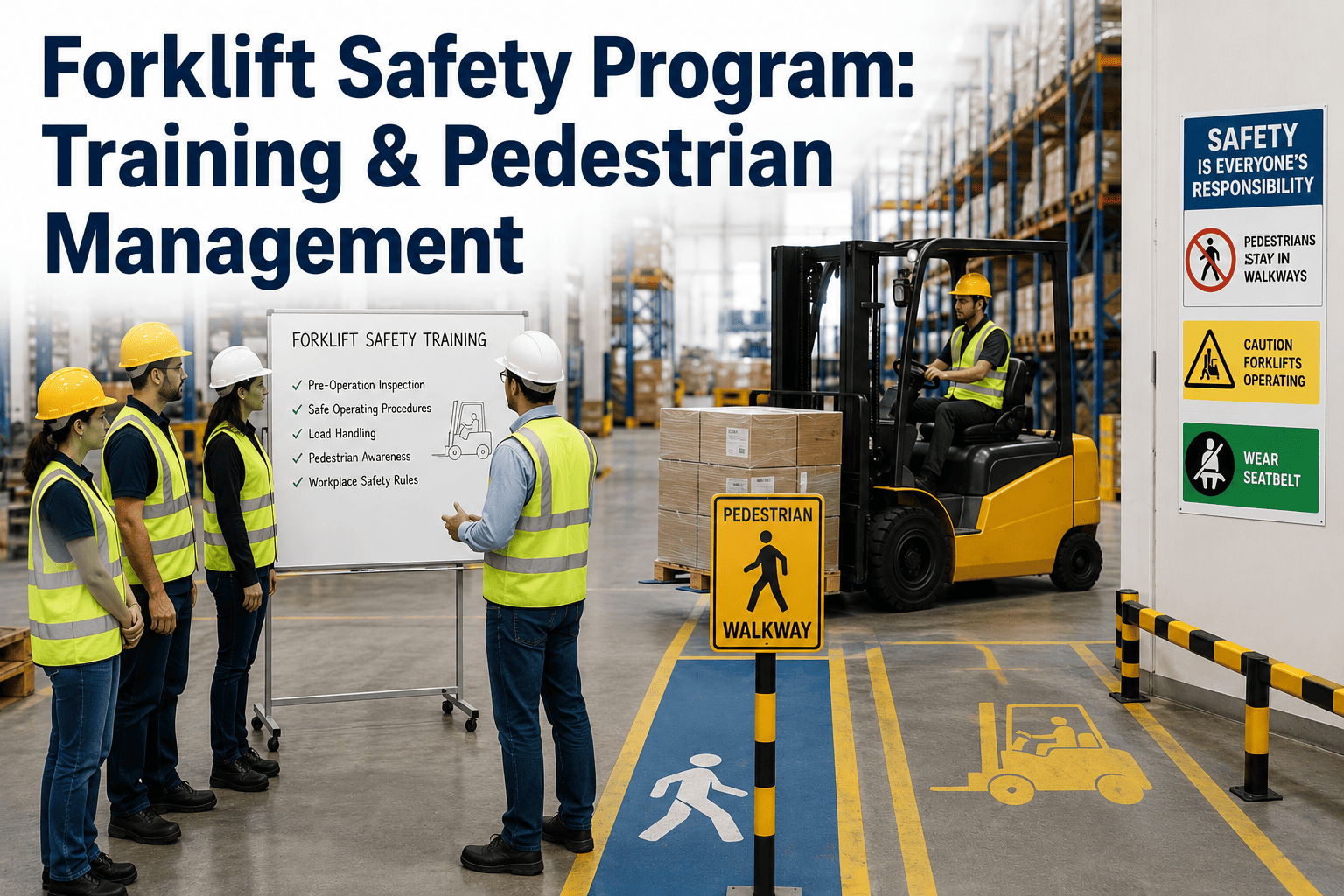
Most plants start with the highest-risk, highest-citation areas, machine points of operation subject to guarding requirements and stations where lockout procedures are performed most frequently during maintenance. From there, coverage typically expands to PPE compliance checkpoints and high-traffic zones where powered industrial trucks and pedestrians share space. Prioritization is usually based on your own injury and near-miss history rather than a generic template, since every plant's risk profile is different, and a facility with a heavy chemical inventory may reasonably prioritize hazard communication ahead of machine guarding even though guarding drives more citations industry-wide.
How does this help if OSHA actually shows up for an inspection?
Continuous monitoring generates a documented history of guard status, PPE compliance, and corrective actions over time, which is exactly the kind of evidence that demonstrates an active, functioning safety program rather than a binder that only gets opened once a year. Inspectors look for evidence that a written program is actually being followed, and continuous, timestamped monitoring data is far stronger evidence than a single audit performed the week before the inspection. If you want help preparing your documentation ahead of an inspection, our support team can walk through what to have ready.
Do employees need to change how they work for the system to function?
No significant change to daily workflow is required, since the monitoring is designed to observe existing conditions rather than add new steps for operators to follow. The goal is to catch gaps like a missing guard or an incomplete lockout step as they happen, not to add another form for employees to fill out or another badge scan to slow down a shift changeover. Most plants find that once operators understand the system is there to prevent injuries rather than to catch individuals, adoption happens quickly, and safety committees often become the strongest internal advocates once they see the data it surfaces.
What does getting started actually look like for our facility?
A typical rollout begins with a walk-through of your highest-risk equipment and processes, followed by a scoped pilot on a single line or zone where monitoring runs alongside your existing safety program for a defined period. From there, your team reviews the data captured against your own incident and near-miss history before deciding on wider deployment. The most direct way to see what this would look like on your floor is to book a demo and walk through your specific layout and risk areas.

Stop Finding Out About Safety Gaps During The Audit

Hazard communication, lockout and tagout, and machine guarding drive the majority of manufacturing citations because the gaps between them go unseen for months. iFactory gives your safety team continuous visibility so those gaps get closed before they become a citation.

Share This Story, Choose Your Platform!