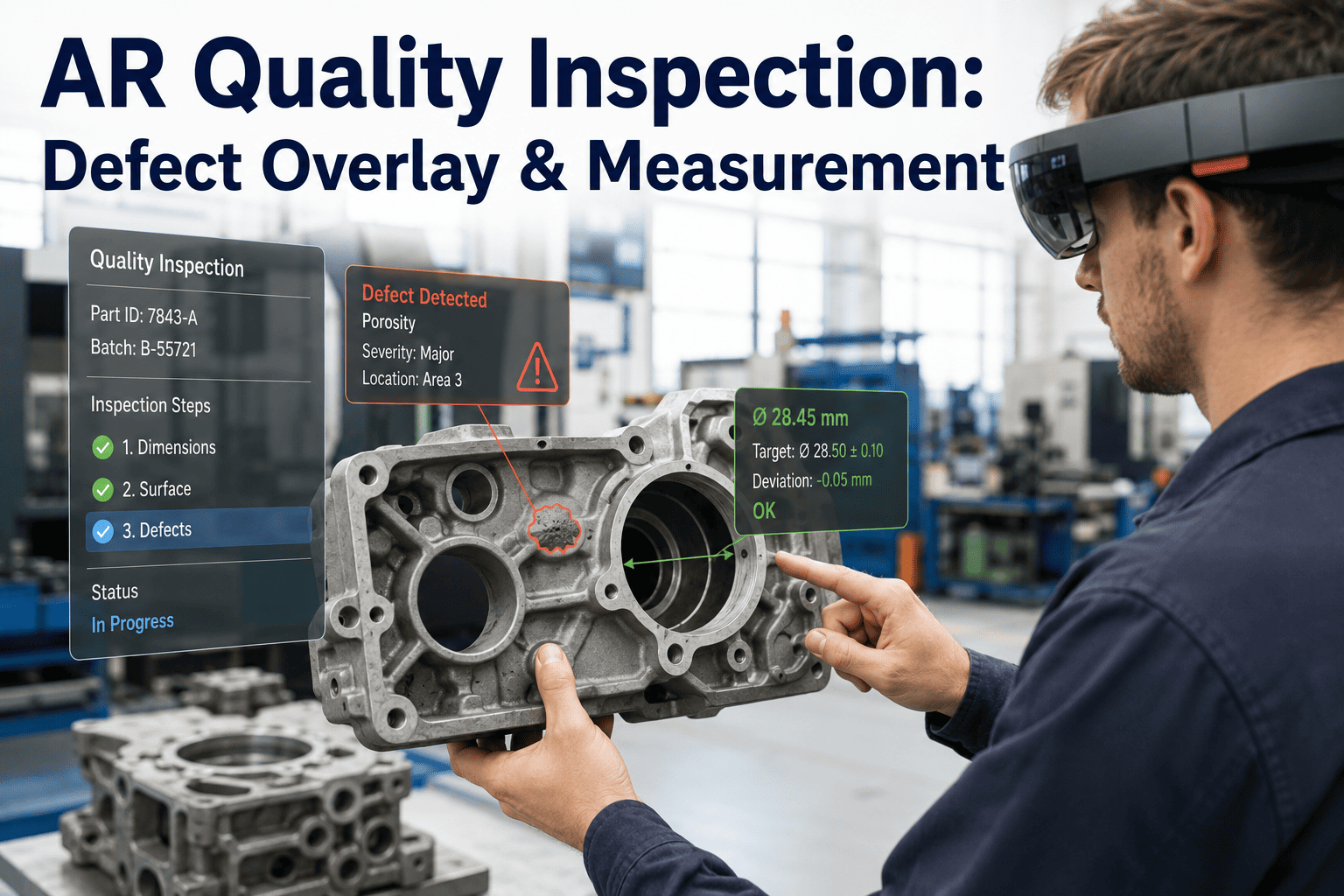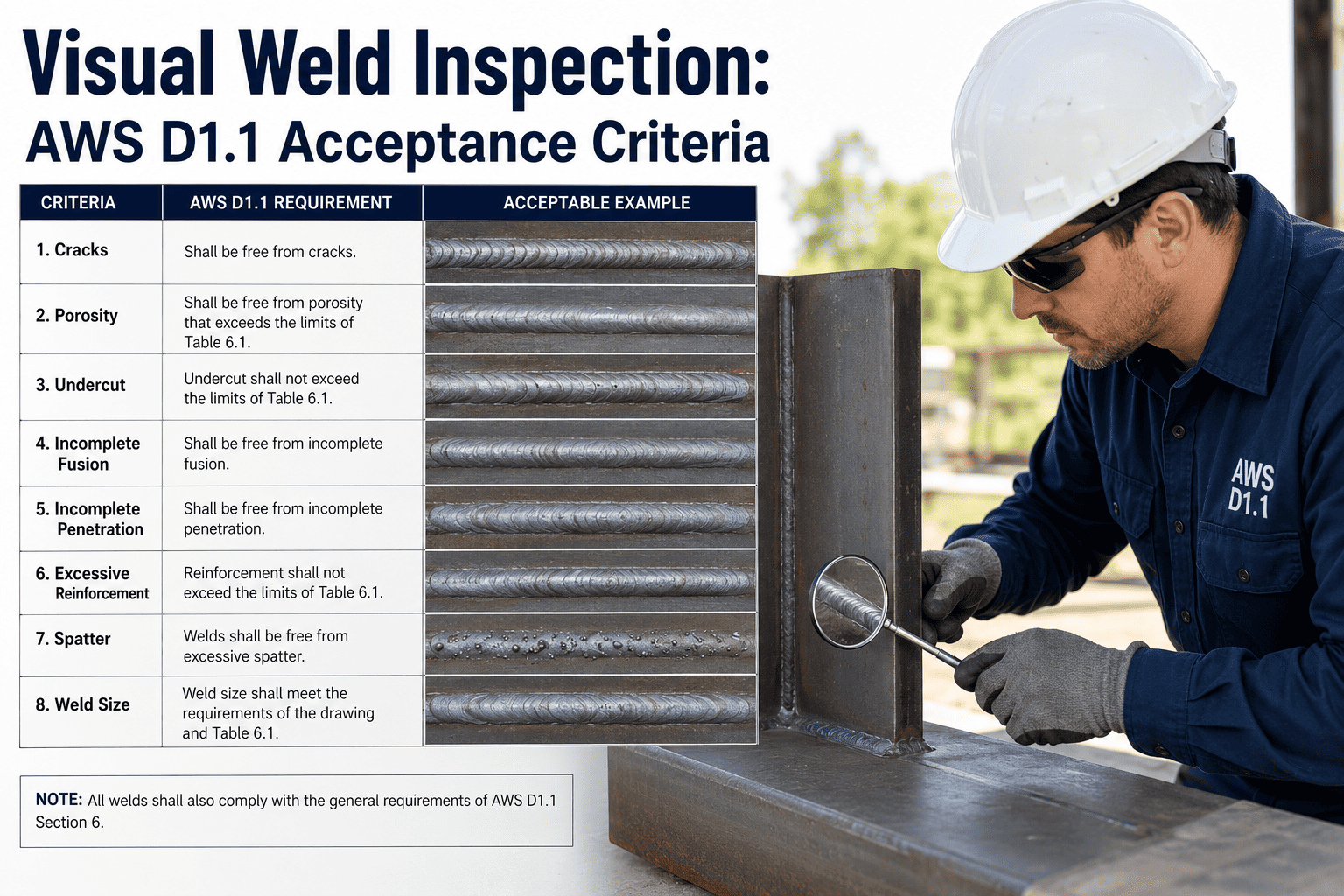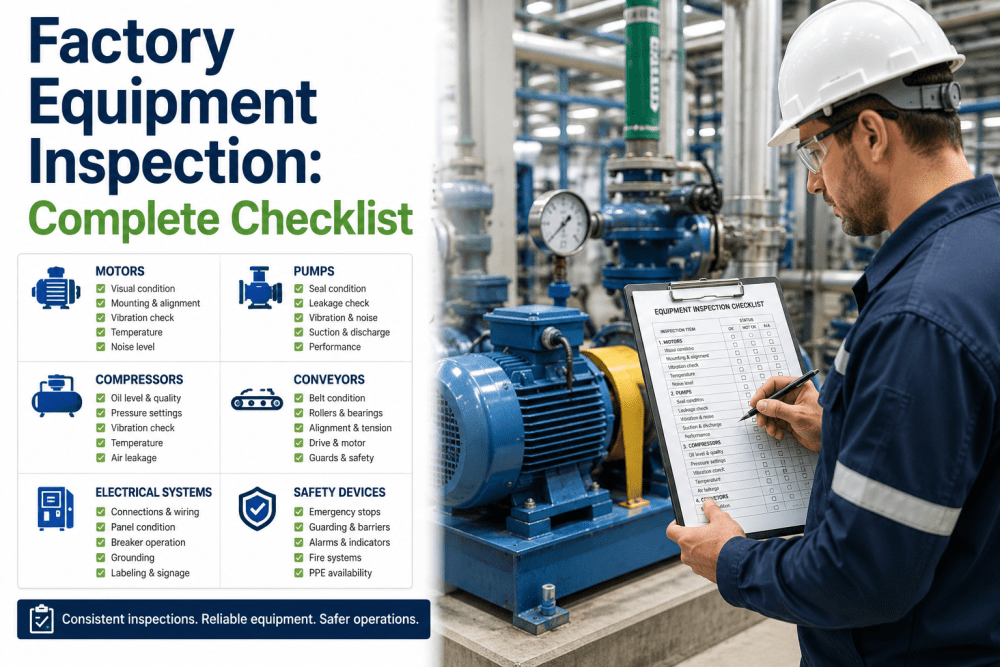
Every defective component that slips past receiving becomes a much more expensive problem three stations later, once it has consumed labor, machine time, and often other good material before anyone notices something was wrong from the start. A disciplined receiving inspection program stops that chain before it begins, catching dimensional drift, material substitutions, and documentation gaps at the dock instead of on the assembly line. Most plants already inspect incoming material in some form, but few have a program rigorous enough to catch the failures that actually cause downstream scrap. Book a session with the iFactory team to see how a digitized receiving inspection workflow closes those gaps.
Supply Chain · Incoming Quality
Receiving Inspection: Building an Incoming Quality Program That Actually Catches Bad Material
AQL sampling, dimensional verification, and certificate validation — structured so your receiving team stops defects at the dock instead of discovering them three operations downstream.
Why Receiving Inspection Gets Skipped
The Cost of a Weak Incoming Quality Program Shows Up Downstream, Not at the Dock
Receiving inspection is often the first quality function to get compressed when a plant is under schedule pressure, because material sitting at the dock waiting for inspection looks like the bottleneck — even though the alternative is defective material entering production and causing far more expensive scrap, rework, and schedule disruption later.
No Statistically Valid Sampling Plan
Ad hoc "check a few parts" inspection provides no defensible confidence level, so a genuinely bad lot can pass simply because the wrong handful of units happened to get pulled.
Binary Pass/Fail Instead of Actual Values
Recording only pass or fail instead of the measured dimension throws away the data needed for trend analysis, SPC, and defending a decision during a customer audit.
No Supplier-Tiered Inspection Rigor
Treating a long-approved supplier the same as a new or corrective-action supplier wastes inspection capacity on low-risk material while under-inspecting the sources most likely to send a defective lot.
Rejected Material Not Physically Segregated
Without a hard hold area and clear tagging, rejected or hold-status material sits near accepted stock, and it is only a matter of time before it gets pulled into a work order by mistake.
The Receiving Inspection Workflow
Five Steps From Dock Arrival to Disposition
1
Document Verification
Confirm the purchase order, packing slip, and certificate of conformance match before the lot is unpacked, catching wrong-part or wrong-revision shipments before any physical inspection time is spent.
2
Sample Size Determination
Pull the sample size defined by the lot's AQL level and inspection level per ANSI/ASQ Z1.4, adjusted for supplier tier — tightened for new or corrective-action suppliers, standard or reduced for long-approved sources.
3
Visual and Dimensional Inspection
Inspect the sampled units against the engineering drawing using calibrated instruments, recording actual measured values rather than a binary pass or fail so the data supports trending later.
4
Material Identity Verification
For safety-critical, aerospace, medical, or high-reliability applications, independently verify material chemistry and identity rather than relying solely on supplier-provided certification data.
5
Formal Disposition
Every lot receives an explicit accept, reject, or hold-for-review decision before it moves — accepted material is tagged and released, rejected material is physically segregated, and hold status triggers a defined review path.
Digitize Every Step of the Dock-to-Disposition Workflow
iFactory Captures Certificates, Dimensions, and Photo Evidence in One Record
Instead of paper checklists and a separate spreadsheet for supplier history, iFactory ties every receiving inspection record to the supplier, the lot, and the disposition decision — searchable the moment an audit or a downstream quality escape asks where a batch came from.
Sampling Reference
AQL Defect Classes and What They Mean for Your Sampling Plan
| Defect Class | Typical AQL | What It Covers | Disposition on Failure |
|---|---|---|---|
| Critical | 0.065 | Safety-related failure modes | Automatic reject, supplier corrective action |
| Major | 0.65 | Functional non-conformance | Reject lot, 100% sort or return |
| Minor | 2.5 | Cosmetic or appearance flaws | Accept with deviation if customer agrees |
A lot of 5,000 units at AQL 2.5 under General Inspection Level II typically requires sampling around 200 units — enough for a statistically defensible accept or reject decision without inspecting the full lot.
Supplier Quality Tiering
Matching Inspection Rigor to Supplier Track Record Instead of Treating Every Lot Identically
New or Unqualified Suppliers
Every lot inspected at tightened AQL levels until enough consecutive clean lots establish a track record — this is where the highest defect rates are found, so inspection capacity is best spent here first.
Standard Approved Suppliers
Normal AQL sampling per ANSI/ASQ Z1.4 at the general inspection level appropriate to the part's criticality, reviewed periodically against actual lot performance.
Long-Term High-Performance Suppliers
Eligible for reduced inspection or, for the strongest performers, skip-lot or dock-to-stock status — earned through a defined run of clean lots and revoked automatically on the first failure.
Suppliers on Corrective Action
Reverted to tightened or 100% inspection until the root cause of the failure is verified closed, regardless of how long the supplier had previously held reduced-inspection status.
The plants that run the tightest receiving inspection programs treat the sampling plan as a living document tied to actual supplier performance, not a static table posted on the wall. A supplier that has run clean for a year earns reduced inspection; a supplier that just sent a lot with three major defects gets tightened inspection immediately, without waiting for a quarterly review to catch up. The other habit that separates strong programs from weak ones is recording actual measured values instead of pass and fail — the moment you have real numbers, you can trend a supplier's dimensional drift months before it turns into an outright rejected lot, which is a completely different conversation to have with a supplier than reacting after the fact.
Odalys Feinberg-Achterberg
Manufacturing Quality Systems Specialist · 18 years designing incoming inspection and supplier quality programmes across automotive and heavy industrial manufacturing
Receiving Team Questions
Incoming Quality Inspection — Frequently Asked
Do we need to inspect 100% of every incoming lot, or is sampling always sufficient?
100% inspection is only justified for safety-critical materials, very high-value items, or suppliers with a demonstrated pattern of quality problems where the risk of a single missed defect outweighs the inspection cost. For the large majority of incoming material, AQL-based sampling per ANSI/ASQ Z1.4 provides a statistically valid confidence level at a fraction of the time and labor cost of inspecting every unit, which is why it remains the industry standard across electronics, automotive, and general industrial manufacturing. Contact our support team for help mapping your part criticality to the right inspection intensity.
How do we decide when a supplier qualifies for reduced or skip-lot inspection?
Reduced or skip-lot status should be earned through a documented track record, typically a defined number of consecutive lots accepted at standard inspection with no major or critical defects, and it should be revoked automatically the moment a lot fails, reverting the supplier to standard or tightened inspection until the pattern of clean lots is re-established. Building this into your quality management system rather than tracking it manually in a spreadsheet prevents the common failure where a supplier quietly stays on skip-lot status long after their performance has degraded.
What is the difference between a hold disposition and a reject disposition, and why does the distinction matter?
A reject disposition means the lot has failed inspection outright and is physically segregated pending return, rework, or scrap, while a hold disposition means the lot cannot yet be dispositioned because additional information is needed — an engineering deviation review, a supplier response to a corrective action request, or clarification on an ambiguous drawing requirement. Material sitting in hold status for an extended period without a defined review cadence quietly becomes inventory nobody can use, so a functioning program tracks hold-status aging as closely as it tracks reject rate. Book a demo to see how disposition status and aging are tracked automatically.
How much does receiving inspection actually slow down material availability for production?
The delay is real but manageable when inspection lead time is planned into the schedule rather than treated as an afterthought — most AQL sampling plans for a standard lot size can be completed within a few hours by a trained inspector with the right gauges staged and ready, and scheduling software that accounts for inspection lead time when calculating material availability dates prevents the common problem of production expecting material that has not yet cleared receiving. The delay from skipping inspection and later discovering a defect mid-production is almost always far longer than the inspection itself would have taken.
What documentation should accompany every receiving inspection record for audit readiness?
A complete record should include the purchase order and packing slip reference, the certificate of conformance or material test report, the sampling plan and sample size used, the actual measured values recorded against each inspected characteristic, photo evidence for visual defects, and the final disposition with the inspector's identification and timestamp. Missing any of these elements is a common finding during customer or regulatory audits, and reconstructing them after the fact from memory or scattered paperwork is rarely possible with any confidence.
Stop Defects at the Dock, Not on the Line
Build a Receiving Inspection Program With Full Traceability
iFactory digitizes certificate capture, dimensional entry, photo evidence, and disposition into one connected record — so your receiving team inspects faster and every lot's history is complete from the moment it clears the dock.