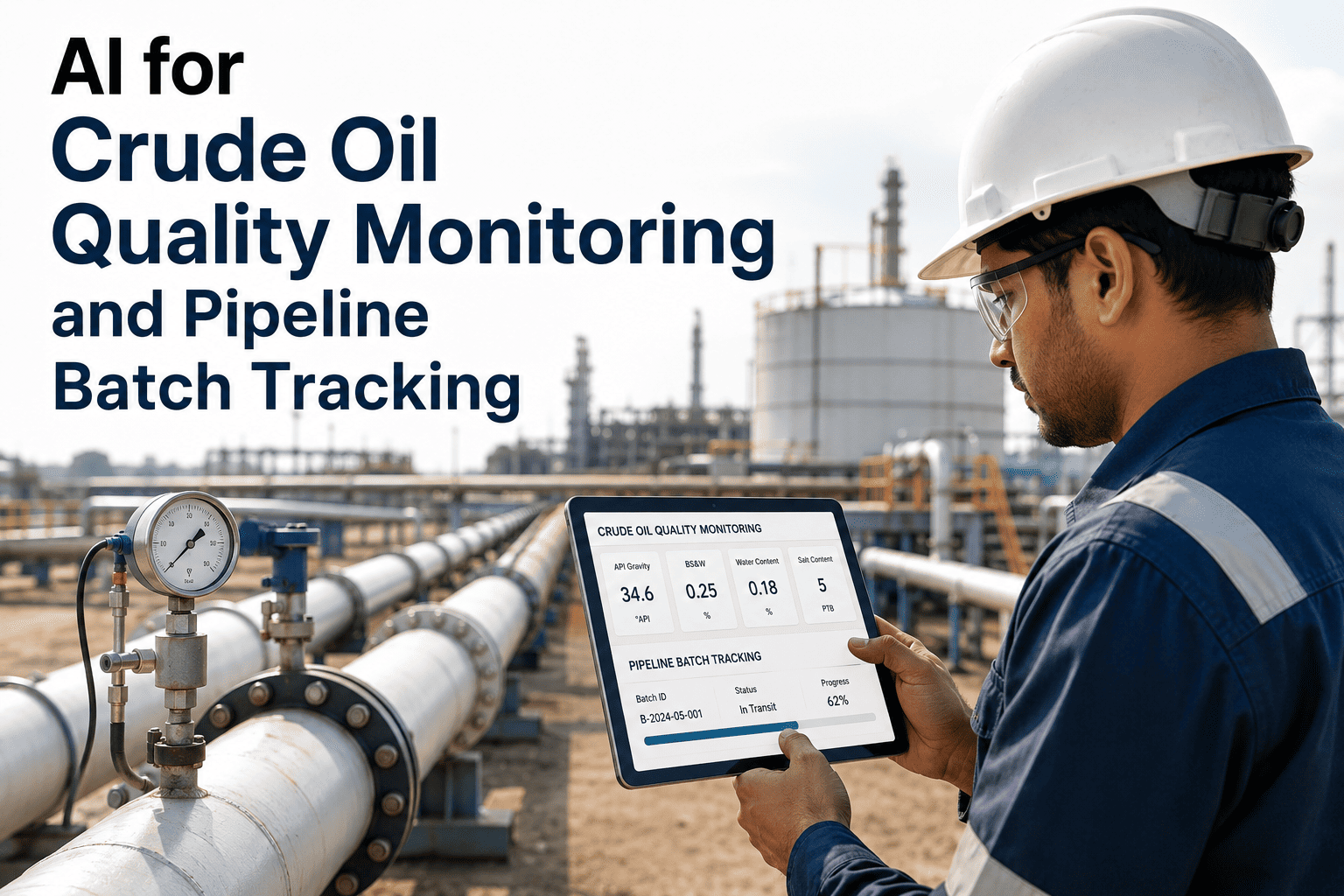
A common carrier pipeline rarely moves just one grade of crude, it moves a sequence of batches, light sweet behind medium sour behind a high-TAN opportunity crude, each one owned by a different shipper and priced against a different quality specification. Where one batch ends and the next begins is never a clean line, it's a mixing zone called transmix that grows the longer crude travels, and if that interface isn't tracked accurately, a shipper can end up receiving barrels that no longer match what they contracted for. Traditionally this gets caught, if it gets caught at all, by a lab sample pulled at the delivery point hours after the crude has already been custody-transferred and invoiced. AI-driven inline quality monitoring changes the timing entirely, correlating live API gravity, sulfur, and density readings against the pipeline's flow model to track exactly where each batch interface sits in real time. Book a crude quality monitoring demo to see it tracking batch interfaces against your own pipeline schedule.
AI-Driven Crude Oil Quality Monitoring and Batch Interface Tracking
Every batch of crude moving through a shared pipeline carries its own API gravity, sulfur content, and acid number, and every interface between batches is a mixing zone that grows the farther it travels. AI fuses inline analyzer data with the pipeline's flow model to track batch position and quality continuously, catching contamination and off-spec drift before crude reaches the delivery point.
Why Batch Interfaces Are a Quality Blind Spot
A pipeline batching multiple crude grades sequentially relies on the fact that different densities and viscosities don't mix instantly, but they do mix gradually as the batch travels, and that mixing zone, the transmix, grows with distance and turbulence. Without continuous tracking, the only way to know where one batch actually ends and the next begins is to infer it from scheduled pumping volumes and confirm it with a lab sample, by which point the crude has often already moved past the point where a contamination decision could have been made.
typical transmix volume generated per batch interface, growing with pipeline length and diameter
typical lag between crude reaching a delivery point and lab-confirmed quality results coming back
gravity deviation is often enough to trigger a contract quality dispute between shipper and receiver
is the sweet-to-sour sulfur content threshold separating two entirely different pricing and processing categories
The Four Quality Parameters That Define a Crude Batch
A crude oil quality specification is never just one number. These four parameters together determine how a refinery values and processes a given batch, and each one needs its own tracking approach as crude moves through the system.
Density Classification
Light crude runs above roughly 31 degrees API, medium falls between 22 and 31, and heavy sits below 22. Gravity drives yield expectations at the refinery and is usually the first parameter to shift as an interface passes a monitoring point.
Sweet vs Sour
Crude below 0.5 percent sulfur by weight is classified sweet, above that threshold it's sour, and the distinction changes both the price and the desulfurization capacity a refinery needs to process it correctly.
Total Acid Number
Opportunity crudes with a TAN above roughly 0.5 mg KOH per gram carry real corrosion risk at refinery process temperatures, and blending a high-TAN batch into a pipeline without tracking it can quietly raise corrosivity for everything behind it.
Sediment and Water
Custody transfer specifications typically cap basic sediment and water around 0.5 percent or tighter, and a batch running above that threshold at a LACT unit can trigger a rejected delivery or a quality claim before the barrel ever moves further downstream.
How Pipeline Batching and Interfaces Actually Work
Understanding where quality risk actually lives in a batched pipeline starts with understanding the mechanics of how batches move and mix in the first place.
Batch
A defined volume of a single crude grade, scheduled to move through the pipeline as a discrete slug behind and ahead of other shippers' batches, each with its own contracted quality specification.
Interface
The boundary zone where two adjacent batches meet and begin to mix due to turbulent flow, viscosity differences, and diffusion, expanding gradually the farther the batches travel together.
Transmix
The blended volume within the interface zone that no longer matches either original batch's specification, requiring separate handling, reprocessing, or allocation between shippers by contract or convention.
Custody Transfer Point
The metering location where ownership and quality responsibility formally change hands, and where an inaccurate interface prediction turns directly into a contract dispute over what was actually delivered.
How AI Tracks Batch Quality From Injection to Delivery
The goal is to know what quality of crude is at every point along the pipeline at every moment, not just at the two ends where meters happen to sit.
Inline Analyzer Data Ingestion
Density, near-infrared spectroscopy, and sulfur analyzer readings stream continuously from monitoring stations along the pipeline route, rather than relying only on samples pulled at origin and destination.
Flow Model Correlation
Pump rates, line pressure, and elapsed transit time are combined with analyzer readings to model exactly where each batch and each growing interface currently sits in the pipeline.
Interface Growth Prediction
Transmix volume is predicted ahead of arrival based on distance traveled, flow regime, and the density difference between the two batches involved, instead of being discovered only once it reaches a sampling point.
Off-Spec Drift Alerting
Any batch trending outside its contracted API, sulfur, TAN, or BS&W specification generates an alert well before it reaches the delivery point, giving the controller time to divert or reroute.
Custody Transfer Certification
Quality data for the certified batch volume, with the transmix cut cleanly separated, is compiled automatically to support the custody transfer ticket and any shipper quality reconciliation.
Periodic Lab Sampling vs Continuous AI Batch Tracking
Lab analysis remains the certified reference method for custody transfer, but relying on it as the only quality signal along the pipeline route leaves long stretches of transit where nobody actually knows what's moving.
Swipe left to see the full comparison
See Your Own Batch Schedule Modeled in Real Time
iFactory can map your existing inline analyzers and pipeline flow data against your batch schedule before a rollout is scoped, so you see interface tracking working on your own line before committing to anything.
Grade Combinations That Carry the Highest Commingling Risk
Not every batch sequence carries the same quality risk. The bigger the property gap between adjacent batches, the more transmix volume and the more contract exposure a poorly tracked interface creates.
Light Sweet Behind Heavy Sour
The largest density and sulfur gap of any common batch sequence, producing the widest interface and the highest risk of pulling a light sweet batch out of its sulfur specification.
High-TAN Opportunity Crude Adjacent to Standard Grades
An underestimated interface with a high-TAN batch can elevate acid number in the neighboring batch enough to raise corrosion concerns at the receiving refinery's crude unit.
Condensate Blended With Crude Batches
Sharp viscosity and API differences between condensate and crude batches accelerate interface growth compared to crude-to-crude sequences, especially at higher flow velocities.
Batches Separated by Long Transit Distances
The farther two batches travel together, the more turbulent mixing accumulates, meaning long-haul pipeline segments need tighter interface tracking than short gathering runs.
Common Crude Quality Tracking Mistakes
Most quality disputes and off-spec deliveries trace back to a handful of recurring gaps in how batches are monitored.
Applying a Fixed Transmix Cut Regardless of Conditions
A standard interface cut volume applied to every batch sequence either wastes good product or lets contaminated crude through, depending on whether actual conditions produced a wider or narrower interface than assumed.
Relying Only on Origin and Destination Sampling
Two data points on a long pipeline route leave the entire transit blind, meaning quality problems introduced mid-route aren't caught until the batch has already reached delivery.
Treating TAN as a One-Time Origin Certificate
Acid number can shift as a high-TAN batch interfaces with neighboring grades, and a certificate based only on the origin sample misses that drift entirely.
Ignoring Flow Rate Changes Mid-Transit
A pump rate change partway through a batch's transit alters the flow regime and interface growth rate, and a static model built for a single flow condition won't catch the shift.
What Changes When Batch Quality Is Tracked Continuously
Facilities and pipeline operators that move from periodic sampling to continuous AI batch tracking typically see the shift show up first in dispute volume and transmix handling costs.
Perspective From the Field
We had a shipper dispute nearly every month over sulfur content on deliveries out of one particular batch sequence, and our only real evidence was two lab samples from either end of a three hundred mile run. Once we had inline analyzers correlated against the flow model, we could actually show where the interface sat at any point in transit, and more importantly, catch a batch drifting sour early enough to hold it back instead of delivering it and arguing about it afterward. The disputes on that line have nearly disappeared.
— Marcus Whitfield, Pipeline Operations Manager, Permian to Gulf Coast Crude System
frequency of sulfur-related shipper disputes before continuous batch tracking
lab samples were previously the only quality evidence across a 300-mile run
current dispute frequency on the same line after interface tracking was enabled
Frequently Asked Questions
Does this replace the certified lab sampling required for custody transfer?
No, certified lab analysis remains the reference method for the official custody transfer ticket. What AI-driven monitoring adds is a continuous quality picture along the full pipeline route between those certified sample points, so drift and contamination are caught early instead of only being confirmed after the fact. Book a crude quality demo and bring your current analyzer and sampling setup so we can map what's already in place.
How is transmix volume actually calculated instead of using a fixed estimate?
Transmix volume is modeled from the actual flow regime, transit distance, and the density and viscosity difference between the two adjacent batches, rather than applying the same rule-of-thumb cut to every interface regardless of conditions. A wide-gap interface like light sweet behind heavy sour generates meaningfully more transmix than two similar medium grades run back to back, and the model reflects that difference directly.
Can this work on pipelines that don't have inline analyzers installed at every station?
Yes, the flow and interface model works with whatever analyzer coverage currently exists along the route, and accuracy improves as additional monitoring points are added over time. Most operators start with analyzers at existing meter stations and expand coverage to the segments where interface risk is highest, rather than instrumenting the entire route at once.
How does this help with TAN tracking specifically for high-acid opportunity crudes?
Acid number is tracked as part of the same continuous batch profile as API gravity and sulfur, so a high-TAN batch's actual footprint through the pipeline, and any elevation it causes in neighboring batches through the interface, is visible rather than assumed from an origin certificate alone. Talk to a specialist about your specific crude slate and corrosion concerns.
What happens when the system detects a batch drifting off its contracted specification?
An alert reaches the pipeline controller with enough lead time, based on the predicted transit distance remaining, to hold, reroute, or divert the affected volume before it reaches a delivery point, along with the quality data needed to support any shipper communication about the deviation.
Know Where Every Batch Interface Sits, Before Delivery
Book a 30-minute scoping call and iFactory will map your pipeline route, batch schedule, and existing analyzer coverage to a rollout plan built around your highest-risk interfaces first.