AI Exploration & Prospect Evaluation Risk Assessment

By Johnson on July 24, 2026

ai-exploration-prospect-evaluation-risk-assessment

An exploration team screening twenty prospects across a new basin used to spend six weeks maturing each lead by hand — one geologist per prospect, each one applying a slightly different mental model of what counts as strong charge risk versus weak seal risk, before the group finally sat down to rank them for the drilling budget. A single deepwater well can cost more than a hundred million dollars before a barrel is produced, so the ranking meeting is where careers and capital both get decided. AI-assisted prospect evaluation compresses that six-week screening cycle into days and replaces gut-feel ranking with a consistent, evidence-scored probability of geological success across the whole portfolio. Book a demo to see prospect risking applied to your own lead inventory.

EXPLORATION · PROSPECT RISKING · PORTFOLIO DECISIONS

AI Exploration & Prospect Evaluation That Turns Twenty Leads Into a Ranked, Defensible Drilling Program

Machine learning models trained on thousands of historical wells — commercial discoveries, non-commercial finds, and dry holes — turn scattered seismic and geological evidence into a consistent, comparable chance-of-success score for every prospect in the portfolio, so capital goes to the leads the data actually supports.

20
Prospects Evaluated in Days Instead of a Six-Week Manual Screening Cycle
5–10%
Typical Dry Hole Rate Reduction From Consistent, Evidence-Based Risking
10,000+
Historical Wells Used as Training Analogs for Prospect Scoring Models
THE RANKING PROBLEM

Why Manual Prospect Risking Breaks Down at Portfolio Scale

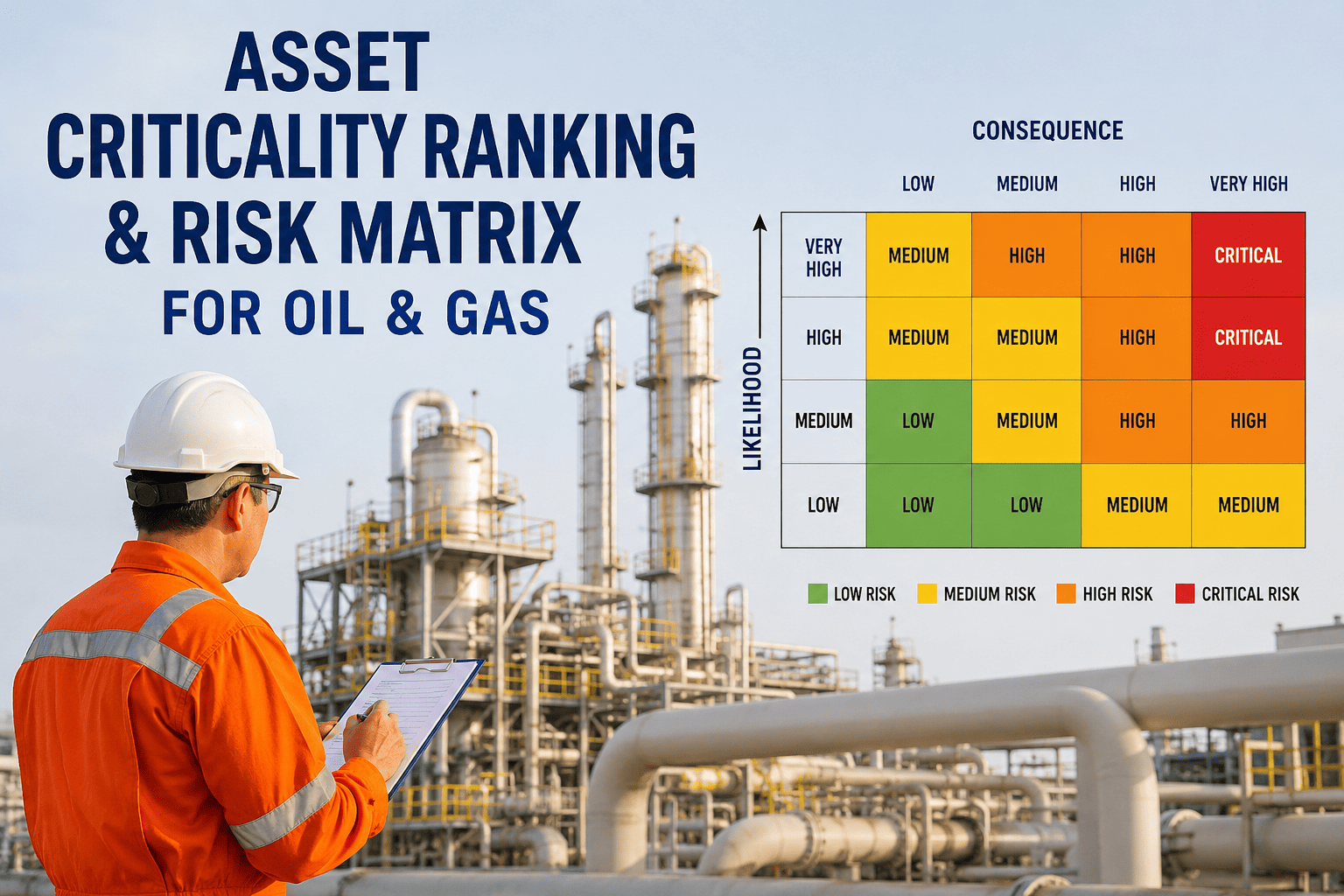
Every prospect carries a geological chance of success — the probability that hydrocarbons are actually present in commercial quantity — built from four independent elements: source rock adequacy, migration pathway, reservoir presence, and trap or seal integrity. If any one element fails, the well is dry. Geologists are trained to estimate each element, but the estimate is inherently subjective, and studies of exploration outcomes have repeatedly found that geologists skew optimistic — a prospect rated one-in-four odds by the team maturing it often performs closer to one-in-ten in the field.

That subjectivity becomes a portfolio problem the moment a company is choosing between twenty prospects with a budget for five wells. Each prospect was likely evaluated by a different geologist, at a different level of maturity, using a different mental model of risk — which means the ranking reflects who did the work as much as what the rocks actually show. AI-assisted risking does not remove geological judgment from the process; it standardizes the scoring so that every prospect is measured against the same evidence bar, using outcomes from thousands of analog wells instead of one interpreter's experience.

HOW THE MODEL SCORES A PROSPECT

From Seismic Volume to Ranked Prospect List — The Evaluation Pipeline

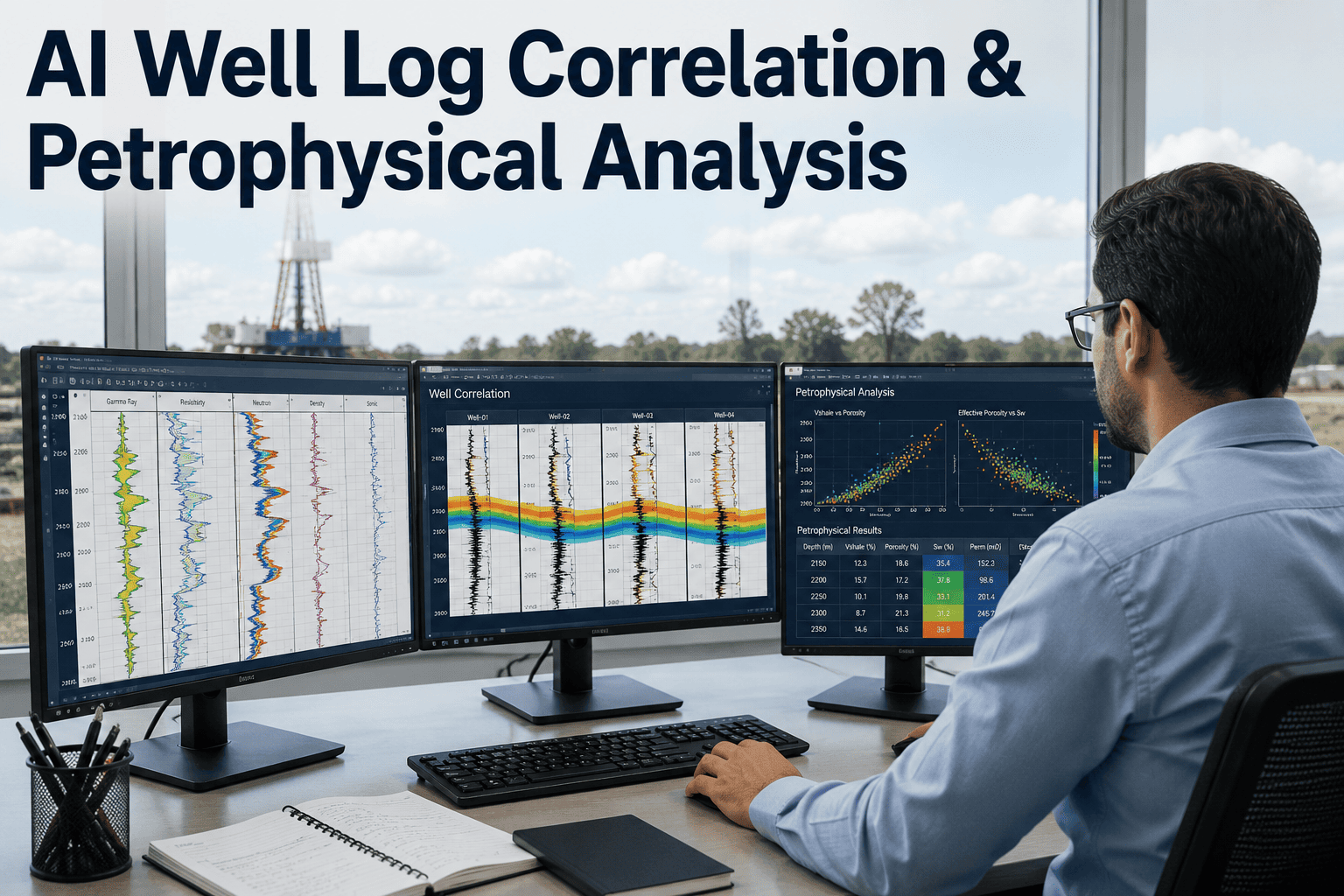
AI-assisted prospect evaluation processes the same seismic, well log, and geological inputs a team already has — it simply applies pattern recognition across a far larger analog set than any individual geologist has personally worked, then produces a comparable score across every lead in the inventory.

01
Seismic Attribute Processing
3D seismic volumes are processed to extract structural, amplitude, and depositional attributes across the prospect area, compressing an interpretation cycle that traditionally runs months into a matter of days.
02
Analog Well Matching
The model compares the prospect's attribute signature against a library of labeled outcomes — commercial discoveries, non-commercial finds, and dry holes — from thousands of wells across similar basins and depositional settings.
03
Component Risk Scoring
Source, migration, reservoir, and trap/seal risk are each scored independently, so the team can see exactly which element is driving a low chance-of-success rating rather than receiving a single opaque number.
04
Portfolio Ranking & Expert Review
Every prospect is ranked on a consistent scale, then geoscientists review the top-ranked leads for structural validity and business relevance before any prospect is matured for a drilling decision.
RISK ELEMENTS COMPARED

Manual Risking vs AI-Assisted Risking Across the Four Risk Elements

The four elements of geological chance of success do not change — what changes is how consistently and how quickly each one gets evaluated across an entire portfolio of prospects.

Risk ElementManual EvaluationAI-Assisted Evaluation
Source rock adequacyInterpreter judgment from local wellsScored against basin-wide and global analogs
Migration pathwayManual mapping, time-intensiveModeled from seismic and structural data
Reservoir presence & qualityPorosity/permeability estimated per prospectPredicted with reduced uncertainty from offset logs
Trap & seal integrityStructural map interpretation onlyCross-checked against known trap failure signatures
Time per prospectWeeks of dedicated interpreter timeDays, with expert review before finalizing
Portfolio comparabilityVaries by interpreter and maturity levelConsistent score scale across every lead

A Ranked Prospect List Backed by Ten Thousand Wells Is Worth More Than One Backed by One Geologist's Instinct

Consistent chance-of-success scoring, component-level risk breakdowns, and a portfolio ranking your capital committee can actually defend.

PORTFOLIO VIEWS

What Each Role Sees When Reviewing a Ranked Prospect Inventory

Exploration decisions involve geoscientists, portfolio managers, and capital committees, each needing a different cut of the same underlying risk model to do their part of the job.

Exploration Geologist
Component risk scores with supporting seismic attributes
Analog well matches used to derive each score
Structural validity flags requiring expert review
Exploration Portfolio Manager
Ranked prospect list by chance of success and volume
Expected monetary value across the drilling program
Comparative screening against prior drilled prospects
Capital Allocation Committee
Portfolio-level risked and unrisked resource summary
Downside exposure vs upside case by prospect
Recommended drilling sequence by economic priority
Asset & Reserves Team
P90/P50/P10 volumetric ranges per prospect
Geological chance of success audit trail
Post-drill outcome feedback for model refinement
FROM GEOLOGICAL TO ECONOMIC RISK

Why Geological Chance of Success Is Only Half the Decision

A high geological chance of success does not automatically make a prospect worth drilling. The economic chance of success multiplies the geological probability by the odds that, if hydrocarbons are found, the discovered volume clears the minimum economic threshold for development — a prospect with strong geological odds but marginal expected volume can still be a poor capital allocation compared to a lower-probability prospect with a much larger potential upside.

AI-assisted evaluation supports this second calculation directly by pairing the chance-of-success score with a probabilistic volumetric range for each prospect, so the portfolio ranking reflects expected monetary value rather than geological probability alone. That distinction is exactly where exploration programs lose the most value when risking is done manually and inconsistently across a large lead inventory.

TRUST & PORTFOLIO OPTIMIZATION

Why Explainability and Portfolio Math Matter as Much as the Score Itself

A single wrong prediction on a deepwater prospect can mean the loss of several million dollars, so a risk score that cannot show its reasoning does not earn a geoscientist's trust — and should not. The strongest AI-assisted risking deployments pair the score with the mechanics behind it, and extend the same rigor to how prospects are combined into a program rather than ranked one at a time.

01
Feature-Level Explanation, Not a Black Box
Model-agnostic explanation techniques show exactly which seismic attributes, structural signatures, or analog matches pushed a prospect's score up or down, so a geoscientist can validate the reasoning rather than accept a number on faith.
02
Two-Stage Portfolio Optimization Under Uncertainty
Rather than ranking prospects one at a time, stochastic programming frameworks optimize the whole well portfolio jointly, weighing geological chance-of-success uncertainty alongside drilling cost and reserve-volume uncertainty in the same decision.
03
Downside Exposure, Not Just Expected Value
Portfolio scoring separates expected monetary value from downside risk and upside potential, giving a capital committee the full distribution of outcomes rather than a single blended average that can hide a program's worst-case exposure.
04
Continuous Analog Library Growth
Every drilled prospect — success or dry hole — feeds back into the training set, and natural language processing continues mining historical exploration reports for overlooked play concepts that sharpen future scoring.
FREQUENTLY ASKED QUESTIONS

Questions Exploration Teams Ask About AI-Assisted Prospect Risking

Does AI-assisted risking replace the exploration geologist's judgment?
No — every top-ranked prospect still goes through geoscientist review for structural validity, charge risk, and business relevance before it advances toward a drilling decision. What the model changes is the starting point: instead of one interpreter building a risk case from scratch, the geologist reviews a consistent, evidence-scored baseline drawn from thousands of analog wells and can focus expert time on the judgment calls that actually require it. Book a demo to see how the review workflow fits your exploration process.
How does the model handle a frontier basin with very few analog wells?
In frontier settings, the model draws on a broader library of global analogs with similar depositional settings and structural styles rather than relying solely on basin-local wells, while explicitly flagging the increased uncertainty that comes with sparse local data. The output still gives the team a consistent scoring framework, but the confidence range around each component risk is wider and clearly labeled as such. Contact exploration support to discuss analog coverage for a specific basin.
Can the model incorporate old exploration reports and unstructured data?
Yes — natural language processing techniques can mine historical exploration reports to extract play concepts, analog evidence, and prior risk assessments that would otherwise sit unused in archived documents. This is particularly valuable in mature basins where decades of interpretation work exists but was never consolidated into a searchable, comparable format. Book a session to review what historical data can feed into scoring.
How is model performance validated against real drilling outcomes?
Every drilled prospect's outcome — commercial discovery, non-commercial find, or dry hole — is fed back into the training set, allowing the model to be continuously recalibrated against real results rather than remaining static after initial deployment. This closed feedback loop is what keeps the chance-of-success scores aligned with actual basin performance over time. Talk to support about outcome tracking for your drilling program.
What data does an exploration team need before starting with AI-assisted prospect risking?
At minimum, 3D or 2D seismic coverage of the prospect area, available well logs from offset wells, and any prior geological interpretation or risk assessments already on file. More analog data generally means a tighter confidence range on the resulting scores, but the framework can still produce a useful ranking with a modest starting data set. Book a demo to map out data requirements for your lead inventory.
CONSISTENT SCORING · FASTER SCREENING · DEFENSIBLE RANKING

Turn a Portfolio of Prospects Into a Ranked, Evidence-Backed Drilling Program

See how AI-assisted prospect evaluation scores your lead inventory against thousands of analog wells — with component risk breakdowns your geoscience team can defend in the room.

Share This Story, Choose Your Platform!