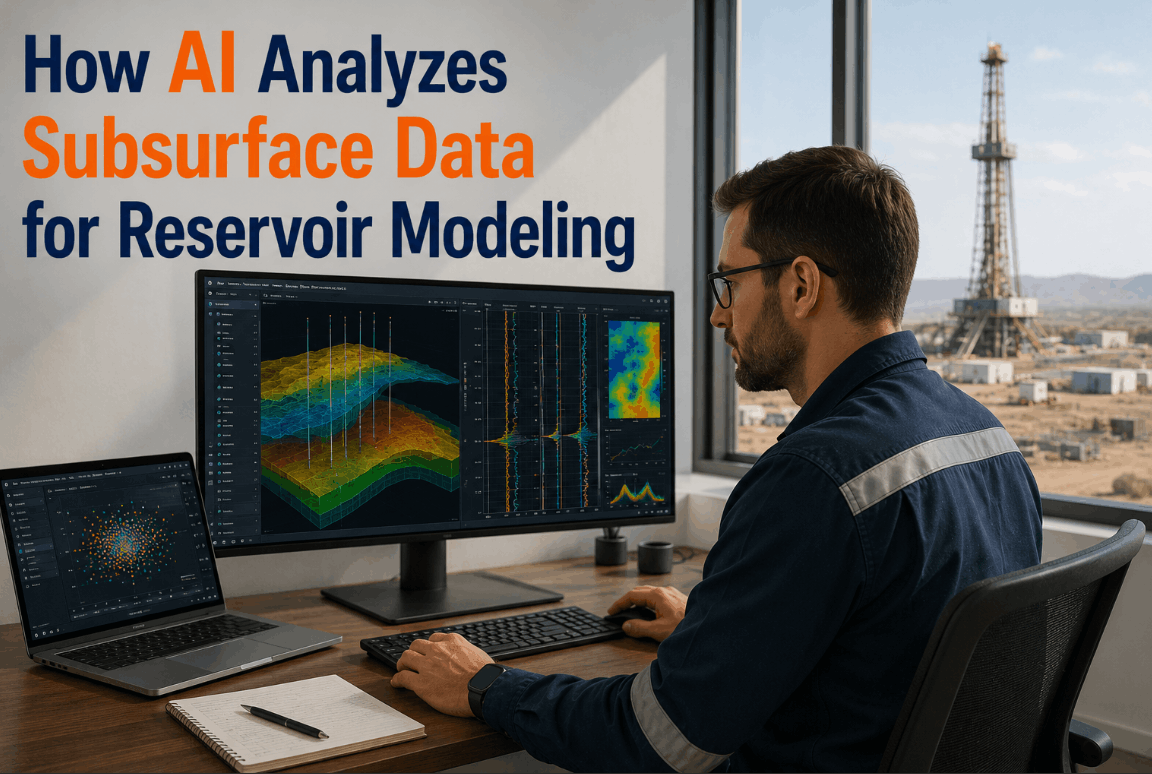
Reservoir simulation has always been a waiting game. A single full-physics history match on a complex, multi-well field model can take days to run, and a proper uncertainty analysis across dozens of geological realizations can stretch that to weeks, which means development decisions are frequently made on outdated model output. Surrogate reservoir models built with deep neural networks and physics-informed learning are changing that timeline dramatically, with published research showing inference speedups of several thousand times over conventional numerical simulation. Reservoir teams carrying a backlog of unmatched models or slow-turnaround forecasts can book a demo to see how AI surrogate modeling fits into an existing simulation workflow.
Turn Week-Long History Matching Runs Into Same-Day Decisions
iFactory trains neural network surrogates on your full-physics simulator so history matching, uncertainty quantification, and production forecasting run in a fraction of the original compute time.
Why Full-Physics Reservoir Simulation Cannot Keep Up With Decision Speed
Development teams increasingly need answers on a weekly or even daily cadence as new production and pressure data arrives, but the simulation infrastructure most fields run on was built for a slower planning cycle. That mismatch is the core reason surrogate modeling has moved from an academic curiosity to an operational necessity for reservoir engineering groups managing more than a handful of wells.
The Traditional Constraint
A history match on a full-field, multi-million-cell simulation model typically requires dozens to hundreds of forward runs to converge on a parameter set that reproduces observed pressure and rate history. Each run can take hours, so a single history-matching cycle can consume days of compute time before an engineer even begins interpreting the result. When a new geological realization or an updated PVT model needs to be tested, the entire cycle starts over.
Where the Time Actually Goes
Most of that time is not spent on engineering judgment, it is spent waiting on the simulator to converge on parameter combinations that have already been ruled out in earlier iterations. Published research on AI reservoir surrogates has demonstrated speedups of up to 6,000 times over conventional numerical simulation once a surrogate is trained, because the neural network learns the relationship between reservoir parameters and simulation output directly, without re-solving the underlying flow equations for every candidate.
How a Surrogate Reservoir Model Is Built and Deployed
Building a reliable surrogate is a structured process, not a single training run, and each stage below determines how much the resulting model can be trusted for real development decisions. Skipping any one of these steps is the most common reason a surrogate underperforms in the field, so iFactory treats training data coverage and validation against held-out simulation runs as non-negotiable before a model is handed to the reservoir team.
Training Data Generation From Your Simulator
A design-of-experiments sampling strategy runs the full-physics simulator across the parameter ranges relevant to your field, generating a training set that spans permeability, porosity, relative permeability, and aquifer strength combinations rather than relying on a single tuned base case.
Neural Network Surrogate Training
Deep learning architectures, including convolutional encoder-decoder networks and physics-informed neural operators, learn to map reservoir parameters directly to pressure and saturation output, validated against held-out simulation runs the network never saw during training.
Ensemble-Based History Matching
The trained surrogate is embedded inside an ensemble Kalman inversion or particle swarm optimization loop, which can now evaluate thousands of candidate parameter sets in the time a conventional workflow would evaluate a handful.
Uncertainty-Quantified Forecasting
Because the surrogate is fast enough to run across an entire ensemble of matched models, production forecasts come with a probability distribution rather than a single deterministic curve, directly supporting reserves classification and development risk decisions.
What Surrogate Modeling Delivers Against Full-Physics Simulation
Find Out How Fast Your Own Field Model Could Run as a Surrogate
iFactory reviews your existing simulation deck and history-matching workflow to scope a surrogate model built specifically for your field's geology and well count.
Conventional Simulation vs. AI Surrogate-Assisted Workflow
The following comparison reflects the stages of a typical history-matching and forecasting cycle, and how each one changes once a validated surrogate model sits alongside the full-physics simulator. The full-physics model is never removed from the workflow, it simply moves from being the tool used for every iteration to the tool used for final confirmation of the surrogate's top candidates.
| Workflow Stage | Full-Physics Simulation Only | AI Surrogate-Assisted (iFactory) | Time Saved |
|---|---|---|---|
| Single Forward Run | Hours per realization | Milliseconds to seconds per realization | Orders of magnitude faster |
| History Match Convergence | Days to weeks of compute and analyst time | Hours, with thousands of candidates evaluated | Weeks to hours |
| Uncertainty Quantification | Limited to a handful of scenarios due to runtime | Full ensemble evaluated for probabilistic forecasts | Comprehensive vs. partial coverage |
| New Well Placement Testing | Each candidate location requires a new simulation run | Candidate locations screened near-instantly, top options simulated | Days to minutes |
| Model Refresh Cadence | Quarterly or slower due to runtime constraints | Continuous refresh as new production data arrives | Quarterly to continuous |
What Changes for the Reservoir Engineering Team
Before the surrogate was in place, a big part of every quarter was spent just getting the field model to reproduce history well enough to trust the forecast that came out of it. Our engineers shifted from model maintenance to actual reservoir optimization, and our recovery factor improved by four percent in the first operating year simply because we had time to test sweep alternatives we never would have gotten to otherwise.
Beyond History Matching: Other Places a Surrogate Pays Off
Once a surrogate model is validated against your simulator, it tends to get used well beyond the history-matching cycle it was originally built for. Well test design benefits from being able to screen dozens of candidate test durations and rates before committing rig time to a real test. Enhanced oil recovery screening, including waterflood pattern changes and CO2 injection scenarios, becomes something a reservoir engineer can explore in an afternoon rather than a subsequent simulation cycle. Field development planning teams use the same surrogate to stress-test a development sequence against multiple geological realizations at once, rather than picking one base case and hoping it holds.
Because the surrogate is fast enough to run interactively, some operators embed it directly into a lightweight planning tool that non-simulation specialists on the asset team can query themselves, freeing the reservoir engineering group from running one-off scenario requests. Teams curious whether their own field model is a good candidate for this kind of surrogate can book a demo to walk through a specific use case.
AI Reservoir Simulation and History Matching — Frequently Asked Questions
Does a surrogate model replace our existing reservoir simulator?
No, the surrogate is trained on your existing simulator and works alongside it rather than replacing it. The full-physics model remains the source of truth for final validation, while the surrogate handles the high-volume, iterative work of history matching and scenario testing where speed matters most.
How accurate is a neural network surrogate compared to the original simulation?
Well-validated deep learning surrogates typically achieve relative errors in the 4 to 8 percent range for pressure and saturation prediction against the full-physics reference case. Accuracy depends heavily on how well the training data spans the parameter space, which is why iFactory front-loads the design-of-experiments stage before any model is trained. Teams wanting a field-specific accuracy estimate can book a demo for a scoping review.
What reservoir types and simulator formats does this support?
Surrogate modeling has been applied successfully across conventional, waterflood, and unconventional shale reservoirs, and iFactory's pipeline works with standard black-oil and compositional simulator output formats including Eclipse and CMG. Naturally fractured and dual-porosity systems are supported with additional training data to capture interporosity flow behavior.
How long does it take to build and validate a surrogate for a new field?
Initial calibration typically takes four to eight weeks depending on the number of wells and the complexity of the geological model, most of which is spent generating and validating the training simulation runs rather than training the neural network itself. Ongoing model refreshes as new production data arrives take a fraction of that time.
Can the surrogate be used for well placement and infill drilling decisions?
Yes, once validated, the surrogate can screen dozens of candidate well locations in the time a single full-physics run would take, narrowing the field to a short list that then gets confirmed with a full simulation before capital is committed. Reservoir teams evaluating infill programs can talk to our engineer about integrating this into an existing development planning workflow.
Stop Waiting Days for a History Match You Need This Week
iFactory builds and validates a surrogate reservoir model against your existing simulator so history matching, uncertainty quantification, and forecasting run in hours instead of weeks.



-optimization.png)