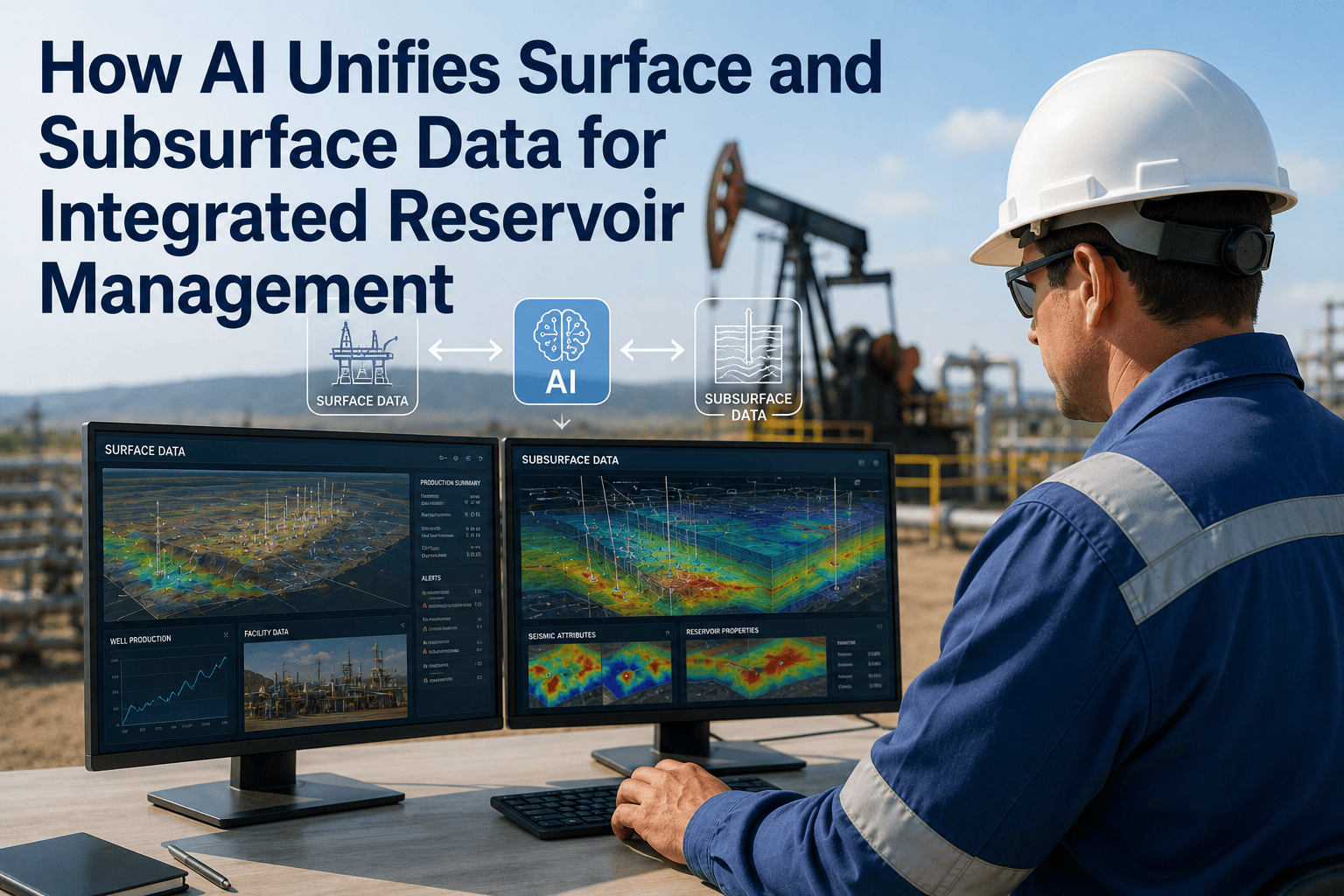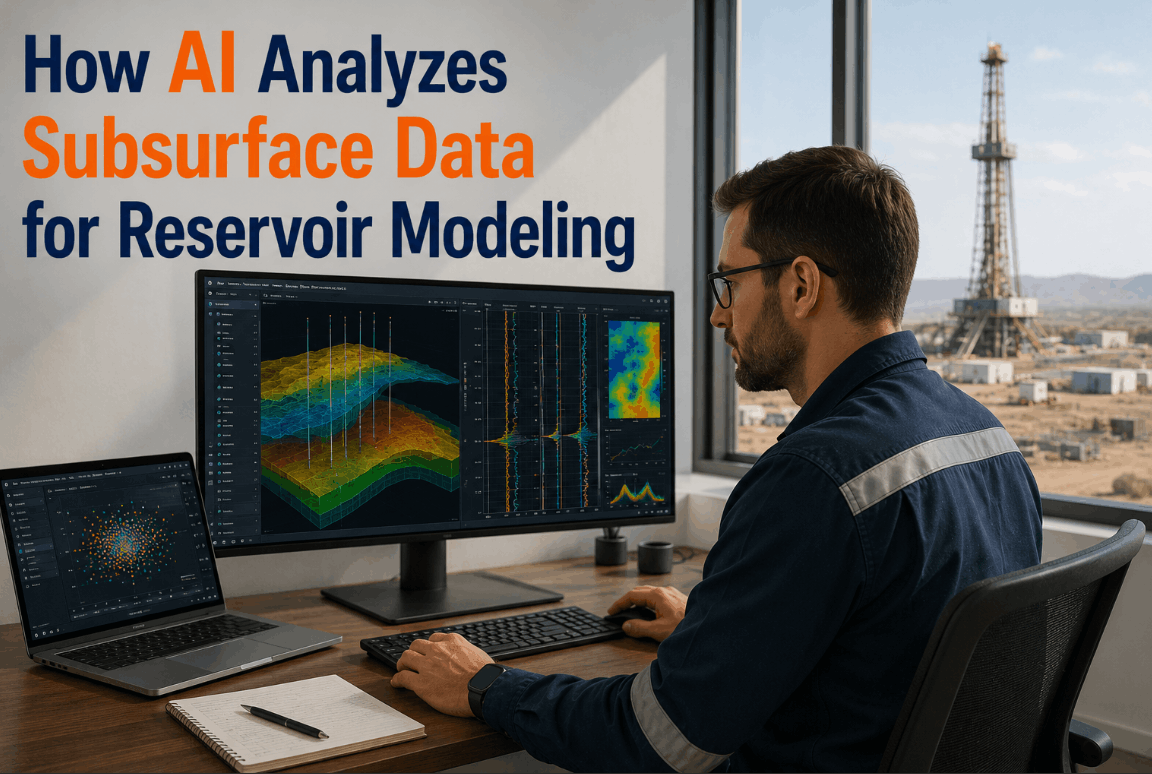
The subsurface has always been the most data-rich and least understood layer of any oil and gas operation. Seismic surveys, well logs, core samples, pressure transient tests, and production histories generate enormous volumes of information—yet for decades, the tools available to interpret that data lagged behind its sheer complexity. Reservoir engineers worked with static models, hand-calibrated simulations, and probabilistic guesswork that could take months to update. AI subsurface data reservoir modeling is changing that reality at a fundamental level. By applying machine learning, neural networks, and causal AI to geological and production datasets simultaneously, operators are building dynamic reservoir models that update continuously and respond to live well data. Organizations that Book a Demo with iFactory discover that this capability is no longer experimental—it is production-ready and delivering measurable recovery improvements across fields worldwide.
Transform Static Reservoir Models into Living, AI-Driven Intelligence
iFactory's AI platform ingests seismic, well log, and real-time production data to continuously update your reservoir model — replacing quarterly simulation cycles with continuous subsurface intelligence.
Why Traditional Reservoir Modeling Falls Short
Conventional reservoir modeling relies on a workflow that has changed little in 30 years: acquire seismic data, interpret horizons and faults, build a static geological model, populate it with petrophysical properties from well logs, then run a dynamic simulation to history-match production. Each step is time-intensive, specialist-dependent, and produces a model that is already outdated by the time it is delivered. The result is a dangerous gap between what the reservoir is actually doing and what the model says it should be doing.
This gap costs operators in two direct ways: bypassed oil from poor sweep decisions, and unplanned downtime from pressure anomalies that static models failed to predict. AI reservoir management closes this gap by replacing the sequential, batch-processing workflow with a continuous intelligence loop—one where every new data point from a producing well automatically refines the subsurface model in real time. Reservoir managers who Book a Demo with iFactory consistently identify this shift from batch to continuous modeling as the single highest-impact change they can make to their reservoir management program.
Static Geological Models
Built once from seismic and well data, updated only when new wells are drilled. Cannot reflect dynamic fluid movements, pressure depletion, or real-time production-induced changes to reservoir behavior.
Dynamic Simulation (Full-Physics)
Numerically rigorous but computationally expensive. A full-physics simulation run can take days to weeks, making rapid scenario evaluation impractical for real-time operational decisions.
AI Proxy Reservoir Models
Machine learning models trained on full-physics simulation outputs and real production data. Deliver near-equivalent accuracy at a fraction of the computational cost, enabling real-time scenario analysis.
iFactory Continuous Intelligence
Ingests live sensor data, production logs, and injection telemetry to continuously update the proxy reservoir model. Engineers receive automated alerts when deviations from predicted behavior are detected.
"Our reservoir team used to spend three weeks per quarter running history-match updates on a full-physics simulation model. With iFactory's AI proxy layer ingesting our real-time well data, that same model now updates itself continuously. Our engineers shifted from model maintenance to actual reservoir optimization—and our recovery factor improved by four percent in the first operating year."
How AI Processes the Five Core Subsurface Data Types
Effective AI subsurface data reservoir modeling requires the system to ingest, normalize, and cross-correlate multiple fundamentally different data types simultaneously. Each data type carries different spatial resolution, temporal frequency, and physical meaning. Here is how iFactory's AI engine handles each one.
3D Seismic & AVO Attribute Data
AI algorithms, particularly convolutional neural networks (CNNs), interpret seismic amplitude and AVO (Amplitude Versus Offset) attributes to automatically identify faults, stratigraphic traps, and fluid contact depths. Tasks that previously required months of manual geophysical interpretation are completed in hours, with uncertainty quantification built into the output.
Petrophysical Well Log Data
Neural network models trained on gamma ray, resistivity, neutron-density, and NMR log data automatically classify lithofacies, estimate porosity and permeability, and flag zones of reservoir quality. iFactory's AI applies these log interpretations consistently across all wells in the field, eliminating the interpreter-to-interpreter variability that degrades model quality.
Pressure Transient & Well Test Data
Machine learning algorithms analyze pressure buildup and drawdown curves to automatically estimate permeability thickness, skin factor, and reservoir boundary conditions. The AI platform cross-validates these estimates against the geological model in real time, flagging inconsistencies that indicate model errors or undetected geological features. Book a Demo to see how iFactory automates well test interpretation for your specific reservoir type.
Production & Injection History
Time-series AI models continuously assimilate daily production rates, GORs, water cuts, and injection volumes into the reservoir model through an ensemble history-matching process. This replaces the traditional manual history-match workflow with an automated, probabilistic calibration that runs continuously as new production data arrives from the field.
Real-Time Downhole Sensor Feeds
Permanent downhole gauges, distributed temperature sensing (DTS), and fiber-optic acoustic sensors stream continuous data into the iFactory platform. The AI engine detects subtle deviations from predicted pressure and temperature profiles that signal fluid movement, gas cap expansion, or injector-producer channeling—often weeks before production impacts become measurable at surface.
Reservoir Modeling Workflow: Traditional vs. AI-Powered
The operational impact of AI subsurface data reservoir modeling is best understood through a direct workflow comparison. Each phase of the conventional reservoir engineering cycle is transformed when AI is introduced as the analytical engine. Operators considering this transition can Book a Demo with iFactory to see a field-specific workflow assessment.
| Workflow Stage | Traditional Approach | Timeline | AI-Powered with iFactory | AI Timeline |
|---|---|---|---|---|
| Seismic Interpretation | Manual horizon and fault picking by geophysicist | 6–12 weeks | CNN auto-interpretation with uncertainty mapping | Hours to days |
| Well Log Analysis | Petrophysicist manually evaluates each well | 2–4 weeks per well | Neural net batch-processes all wells simultaneously | Hours |
| History Matching | Manual parameter adjustment in simulation software | 4–12 weeks | Automated ensemble Kalman filter assimilation | Continuous |
| Scenario Evaluation | Full-physics simulation run per scenario | Days to weeks each | Proxy model evaluates hundreds of scenarios overnight | Hours |
| Production Forecasting | Decline curve analysis or periodic simulation update | Quarterly updates | Continuous AI forecast updated with every new data point | Real-time |
| Anomaly Detection | Engineer reviews charts manually during scheduled reviews | Monthly reviews | AI flags subsurface deviations as they occur | Minutes |
What Makes iFactory's Subsurface AI Operationally Different
Most reservoir modeling software remains in the study environment—it produces insights that engineers must then manually translate into field operating decisions. iFactory bridges the gap between the reservoir model and the wellsite by connecting subsurface intelligence directly to operational workflows. When the AI detects a pressure anomaly consistent with a thief zone opening between an injector and a producer, it does not just flag the anomaly in a report. It automatically generates a field work order, attaches the relevant pressure data and model output, and routes it to the appropriate field engineer's mobile device for immediate action.
AI Subsurface Modeling Is No Longer a Research Project
The transition from static, batch-processed reservoir models to continuous, AI-driven subsurface intelligence is well underway across the global upstream industry. Operators who have made this shift report faster development decisions, higher recovery factors, and reservoir engineering teams that spend their time on optimization rather than model maintenance. The technology infrastructure required—sensor connectivity, machine learning model management, and operational workflow integration—is exactly what iFactory's platform is built to deliver.
Whether your asset is a mature waterflood in the Permian Basin, a deepwater development offshore, or a shale production program requiring continuous surveillance of hundreds of wells, the data advantage from AI subsurface modeling is available today. The question for reservoir management teams is no longer whether to adopt this approach, but how quickly they can deploy it before their competitors do. Book a Demo with iFactory's reservoir technology team to map out what continuous subsurface intelligence looks like for your specific field.
AI Subsurface Data & Reservoir Modeling — Frequently Asked Questions
What types of subsurface data does iFactory's AI platform require to build a reservoir model?
At minimum, the platform requires well production history and injection volumes; seismic data, well logs, and downhole gauge feeds significantly improve model accuracy and prediction confidence.
Can AI reservoir modeling replace traditional full-physics reservoir simulation software?
Not entirely — AI proxy models complement full-physics simulators by providing real-time operational intelligence, while full-physics models remain the standard for development planning and reserves estimation.
How does iFactory handle uncertainty quantification in its AI subsurface models?
The platform generates probabilistic model outputs with defined confidence intervals, giving reservoir engineers a clear view of uncertainty ranges rather than a single deterministic prediction.
Is iFactory's AI platform compatible with existing reservoir simulation software like Eclipse or CMG?
Yes — iFactory ingests simulation outputs as training data for its proxy models and can receive history-matched parameter sets from both Eclipse and CMG environments through standard data connectors.
How long does it take for the AI model to become accurate enough for operational use after initial deployment?
With sufficient production history available at onboarding, the initial proxy model reaches operational accuracy within 4–8 weeks; accuracy improves continuously as the model assimilates live field data.
Stop Running Static Models. Start Running a Living Reservoir.
iFactory connects your well data, seismic attributes, and real-time sensor feeds into a continuously updated AI reservoir model — purpose-built for operational decision-making in upstream oil and gas.