Coiled Tubing Fatigue Life Tracking for Well Intervention Jobs
By Henry Green on June 16, 2026
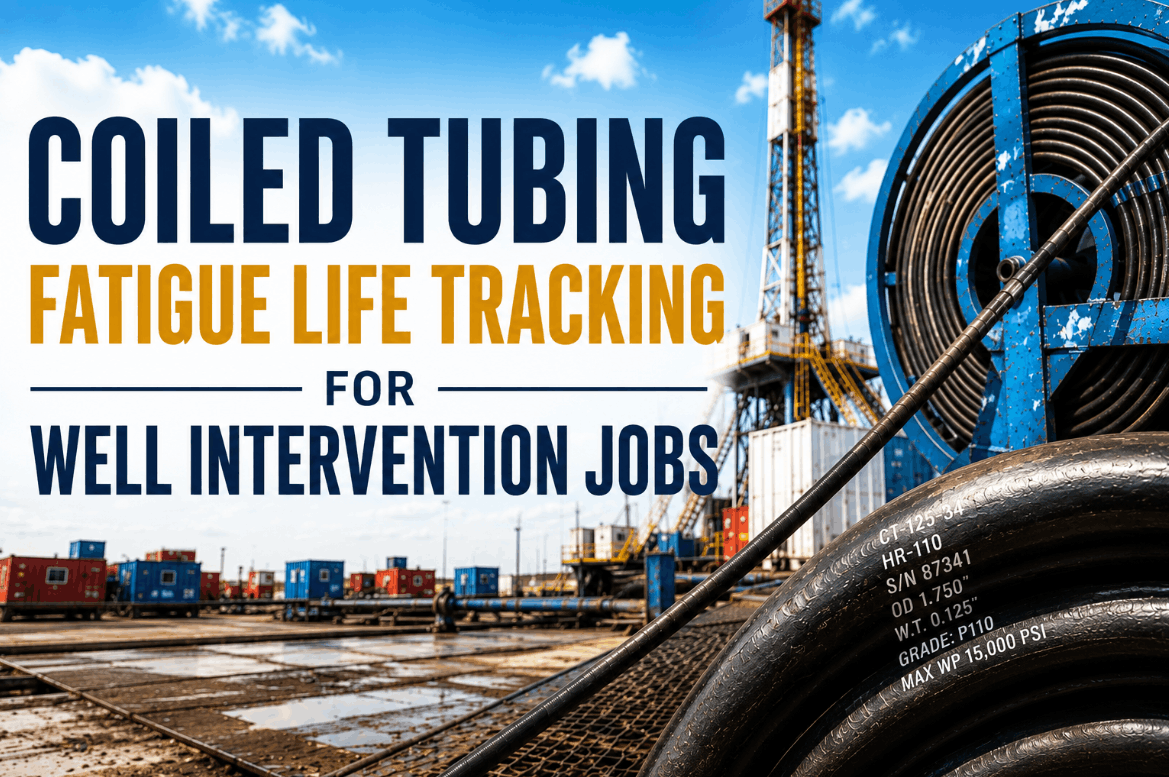
Coiled tubing strings fail by fatigue in well intervention operations more frequently than any other downhole tool — and the failure is almost always preventable through systematic fatigue-life tracking that accounts for the cumulative effect of each trip, each pressure cycle, each bend over the gooseneck and through the injector chains, and each exposure to corrosive well fluids. Unlike jointed pipe where each connection can be inspected individually for service life, coiled tubing is a continuous string that accumulates fatigue damage across its entire working length with every deployment — and the damage is not evenly distributed. The sections that pass over the gooseneck most frequently, experience the highest bending strain, or see the most corrosive production fluids accumulate fatigue at rates that are 3 to 10 times faster than less-stressed sections of the same string. Understanding exactly how fatigue accumulates in coiled tubing, what the critical tracking parameters are, and how de-rate factors for corrosion and pressure extend or limit safe working life is the prerequisite for retiring strings before they part downhole — and for avoiding the fishing jobs, lost wells, and safety incidents that CT fatigue failures cause when the tracking system is inadequate. iFactory's analytics platform supports this engineering workflow directly — with fatigue life tracking that integrates cycle counting, pressure history, bend strain modeling, and corrosion exposure data into a single string management system that alerts the intervention team when a string is approaching its retirement threshold. For a technical discussion of how CT fatigue analytics can be configured for your specific intervention fleet,
CT Life Tracking Assessment
Evaluate Your Coiled Tubing Fatigue Life Tracking Program Against Industry Best Practices
iFactory's CT fatigue analytics platform integrates cycle counting, pressure history, bend strain data, and corrosion exposure into a single string management system — helping intervention teams retire strings at the right time, not a trip too late.
Why Coiled Tubing Strings Fail When the Cycle Count Says They Shouldn't
Most coiled tubing operation teams track string usage by cycles or cumulative footage — a running odometer that tells them how much service the string has seen. The gap between that basic tracking approach and the real-time fatigue life tracking that prevents downhole partings is the difference between knowing when a string was used and knowing how much of its safe working life remains. Book a Demo to see how iFactory's fatigue analytics closes that gap.
Cycle-Only
Most CT tracking programs count cycles or footage alone — ignoring pressure differential, bend strain, and corrosion exposure that determine true fatigue life consumption
3–10x
Fatigue accumulation rate difference between high-stress sections (gooseneck, injector) and low-stress sections of the same string
50%+
Of CT strings retired based on visual inspection or cycle count still have usable fatigue life — and a significant percentage of those retired strings part in service
$500K–2M
Cost range for a CT parting event — fishing operation, lost well intervention, potential well control event, and replacement string cost
CT Fatigue Life Tracking: Conventional vs. AI-Driven iFactory
Conventional CT Fatigue Tracking
Cycle Counting, Manual Logs, and Retrospective Analysis
Cycle counting by the operator's manual log — total trips recorded but not always the specific depth, pressure, or bending configuration of each trip. String sections tracked as a single unit with no differentiation between the gooseneck section that has seen 200 bending cycles and the BHA section that has seen 20. Corrosion exposure noted qualitatively but not integrated into the fatigue calculation. Retirement decisions based on cumulative cycle count against a generic manufacturer rating, with no adjustment for the actual operating conditions each job imposed on the string. The tracking data exists but in disconnected formats that prevent any kind of real-time fatigue life assessment.
Cycle count only — no pressure or strain integrationNo section-specific fatigue differentiationCorrosion exposure not quantified in fatigue modelRetirement decisions based on generic manufacturer ratings
iFactory AI-Driven Fatigue Life Management
Multi-Parameter Fatigue Integration with Real-Time String Status
Every trip recorded with depth profile, pressure differential, bending configuration, and well fluid chemistry — each parameter contributing to the fatigue accumulation calculation for each section of the string. The gooseneck and injector chain sections tracked separately from the downhole sections because their bending strain exposure is different. Corrosion exposure quantified by fluid chemistry data and integrated into the fatigue model as a de-rate factor that accelerates retirement for strings exposed to H₂S, CO₂, or high-chloride brines. Real-time string retirement status display available to the intervention supervisor before each job — showing remaining safe cycles in each section under the planned operating conditions.
Multi-parameter fatigue calculation per sectionSection-specific differentiation (gooseneck vs. downhole)Quantified corrosion de-rate factorsPre-job retirement check per planned operating conditions
6 Critical Tracking Parameters
What iFactory Tracks Across Your Coiled Tubing Fleet — and What Each Parameter Prevents
Each tracking parameter addresses a specific fatigue mechanism in coiled tubing service. Together they provide the multi-parameter life assessment that cycle-counting alone cannot deliver. Engineering teams evaluating CT fatigue management solutions should Book a Demo to see how iFactory's analytics platform integrates these parameters into a single string management interface.
01
Bending Cycle Counting by String Section
Each trip recorded with the specific depth and bending configuration — differentiating gooseneck bending cycles from injector chain bending from downhole bending. Cycle counts accumulated per section, not per string, because the section that passes over the gooseneck experiences a different bending radius and strain level than the section at the BHA. Sections identified by measured or modeled length from the string end, enabling section-specific fatigue tracking.
Internal and external pressure differential recorded per trip segment — because pressure stress interacts with bending strain to accelerate fatigue accumulation. High-pressure pumping jobs, stimulation treatments, and well kill operations each impose different pressure-related fatigue contributions that are not captured by cycle counting alone. Maximum differential pressure, number of pressure cycles, and pressure ramp rates all factored into the fatigue calculation.
Prevents: Pressure-enhanced fatigue failures during high-rate pumping jobs
03
Bend Strain and Gooseneck Configuration
Gooseneck radius, injector chain configuration, and wellhead bending geometry recorded per job — because bending strain is a direct input to the fatigue cycle calculation. Changes in gooseneck setup between jobs, variations in injector alignment, and wellhead height changes all affect the bending strain applied to the string sections passing through each bending point. Fatigue accumulation recalculated per section for each unique bending configuration.
Prevents: Gooseneck and injector-section fatigue failures from underestimated bend strain
04
Corrosion Exposure and De-Rate Factor Tracking
Well fluid chemistry data — H₂S concentration, CO₂ partial pressure, chloride content, pH, and temperature — recorded per job and integrated as a corrosion de-rate factor applied to the remaining fatigue life of each exposed string section. Each exposure to corrosive fluids reduces the safe remaining cycles for that section by a factor determined from the fluid chemistry, exposure duration, and temperature. The de-rate factor accumulates across multiple corrosive exposures.
Prevents: Corrosion-accelerated fatigue failures in sour or high-chloride service
05
Pre-Job String Fitness Assessment
Before each job, iFactory generates a section-by-section fitness assessment for the selected string — showing remaining safe cycles for each section under the planned operating conditions (depth, pressure, bending configuration, fluid chemistry exposure). The assessment highlights sections approaching retirement and recommends string configuration changes — cutting off the gooseneck section, rotating the string, or selecting a different string entirely — to match the fatigue life distribution to the planned intervention requirements.
Prevents: Deploying a string with insufficient remaining fatigue life for the planned job
06
Fleet-Wide String Retirement Optimization
Multiple string fatigue records managed within a single platform — enabling fleet-wide optimization of string deployment, rotation, section cutting, and retirement scheduling. The platform identifies which string is the optimal candidate for each job based on remaining fatigue life distribution across the fleet, plans string rotations that even out fatigue accumulation across multiple strings, and schedules string end-of-life based on operational requirements rather than calendar cycles.
Delivers: Maximum safe service life extraction from every CT string in the fleet
Coiled Tubing Fatigue Life Tracking: Conventional Cycle Counting vs. iFactory Multi-Parameter Tracking
This comparison maps the primary coiled tubing fatigue factors to the detection capability of conventional cycle-based tracking versus iFactory's multi-parameter fatigue life assessment.
Fatigue Life Tracking Capability — Conventional vs. iFactory AI-Driven
Fatigue Factor
Conventional Tracking
iFactory AI-Driven Tracking
Risk Reduction
Bending cycle accumulation per section
Total string cycles only — no section differentiation
What CT Fatigue Specialists Say About the Limits of Cycle-Based Tracking
Coiled tubing specialists with direct experience in CT fatigue life management programs have identified the multi-parameter integration gap as the defining difference between programs that prevent downhole partings and programs that document them after the event.
The coiled tubing fatigue failures I have investigated over 20 years in the industry share a consistent pattern: the tracking system showed the string was within its cycle-based retirement limit, and the failure occurred because the tracking system did not account for the actual operating conditions that consumed fatigue life faster than the cycle count predicted. In one case, a string with only 40 percent of its manufacturer-rated cycle life remaining parted at the gooseneck because the previous five jobs had been high-pressure acid stimulation treatments in a sour well — the pressure differential fatigue contribution and the H₂S corrosion de-rate factor had consumed 80 percent of the remaining fatigue life, but the cycle-based tracking system showed no cause for concern. In another case, a string was retired at 85 percent of its rated cycle life with no visible damage, but the retirement was based on cycle count alone — the same string could have safely completed another 30 percent of low-stress jobs if the tracking system had differentiated between the fatigue consumption from high-pressure, high-corrosion jobs and low-stress circulating jobs. The industry needs fatigue tracking that accounts for what actually happens to the string downhole, not just how many times the injector moved.
Senior CT Intervention Engineer and Fatigue Management Specialist20 Years Coiled Tubing Operations · SPE Well Intervention Technical Section · Author, CT Fatigue Life Management Best Practices · Major Operator Intervention Engineering Team Lead
How It Works
How iFactory's CT Fatigue Life Tracking Works — From Job Data to String Retirement Decision
The integration challenge in coiled tubing fatigue management is connecting job parameters from multiple sources — trip records, pressure logs, fluid chemistry reports, equipment configuration data — into a single coherent fatigue accumulation model for each string section.
Step 01
Job Parameter Import and String Assignment
Each coiled tubing job data set imported from the operator's trip log, SCADA system, or digital job reporting platform — including depth profile, trip-in and trip-out speeds, maximum depth reached, pumping schedule with pressures and rates, and well fluid chemistry analysis. Each job assigned to the specific CT string used, with the gooseneck radius, injector chain configuration, and wellhead bending geometry for that job recorded alongside the operational parameters. Data can be imported automatically from digital job recorders or entered manually from paper job reports for legacy operation tracking.
The string is divided into tracking sections — typically 50- to 100-foot intervals from the connector end — and fatigue accumulation is calculated independently per section for each job. The calculation integrates bending cycles (from the depth profile and bending configuration), pressure differential stress (from the pumping schedule), and corrosion de-rate factor (from the fluid chemistry exposure and temperature). Each section's cumulative fatigue consumption is recorded and tracked against that section's remaining safe life limit. Sections that pass through the gooseneck on each trip accumulate bending cycles faster than downhole sections.
Step 03
Real-Time String Status Dashboard
A live dashboard displays fatigue consumption status for all strings in the fleet — showing the most-stressed section's remaining life percentage, the number of jobs remaining at the fleet's typical operating envelope, and the specific fatigue factors driving consumption for each string. Color-coded section maps show fatigue distribution along each string's length, highlighting the gooseneck and injector sections that accumulate fatigue fastest. The dashboard updates after each job is imported and processed, providing immediate visibility into how the job affected fleet fatigue status.
Step 04
Pre-Job String Selection and Job-Specific Fitness Report
Before each job, the intervention supervisor generates a fitness report for candidate strings — showing remaining section-by-section life under the planned operating conditions. The report recommends the optimal string from the available fleet, flags any sections that would approach retirement during the planned job, and suggests mitigation actions (cut off gooseneck section, rotate string end-for-end, select a different string with more remaining life in the critical sections). The fitness report becomes part of the job packet and pre-job safety review documentation, providing auditable evidence that string fitness was assessed before deployment.
Engineering teams evaluating CT fatigue management solutions should Book a Demo to see how iFactory's multi-parameter fatigue tracking integrates with your existing job reporting and CT fleet management processes.
Conclusion
CT Fatigue Failures Are Not Tracking Failures — They Are Integration Failures
The data needed to predict coiled tubing fatigue failures — trip cycles, pressure differential, bending strain, corrosion exposure — is generated on every job and recorded in some form by most operators. The failure is not in data availability. It is in the absence of a system that integrates all four parameters into a single fatigue accumulation model, applies section-specific tracking, and generates a pre-job fitness check that accounts for the actual conditions of the planned intervention.
iFactory's CT fatigue life tracking platform closes that integration gap. It connects trip records, pressure logs, equipment configuration data, and fluid chemistry results into a single string management system — applies section-specific fatigue accumulation calculations with corrosion de-rate factors — and converts the fatigue status into actionable pre-job string selection and fitness reports. The difference between a string that parts downhole and a string that is retired at the optimal point in its service life is not the number of cycles recorded. It is whether the tracking system accounts for what was actually happening to the string during those cycles. Book a Demo to see iFactory's CT fatigue analytics configured for your specific string sizes, equipment configurations, and intervention types.
Coiled Tubing Fatigue Life Tracking — Frequently Asked Questions
What is the difference between cycle-based tracking and multi-parameter fatigue tracking for coiled tubing?
Cycle-based tracking counts total trips or footage, while multi-parameter tracking integrates bending cycles, pressure differential, bend strain, and corrosion exposure into a section-by-section fatigue accumulation model that accounts for actual operating conditions.
How does iFactory handle corrosion de-rating in the CT fatigue life calculation?
Corrosion de-rate factors are calculated from well fluid chemistry data — H₂S concentration, CO₂ partial pressure, chloride content, pH, and temperature — and applied as a cumulative reduction to remaining safe fatigue life per exposed section.
Can iFactory track CT strings across multiple well sites and operating bases in a single fleet view?
Yes — iFactory's fleet-wide string management platform tracks all strings across all locations with centralized fatigue status, enabling optimal string selection based on remaining life distribution across the entire fleet regardless of physical location.
What data is needed to start using iFactory's CT fatigue tracking for an existing string inventory?
A minimum viable configuration requires job trip records (depth, cycles per trip) and basic string specifications (OD, wall thickness, grade) for each string — additional data including pressure logs, fluid chemistry, and equipment configuration progressively improves accuracy.
Does iFactory support different CT material grades and their different fatigue characteristics?
Yes — the fatigue model accepts material-specific parameters including yield strength, tensile strength, and fatigue life curves for standard CT grades including QT-70, QT-80, QT-100, and corrosion-resistant alloy grades, with manufacturer-specific data where available.
Protect Your CT Intervention Fleet
Coiled Tubing Fatigue Data Exists in Job Reports, Pressure Logs, and Chemistry Results. iFactory Connects All Four Into One AI-Driven Life Tracking Program.
Bending cycle accumulation, pressure differential history, bend strain tracking, and corrosion exposure de-rating — integrated in a single string management system with section-by-section fatigue calculation that generates pre-job fitness reports before every deployment.
Section-by-section fatigue accumulation tracking
Multi-parameter calculation integrating pressure, strain, and corrosion
Pre-job fitness assessment per planned operating conditions
Fleet-wide string retirement optimization and scheduling