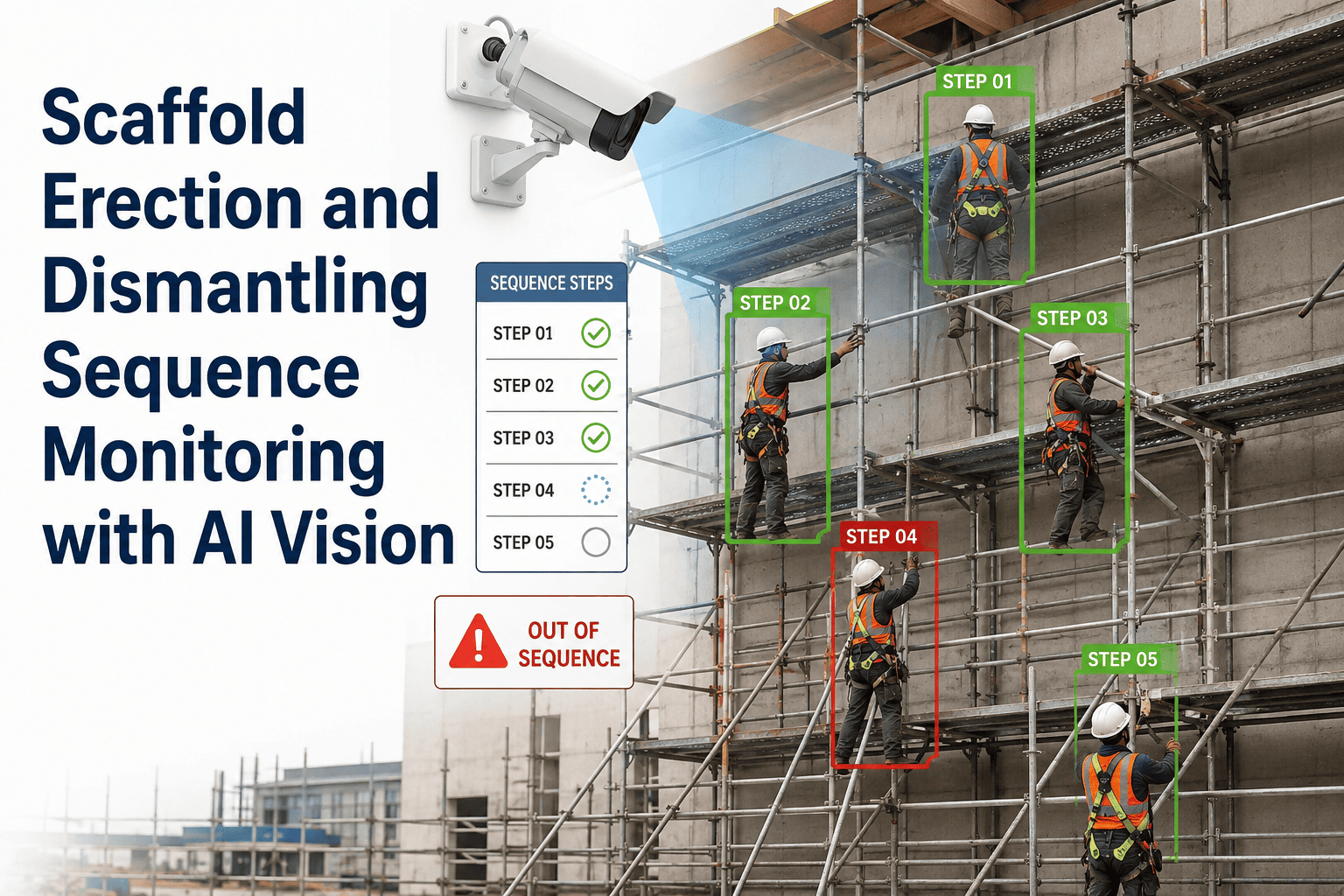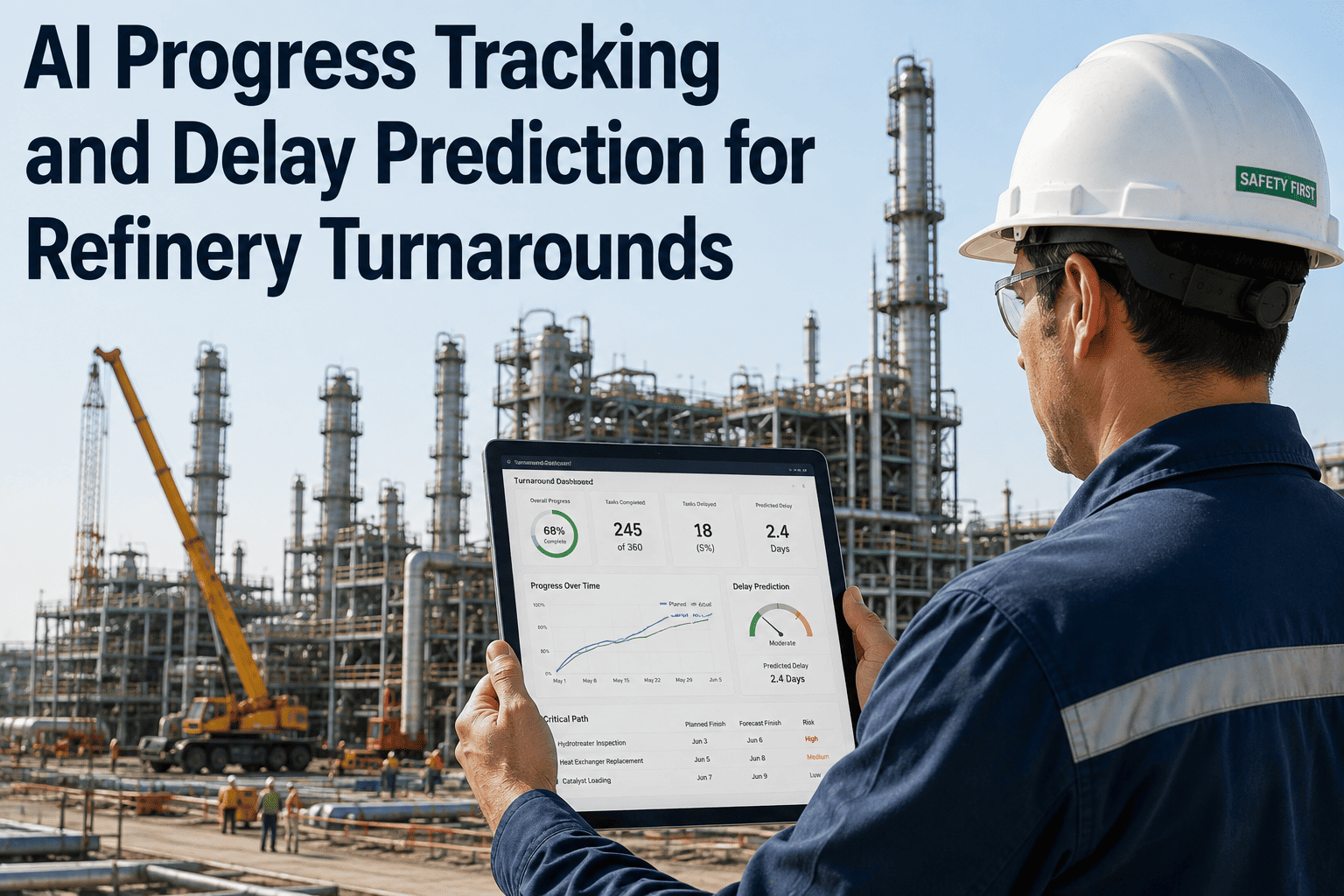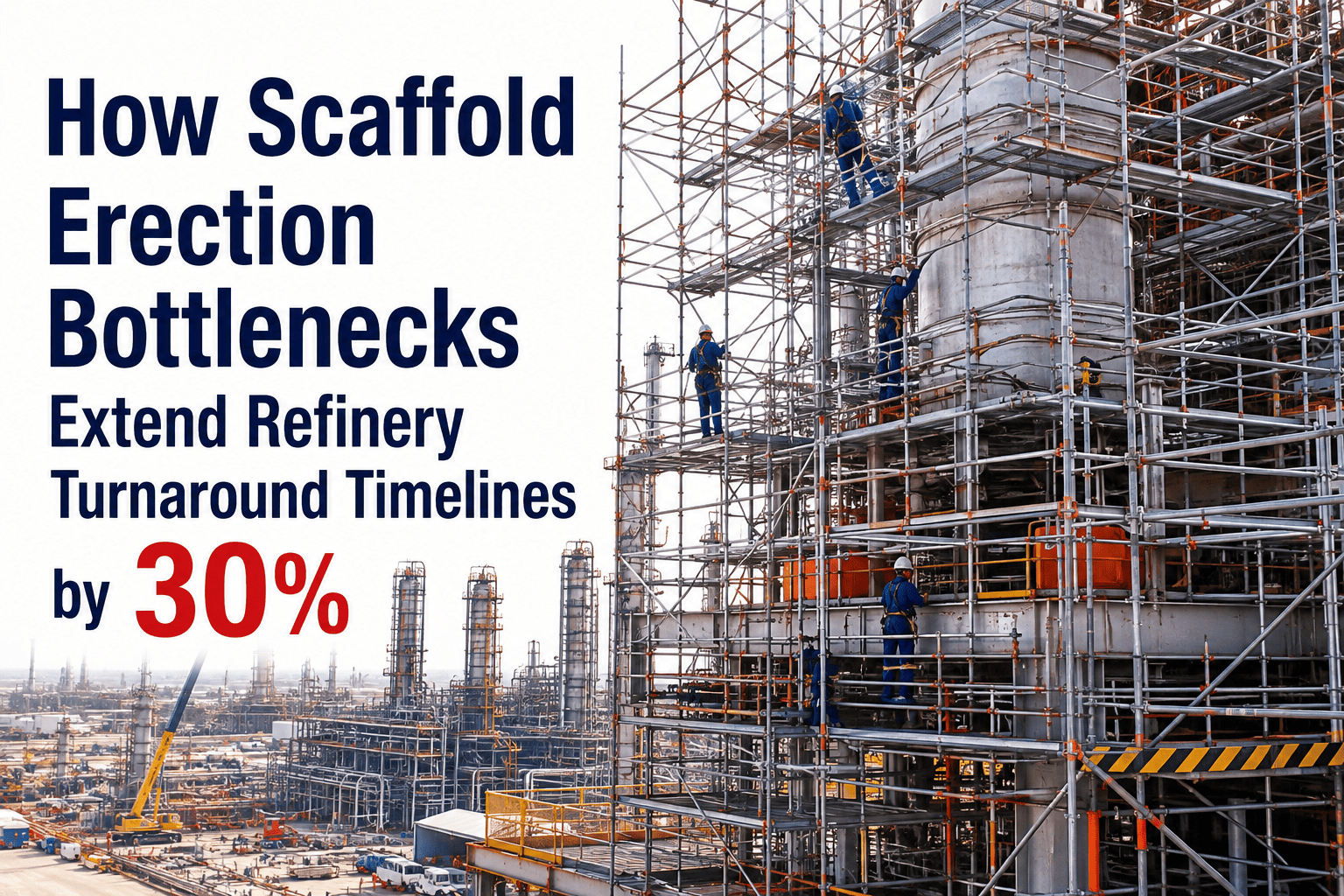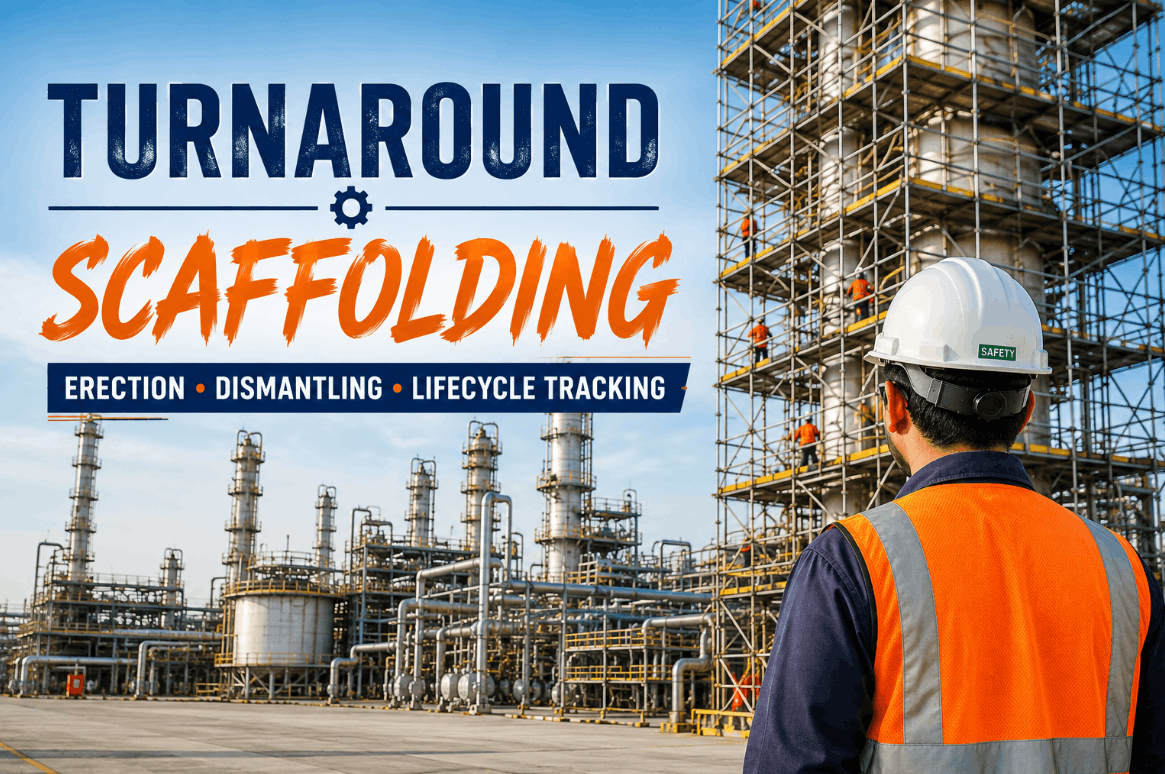
Scaffolding is one of the most underestimated cost and risk drivers in a refinery or chemical plant turnaround. Accounting for 5–10% of total TAR budget — often reaching $250,000 to $500,000 per unit on a Gulf Coast refinery — scaffold erection, modification, inspection, and dismantling directly influence whether every other contractor crew gets access to their work scope on schedule, whether fall protection obligations are continuously met across dozens of simultaneous work fronts, and whether the TAR returns to service without a scaffold-related safety event that halts execution entirely. Yet most facilities manage scaffolding through paper-based tag systems, verbal handoffs between crews, and spreadsheet-level tracking that provides no real-time view of which structures are inspection-current, which are awaiting modification, and which are blocking downstream work packages by failing to come down on schedule. Book a Demo to see how iFactory's digital TAR management platform connects scaffold lifecycle tracking, inspection tag status, and work order sequencing into a single execution system that gives TAR managers full scaffold visibility from erection through dismantling.
Why Scaffolding Lifecycle Tracking Determines TAR Schedule Performance
Every work package in a refinery TAR that requires access above grade level has a scaffold dependency embedded in its schedule logic. A fired heater tube bundle replacement cannot begin until the heater box scaffold is erected and inspection-tagged green. A pressure vessel nozzle inspection cannot close out until the scaffold at that elevation is released for dismantling. When scaffold lifecycle status is invisible to the TAR scheduling system — because it is tracked on paper tags and verbal updates rather than digitally — the CPM schedule operates without knowing the actual status of its access preconditions.
The result is predictable: contractor crews arrive at work fronts to find scaffolds not yet erected, not yet inspection-cleared, or not yet modified for the access geometry their scope requires. Those delays consume float on the activities that depend on scaffold access — and once near-critical activities lose their float, the schedule compression compounds. Facilities that digitize scaffold lifecycle tracking report measurable improvements in work front opening rates and direct reductions in scaffold-related schedule losses on critical path activities. Book a Demo to see how iFactory integrates scaffold status into TAR work order tracking and CPM schedule visibility in a single platform.
The Scaffold Inspection Tag System: Color Codes, OSHA Requirements, and Digital Compliance
The scaffold inspection tag system is the primary safety control mechanism for managing access to scaffold structures across a TAR site. Under OSHA 29 CFR 1926.451, a competent person must inspect every scaffold before each work shift and after any event that could affect structural integrity. The three-color tag system — green for fully cleared and ready for use, yellow for restricted access with specific conditions documented, and red for unsafe and out of service — is the field communication mechanism that translates inspection findings into access control. When that system operates on physical tags alone, the TAR safety team has no aggregate view of the site's scaffold safety status without walking every structure personally.
| Tag Color | Status Meaning | Required Documentation | iFactory Digital Record |
|---|---|---|---|
| Green — Safe to Use | Structure has passed competent-person inspection for all access points; no restrictions on access or load | Inspector name, signature, date of inspection, and structure identifier. Renewed before each shift per OSHA 29 CFR 1926.451(f)(3) | Digital inspection record with inspector credential, timestamp, structure ID, and GPS tag location — searchable and reportable by structure, date, and inspector |
| Yellow — Restricted Use | Specific access conditions apply — PPE requirements, load limits, restricted bays, or tie-off requirements documented on tag | Specific restriction documented; authorized inspector name and date; conditions for upgrade to green tag listed | Restriction type, affected bay reference, required PPE documented digitally; automatic notification to dependent work order supervisors of restricted access status |
| Red — Do Not Use | Structure fails inspection; access prohibited; repair or dismantling required before re-entry | Deficiency description; issuing inspector name and credentials; corrective action required before re-inspection | Deficiency logged against structure record; work order automatically generated for repair; dependent work packages flagged for schedule impact review |
| Modified Structure | Any structural modification after initial green tag voids the inspection — structure must be re-inspected before access is restored | Modification work order with scope of change; re-inspection confirmation before access authorized | Modification request triggers automatic tag status reset to yellow; re-inspection work order generated; access authorization blocked until new inspection record completed |
Want to see how iFactory tracks scaffold lifecycle status alongside TAR work package progress and CPM schedule compliance in a single platform? Book a Demo with our TAR management team.
Scaffold Cost Control: Where Budget Overruns Originate and How Tracking Prevents Them
Scaffold cost overruns in a TAR do not typically result from a single large failure. They accumulate through dozens of small untracked events: modification requests that add material and labor not captured in the original estimate, structures standing past their use window accumulating daily rental charges, erection crew idle time while waiting for access or material delivery, and material losses that are not reconciled until post-TAR close-out when recovery is impossible. Facilities that implement digital scaffold lifecycle tracking report measurable reductions in each of these cost drivers simply by making the activity visible and requiring documentation before costs are incurred.
Expert Review: What TAR Scaffold Managers Miss When Lifecycle Tracking Fails
The failure mode I encounter most consistently in scaffold management during a TAR is the gap between modification and re-inspection. A late-discovery scope addition requires the scaffold crew to add a platform or extend an upper bay. The modification takes two hours. The scaffold supervisor walks it, decides it looks fine, and waves the trade crew back on. There is no re-inspection record, no tag reset, no engineering confirmation that the modification did not affect the structure's load distribution or tie-back geometry. That situation happens dozens of times on a large TAR — and most of them are fine in practice. But when one is not fine, and a platform fails because a non-standard extension was added without structural review and the inspection tag from three days ago is still showing green, the consequences are severe. The post-incident investigation always identifies the same root cause: there was no system requiring a tag reset and re-inspection before access was restored after the modification. A digital scaffold register that automatically voids the tag on any modification record would prevent that failure mode entirely — not by adding bureaucracy, but by making the precondition for restored access explicit and verifiable rather than dependent on a field supervisor's judgment under schedule pressure.
Conclusion: Scaffold Lifecycle Visibility Is a TAR Safety and Cost Control Requirement
Scaffolding accounts for 5–10% of every TAR budget and is the access precondition for the majority of maintenance work packages executed during the shutdown. When scaffold erection status, inspection tag currency, modification history, and dismantling sequencing are managed through disconnected paper records and verbal updates, TAR managers are operating without visibility into the infrastructure that every other contractor crew depends on to begin their scope. The schedule risk of that visibility gap accumulates shift by shift through work fronts that do not open when planned, modifications that void safety clearances without triggering re-inspection, and scaffold structures that stand past their use window blocking adjacent crews while accumulating rental cost.
Digital scaffold lifecycle tracking closes that gap by making every structure's status, inspection currency, modification history, and dismantling schedule visible in real time — linked to the work packages and CPM activities those structures support. It does not add administrative burden to field personnel; it replaces the paper tag system with a digital record that provides more information with less effort and generates the audit trail that OSHA compliance, post-TAR cost reconciliation, and future TAR planning all require. Book a Demo to see how iFactory implements scaffold lifecycle tracking within a full TAR execution management platform.