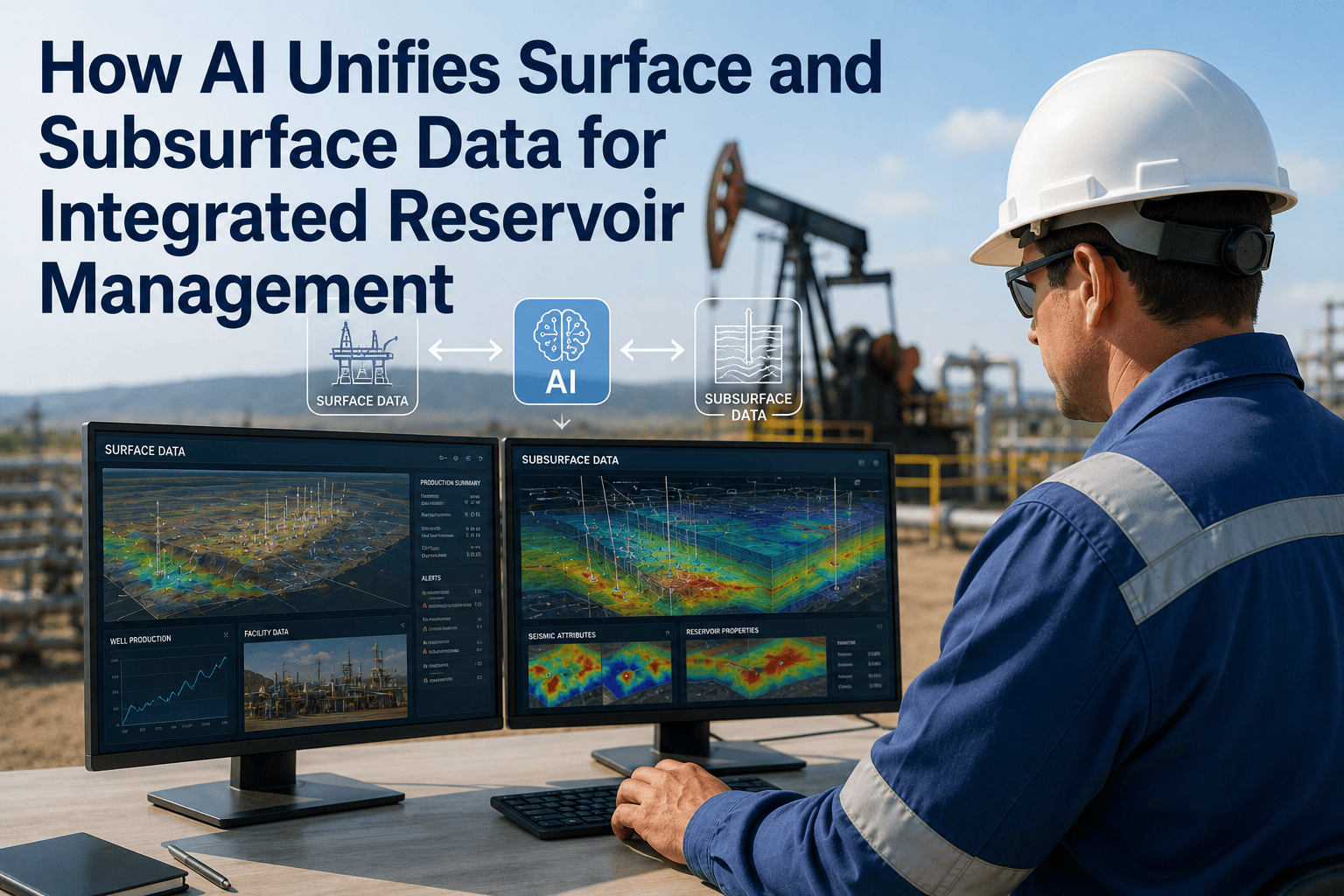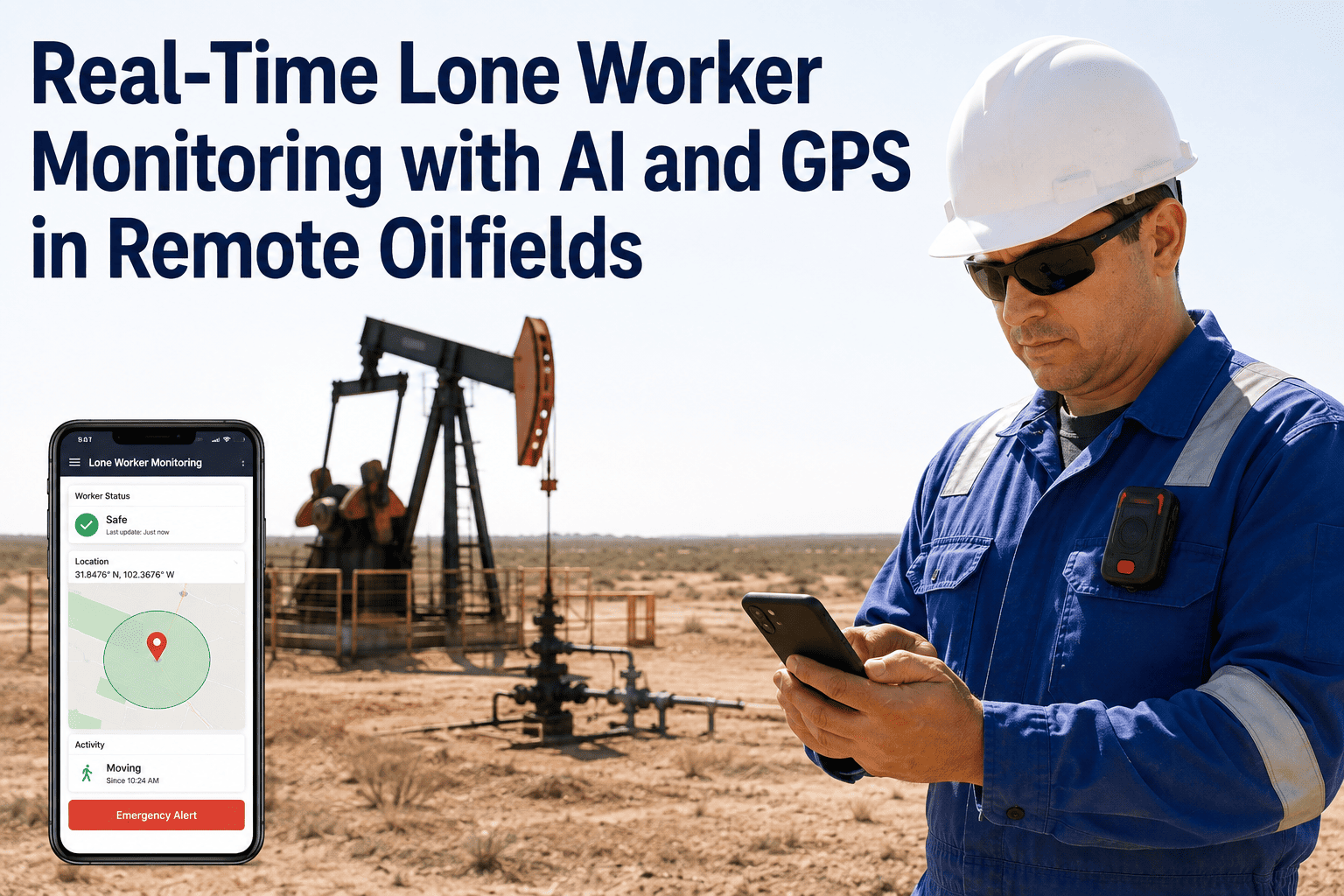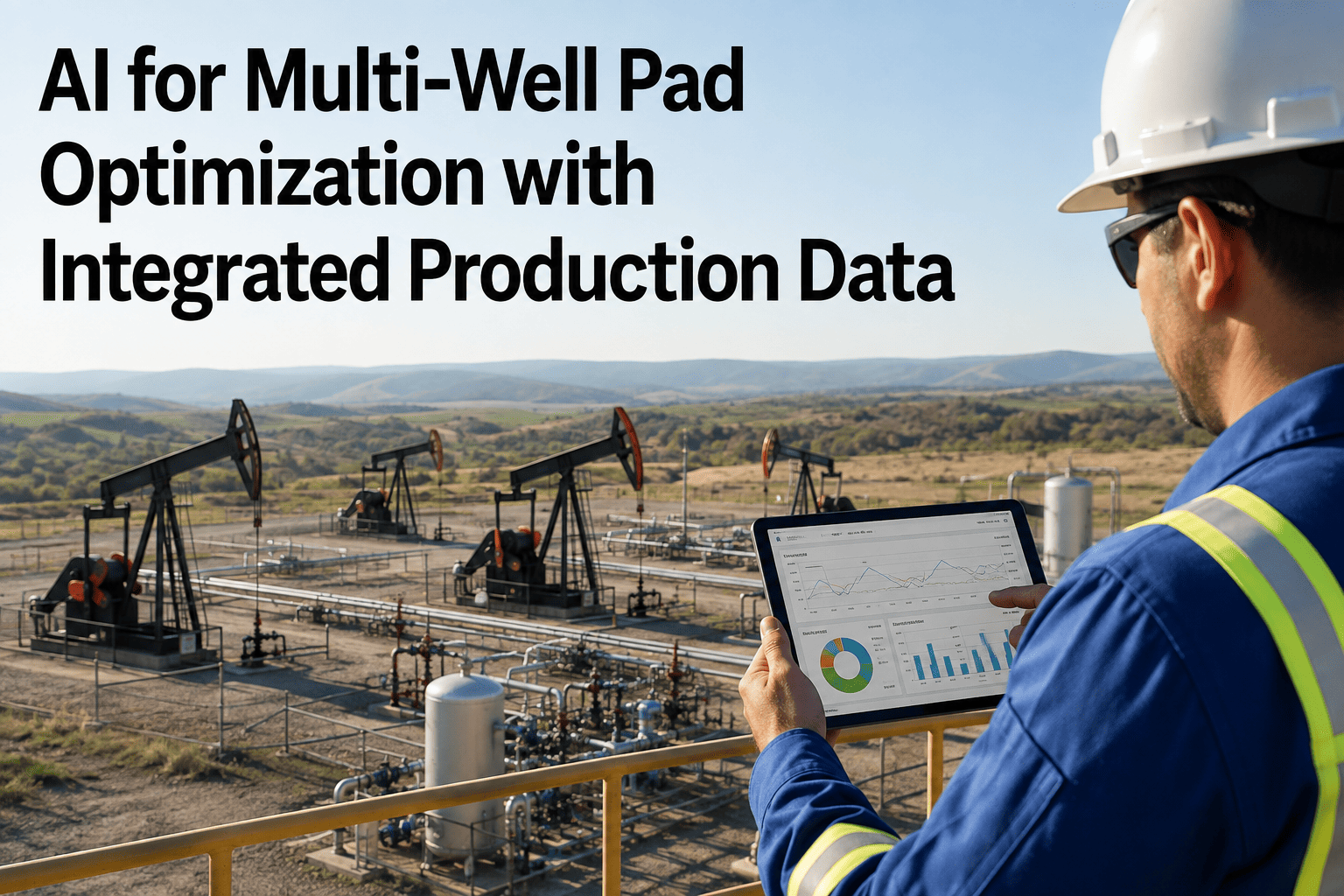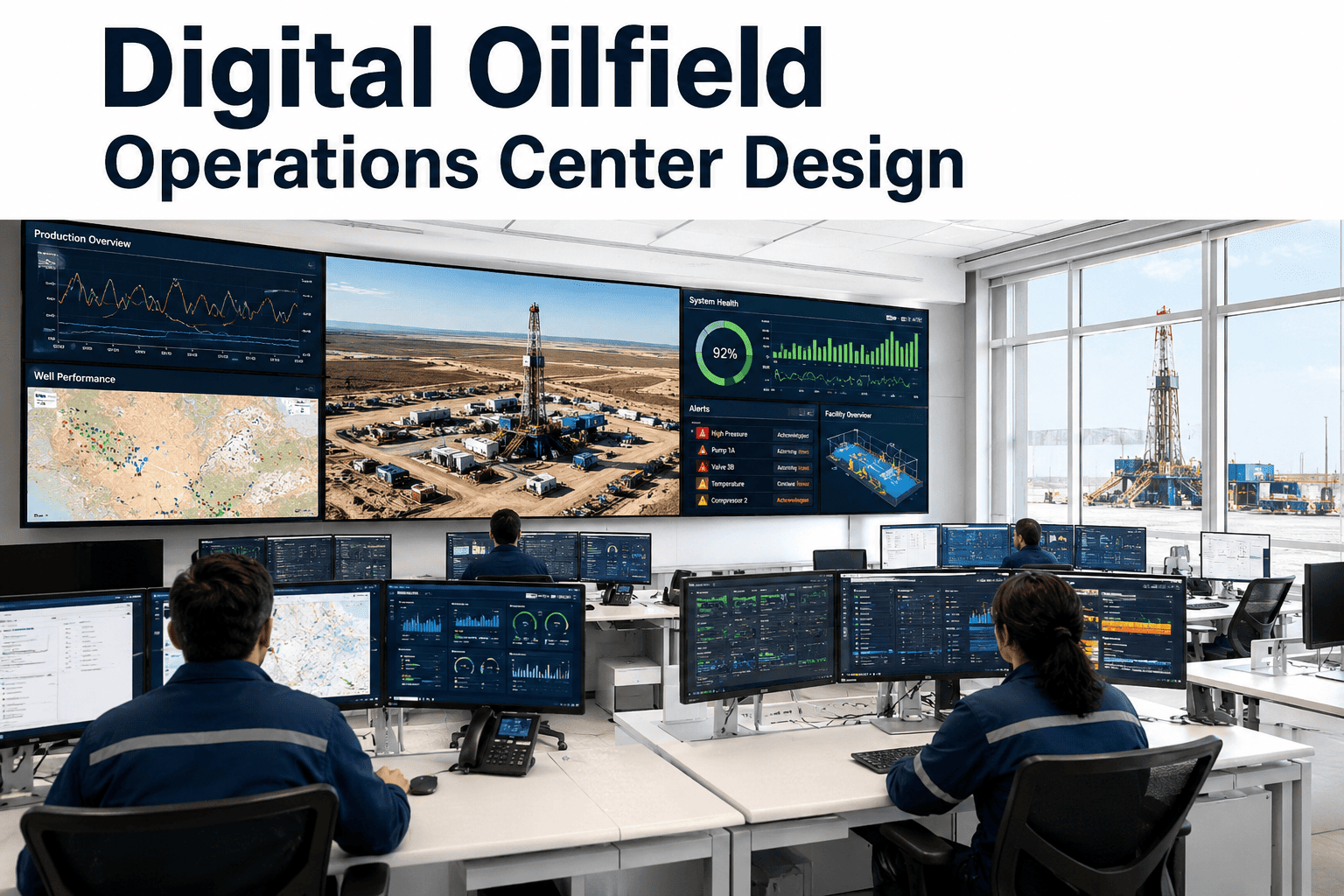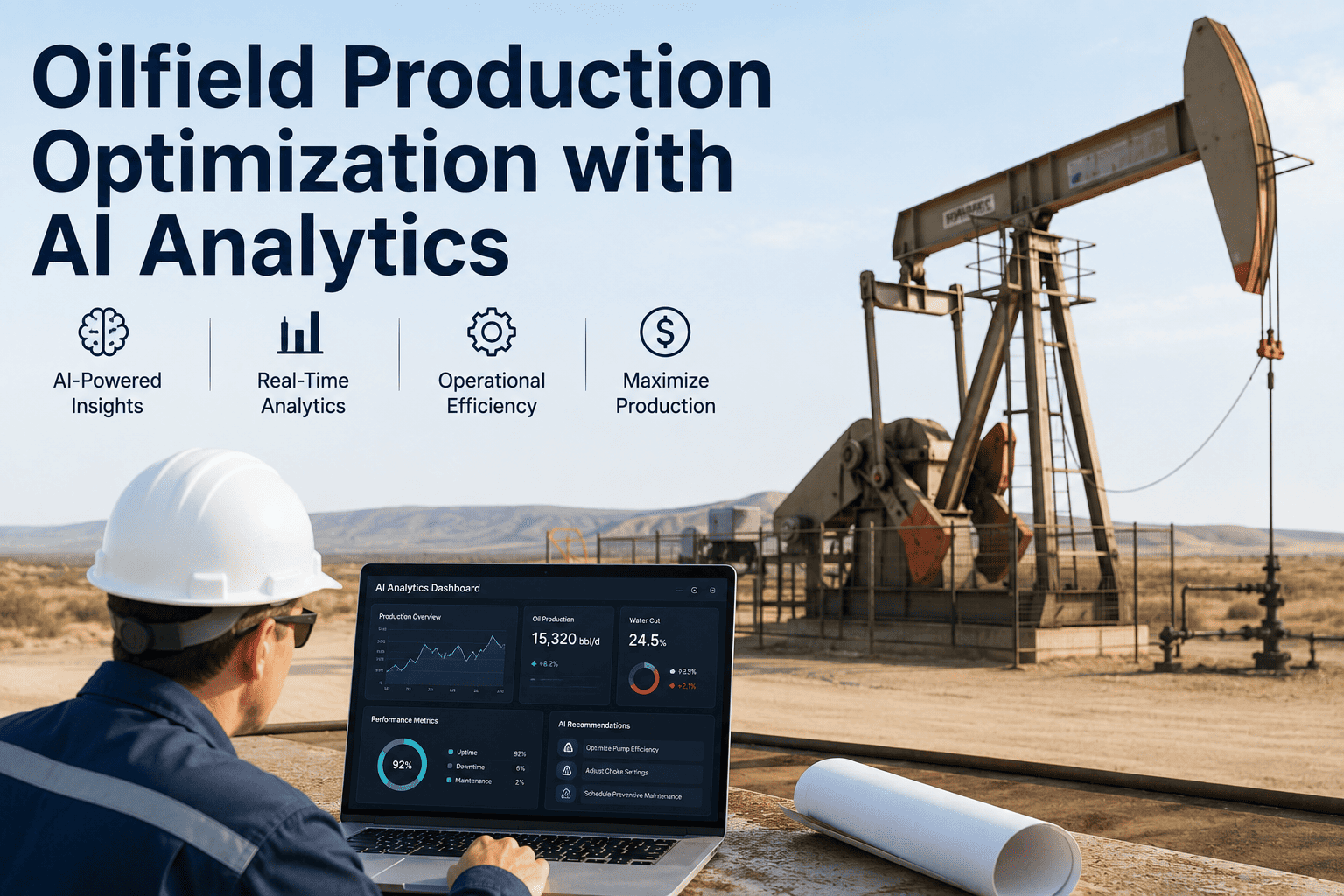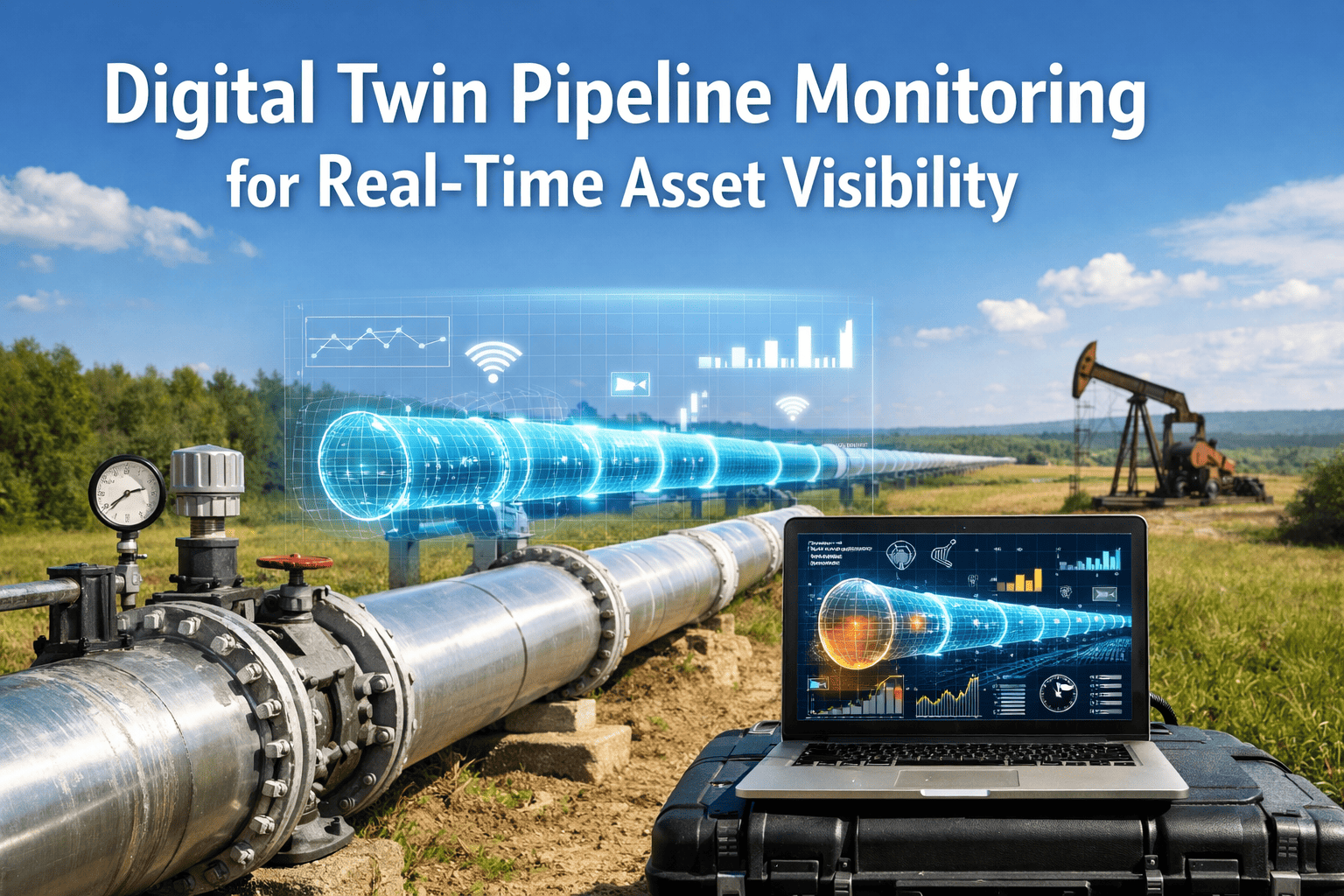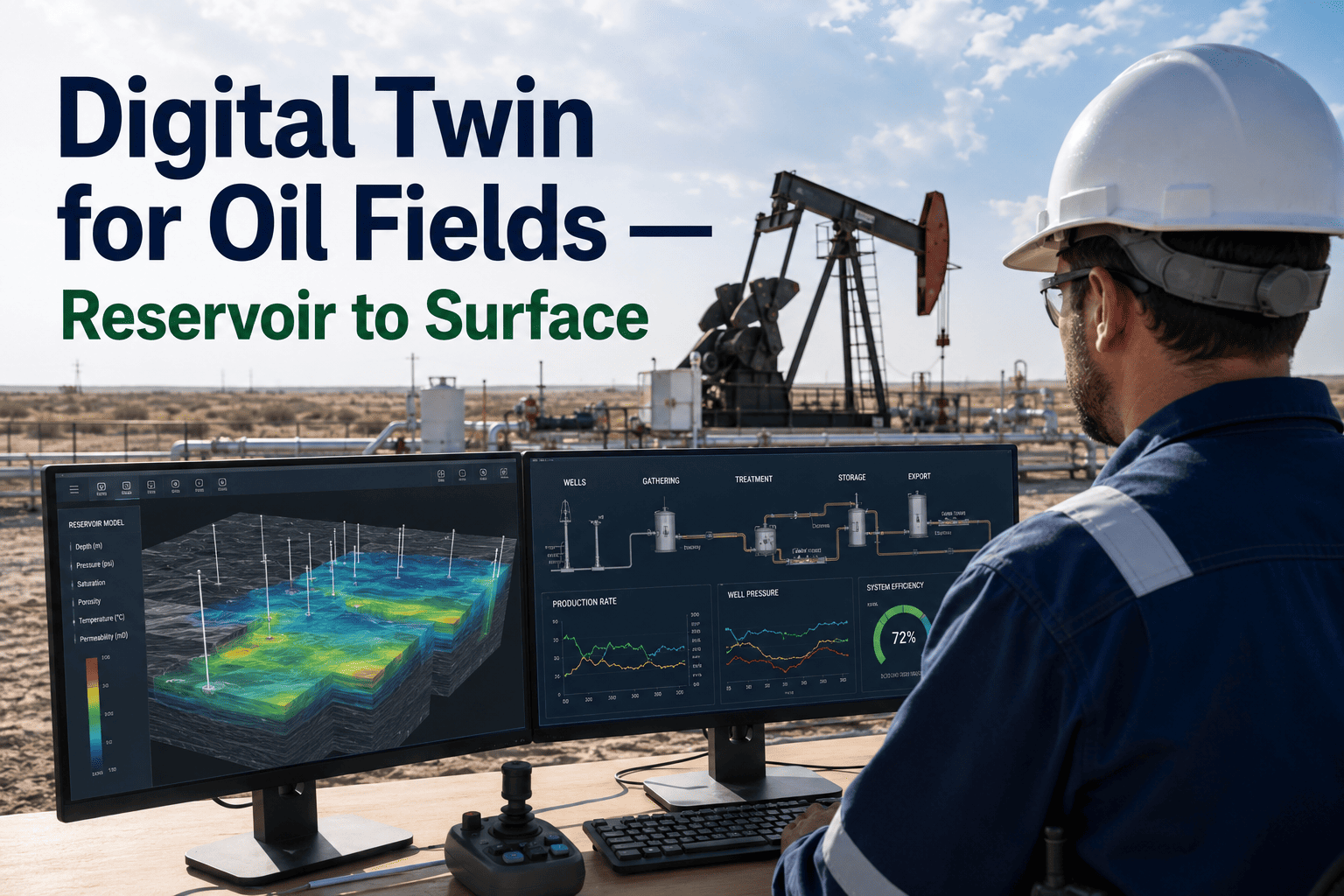
A field operations team running a mature asset used to work from three separate models that never quite agreed with each other — a reservoir simulation updated once a quarter, a wellbore hydraulics model an engineer rebuilt whenever a workover happened, and a surface facility spreadsheet tracking separator and pipeline constraints that lived entirely outside both. When production dropped, nobody could say with confidence whether the cause was reservoir pressure decline, a wellbore restriction, or a bottleneck at the separator, because no single model spanned all three. An integrated digital twin closes that gap by fusing reservoir, wellbore, and surface facility models into one continuously updated system, so a production shortfall can be traced to its actual cause in hours instead of being debated for weeks. Book a demo to see a reservoir-to-surface digital twin configured for your field.
Digital Twins for Oil Fields — One Integrated Model From Reservoir to Wellbore to Surface Facilities
An integrated digital twin fuses physics-based reservoir, wellbore hydraulics, and surface facility models with live field data, so production optimization decisions are made against one consistent picture of the field instead of three disconnected models that were never built to agree with each other.
Why Reservoir, Wellbore, and Facility Models Rarely Agree With Each Other
Reservoir simulation, wellbore hydraulics, and surface facility modeling have historically been built by different disciplines, on different software, updated on different schedules. A reservoir engineer's simulation grid might be refreshed quarterly. A drilling engineer's wellbore model gets rebuilt after every intervention. A production engineer's facility constraints live in a spreadsheet reconciled manually against SCADA data. None of the three was designed to talk to the other, which means that when field performance shifts, the diagnostic process becomes a meeting between three teams comparing three different pictures of the same well.
An integrated system twin — the architecture used in reservoir digital twin platforms from operators like Halliburton — solves this by representing the entire production path as a single connected model: reservoir inflow, wellbore lift performance, and surface network constraints computed together rather than in isolation. That integration is what allows a digital twin to answer questions a single-domain model structurally cannot, such as whether a production drop traces back to reservoir depletion, artificial lift degradation, or a downstream separator bottleneck.
The Layered Architecture of an Integrated Oilfield Digital Twin
An oilfield digital twin is best understood as a family of connected twins, each covering a different part of the production system, unified by a shared data backbone that keeps every layer synchronized against the same live field data.
Disconnected Point Models Compared Against an Integrated Digital Twin
The value of integration is easiest to see side by side with the fragmented approach it replaces — the same underlying physics, but computed together instead of in isolated silos that require manual reconciliation.
| Function | Disconnected Point Models | Integrated Digital Twin |
|---|---|---|
| Reservoir update cycle | Quarterly simulation refresh | Continuous update from live production data |
| Wellbore state estimation | Rebuilt manually after each intervention | Fused with sensor data in near real time |
| Production bottleneck diagnosis | Cross-team meeting to compare models | Single system twin traces cause automatically |
| Facility condition data | Tracked separately in spreadsheets | Integrated into the same optimization loop |
| Scenario testing | Days to weeks per what-if case | Parallel simulation of multiple scenarios |
A Digital Twin That Spans Reservoir to Surface Is Worth More Than Three Models That Almost Agree
One data backbone, continuous updates from live field data, and production optimization decisions made against a single connected picture of the asset.
Where an Integrated Digital Twin Delivers Value Across Field Operations
The same integrated model supports several distinct operational needs, each drawing on a different combination of the reservoir, wellbore, and facility layers described above.
What an Integrated Twin Needs to Stay Synchronized With the Real Field
An integrated digital twin is only as good as the data feeding it. That starts with a complete asset registry spanning drilling rigs, production wells, processing facilities, and pipeline infrastructure, integrated with existing DCS, SCADA, and historian systems so live field data flows into the model without manual re-entry. Physics-based models for wellbore hydraulics, reservoir simulation grids, and rotating equipment dynamics are combined with machine learning models trained on historical operational data to recognize normal versus anomalous behavior.
Validation against known operational events is what separates a production-ready digital twin from a simulation exercise — the model needs to demonstrate it would have predicted or explained events that already happened before it can be trusted to guide decisions on events that have not happened yet. That validation discipline, combined with update frequencies tuned to each layer's operational tempo, is what keeps an integrated twin useful in daily operations rather than becoming another static model that drifts out of sync with the field.
What Actually Slows Digital Twin Adoption — and How Each Barrier Gets Addressed
Digital twin maturity in the oilfield sector is progressing unevenly across the asset lifecycle. Virtual flow metering and predictive maintenance are comparatively mature applications, while closed-loop autonomous optimization remains far more nascent — and the gap between the two is driven by a consistent set of adoption barriers rather than the underlying modeling technology itself.
Questions Field Operations Teams Ask About Integrated Digital Twins
Replace Three Disconnected Models With One Digital Twin That Spans the Whole Production Path
See how an integrated reservoir-to-surface digital twin connects your existing simulation, SCADA, and historian data into one continuously updated field model.