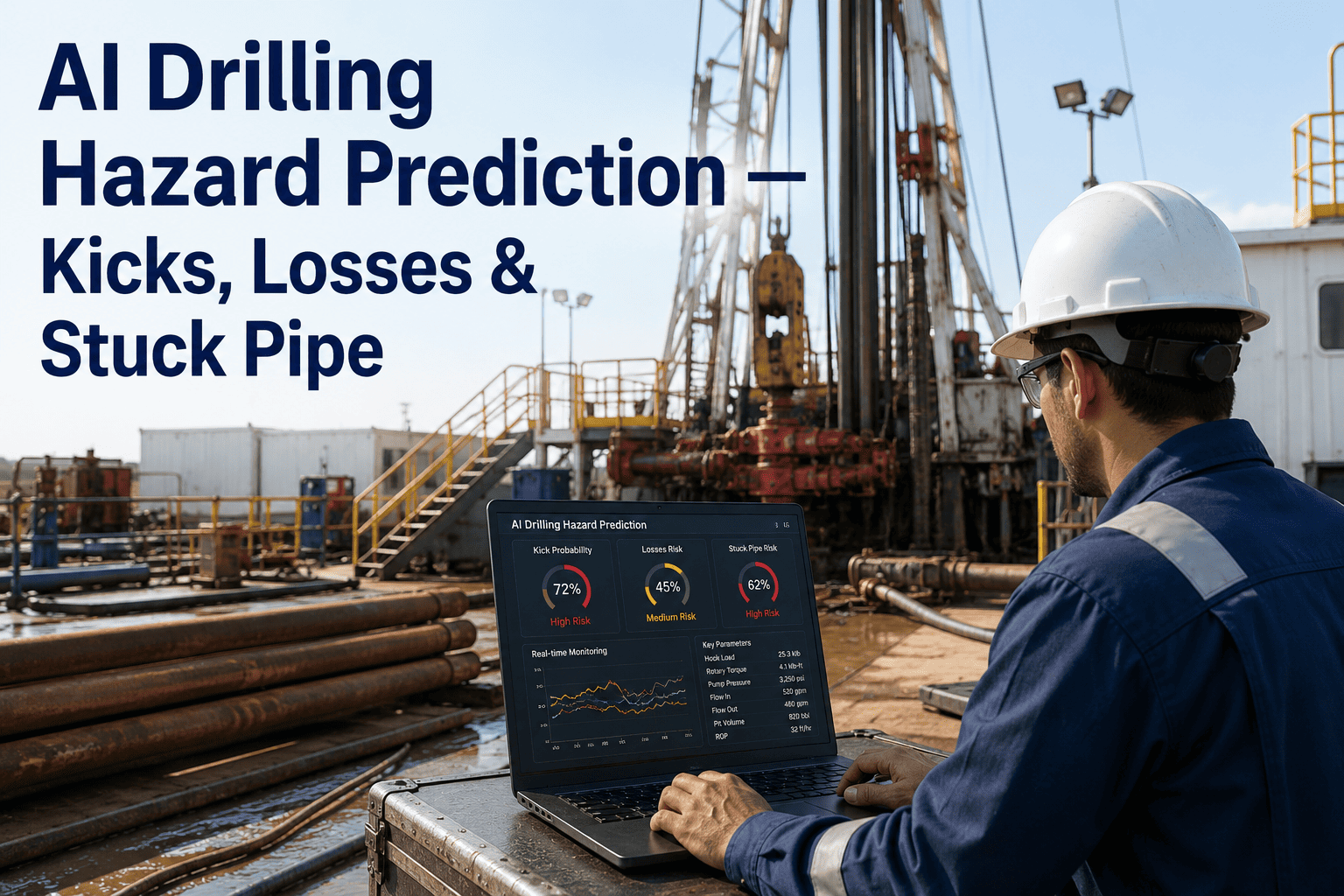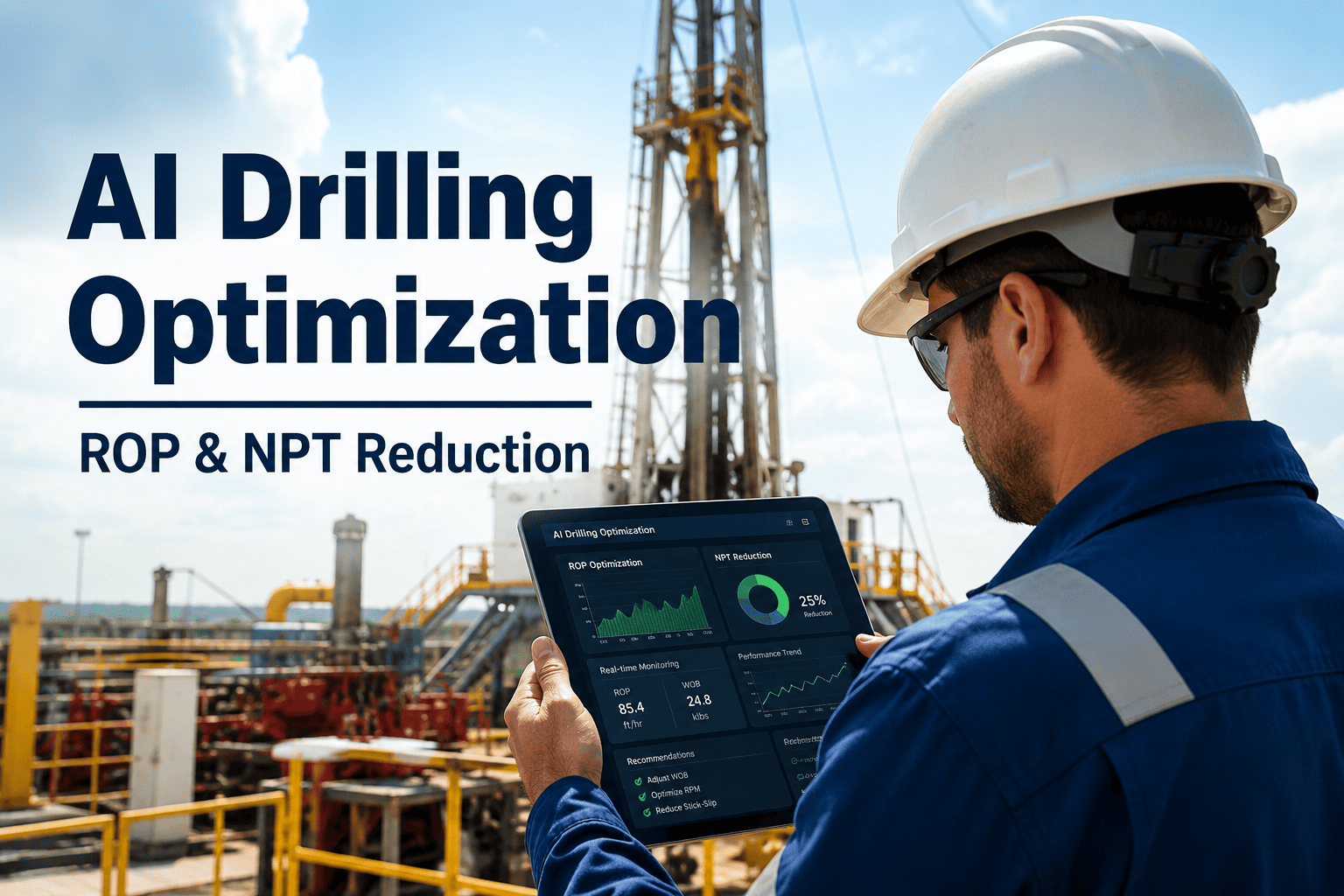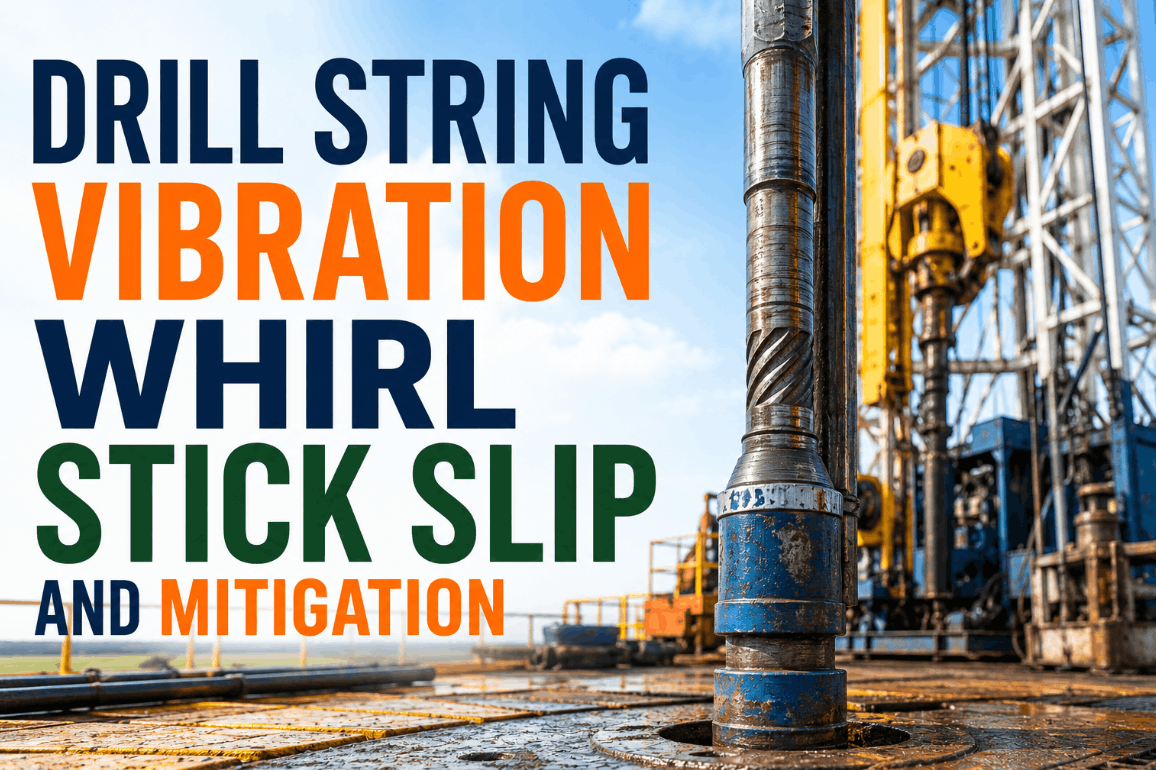
Drill string vibration is one of the most destructive and expensive sources of non-productive time in modern drilling operations. Stick-slip, lateral whirl, and axial bit bounce do not just reduce rate of penetration — they wash out pin connections, fracture PDC cutters, fatigue BHA collars, and destroy MWD/LWD tools that cost hundreds of thousands of dollars per run. The operators consistently delivering top-quartile ROP and bottom-quartile BHA failure rates are not drilling easier wells. They are monitoring downhole dynamics in real time, classifying vibration modes as they develop, and adjusting weight on bit, RPM, and drilling fluid parameters before damage accumulates. Organizations that Book a Demo with iFactory are discovering how AI-integrated MWD analytics closes the gap between downhole dysfunction event and surface corrective action — before the next connection reveals a twisted-off collar or a washed-out bit sub.
Real-Time Stick-Slip, Whirl & Axial Bounce Detection — One Unified Drilling Dashboard
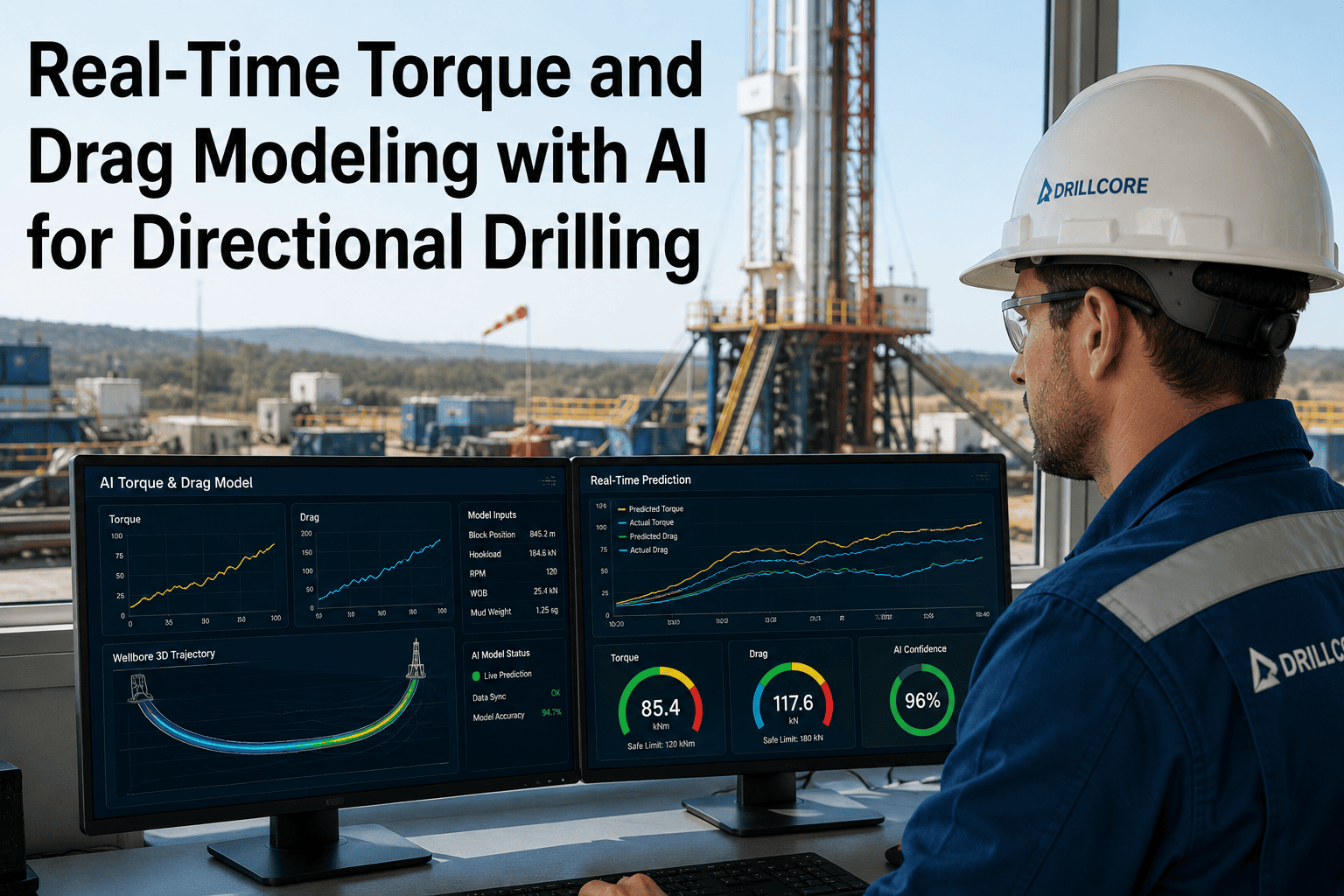
iFactory AI connects MWD downhole sensors, surface torque signatures, WOB/RPM data, and bit performance records into a single live dashboard — so your drilling engineers act on vibration data in real time, not after a BHA failure.
Three Modes of Drill String Dysfunction — and Why Misdiagnosing Them Makes It Worse
The single most consequential error a driller can make when vibration alarms appear is applying the wrong corrective action for the vibration mode that is actually occurring downhole. Stick-slip, lateral whirl, and axial bit bounce each require a different parameter response — and several of these responses are directly opposed. Increasing RPM to suppress stick-slip can push a BHA into forward whirl. Reducing WOB to eliminate axial bounce can simultaneously starve the PDC bit of the depth-of-cut needed to suppress torsional oscillation. Surface indicators — torque swings, standpipe pressure fluctuation, surface RPM variation — are ambiguous between modes. Only downhole MWD accelerometer and magnetometer data, transmitted in real time, provides the mode-specific classification needed to select the correct intervention.
Stick-Slip
The bit or BHA alternately sticks against the formation due to friction, then releases suddenly as accumulated torsional energy exceeds static friction — generating instantaneous RPM spikes 2–8× the surface rotary speed. PDC cutters experience catastrophic impact loads. Pin connections see fatigue cycles far beyond design limits. Surface indicator: high-amplitude torque oscillation with surface RPM variation at 0.1–0.5 Hz. Standard mitigation: increase surface RPM, reduce WOB, or apply top-drive active dampening control.
BHA Whirl
The BHA orbits eccentrically within the borehole — either forward (in the direction of rotation) or backward (counter to rotation). Backward whirl generates the highest lateral shock loads in drilling, with BHA wall-contact impacts producing accelerations exceeding 100 g on stabilizers and collars. It is self-perpetuating: once established, it typically cannot be suppressed by RPM reduction alone. Surface indicator: lateral shock alerts on MWD, erratic WOB. Mitigation: increase WOB significantly while reducing surface RPM — the opposite of stick-slip response.
Bit Bounce
The drill bit periodically lifts off the formation bottom and impacts it again — a low-frequency axial resonance driven by inconsistent WOB loading. In roller cone bit operations, axial vibration at 3× rotary speed is the diagnostic signature. In PDC bit runs on hard interbedded formations, bit bounce at irregular intervals damages cutting elements and transmits compressive shock through the bit sub and float valve. Mitigation requires reducing WOB to eliminate the bounce excitation, combined with RPM adjustment to shift away from the resonant frequency for that BHA/string combination.
| Vibration Mode | Root Cause | Surface Indicator | Correct Mitigation | Incorrect Response Risk |
|---|---|---|---|---|
| Stick-Slip (Torsional) | Bit-formation friction + string compliance | Torque oscillation, surface RPM variation | Increase RPM, reduce WOB | Reducing RPM worsens torsional energy accumulation |
| Forward Whirl (Lateral) | High RPM / low WOB imbalance | Lateral shock on MWD, bit walk | Reduce RPM, increase WOB | Increasing RPM accelerates eccentric orbit |
| Backward Whirl (Lateral) | PDC bit cutter asymmetry, stabilizer contact | High lateral g-force on MWD, erratic torque | Stop rotation; re-establish WOB pattern | RPM reduction alone cannot break self-sustaining orbit |
| Bit Bounce (Axial) | Inconsistent WOB on hard formation | Axial shock at 3× RPM (roller cone); irregular axial on PDC | Reduce WOB, adjust RPM off resonance | Increasing WOB amplifies bounce excitation |
| High-Frequency Torsional (HFTO) | BHA torsional resonance at bit-formation contact | Surface-invisible — detectable only by downhole MWD | Change RPM to detune from resonant frequency | Undetected without downhole telemetry — catastrophic tool damage |
MWD Vibration Monitoring: From Downhole Sensor to Surface Decision in Real Time
Surface torque and RPM measurements are a lagging, ambiguous proxy for what is actually happening at the bit. The compliance and damping of a 10,000-foot drill string mean that torsional events at the bit arrive at the top drive distorted, delayed, and mixed with string resonance signatures that mask the original downhole signal. High-frequency torsional oscillation (HFTO) — one of the most damaging BHA vibration modes — is essentially invisible at the surface because the string damps the signal before it propagates upward. The only reliable mode classification comes from downhole accelerometers and magnetometers placed close to the bit, transmitting data via mud-pulse or wired-pipe telemetry. Book a Demo to see how iFactory ingests and classifies MWD vibration streams in real time.
Stick-Slip: The WOB-RPM Dilemma and How AI Resolves It
Stick-slip is fundamentally a WOB-RPM balance problem with no static solution — the optimal parameters shift with formation hardness, bit wear, mud properties, and BHA configuration on a stand-by-stand basis. Increasing WOB at a fixed RPM typically induces torsional vibration as the bit bites deeper into the formation and friction torque exceeds the rotary table's ability to maintain constant velocity. Increasing RPM at constant WOB can resolve stick-slip but risks pushing the BHA into forward whirl if the RPM-to-WOB ratio crosses the lateral instability threshold for that BHA design. This is the dilemma that makes manual parameter management inadequate for complex wells — and it is exactly the problem iFactory's AI engine is designed to solve.
iFactory continuously models the torsional compliance of the drill string based on depth, string weight, and mud properties — updating the predicted stick-slip onset WOB and the whirl-risk RPM boundary for every stand drilled. The operating window between these two boundaries — the zone where ROP is maximized without triggering either torsional or lateral dysfunction — narrows significantly in extended-reach, HPHT, and deep directional wells. Book a Demo to see the WOB-RPM optimization window in a live well scenario.
Surface torque oscillation is the most accessible stick-slip indicator, but its amplitude is attenuated and delayed by string compliance. iFactory processes surface torque at high sample rates to extract the stick-slip oscillation frequency, compare it against the string's predicted torsional natural frequency, and estimate downhole RPM amplitude from the surface signal using a torsional wave propagation model.
- High-frequency torque sampling at top-drive sensor level — 10 Hz minimum
- Stick-slip frequency extraction and comparison against modeled string resonance
- Surface RPM oscillation amplitude as a proxy for downhole RPM excursion severity
- Torque-on-bit estimation from surface measurements corrected for string friction
- Shift-level stick-slip severity trending to identify formation-driven onset patterns
Downhole magnetometer toolface velocity — measured as the angular velocity of the BHA at specific radial orientations — is the highest-confidence stick-slip diagnostic available. A toolface velocity that periodically drops to zero and then spikes is the definitive stick-slip signature, unambiguous from the downhole frame of reference. iFactory classifies severity on a 0–10 scale using the ratio of peak-to-mean downhole RPM.
- Toolface velocity profile analysis — zero-velocity events define stick phase duration
- Peak-to-mean RPM ratio as quantitative stick-slip severity index
- Lateral g-force concurrent with torsional events — identifies mode coupling risk
- Axial acceleration during slip phase — detects concurrent bit bounce excitation
- HFTO detection via high-frequency accelerometer channel — invisible at surface
Active stick-slip suppression using top-drive torque control is the most effective intervention for severe torsional dysfunction — capable of eliminating stick-slip without the ROP penalty of WOB reduction. iFactory integrates with top-drive control systems to recommend or automatically apply RPM setpoint adjustments and torque damping parameters that interrupt the torsional oscillation cycle before it re-establishes.
- Top-drive RPM controller integration for automated stick-slip frequency interruption
- Torque damping setpoint recommendations updated per stand based on string model
- Active control effectiveness logging — compares RPM oscillation before and after
- Controller detuning alerts when string properties change with depth or fluid density
- Passive dampening tool performance tracking when downhole shock subs are installed
BHA configuration directly determines the vibration susceptibility envelope for a given formation and well profile. Stabilizer placement affects the lateral resonant frequency; collar weight distribution affects torsional compliance; bit-BHA interaction determines whether PDC depth-of-cut control suppresses or amplifies stick-slip. iFactory's BHA vibration model analyzes each run's configuration against its measured downhole dynamics to identify configuration-driven dysfunction patterns for the next BHA design.
- Stabilizer placement and gauge diameter effect on lateral whirl resonance frequency
- Collar length and weight distribution impact on torsional compliance and stick-slip onset WOB
- Bit-BHA interaction model — depth-of-cut control element effectiveness per formation
- Drilling motor specification effect on torsional energy storage during stick phase
- BHA run performance comparison — vibration severity by configuration across offset wells
BHA Whirl and Bit Bounce: The Lateral and Axial Failure Chain
Backward whirl is widely recognized as the most mechanically destructive drilling dysfunction per unit of time — lateral shock loads generated when the BHA impacts the borehole wall at the whirl orbit frequency can exceed 100 g on collar shoulders and stabilizer blades. At these load levels, fatigue crack propagation in collar connections accelerates dramatically, and a single stand of severe backward whirl can consume more fatigue life than thousands of feet of normal drilling. The compounding problem is that backward whirl is self-reinforcing: the eccentric borehole geometry it creates provides the physical asymmetry that sustains the whirl orbit, making it impossible to eliminate by simply reducing RPM without also re-establishing the BHA's centered cutting pattern through a full WOB adjustment cycle.
Bit bounce compounds the damage on formations where PDC bits transition between hard and soft layers at depth. The axial resonance generated by inconsistent formation resistance creates compressive and tensile shock loads in the bit sub, float valve, and motor bearing package — the components least designed to absorb repeated impact loading. iFactory's axial vibration monitoring tracks the frequency signature of bit bounce relative to surface RPM, identifying the resonant condition that amplifies bounce severity and recommending the RPM shift needed to detune the string from that resonant frequency without sacrificing ROP. Book a Demo to review a whirl and bounce diagnostic from an actual BHA run.
Lateral Shock Event Identification via MWD Accelerometer
iFactory monitors lateral g-force magnitude from the near-bit accelerometer continuously, flagging events exceeding the configurable shock threshold for the BHA tool ratings. The pattern of shock events — sustained versus intermittent, symmetric versus directional — distinguishes forward whirl, backward whirl, and stabilizer-contact bounce from each other.
Whirl Mode Identification — Forward, Backward, or Chaotic
Backward whirl generates a characteristic lateral shock frequency that is higher than the surface RPM — a definitive signature that iFactory's AI identifies from the accelerometer time-series. Chaotic whirl, which oscillates between forward and backward orbits, produces a lower-frequency but highly variable shock pattern. Mode classification determines the correct mitigation action: a recommendation to stop rotation completely is issued only for backward whirl events that cannot be resolved by WOB increase alone.
Parameter Adjustment with Mode Interaction Risk Check
Every whirl mitigation recommendation from iFactory is checked against the concurrent stick-slip risk before it is issued. Increasing WOB to suppress lateral whirl raises the torsional friction load simultaneously — iFactory's model verifies that the recommended WOB increase remains below the predicted stick-slip onset threshold for the current formation and bit wear state before the recommendation is surfaced to the driller.
BHA Run Summary and Cumulative Fatigue Index
After each BHA run, iFactory generates a complete vibration exposure summary showing total time in each dysfunction mode, peak shock events by severity, and a cumulative fatigue index for collar connections and bearing elements. This report drives the pull-or-run decision at TD and populates the BHA performance database used to improve the next run's configuration and parameter limits.
Replace Reactive BHA Damage with Proactive Vibration Management — Every Stand
iFactory connects downhole MWD vibration data, surface torque and RPM, bit performance history, and BHA configuration into a single real-time dashboard — classifying stick-slip, whirl, and axial bounce modes and recommending the correct parameter response before the damage accumulates.
Drill String Vibration Is a Data Problem Before It Is an Equipment Problem
Every BHA failure that stems from undetected whirl, unmitigated stick-slip, or sustained axial bounce represents a decision that was made without the data needed to make it correctly. The formation was doing what formations do. The equipment was operating within its design envelope — until it was not. The gap between normal operation and failure accumulates in fatigue cycles, shock events, and torsional excursions that surface parameters simply cannot see. Downhole MWD vibration data contains the early warning signal for every one of these failure modes. The only question is whether that data reaches the driller as a classified, actionable alert in real time, or as a post-mortem on the BHA report after the trip.
iFactory's drill string vibration analytics platform brings mode-specific classification, real-time parameter recommendations, and cumulative BHA fatigue tracking to every stand drilled — using the MWD data your string is already generating. The result is fewer BHA failures, fewer unplanned trips, better ROP, and a drilling program that learns from every run rather than repeating the same dysfunction patterns on every well.
Drill String Vibration & MWD Analytics — Frequently Asked Questions
Stop Diagnosing Vibration Damage After the Trip. Start Managing It Stand by Stand.
iFactory connects your MWD vibration data, surface drilling parameters, and BHA configuration into a single real-time intelligence platform — classifying every dysfunction mode and recommending the correct mitigation before damage accumulates. Trusted across deepwater, HPHT, and unconventional drilling programs.