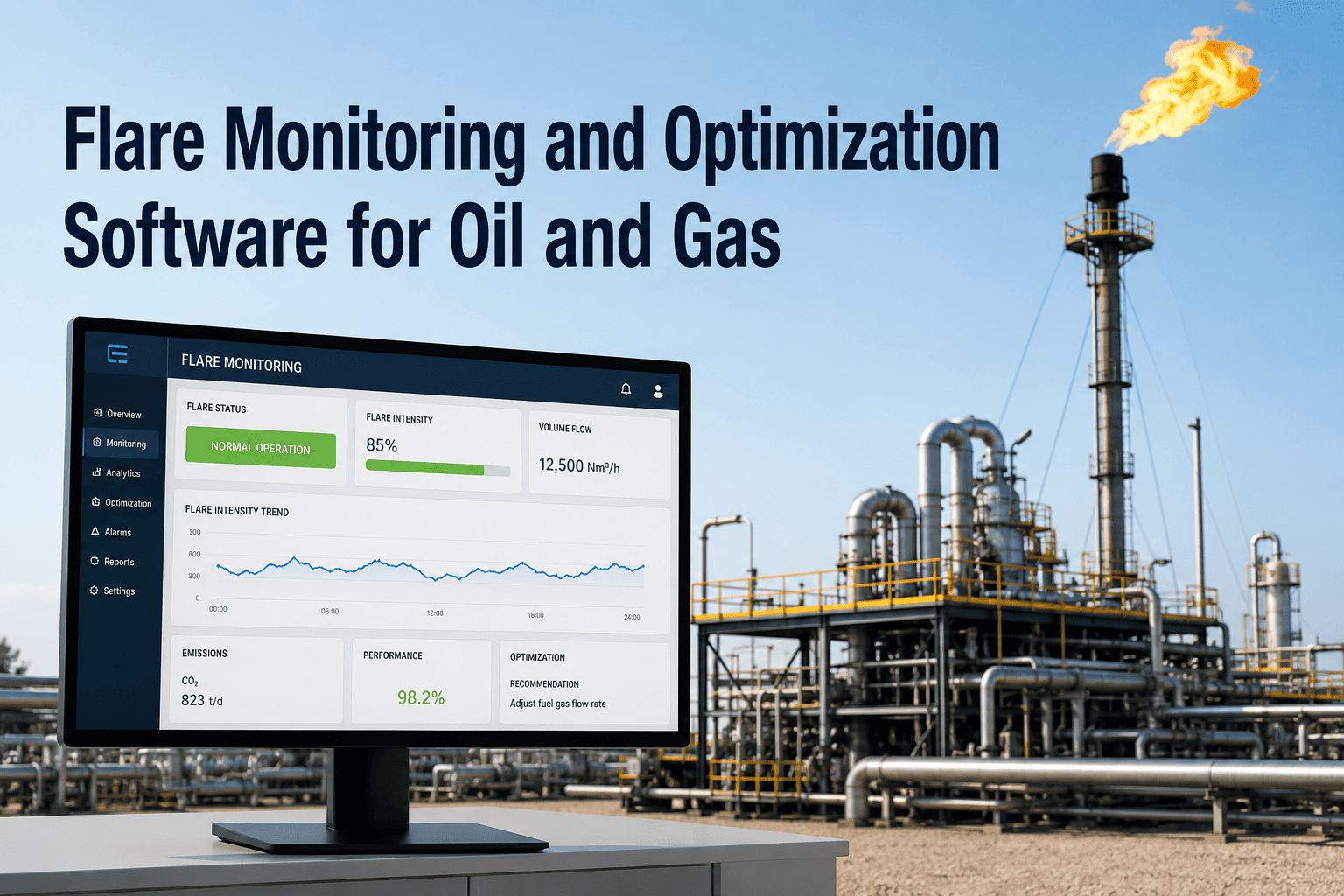
A flare that looks perfectly normal from the control room can still be quietly failing its destruction removal efficiency, because DRE is not something a stack camera or a flow totalizer shows on its own. It is the product of steam-to-fuel ratio, pilot reliability, exit velocity, and wind exposure all landing in the right range at the same moment, and any one of them drifting out of tolerance can drop combustion from the regulatory default of 98 percent down into the low 90s without a single alarm firing. That gap is invisible on a control screen but very visible in an EPA Method 22 smoke observation or a stack test result. iFactory's AI layer watches all four variables continuously and holds them in the window that keeps DRE where it needs to be, with the underlying models detailed at iFactory support.
Flare Intelligence · Combustion Optimization
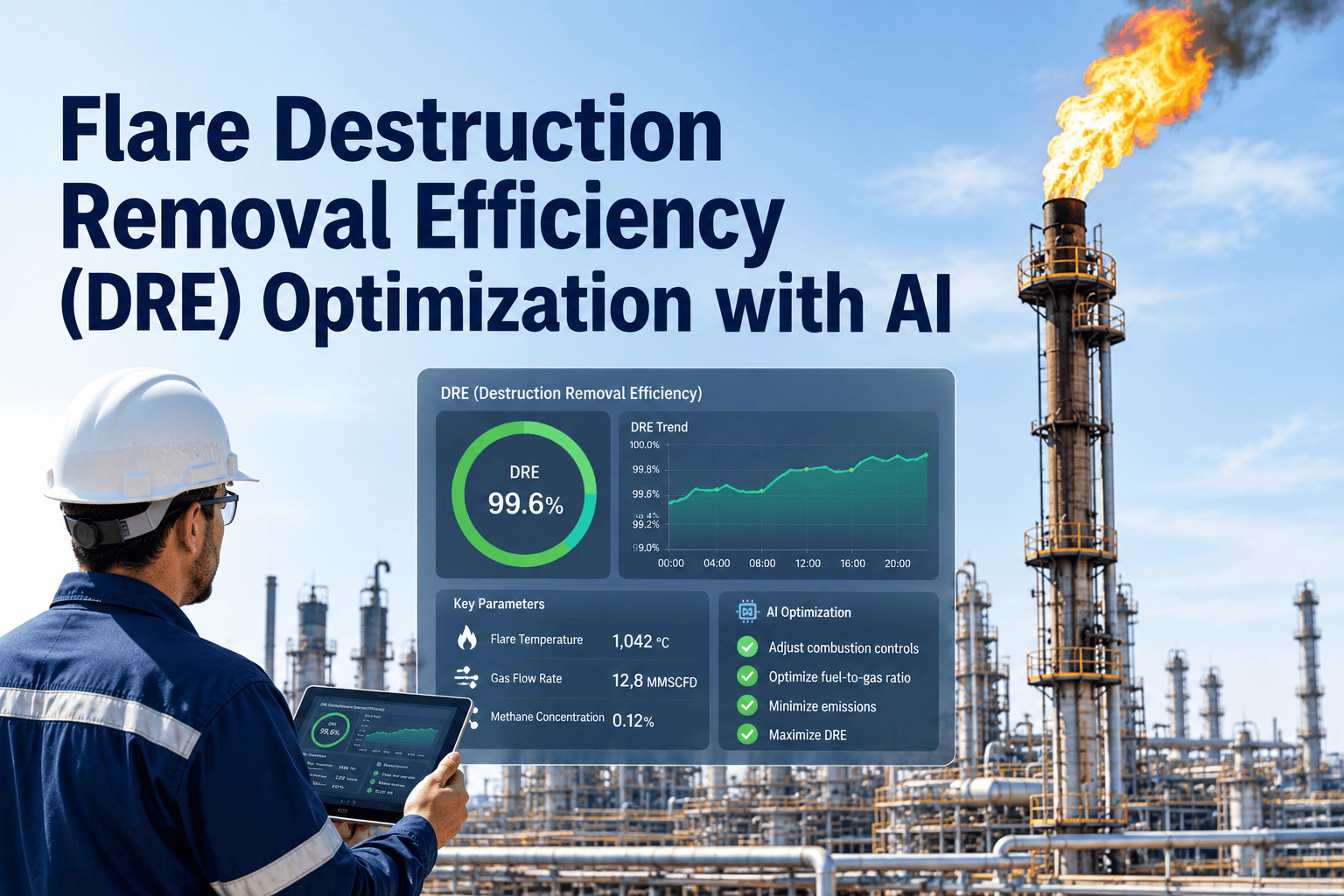
Flare Destruction Removal Efficiency Optimization with AI
AI continuously tunes steam-to-fuel ratio, pilot gas flow, and wind shielding response to hold 98 percent or better destruction removal efficiency, preventing the incomplete combustion that shows up as visible smoke and excess reportable emissions.
How DRE Actually Degrades
The Path From a Well-Tuned Flare to an Out-of-Compliance Plume
DRE rarely fails all at once. It slides, one variable at a time, through a sequence that is predictable once you know what to watch for. Understanding this sequence is what lets an AI monitoring layer intervene before the flame reaches the point auditors actually notice.
A
Waste Gas Load Increases
A process upset or planned relief event sends more gas to the header than the flare's steam system was tuned for at the time, and the existing steam-to-fuel ratio no longer matches the new load.
B
Steam Falls Out of Ratio
Too little steam leaves the flame under-mixed and smoky, while too much steam over-cools the combustion zone, and both directions independently reduce destruction efficiency even though neither triggers a hard alarm.
C
Flame Color Shifts
The flame moves away from the pink-and-orange marbled appearance associated with optimal DRE toward a pale or clear blue flame, a visual signal that correlates with destruction efficiency dropping below the 98 percent threshold.
D
Wind Disrupts the Flame Envelope
Crosswind bends the flame off the tip and reduces residence time in the combustion zone, compounding whatever steam imbalance already exists and pushing incomplete combustion further.
E
Visible Smoke or Failed Observation
By the time smoke is visible or a Method 22 observation records an exceedance, the DRE degradation has typically been building for minutes to hours, which is the window an AI system is built to catch.
The Three Variables That Matter Most
What an AI Optimization Layer Is Actually Adjusting
Steam-to-Fuel Ratio
The single largest lever on smokeless combustion for steam-assisted flares. Research on assist gas ratios has found the highest destruction efficiency in a mass ratio band roughly between 0.2 and 0.6 of steam to waste gas, and AI continuously recalculates that target as waste gas flow and composition change, rather than leaving operators to adjust it manually off a fixed setpoint.
Pilot Gas Reliability
A flare with an unreliable or intermittently monitored pilot risks a flame-out that goes undetected for longer than it should, during which unburned waste gas is released with essentially zero destruction efficiency. Continuous pilot flame monitoring paired with automated relight logic closes that exposure window from potentially hours down to seconds.
Wind Shielding Response
Wind speed and direction data feed into the same control loop that manages steam and air assist, allowing the system to pre-emptively increase assist gas or adjust flame stabilization ahead of a wind gust rather than reacting after flame lift-off has already reduced residence time in the combustion zone.
A 98 Percent DRE Assumption Written Into Your Air Permit Is Only True When Steam, Pilot, and Wind Response Actually Hold It There.
iFactory's AI combustion layer keeps all three in range continuously, so the DRE your permit assumes is the DRE your flare is actually achieving.
Regulatory Context
Where the 98 Percent DRE Figure Actually Comes From
40 CFR 60.18
The federal general control device requirements that set out flare design and operating parameters, including exit velocity limits and the conditions under which the 98 percent destruction efficiency default applies.
Heat Content Threshold
EPA guidance ties the 98 percent DRE assumption to a minimum net heating value, commonly cited around 300 Btu per standard cubic foot, below which destruction efficiency degrades even with correct steam and velocity settings.
Subpart OOOOb
Updated New Source Performance Standards for the oil and gas sector require operators to demonstrate combustion efficiency across all operating conditions, not only at design capacity, which is precisely where manual tuning tends to fail during low-load periods.
Method 22 Observation
The visible emissions observation method auditors and inspectors use to check smokeless performance in the field, and the method most likely to catch a DRE degradation that internal monitoring missed.
Field Example
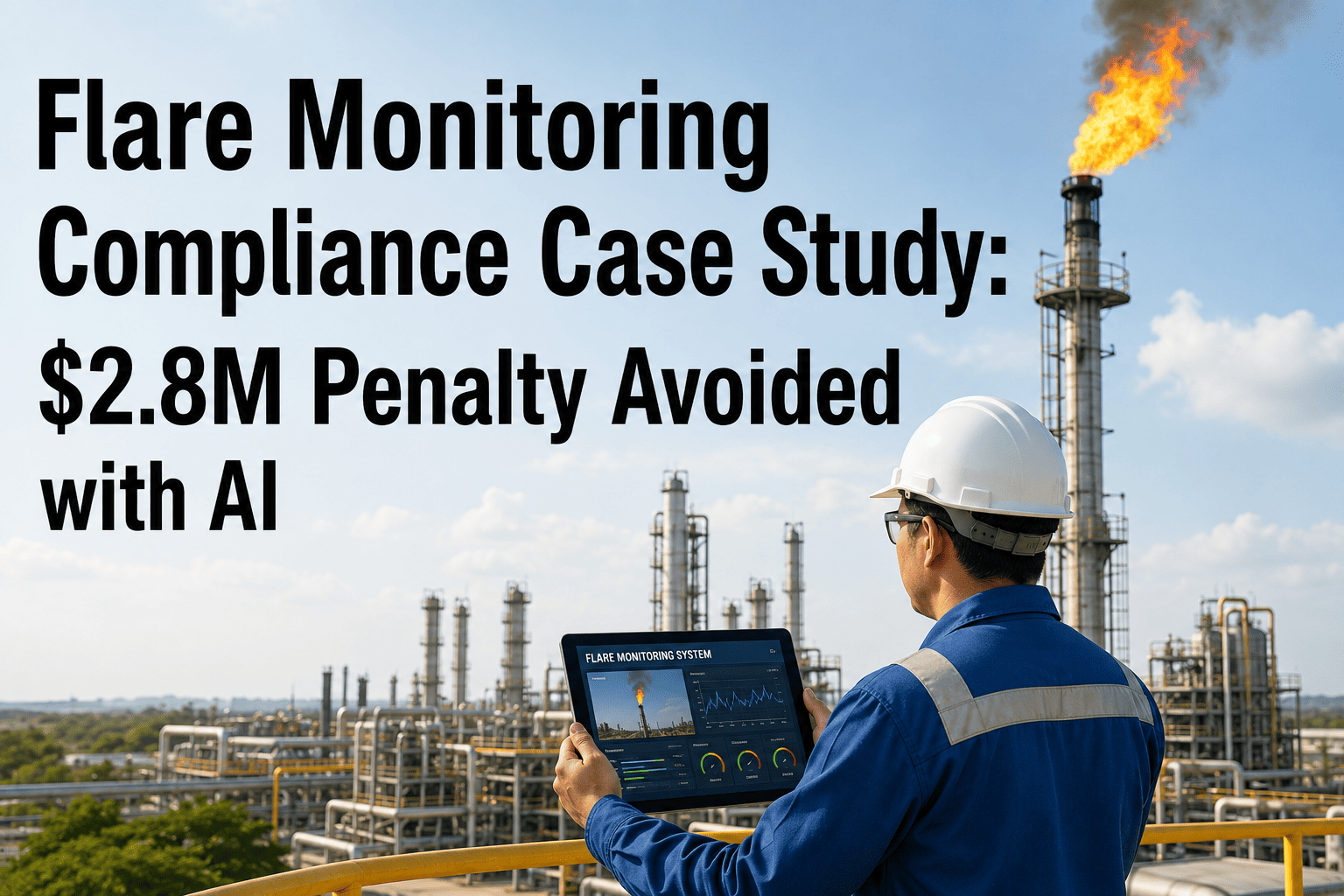
A Petrochemical Facility Eliminating Repeat Smoke Events During Load Swings
A petrochemical plant's flare had a documented pattern of visible smoke events specifically during periods when two adjacent units cycled through planned pressure relief within the same shift, a combination the site's fixed steam-to-fuel setpoint had never been tuned to handle. Operators were adjusting steam manually based on visual flame inspection from the control room camera, a method that reliably lagged the actual load change by several minutes.
iFactory deployed continuous waste gas composition and flow monitoring feeding an AI model that recalculated the optimal steam-to-fuel ratio in real time and issued automated steam valve adjustments ahead of the flame visibly changing. Combined with wind-responsive assist gas staging, the site went from an average of roughly two visible smoke events per month during dual-unit relief scenarios to zero recorded events across the following two full quarters, and the facility's Method 22 observation logs used for permit compliance documentation now show sustained smokeless operation through load swings that previously triggered violations.
2/month to 0
Visible smoke events during dual-unit relief
2 quarters
Sustained smokeless operation since deployment
Minutes to seconds
Reduction in steam adjustment response lag
Assist Type Comparison
Air-Assist vs Steam-Assist: Which One AI Optimizes Better
The choice between air-assist and steam-assist flares is usually locked in at design time based on site utilities, but the AI optimization approach differs meaningfully between the two, and understanding that difference matters for setting realistic performance expectations.
Steam-Assist: Primary Lever
Steam-to-fuel ratio is the dominant control variable, and AI continuously recalculates the target ratio as waste gas flow and composition shift, adjusting the steam valve in small increments rather than waiting for a scheduled review.
Steam-Assist: Failure Mode
Over-steaming cools the combustion zone and reduces destruction efficiency just as reliably as under-steaming causes visible smoke, which is why a static setpoint tuned for one load condition tends to fail in both directions over time.
Air-Assist: Primary Lever
Blower speed and air-to-fuel ratio take the place of steam as the main control variable, with AI managing the electric blower output against real-time waste gas load to avoid the over-aeration that a common finding in EPA compliance inspections traces back to poorly specified air-assist systems.
Air-Assist: Failure Mode
Air-assist systems are particularly prone to over-aerating during routine low-load operation, a condition that can fail combustion efficiency requirements without ever producing visible smoke, making continuous monitoring more important than a visual check alone.
Continuous Monitoring Scope
What the AI System Is Actually Watching, Second by Second
Flame Color and Shape Analysis
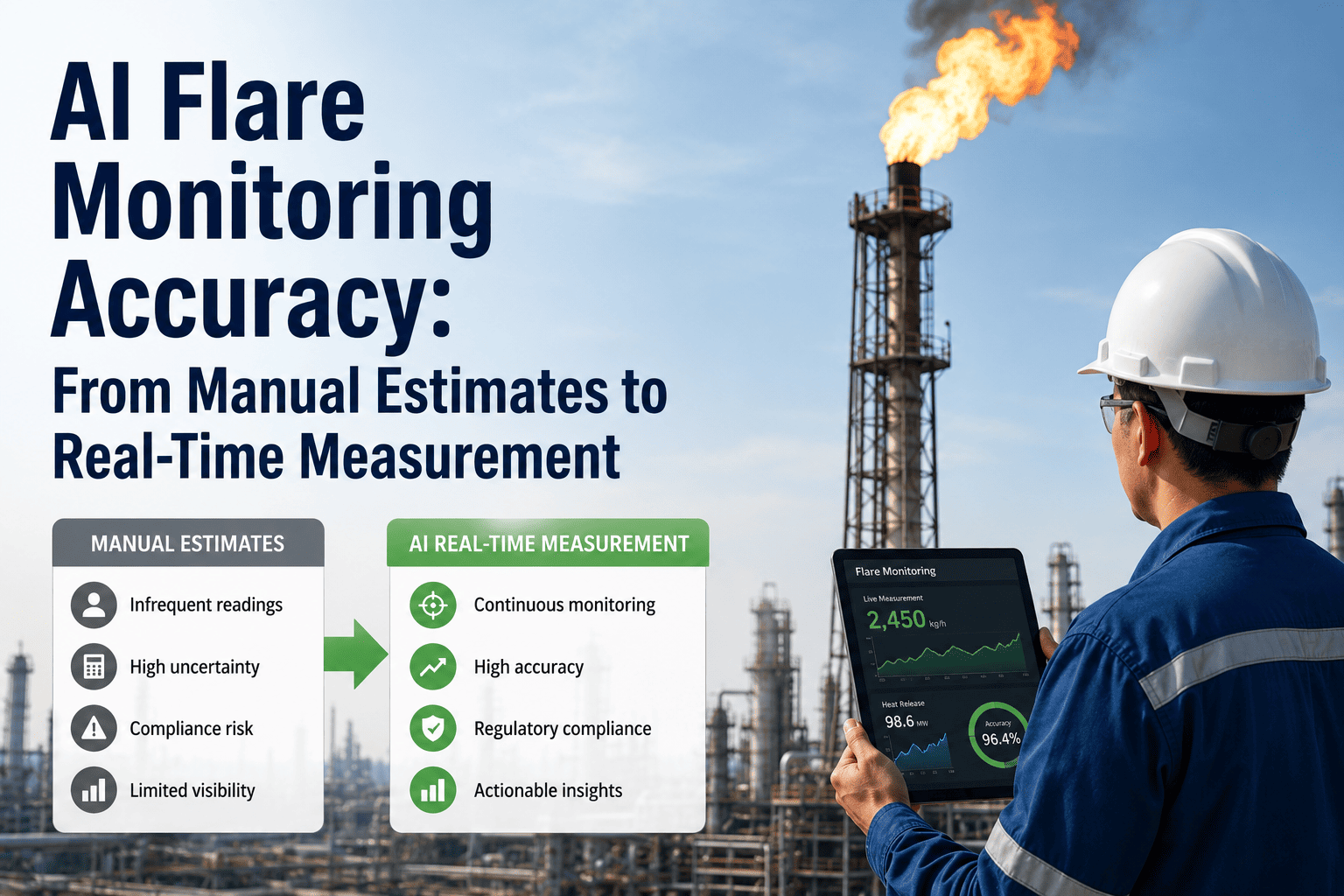
Camera-based analysis tracks flame color against the pink-and-orange marbled pattern associated with optimal DRE, flagging a drift toward pale or clear blue before it reaches the point a human operator would notice on a control room monitor.
Infrared Thermal Signature
Thermal imaging of the flame envelope provides an independent read on combustion completeness that complements visual flame color analysis, particularly useful during daylight conditions when visual contrast is reduced.
Pilot Flame Continuity
Continuous thermocouple or ionization monitoring on every pilot confirms flame presence without gaps, feeding directly into the automated relight logic that closes the exposure window after a flame-out.
Wind Speed and Direction
Local wind instrumentation feeds the same control loop managing steam or air assist, allowing pre-emptive adjustment ahead of a gust rather than a reactive correction after flame lift-off has already occurred.
Assist Gas Valve Position Feedback
Confirming that a commanded steam or air adjustment actually reached the intended valve position closes the loop between the AI model's decision and the physical result, catching a stuck or slow-responding valve before it becomes a compliance issue.
Frequently Asked Questions
What Combustion and Environmental Engineers Ask About AI DRE Optimization
How does AI improve on a fixed steam-to-fuel setpoint?
A fixed setpoint is tuned for one representative load condition and cannot adapt as waste gas flow, composition, and wind conditions change throughout a shift, which is why over-steaming and under-steaming both happen routinely at plants running on static settings. An AI model recalculates the optimal ratio continuously against live flow and composition data, adjusting the steam valve in small increments before the flame visibly degrades rather than after an operator notices smoke on the control room camera. This closes the gap between the setpoint that was tuned during commissioning and the actual operating envelope of the flare years later.
Can this system prevent a pilot flame-out from going undetected?
Yes, continuous pilot monitoring paired with automated relight logic is one of the core functions of the system, since an undetected flame-out means waste gas is being released to atmosphere with essentially no destruction efficiency for as long as the outage lasts. Traditional pilot monitoring on a periodic check cycle can miss a flame-out for an extended period, while continuous monitoring with automated relight closes that exposure window to seconds and logs the event for compliance documentation.
Does wind actually make a measurable difference to DRE?
Wind is one of the more underappreciated variables in flare performance because it bends the flame off the tip and reduces the residence time waste gas spends in the hottest part of the combustion zone, which directly reduces destruction efficiency even when steam and pilot conditions are otherwise correct. Sites in consistently windy locations, such as coastal or offshore facilities, tend to see the largest benefit from wind-responsive assist gas staging because the correction happens automatically rather than depending on an operator noticing flame lift-off in real time.
Will this help during a stack test or third-party DRE verification?
A continuously optimized flare is far more likely to perform consistently during a scheduled stack test because the steam, pilot, and wind response conditions are being held in range automatically rather than depending on whatever setpoint happens to be active on test day. Many sites also use the historical monitoring data as supporting documentation during a stack test review, since it demonstrates sustained performance across a range of operating conditions rather than a single snapshot. To discuss how this data supports a specific verification requirement,
book a demo.
What does it take to get this running on an existing flare?
Most flares already have some combination of steam control valves, pilot monitoring, and wind instrumentation in place, and the AI optimization layer is typically integrated against that existing infrastructure rather than requiring a full flare tip replacement. The integration scope depends on what control automation is already present versus what needs to be added, and a site walkthrough is the fastest way to scope that accurately. Reach out through
iFactory support for an integration assessment specific to your flare configuration.
Turn a Fixed Steam Setpoint Into a Continuously Optimized Combustion System.
AI-driven steam-to-fuel tuning, pilot reliability monitoring, and wind-responsive assist gas staging, keeping destruction removal efficiency where your permit says it should be.