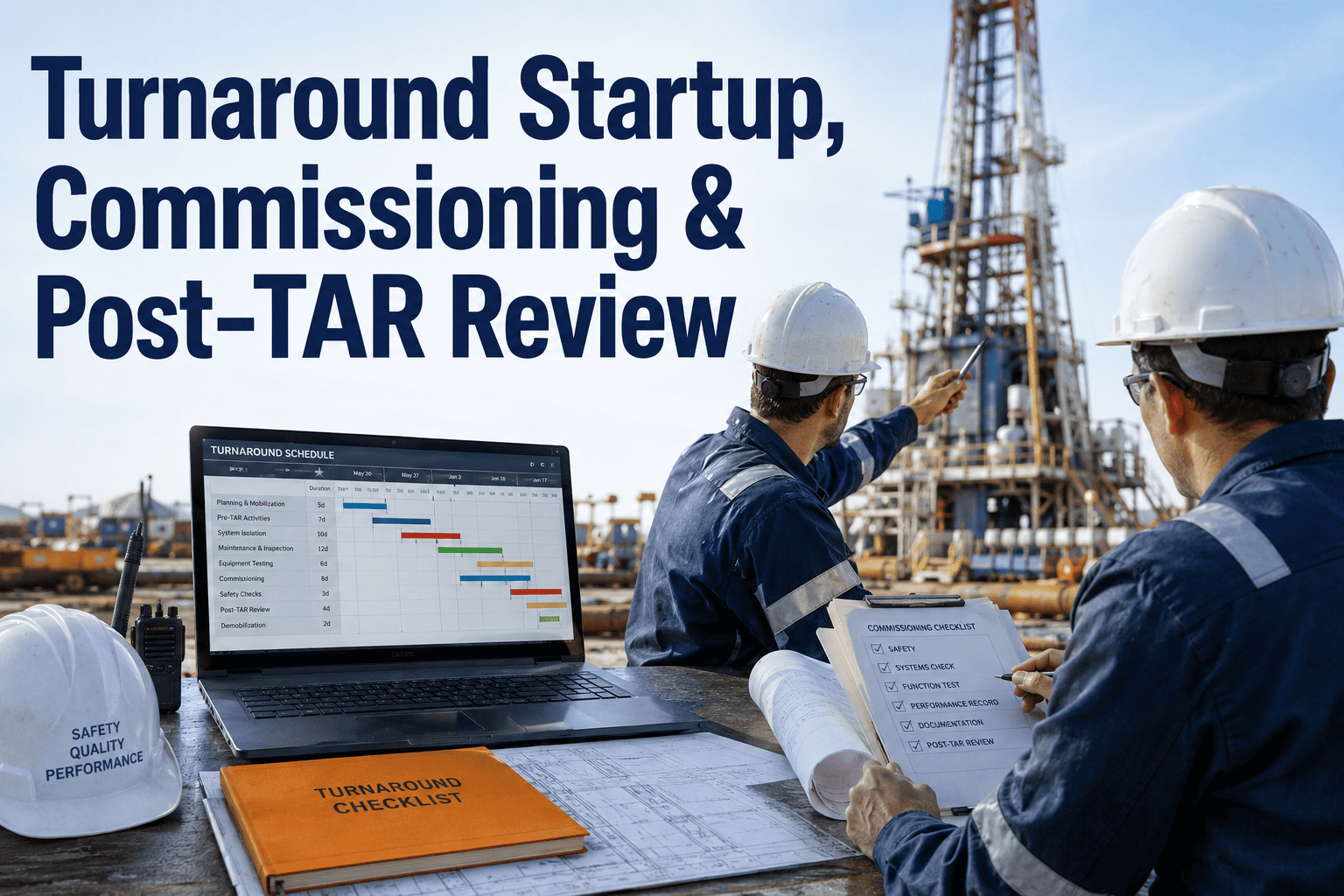
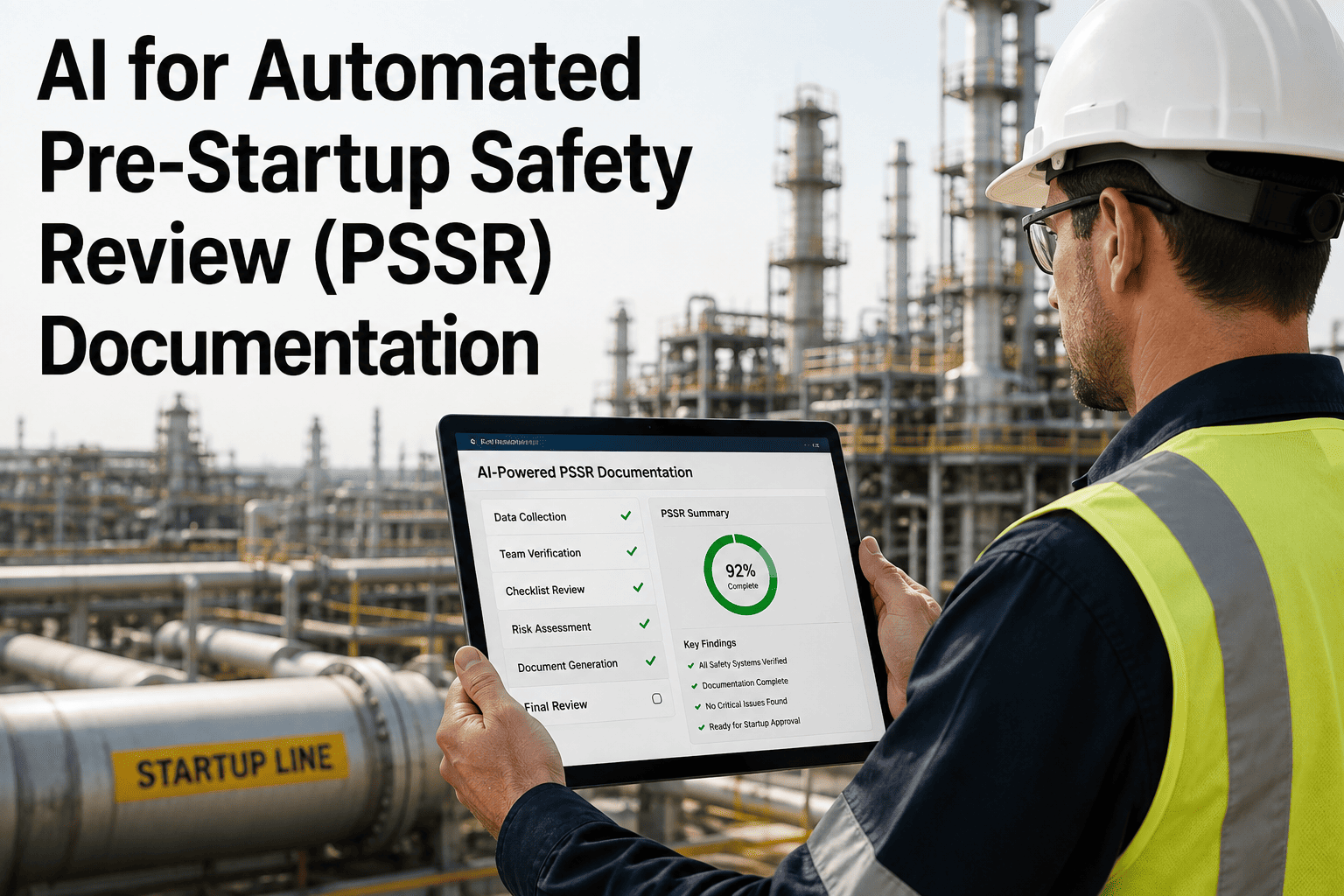
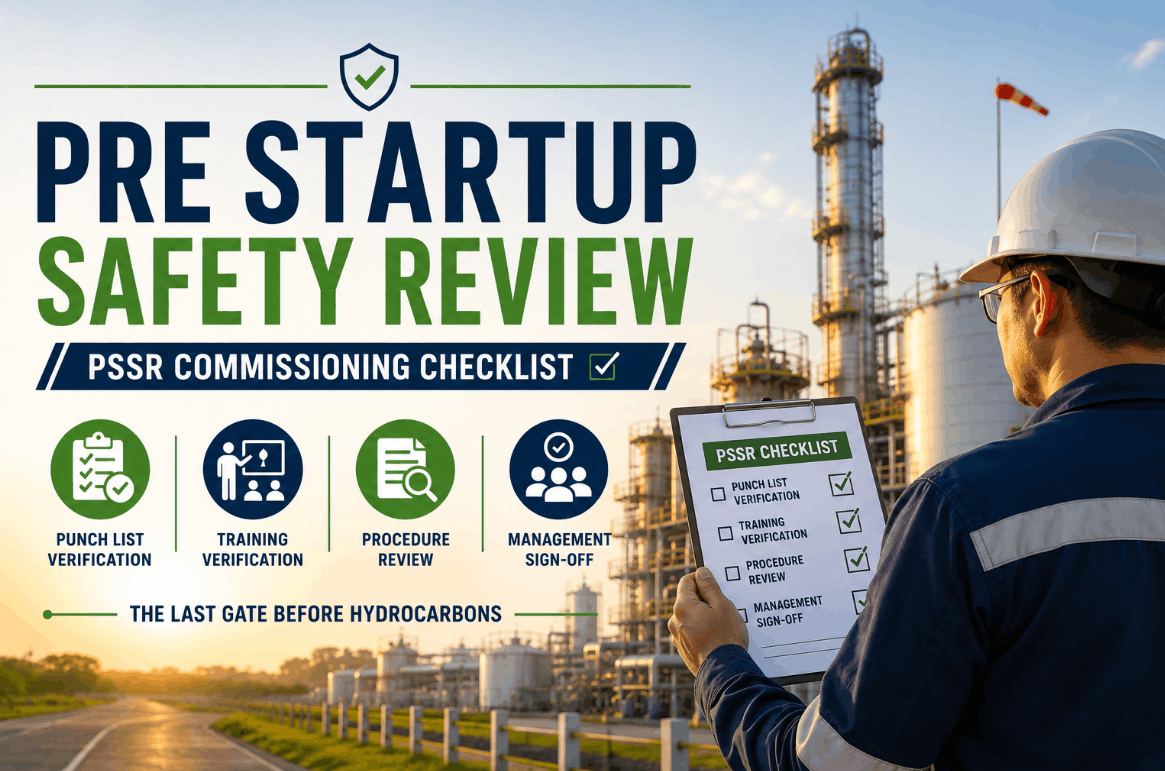
A turnaround is not complete when the last bolt is torqued and the scaffolding is down. The most consequential phase of any turnaround begins the moment the execution teams demobilize and the operations team takes ownership of a unit that has been disassembled, reassembled, modified, and handed back in a configuration that exists for the first time. How that unit is started up, how commissioning verifies that every system performs as intended, and how the post-turnaround review captures what actually happened determines whether the TAR delivers the reliability improvement it was designed to produce or simply sets up the next unplanned shutdown, and the digital workflow that connects inspection findings through startup verification is available through iFactory support.
Oil & Gas · Shutdown Planning
Turnaround Startup, Commissioning & Post-TAR Review
The three phases after execution that determine whether your turnaround delivers lasting reliability improvement or sets up the next unplanned shutdown.
40-60%
Of TAR-related reliability problems originate from startup or commissioning gaps
72 hrs
Average delay from incomplete startup readiness verification
30%
Of facilities conduct a structured post-TAR review within 30 days
2x
Cost of a startup failure versus getting it right the first time
The Three Underinvested Phases
Where Most Turnaround Programs Spend the Least Effort on the Highest-Impact Work
Turnaround planning and execution consume the vast majority of organizational attention during a TAR. Startup, commissioning, and post-TAR review are typically treated as afterthoughts — squeezed into the schedule after the execution window closes, under-resourced compared to the execution phase, and rarely documented with the same rigor applied to planning and execution. Yet these three phases are where the turnaround either converts executed work into reliable performance or squanders it through rushed startup procedures, incomplete commissioning verification, and post-TAR reviews that produce a list of generic lessons that disappear into a filing cabinet.
01
Startup Execution
Duration: Days to Weeks
The unit is returned to operating conditions from a cold, post-maintenance state. Every valve position, every instrument setpoint, every utility supply must be verified before process fluids are introduced. Startup failures at this stage can cause equipment damage, safety incidents, and schedule delays that wipe out weeks of careful execution planning in hours.
Risk if under-resourced: Equipment damage from improper startup sequence, safety incidents from unverified interlocks, delayed revenue from extended startup timeline
02
Commissioning Verification
Duration: Overlaps with Startup
Commissioning is not the same as startup. Startup gets the unit running. Commissioning verifies that it is running correctly — that modified systems perform to design intent, that new equipment achieves specified performance, that control loop tuning is stable, and that safety systems function as designed under actual operating conditions. This phase is where design errors, installation mistakes, and scope gaps that survived execution are finally exposed.
Risk if under-resourced: Undetected performance shortfalls, control system instability, safety system gaps that persist into normal operation
03
Post-TAR Review
Duration: 1-2 Weeks of Focused Effort
A structured analysis of what happened during the turnaround — what went well, what did not, what was missed in planning, where execution deviated from scope, what startup and commissioning revealed that should have been caught earlier, and what specific actions will be taken to improve the next turnaround. This is the only phase that directly improves future turnarounds, yet it is the most commonly skipped or superficially executed.
Risk if under-resourced: Same mistakes repeated on every TAR, no institutional learning, no measurable improvement trend across turnaround cycles
Startup Readiness
What Must Be Verified Before the First Process Fluid Enters the Unit
Startup readiness is not a single checklist item — it is a structured verification process that confirms every prerequisite for safe unit startup has been satisfied. The verification is organized into categories that correspond to the systems that must be confirmed functional before process introduction. Each category has specific verification items that must be signed off by the responsible discipline before the startup authority grants permission to proceed to the next stage.
All equipment reinstalled per assembly procedures with correct bolting, gasketing, and alignment verified
Temporary blinds removed and permanent spades installed per the blind list, with each blind location verified and signed off
Scaffolding removed from operating areas, with confirmation that no tools, materials, or debris remain inside equipment or vessels
Equipment rotation checks completed — motors bump-tested, pump rotation confirmed correct, turbine turning gear operation verified
I
Instrumentation and Controls
All instruments loop-checked from field element through DCS indication, with calibration verified against certified standards
Control valves stroked through full range with DCS output confirmed, positioner calibration verified, and fail-safe action confirmed
Safety instrumented system functions tested — trip setpoints verified, logic solver response confirmed, final element action verified for each safety function
DCS configuration reconciled against the TAR scope — new control strategies implemented, modified loops re-tuned, deleted logic confirmed removed
Cooling water available at design flow and temperature to all exchangers, with air eliminated from the system and flow verified at each user
Steam supply available at required pressure levels, with steam tracing systems operational and trap functioning verified on all traced lines
Instrument air and plant air systems at required pressure with dewpoint verified, and all air supply valves open to instrument users
Electrical supply confirmed to all MCCs and panels, with transformer tap settings verified for post-TAR load conditions and emergency power systems tested
Fire and gas detection system verified — sensor response tested, alarm annunciation confirmed, shutdown actions verified for each detected condition
Pressure relief devices confirmed installed correctly, with PSV tag numbers verified against the relief device database and inlet/outlet piping clear
Emergency shutdown pushbuttons and hardwired trips tested from each ESD station, with confirmed trip response through the SIS to final elements
Process hazard analysis recommendations from the pre-TAR PHA confirmed implemented, with each recommendation closed out and documented in the PHA tracking system
Commissioning Gate Sequence
A Stage-Gate Commissioning Process That Prevents Problems From Slipping Through
Effective commissioning follows a staged sequence where each gate must be passed before the next stage begins. Skipping gates to recover schedule time is the single most common cause of startup failures that result in equipment damage or safety incidents. The gate sequence below represents the standard framework used in well-managed turnaround commissioning programs.
Gate 1
Static Verification
All equipment physically in place, correctly installed, and documented as complete
Walkdown verification against P&ID markups for every modified system
Hydrotest packages complete with documented hold points released
Punch list items classified and either resolved or formally deferred with risk acceptance
Gate Pass Criteria: Zero open critical punch items, all hydrotest documentation complete, all blind locations verified
Gate 2
Dynamic Testing
Equipment operates correctly under controlled conditions without process fluids
Motor run-in and vibration baseline established on all rotating equipment
Control valve stroking and DCS response verified for all modified and new loops
Interlock and trip function testing completed for each safety-critical function
Gate Pass Criteria: All rotating equipment within vibration spec, all control loops responding, all safety functions tripping correctly
Gate 3
Process Introduction
Process fluids introduced in a controlled sequence with monitoring at each step
Utilities established and stable before any process fluid movement
Process fluids introduced per the approved startup procedure with hold points at each pressure and temperature stage
Leak detection monitoring active during initial pressurization with defined acceptance criteria for leak rates
Gate Pass Criteria: No leaks above defined thresholds, temperatures and pressures stable at each hold point, no abnormal vibrations or noise
Gate 4
Performance Verification
Unit operates at design conditions and meets performance specifications for modified and new equipment
Heat exchanger duty verified against design or expected performance post-cleaning or replacement
Pump and compressor performance curves verified at operating conditions, with capacity and head confirmed
Control loop performance assessed — stability, response time, and disturbance rejection confirmed acceptable
Gate Pass Criteria: All modified equipment meeting specified performance, control loops stable, no process upsets attributable to TAR scope
Your Turnaround Is Only as Good as the Startup That Proves the Work Was Done Correctly.
Digital commissioning verification tied to inspection findings, punch items, and performance data — so nothing slips through the gaps between execution and operation.
Post-TAR Review Framework
The Structured Analysis Process That Converts One Turnaround's Experience into the Next Turnaround's Advantage
A post-TAR review is not a debrief meeting where people share opinions about what went well and what did not. It is a structured data-driven analysis that examines specific aspects of the turnaround with evidence, identifies root causes for deviations, and produces actionable recommendations with assigned owners and deadlines. The review must be conducted within 30 days of unit handback while memories are fresh and data is accessible, and the output must be formatted so that it is directly usable during the planning phase of the next turnaround.
Schedule Performance
What Caused Every Day of Deviation from the Plan
Planned Duration
Baseline from the approved TAR schedule with critical path identified
Actual Duration
Actual start and end dates with critical path shifts documented at each reschedule point
Deviation Analysis
For every day of schedule slip, the specific work package, craft, or resource constraint that caused the delay, with root cause classified as planning gap, scope growth, execution issue, or external factor
Recovery Actions
What acceleration measures were attempted, whether they succeeded, and what they cost in overtime, premium freight, or quality risk
Cost Performance
Where Every Dollar Above or Below Budget Was Spent
Approved Budget
Final approved TAR budget including approved scope changes
Actual Cost
Final cost with each cost category variance explained
Scope Growth
Every work order added after scope freeze, with justification, approval path, and cost impact
Scope Quality
What Was Found During Startup That Should Have Been Found During Execution
Startup Findings
Every issue discovered during startup and commissioning that required rework or correction
Rework Rate
Total rework hours as a percentage of total execution hours, with root cause for each rework item
QA Escape Rate
Defects that passed inspection hold points but failed during commissioning, indicating QA process gaps
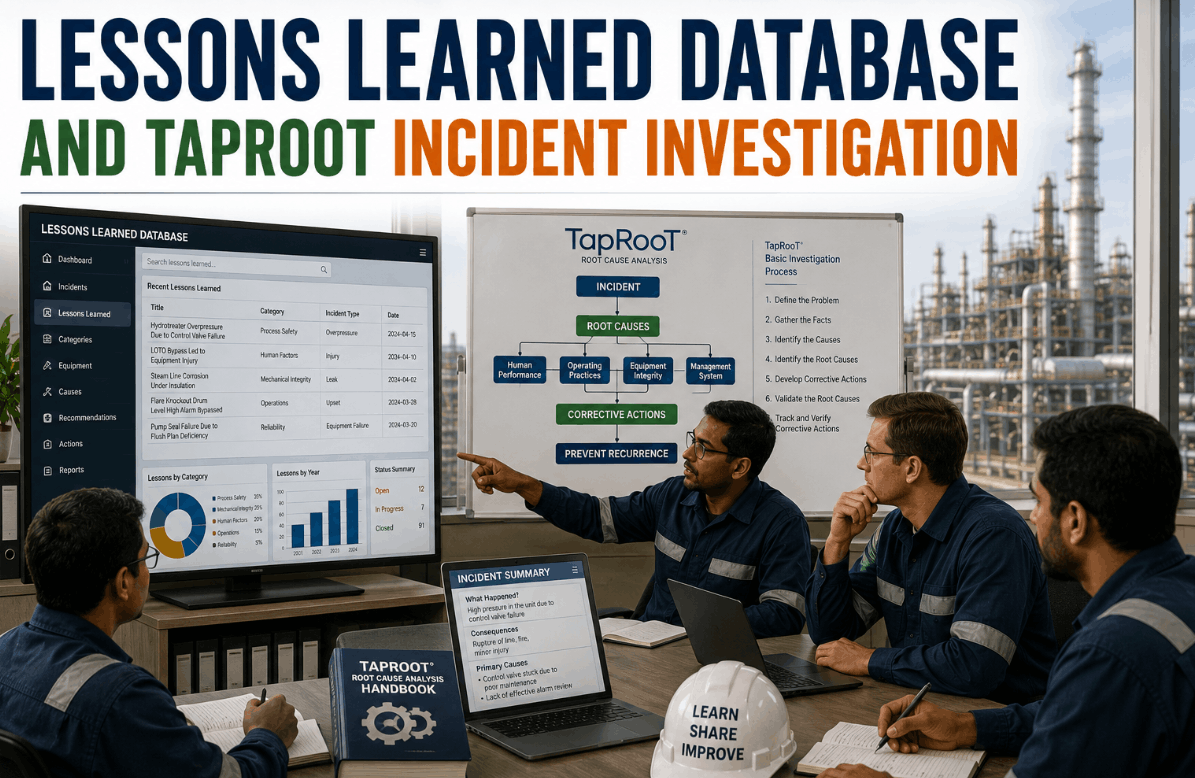
Lessons Learned
Specific, Actionable, Assigned — Not Generic and Forgettable
Planning Lessons
Scope items that should have been included but were missed, work package quality issues that caused execution delays, and schedule logic errors that produced false critical path
Execution Lessons
Craft productivity issues, scaffold and access problems, material availability gaps, and coordination failures between disciplines
Startup Lessons
Readiness verification gaps, commissioning procedures that were incomplete or incorrect, and performance shortfalls on modified equipment
Action Items
Each lesson converted to a specific action with a responsible owner, a target completion date, and a linkage to the planning trigger for the next turnaround so the action is executed in time to affect the next event
Lessons Learned Gap
What Gets Captured in Post-TAR Reviews Versus What Actually Drives Improvement
Most post-TAR reviews produce a list of observations that feel meaningful in the meeting room but have no structural connection to the planning process of the next turnaround. The observations sit in a report, the report sits in a shared drive, and the next TAR planning team starts from the same baseline as every previous team because the lessons were never formatted, stored, or linked in a way that makes them actionable during planning. The following comparison shows the difference between what most facilities capture and what actually drives measurable improvement.
What Most Facilities Capture
"Communication between shifts was poor during the turnaround" — No specific instance, no root cause, no actionable fix
"We should have planned more scaffold upfront" — No quantification of how much scaffold was late, what it delayed, or what the planning gap was
"Contractor performance was below expectations" — No specific work package, no productivity data, no comparison to bid assumptions
"Startup took longer than expected" — No breakdown of which verification items caused delay, no linkage to specific execution gaps
What Actually Drives Improvement
"Shift handoff on the reactor head lift missed the torque verification status, causing a 6-hour delay when the next shift re-verified" — Specific event, quantified impact, fix: add torque verification status to mandatory handoff checklist for critical lifts
"Scaffold for the depropanizer re-tray was 3 days late because the scaffold plan did not account for the temporary piping that was still in place" — Specific cause, quantified delay, fix: scaffold planning to overlay against temporary piping removal schedule
"Pipe fitter productivity on the hot flue gas line was 40% below the work package estimate because the estimate assumed ambient temperature access and the actual work was at 180F" — Specific gap, quantified variance, fix: temperature-adjusted productivity factors in work package estimates for hot work zones
"Control valve commissioning on the new feed control loop took 16 hours because the DCS configuration was not updated to match the new valve characteristics" — Specific cause, quantified time, fix: DCS configuration reconciliation added to the commissioning pre-checklist for all modified control loops
Performance Metrics
Turnaround KPIs That Reveal Whether Your Startup and Post-TAR Process Is Actually Working
Measuring turnaround performance by schedule and cost alone misses the most important dimension: did the turnaround actually improve unit reliability, and did the startup and commissioning process confirm that improvement before handing the unit back to operations? The following KPIs extend beyond traditional TAR metrics to capture the effectiveness of the post-execution phases.
TAR-Induced Unplanned Events
Target: Zero in first 90 days
Count of unplanned shutdowns, equipment failures, or process upsets in the first 90 days after TAR handback that are attributable to TAR scope — installation errors, commissioning gaps, or startup procedures that did not adequately verify the work. This is the most direct measure of whether the post-execution phases caught what they needed to catch.
Startup Rework Hours
Target: Less than 2% of execution hours
Total labor hours spent on rework discovered during startup and commissioning as a percentage of total TAR execution labor hours. A high rework percentage indicates that execution quality control failed to catch defects that should have been found before startup, or that the commissioning process is catching things that the execution QA process missed.
Commissioning Gate Pass Rate
Target: First-pass on all gates
Number of commissioning gates that passed on first attempt versus gates that required rework and re-testing before passing. A gate that fails on first attempt means a deficiency was not caught by the preceding gate, indicating a gap in the gate criteria or the verification process for that stage.
Post-TAR Review Completion Rate
Target: 100% within 30 days
Percentage of post-TAR review action items that are completed, assigned, and linked to the next TAR planning trigger within 30 days of unit handback. Reviews completed later than 30 days lose accuracy because memories fade and data gets archived, and reviews completed without action assignment never drive improvement.
Lesson Implementation Rate
Target: Greater than 80%
Percentage of lessons learned from the previous TAR that were actually implemented in the planning or execution of the current TAR. This is the ultimate measure of whether the post-TAR review process produces real organizational change or just produces documents. A low implementation rate means the review process exists but does not function.
Equipment Performance vs. Design
Target: Within 5% of design for modified equipment
For every piece of equipment modified or replaced during the TAR, the measured performance during commissioning versus the design specification or expected performance. Equipment that does not meet spec after commissioning represents either a design error, an installation error, or a commissioning verification gap that needs to be resolved before the TAR can be considered complete.
Field Example
How a Structured Post-TAR Review Saved 4 Days on the Next Turnaround at a Gulf Coast Refinery
A Gulf Coast refinery had completed a major turnaround on its crude distillation unit that ran 8 days over the planned 28-day duration. The overrun was attributed to a combination of scope growth, scaffold delays, and late material deliveries — the same root causes cited in the post-TAR reviews of the three previous turnarounds on the same unit. The post-TAR review for this event was structured differently: instead of a single debrief meeting that produced a list of observations, the review was conducted as a four-day data analysis effort led by the turnaround manager with dedicated support from the planning, scheduling, and field supervision teams.
The analysis drilled into each day of schedule deviation and traced the root cause to a specific work package, planning decision, or execution event. The scaffold delay was traced to three specific locations where the scaffold plan had not accounted for temporary piping that was still in place when scaffold crews arrived — the exact same issue that had occurred on the previous TAR but had been documented only as "scaffold delays" without the specific cause. The late material deliveries were traced to two purchase orders that had been placed after the material cutoff date because the scope change approval process did not include an automatic material procurement trigger. The scope growth was traced to six work orders that were added during execution, of which four had been identified during the pre-TAR inspection but had not been included in the original scope because the inspection findings were submitted after the scope freeze date.
Each root cause was converted to a specific action with an owner, a deadline, and a trigger point in the next TAR planning process. The scaffold planning action was linked to the 3D model review milestone so that scaffold plans would be developed against the as-maintained model including temporary piping. The material procurement action was linked to the scope change approval workflow so that any scope addition after cutoff automatically generated a material requisition with expedited delivery. The inspection-to-scope action was linked to the pre-TAR inspection completion milestone so that all inspection findings were incorporated into the scope before scope freeze rather than after. At the next turnaround 18 months later, the unit came in 4 days under the revised 26-day plan, with zero scaffold delays attributable to planning gaps, zero late material deliveries, and zero scope additions attributable to pre-TAR inspection timing.
8 days over
Previous TAR schedule deviation
4 days under
Next TAR schedule performance after structured review
12 days
Total schedule improvement across two TARs
3 root causes
Specific, actionable, and implemented for the next TAR
Frequently Asked Questions
What Turnaround Managers and Operations Leaders Ask About Post-TAR Processes
How soon after unit handback should the post-TAR review be conducted, and who should participate?
The post-TAR review should begin within two weeks of unit handback and be completed within 30 days. Waiting longer results in significant information loss as team members transition to other assignments and memories of specific events fade. The review should be led by the turnaround manager and include the planning lead, field supervisor lead, operations representative, and discipline leads for mechanical, instrumentation, and piping. Contractor representatives who were involved in execution should participate in the portions of the review relevant to their work. The review is not a blame exercise — it is a data analysis exercise where the goal is to identify specific planning and execution gaps that can be corrected, not to assign individual fault for problems. To see how iFactory structures post-TAR review data capture and lesson tracking,
book a demo.
What is the difference between commissioning and startup, and why do both need separate attention?
Startup is the process of bringing the unit from a post-maintenance static condition to an operating condition by introducing utilities, process fluids, and energy in a controlled sequence. Commissioning is the verification process that confirms the unit is operating correctly at each stage — that modified equipment performs to specification, that control systems function as designed, and that safety systems respond correctly under actual operating conditions. A unit can be started up successfully but not commissioned if the startup team gets the unit running without verifying that the modifications and new equipment actually perform as intended. Skipping commissioning to save time is common but it means the TAR's performance objectives are never verified, and deficiencies that should have been caught during commissioning instead show up as operational problems or unplanned shutdowns in the weeks after handback. The
support team can help you build commissioning verification workflows that tie directly to your TAR inspection data.
How do you prevent post-TAR review lessons from being ignored during the planning of the next turnaround?
The single most effective practice is to link each lesson to a specific planning milestone or trigger in the next TAR planning process. A lesson about scaffold planning gaps is not useful as a general observation, but it becomes actionable when it is linked to the scaffold planning milestone with a specific procedural change that the scaffold planner must implement when that milestone is reached. This linkage is the structural difference between lessons that drive improvement and lessons that get filed and forgotten. The post-TAR review output should be formatted as a set of planning inputs — not as a report — with each input assigned to a specific planning phase, a responsible role, and a verification checkpoint that confirms the lesson was implemented. When the next TAR planning team encounters these inputs at the appropriate planning milestone, they are in the context of the work they are doing at that moment, which makes them far more likely to be adopted than if they are presented as a separate document to be read at some point during planning.
What role does digital condition data from the turnaround play in startup and commissioning verification?
Digital condition data captured during the turnaround execution phase — inspection findings, punch items, repair records, equipment condition assessments — provides the baseline that startup and commissioning verification is measured against. When this data is captured in a digital platform rather than on paper forms, it can be directly referenced during commissioning to confirm that specific items identified during inspection were addressed, that repairs were completed to specification, and that equipment condition at handback matches the expected condition based on the work performed. Without digital linkage between execution data and commissioning verification, the commissioning team is working from paper reports and handover notes that may be incomplete, inconsistent, or difficult to cross-reference against the actual scope that was executed. This digital connection between execution and commissioning is a core capability of the iFactory platform, and
booking a demo will show you exactly how the data flows from inspection through commissioning verification.
How do you measure whether your post-TAR review process is actually improving turnaround performance over time?
The most direct measure is the lesson implementation rate: the percentage of specific, actionable lessons from previous TARs that are confirmed implemented in the planning or execution of the current TAR. A facility where this rate is below 50 percent has a post-TAR review process that produces documents but not change. Supporting metrics include the trend in schedule and cost variance across multiple TARs on the same unit — if the variance is not decreasing over time, the review process is not driving improvement. The TAR-induced unplanned event rate in the 90 days after handback is another direct indicator: if this rate is not decreasing across successive TARs, the startup and commissioning process is not getting better at catching the defects that cause early failures. Tracking these metrics across a series of turnarounds creates the trend line that proves or disproves whether the post-TAR process is functioning as an improvement engine or just an administrative requirement. The
support team can help configure these KPI dashboards for your turnaround program.
The Turnaround Does Not End When the Last Scaffolding Comes Down. It Ends When the Post-TAR Review Lessons Are Implemented in the Next Plan.
Structured startup verification, stage-gate commissioning, and data-driven post-TAR review — connected in a single platform so every lesson from this turnaround feeds directly into the planning of the next one.