Deciding what happens to a pipeline at the end of its service life is rarely a purely technical question, even though the regulatory filings and engineering assessments make it look that way on paper. Abandonment-in-place looks cheaper on a spreadsheet almost every time, but that comparison only holds if the long-term monitoring, landowner notification, and future liability obligations are priced in accurately, which they frequently are not. A pipeline left in the ground still belongs to someone, and every jurisdiction that has dealt with an abandoned line resurfacing during later construction knows that the paperwork trail matters just as much as the physical condition of the pipe itself. Book a roadmap call to see how a structured decommissioning plan avoids becoming next decade's unplanned liability.
Pipeline Decommissioning and Abandonment Done Right the First Time
Environmental assessment, purging and isolation procedures, regulatory notification, and the abandonment-in-place versus removal decision, built around the obligations that outlast the project itself.
Why Decommissioning Decisions Outlive the Project Timeline
A decommissioning project closes out on a schedule, but the obligations it creates, monitoring commitments, landowner notifications, and residual liability, extend for decades beyond the project's own completion date.
typical monitoring commitment period attached to an abandonment-in-place decision under most regulatory frameworks
commonly cited cost difference between abandonment-in-place and full removal, before long-term monitoring costs are added in
of product and vapor that needs to be verified purged before a line can be legally classified as abandoned
road, rail, and waterway crossing typically requiring separate notification and closure documentation from the main route filing
Abandonment-in-Place vs. Full Removal
This decision drives every other part of the decommissioning plan, and it is rarely a simple cost comparison once environmental sensitivity, future land use, and long-term monitoring obligations are weighed against the upfront removal cost.
Abandonment-in-Place
The pipe is purged, cleaned, and typically filled with an inert material such as sand, foam, or grout, then left in the ground with end points capped and sealed. Lower upfront cost and less soil disturbance, but it carries an ongoing monitoring and liability obligation that transfers with land ownership.
Best suited to remote, low-sensitivity routes where future excavation is unlikely and where the pipe's presence will not conflict with anticipated land use changes over the following decades.
Full Removal
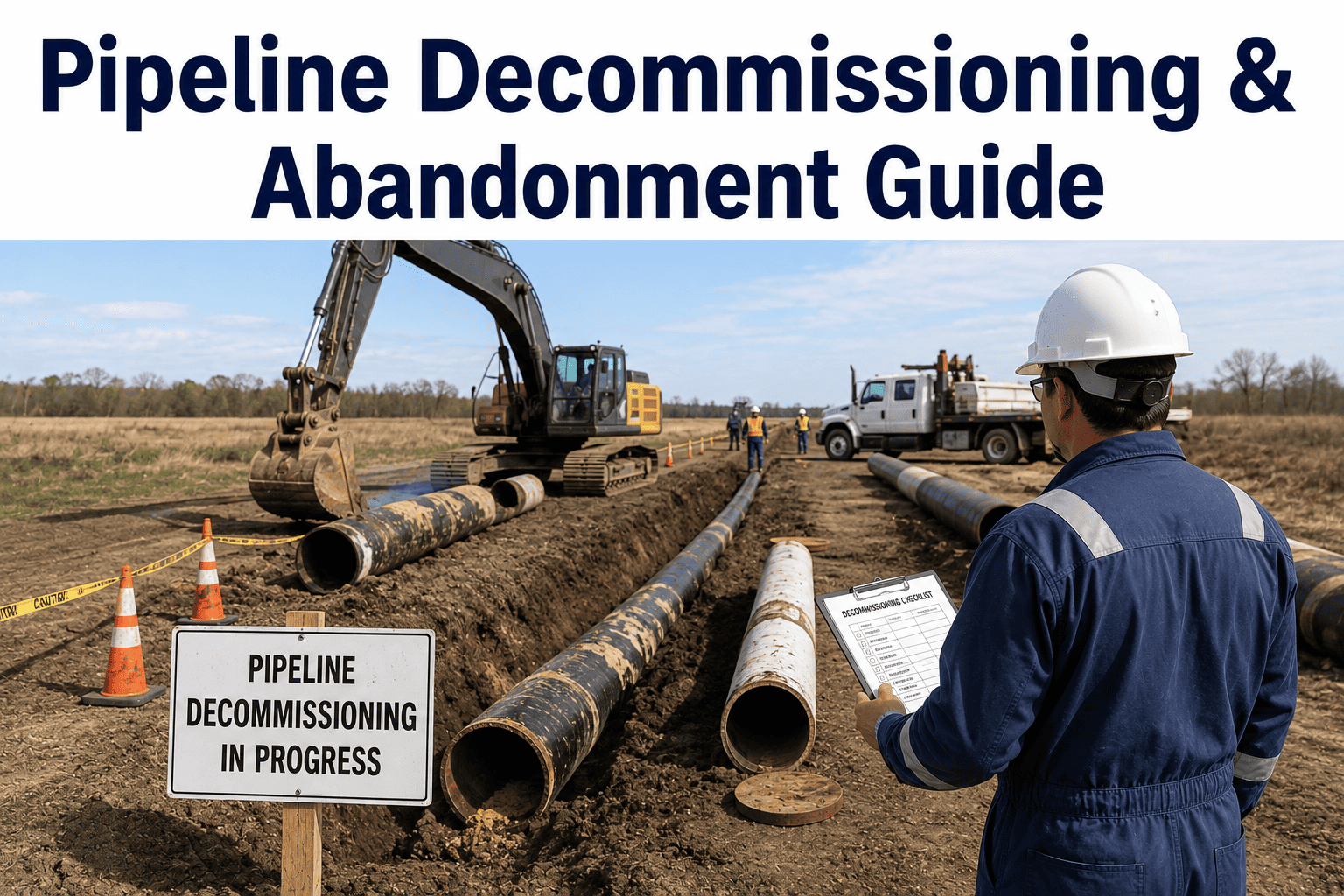
The pipe is physically excavated and removed from the right-of-way, with the disturbed area restored to its prior condition. Higher upfront cost and significant soil disturbance, but it closes out the long-term liability entirely once removal is verified and documented.
Generally preferred in agricultural, urban, or environmentally sensitive corridors where a future landowner or regulator would otherwise inherit an indefinite monitoring obligation on land they did not install the pipeline on.
The Decommissioning Sequence, Phase by Phase
Skipping ahead in this sequence, particularly moving to physical work before regulatory notification periods have closed, is the most common source of decommissioning project delays and re-work.
Regulatory notification and filing
Initial notice filed with the relevant pipeline safety authority and any state or provincial agencies, starting the statutory review and comment period before physical work can begin.
Environmental and land use assessment
Soil and groundwater conditions, sensitive habitats, and current or anticipated land use along the route documented to support the abandonment-versus-removal decision and identify any required remediation.
Isolation and depressurization
The segment is isolated from the active system, depressurized, and physically disconnected at both ends, with block valves and blind flanges confirming complete separation from any line still in service.
Purging and cleaning
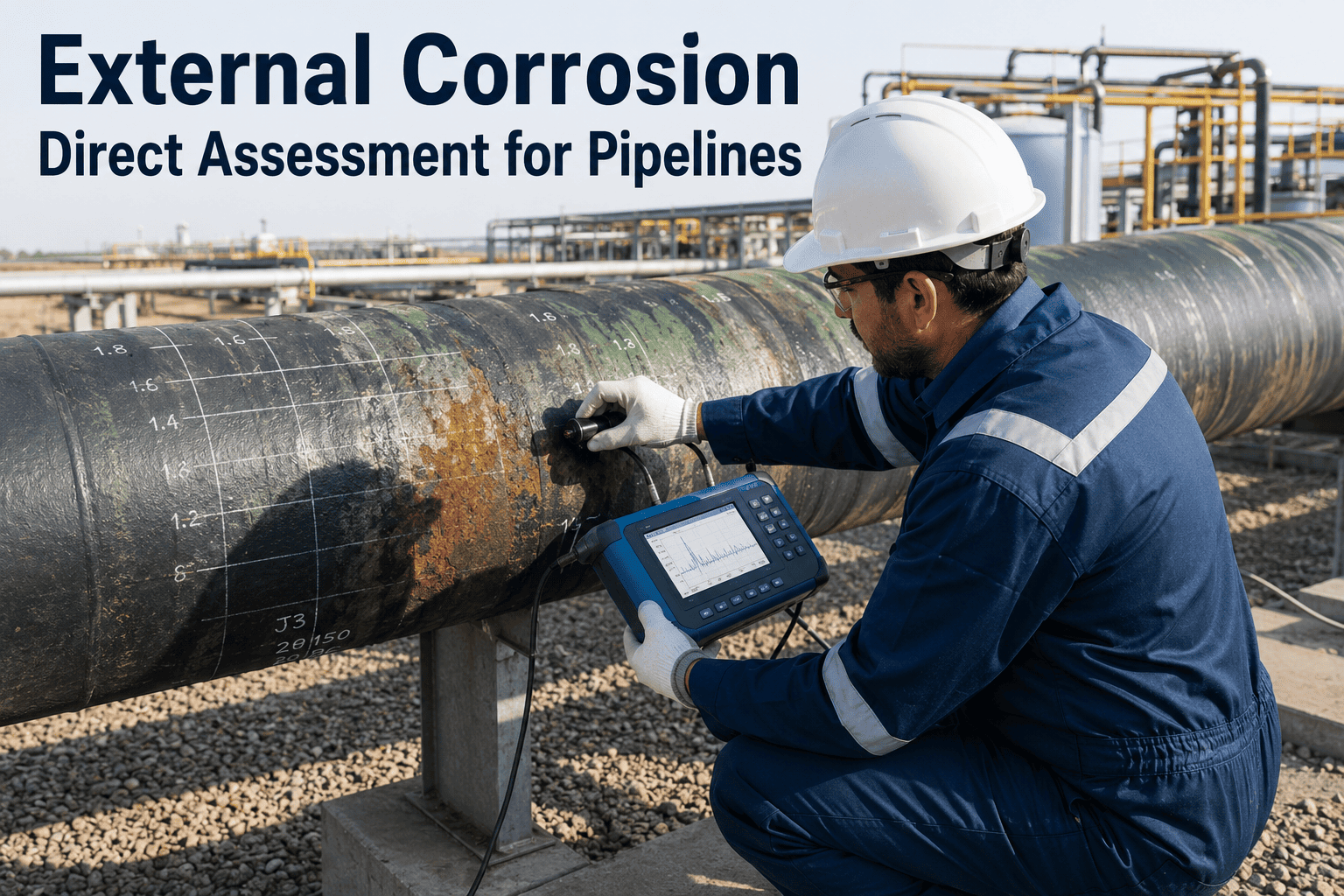
Residual product and vapors removed through inert gas displacement or pigging, verified through gas testing at multiple points along the route before any further work proceeds.
Fill, cap, or removal execution
The pipe is either filled with inert material and capped in place, or physically excavated and removed, depending on the decision reached in Phase 2, with all work documented for the closure filing.
Site restoration and closure documentation
Right-of-way restored to agreed conditions, as-abandoned or as-removed records filed with regulators, and any ongoing monitoring obligations formally established and communicated to current and future landowners.
Regulatory Notification Requirements by Crossing Type
A pipeline route rarely decommissions as a single uniform notification. Every crossing along the way typically carries its own separate agency, notification timeline, and closure documentation requirement.
Environmental Assessment Elements That Shape the Decommissioning Plan
The environmental assessment is not a formality that happens after the abandonment-versus-removal decision is made. It is the data set the decision actually depends on, and skipping depth or rushing it tends to produce a decision that gets revisited later at greater cost.
Soil and groundwater sampling
Sampling along the route to identify any existing contamination from historical leaks or spills that would need remediation regardless of the abandonment method chosen, since leaving contaminated soil in place undermines any abandonment-in-place plan.
Sensitive habitat and species review
Wetlands, waterway crossings, and any protected species habitat along the route documented, since these areas often carry additional permitting requirements and may favor abandonment-in-place specifically to avoid further ground disturbance.
Current and anticipated land use
Agricultural, residential, and future development plans along the route reviewed, since a route slated for construction activity in the coming years carries a much higher practical risk from an abandoned line than one that will remain undisturbed farmland.
Residual product characterization
The specific product last carried by the line assessed for any residual contamination risk, since different products carry different remediation and disposal requirements for any recovered fluid during the purging phase.
What Getting the Abandonment Decision Wrong Actually Costs Later
The cheapest path at closure is not always the cheapest path over the life of the obligation. A decision made primarily on upfront cost, without weighing the monitoring and liability tail, tends to resurface as a larger cost years or decades later.
Abandonment-in-place chosen correctly
Lower upfront cost and a documented, appropriately scheduled monitoring plan that a remote, low-sensitivity route can support without significant future risk to the operator or landowner.
Abandonment-in-place chosen on a sensitive route
The same upfront savings, followed by a future excavation strike, an environmental complaint, or a landowner dispute that triggers remediation costs far exceeding what full removal would have cost at closure.
Full removal chosen correctly
Higher upfront cost, but a closed-out liability with no ongoing monitoring obligation, which is often the lower total cost path on any route with foreseeable future construction activity.
Full removal chosen unnecessarily
Significant upfront cost and soil disturbance incurred on a remote route where abandonment-in-place would have carried negligible long-term risk, an avoidable expense driven by a decision process that did not weigh route-specific factors.
Get Your Route Assessed Against the Abandonment-vs-Removal Decision
iFactory can walk through your route's environmental sensitivity, crossing count, and long-term land use to model both cost paths side by side.
Decommissioning Readiness Checklist
Regulatory notification filed and statutory comment period closed before any physical isolation work begins
Environmental and land use assessment completed and documented, with the abandonment-versus-removal decision formally recorded
Every crossing along the route identified with its specific notified party and closure requirement tracked separately from the main filing
Purging verification testing documented at multiple points along the route, not only at the two isolation points
Long-term monitoring obligations, if abandonment-in-place is chosen, documented and communicated to current landowners before closure
As-abandoned or as-removed records filed in a format accessible to future landowners and regulators decades from now, not only in the project's own internal files
Tracking a Long-Term Monitoring Obligation After Closure
The point where a decommissioning project most commonly loses institutional memory is exactly where the paperwork ends and the monitoring obligation begins. A commitment made at closure to check groundwater or CP-adjacent structures periodically for decades needs a system that survives staff turnover, land sale, and company reorganization.
Centralized abandoned asset register
Every abandoned segment tracked in a single system with its location, fill method, and monitoring schedule, rather than relying on a closure report filed away and never revisited.
Scheduled monitoring reminders
Automated reminders tied to the specific monitoring interval committed to at closure, so a groundwater check or CP interference reassessment does not depend on someone remembering a decade-old filing.
Landowner and GIS record linkage
Abandoned pipe locations linked to a geographic information system accessible to future excavation permit reviews, reducing the risk of a third-party strike on a line assumed to be long forgotten.
Frequently Asked Questions
How is the abandonment-in-place versus removal decision actually made?
The decision weighs upfront removal cost against the long-term liability and monitoring obligations that come with leaving pipe in the ground, factoring in environmental sensitivity, current and anticipated land use, and route accessibility. Agricultural and environmentally sensitive corridors more often favor full removal, while remote low-sensitivity routes more often favor abandonment-in-place once the cost comparison includes decades of monitoring rather than only the initial project cost. Book a demo to model both paths against your specific route.
What happens if an abandoned pipeline is later discovered during excavation?
A properly documented and filed abandonment should already appear in one-call locate systems and regulatory records, allowing an excavation crew to identify it before striking it. The risk arises when documentation was incomplete, filed inconsistently across different agencies, or never updated as land ownership changed, which is exactly why a centralized abandoned asset register with GIS linkage matters as much as the physical abandonment work itself.
How long does a full decommissioning project typically take from notification to closure?
Timelines vary significantly by route length, crossing count, and regulatory jurisdiction, but the notification and environmental assessment phases alone commonly take several months before any physical work begins, since statutory comment periods and agency reviews cannot be compressed. Projects with multiple road, rail, and waterway crossings should expect the notification phase to extend further given the number of separate parties involved.
What verification is required to confirm a pipeline has been fully purged?
Gas testing at multiple points along the route, not just at the two isolation ends, is generally required to confirm residual product and vapor have been displaced to a safe level before the line can be classified as purged. The specific testing method and acceptance threshold vary by product type and regulatory jurisdiction, and documentation of this testing typically forms a required part of the closure filing.
How does iFactory support long-term monitoring obligations after project closure?
Abandoned asset locations, fill methods, and monitoring schedules are tracked in a centralized register with automated reminders tied to each committed monitoring interval, so an obligation made at closure does not depend on institutional memory alone to be honored years or decades later. Talk to a specialist about migrating existing abandonment records into a single tracked system.
Plan a Decommissioning That Closes Out Cleanly
Book a 30-minute scoping call and bring your route map and crossing list. iFactory will show you what the abandonment-versus-removal decision actually looks like for your specific segment.