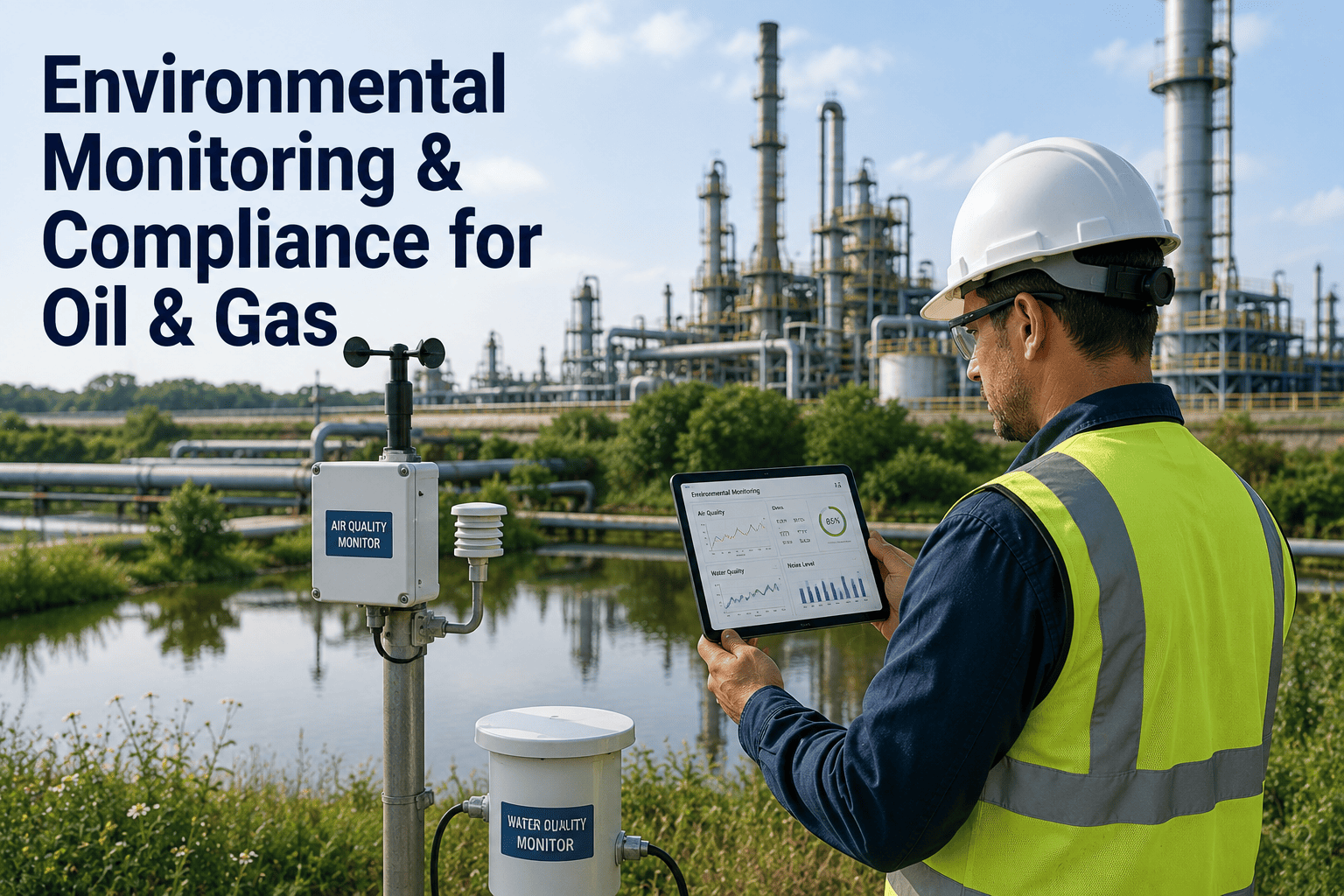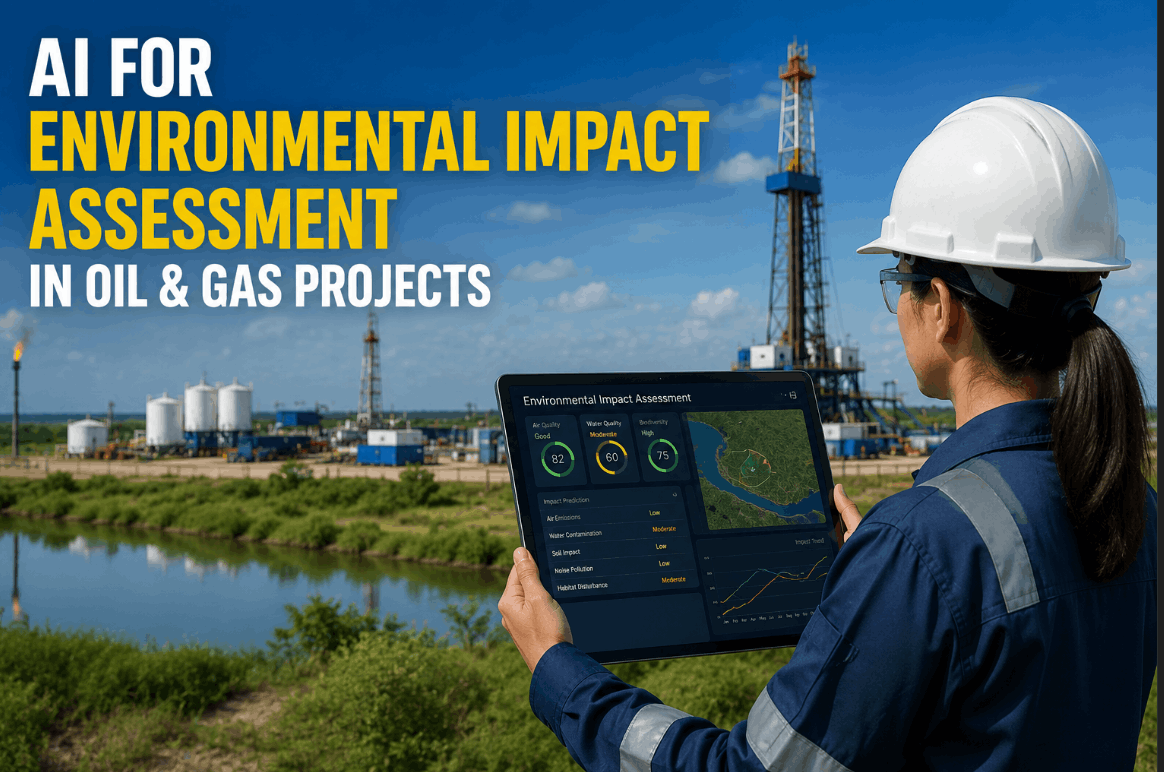
Environmental impact assessment (EIA) in oil and gas has historically been a slow, document-heavy process — field surveys, lab sampling, regulatory filings, and months of review cycles before a single project gets approved. AI is compressing that timeline dramatically while raising the accuracy floor for every stage of assessment. From real-time methane detection and satellite-based land use analysis to automated regulatory reporting under EPA, NEPA, and ESG frameworks, AI environmental impact assessment for oil and gas is shifting from a compliance burden into a competitive capability. Facilities that Book a Demo with iFactory are finding that continuous environmental intelligence — not periodic sampling — is the standard their regulators and stakeholders now expect.
Automate Environmental Impact Assessment with AI-Driven Compliance Intelligence
iFactory's AI platform delivers continuous emissions monitoring, automated regulatory reporting, real-time EIA data capture, and ESG audit records — purpose-built for oil and gas project compliance.
The Gap Between Traditional EIA and What Regulators Now Require
Traditional environmental impact assessments for oil and gas projects were designed around periodic data collection — baseline surveys conducted months before operations begin, air and water quality samples taken on a fixed schedule, and final reports submitted as static documents. The problem is that regulators, ESG investors, and community stakeholders now expect dynamic, continuous evidence of environmental performance, not snapshots. Facilities that rely on quarterly lab reports are operating on data that may be weeks or months stale by the time a deviation surfaces.
AI closes this gap by integrating sensor networks, satellite imagery, drone data, and process telemetry into a unified environmental intelligence layer. Machine learning models identify emissions anomalies, water quality deviations, and land disturbance patterns in real time — triggering alerts and generating audit-ready records before regulatory thresholds are crossed. Operations teams that Book a Demo with iFactory see firsthand how continuous monitoring replaces the fragmented, manually compiled EIA processes most facilities still rely on today.
Methane & GHG Emissions Tracking
AI correlates sensor and satellite data to detect methane leaks and flaring events before they become reportable violations — aligning with EPA Subpart W and IFC Performance Standards.
Water & Soil Impact Monitoring
Produced water discharge, stormwater runoff, and soil contamination are tracked continuously — flagging deviations from permitted thresholds under Clean Water Act and state NPDES programs.
Land Use & Habitat Disturbance
Satellite-based AI maps surface footprint, vegetation loss, and sensitive habitat boundaries — providing NEPA-aligned documentation for project permitting and post-construction compliance.
Automated Regulatory Reporting
AI structures field data, sensor readings, and incident records into audit-ready reports formatted for EPA, BOEM, FERC, and ESG disclosure frameworks — reducing report preparation from weeks to hours.
What a Complete AI Environmental Intelligence Platform Must Cover
A robust AI EIA platform for oil and gas cannot address only one environmental vector. The most effective deployments integrate three interconnected capability layers — emissions intelligence, water and land monitoring, and regulatory data management — into a single continuous compliance environment. Teams building these programs often Book a Demo to map how iFactory's modules align against their specific NEPA, EPA, or ESG disclosure obligations.
Module 1 — Continuous Emissions & Air Quality Monitoring
iFactory integrates with fixed-point gas sensors, portable analyzers, and satellite methane detection feeds to deliver 24/7 emissions surveillance. AI models calculate site-level GHG inventories in real time, flag flaring deviations, and generate EPA Subpart W-formatted reports automatically. This eliminates the manual compilation process that typically takes compliance teams weeks of effort per reporting period.
Module 2 — Water Quality & Produced Water Compliance
In-line sensors and edge-computing nodes monitor produced water quality, stormwater discharge conductivity, and containment pond levels continuously. AI correlates readings against permitted thresholds and triggers CAPA workflows when deviations are detected — creating an unbroken chain of custody records that satisfies Clean Water Act and state NPDES audit requirements without manual log compilation.
Module 3 — ESG Reporting & Multi-Framework Compliance Automation
Environmental data captured across all monitoring streams is automatically structured into ESG disclosure formats — GRI, SASB, TCFD, and SEC climate disclosure requirements. iFactory's AI maps operational data to the correct reporting framework, flags data gaps before submission deadlines, and maintains an immutable audit trail that supports third-party verification without additional documentation effort.
Comparing AI-Driven and Traditional Environmental Impact Assessment
For EHS managers and compliance leads evaluating the business case for AI EIA platforms, the performance gap versus traditional approaches is measurable across every critical dimension — from detection speed and documentation quality to regulatory defensibility. The comparison below reflects outcomes across oil and gas project types supported by iFactory's environmental intelligence platform. Compliance leads frequently Book a Demo to align these capabilities against their current regulatory calendar and EIA obligations.
| EIA Dimension | Traditional Approach | AI-Powered (iFactory) | Regulatory Benefit |
|---|---|---|---|
| Emissions Monitoring | Quarterly bottle sampling & manual log | 24/7 sensor + satellite AI detection | EPA Subpart W, Methane IRA compliance |
| Water Quality Tracking | Periodic grab samples, lab analysis | Continuous in-line sensor analytics | CWA · NPDES permit adherence |
| Land & Habitat Impact | Annual field surveys, paper maps | Satellite-based AI footprint mapping | NEPA documentation & ESA compliance |
| Regulatory Report Generation | 2–4 weeks manual compilation | Automated, framework-formatted output | EPA, BOEM, FERC, SEC climate disclosure |
| Incident Response | Post-event discovery, reactive CAPA | Real-time alert + automated CAPA trigger | Reduces reportable event exposure |
A Scalable AI EIA Deployment Framework for Oil & Gas Projects
Deploying AI for environmental impact assessment works best as a phased approach — beginning with foundational emissions and water monitoring, then extending to multi-framework ESG reporting and predictive compliance analytics. Organizations planning their environmental digitization roadmap commonly Book a Demo to define which tier aligns with their immediate permit obligations and longer-term ESG disclosure targets.
Emissions & Air Quality Baseline
For: EHS Compliance Teams
- Continuous methane & VOC sensor integration
- Flaring event detection & logging
- EPA Subpart W automated data feed
- Mobile alert dashboard for field teams
Water, Land & Multi-Vector Compliance
For: Regulatory Affairs & Operations
- Produced water & NPDES monitoring
- Satellite land use & habitat mapping
- CAPA auto-trigger on threshold breach
- CMMS integration for incident response
ESG Reporting & Predictive Risk Intelligence
For: Sustainability & Executive Teams
- GRI, SASB, TCFD, SEC disclosure automation
- Predictive environmental risk forecasting
- Multi-site environmental benchmarking
- Third-party audit package generation
Measurable Environmental Compliance Gains Across Oil & Gas Operations
Oil and gas operations using AI-driven environmental intelligence report compounding improvements across their core EIA and compliance KPIs. By replacing reactive, calendar-based monitoring with continuous AI analytics, sites reduce their regulatory exposure while simultaneously shortening the audit preparation cycle. The figures below reflect outcomes measured across iFactory-supported upstream and midstream project sites.
"Environmental compliance used to mean chasing paper — quarterly sampling reports, manual data entry, and audit prep that consumed three weeks of our team's time every cycle. iFactory changed that entirely. We now have continuous methane and water quality monitoring feeding directly into our EPA and ESG reporting workflows. Our last NEPA review audit was completed in two days. That's the difference AI makes when it's built into the process from the start."
AI Is Now the Standard for Oil & Gas Environmental Impact Assessment
The regulatory and market environment for oil and gas has made continuous environmental intelligence a baseline expectation, not a differentiator. EPA methane rules, SEC climate disclosure requirements, and ESG investor scrutiny all demand the kind of structured, real-time, and auditable environmental data that manual EIA processes cannot produce at scale. AI platforms like iFactory close this gap — integrating emissions monitoring, water and land impact tracking, and multi-framework ESG reporting into a single compliance environment that generates audit-ready records automatically.
For operations teams still relying on periodic sampling and manual report compilation, the risk is not just regulatory — it's the cost of the compliance gap itself: missed deviation windows, reactive CAPA cycles, and audit preparation that consumes weeks of staff time per cycle. The transition to AI-driven environmental impact assessment is not a long-term roadmap item. It is the operational standard that leading oil and gas facilities are executing today.
AI Environmental Impact Assessment in Oil & Gas — Frequently Asked Questions
How does AI improve environmental impact assessment accuracy in oil and gas?
AI continuously correlates sensor, satellite, and process data to detect environmental deviations in real time — far earlier and more precisely than periodic manual sampling can achieve.
Which regulatory frameworks does iFactory's AI EIA platform support?
The platform supports EPA Subpart W, NEPA, Clean Water Act/NPDES, BOEM, FERC, and ESG disclosure frameworks including GRI, SASB, TCFD, and SEC climate rules.
Can iFactory integrate with existing SCADA and sensor infrastructure on our site?
Yes — iFactory connects to standard industrial sensors (4-20mA, Modbus, IO-Link) and existing PLCs/SCADA via OPC-UA, centralizing all environmental data without replacing current hardware.
How does AI handle methane leak detection for EPA compliance?
AI fuses fixed-point sensor readings with satellite imagery to detect methane leaks before they cross reportable thresholds, automatically generating EPA Subpart W-aligned event records.
What is the typical time-to-value for deploying AI environmental monitoring?
Foundational emissions and water monitoring is typically operational in two to three weeks; full multi-framework ESG reporting integration deploys within eight to twelve weeks depending on site complexity.
Deploy AI-Driven Environmental Impact Assessment Across Your Oil & Gas Operations
iFactory integrates continuous emissions monitoring, water and land impact analytics, and automated multi-framework ESG reporting into a single compliance platform — built for oil and gas project environments.