
Every year, healthcare facilities face millions in regulatory penalties, unexpected shutdowns, and life-threatening safety failures — not because leaders ignored compliance, but because their systems couldn't see the risk coming. NFPA 99 and the Life Safety Code (NFPA 101) govern the fire protection, essential electrical systems, and medical gas infrastructure that patients depend on every second. Non-compliance isn't a paperwork problem — it's a patient safety crisis, a revenue hemorrhage, and a Joint Commission survey failure waiting to happen.
Is Your Facility Truly NFPA 99 & Life Safety Compliant?
iFactory's Compliance Management platform closes every gap in your fire protection, electrical safety, and medical gas programs — before surveyors find them first.
The Financial & Clinical Cost of NFPA Non-Compliance
Life safety failures are not abstract risks. They carry direct, quantifiable costs that reach into every corner of your organization's financial and clinical performance.
Revenue at Risk
- CMS Conditions of Participation violations trigger immediate payment suspension
- Joint Commission citations generate mandatory corrective action plans costing $50K–$500K
- Facilities with repeat deficiencies face accelerated survey cycles — every 6 months
- One preventable fire event averages $2.3M in liability and remediation costs
Patient Safety Exposure
- Essential electrical system failures directly interrupt life-critical procedures
- Medical gas cross-connections are a sentinel event — immediate patient harm
- Delayed fire compartment inspections increase NFPA 101 exit access deficiencies
- Faulty smoke barrier integrity puts entire patient wings at evacuation risk
Operational Hemorrhage
- Manual ILSM (Interim Life Safety Measures) tracking creates documentation backlogs
- Missed preventive maintenance deadlines on ATS and generator systems compound failures
- Untracked fire drill records trigger immediate Joint Commission findings
- Staff overtime from reactive safety responses inflates operational budgets 18–24%
What NFPA 99 & Life Safety Code Actually Require
Understanding the precise scope of NFPA 99 (Health Care Facilities Code) and NFPA 101 (Life Safety Code) is the foundation of a defensible compliance program. These are not optional standards — they are federally adopted requirements under CMS and enforced by accreditation bodies including The Joint Commission and DNV.
| Compliance Domain | NFPA Standard | Key Requirements | Survey Impact | Priority |
|---|---|---|---|---|
| Essential Electrical Systems | NFPA 99 Ch. 6 | ATS testing, generator load testing, branch circuit segregation | Immediate Jeopardy risk | Critical |
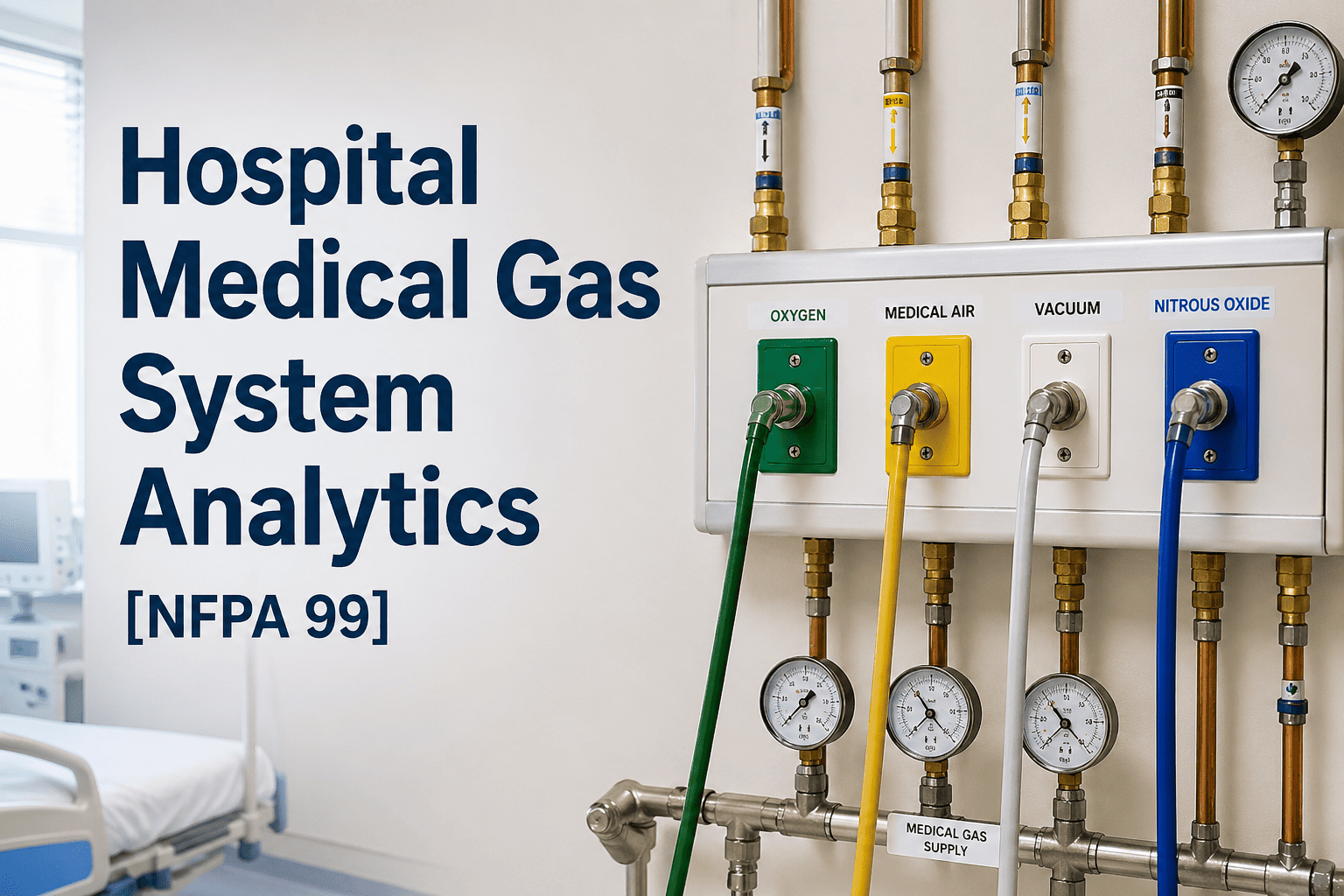
| Medical Gas & Vacuum | NFPA 99 Ch. 5 | Zone valve inspections, alarm panel testing, purity verification | Sentinel Event category | Critical |
| Fire Protection Systems | NFPA 101 §19.3 | Sprinkler ITM, fire alarm annual testing, suppression system records | Direct condition citation | Critical |
| Smoke & Fire Compartments | NFPA 101 §19.3.7 | Barrier integrity surveys, door gap testing, smoke damper inspections | EC standard findings | High |
| ILSM Documentation | Joint Commission EC.02.06.01 | Construction-phase compensatory measures, daily rounds, staff notification | Pattern-of-failure risk | High |
| Fire Drills & Life Safety Training | NFPA 101 §19.7.1 | Quarterly drills per shift, documentation, staff response evaluation | LS standard deficiency | Moderate |
Legacy Operations vs. iFactory Optimized Compliance
The difference between a deficiency-free survey and a 45-day corrective action plan often comes down to a single operational gap: real-time visibility into your life safety program status. This is precisely where iFactory's Compliance Management platform transforms your program.
- Spreadsheet-based PM tracking with no automated escalation
- Paper fire drill records stored in departmental silos
- No real-time dashboard for ATS or generator test status
- ILSM tracking relies on individual facility manager memory
- Medical gas inspection dates managed in disconnected calendars
- Smoke barrier surveys completed on inconsistent cycles
- Survey prep requires weeks of manual document aggregation
- Reactive deficiency response after citations are issued
- Automated PM scheduling with escalation alerts and overdue flags
- Centralized digital fire drill records with one-click survey export
- Live compliance dashboard across all NFPA 99 electrical requirements
- ILSM workflows auto-generated upon construction permit issuance
- Medical gas inspection calendar integrated with vendor work orders
- Smoke barrier inspection rounds tracked by zone with photo documentation
- Survey-ready compliance reports generated in under 60 seconds
- Proactive risk scoring flags deficiencies 30–90 days before survey windows
How iFactory Solves Staff Burnout & Increases Patient Safety Throughput
Eliminate Documentation Burnout
- Auto-populated compliance checklists replace manual entry
- Mobile-first inspection workflows reduce desk time by 60%
- Single platform eliminates 5–7 disconnected tracking tools
- Real-time sync means no end-of-shift data reconciliation
Protect Uninterrupted Care Delivery
- Essential electrical alerts prevent OR and ICU power disruptions
- Medical gas zone valve status monitored continuously
- Smoke compartment integrity preserved through scheduled rounds
- Fire system ITM compliance keeps patient care units fully operational
Maximize Survey Readiness ROI
- Predictive compliance scoring surfaces risk 90 days early
- Evidence packages pre-assembled per Joint Commission standard
- Deficiency trend analysis drives targeted capital reinvestment
- Accreditation cycles maintained without emergency consultant spend
Five Steps to a Deficiency-Free Life Safety Program
Operational Gap Audit
iFactory maps your current NFPA 99 and Life Safety Code program against Joint Commission Environment of Care standards — identifying every undocumented PM, missing drill record, and expired inspection certificate.
Compliance Baseline Configuration
Platform is configured to your facility's NFPA 99 category classification (Category 1–4), occupancy type under NFPA 101, and existing vendor maintenance schedules for electrical and medical gas systems.
Automated Workflow Activation
ILSM protocols, fire drill scheduling, ATS load test calendars, and medical gas inspection workflows are activated with automated notifications to responsible department leaders and vendor contacts.
Real-Time Dashboard Deployment
Executive leadership and facility managers gain a live compliance dashboard — showing overall life safety program health, upcoming critical deadlines, and open corrective actions by NFPA chapter.
Continuous Survey Readiness
Monthly compliance scoring reports, quarterly risk reviews, and one-click evidence generation keep your facility in a permanent state of Joint Commission and CMS survey readiness — eliminating the annual scramble.
NFPA 99 & Life Safety Code — Frequently Asked Questions
Does NFPA 99 apply to all healthcare occupancies?
NFPA 99 applies to all healthcare facilities where patients receive care, including hospitals, ambulatory surgery centers, nursing homes, and clinics. Facilities are classified into Categories 1 through 4 based on the risk to patients if a building system failure occurs — Category 1 carries the highest requirements, applicable to acute care hospitals with surgical and intensive care capabilities.
What is the difference between NFPA 99 and NFPA 101 for hospitals?
NFPA 99 governs health care facility systems — specifically essential electrical systems, medical gas and vacuum systems, and information technology systems. NFPA 101, the Life Safety Code, governs the building itself — means of egress, fire compartmentation, sprinkler systems, alarm systems, and occupant evacuation. Both standards work together and are jointly enforced during Joint Commission and CMS surveys under the Environment of Care and Life Safety chapters.
How often must essential electrical systems be tested under NFPA 99?
NFPA 99 Chapter 6 requires monthly operational testing of automatic transfer switches (ATS) and full load testing of emergency generators under load for a minimum of 30 minutes monthly, with an annual 4-hour load bank test. All test records must be retained for Joint Commission review and must demonstrate the system transferred within the required 10-second window for life safety and critical branches.
What are the Joint Commission's ILSM requirements during construction?
Interim Life Safety Measures (ILSMs) are required under Joint Commission standard EC.02.06.05 whenever construction, renovation, or demolition activities compromise the facility's life safety features. Required compensatory measures include increased fire watch frequency, temporary fire alarm coverage, additional staff training, and daily documentation of ILSM implementation — all of which must be retained as survey evidence for the duration of the project.
How can iFactory help with medical gas compliance under NFPA 99 Chapter 5?
iFactory's Compliance Management module tracks all medical gas system inspection and maintenance requirements including zone valve inspections, alarm panel performance testing, outlet verification, and annual purity certifications. The platform automatically schedules inspections, routes work orders to qualified vendors, stores certificates of compliance, and flags any expired or upcoming certification — keeping your medical gas program continuously audit-ready.
Stop Reacting to Deficiencies — Start Preventing Them
iFactory gives your safety team a unified platform to manage every NFPA 99 and Life Safety Code requirement — from essential electrical PM schedules to medical gas zone valve logs — with survey-ready reporting built in.


.png)