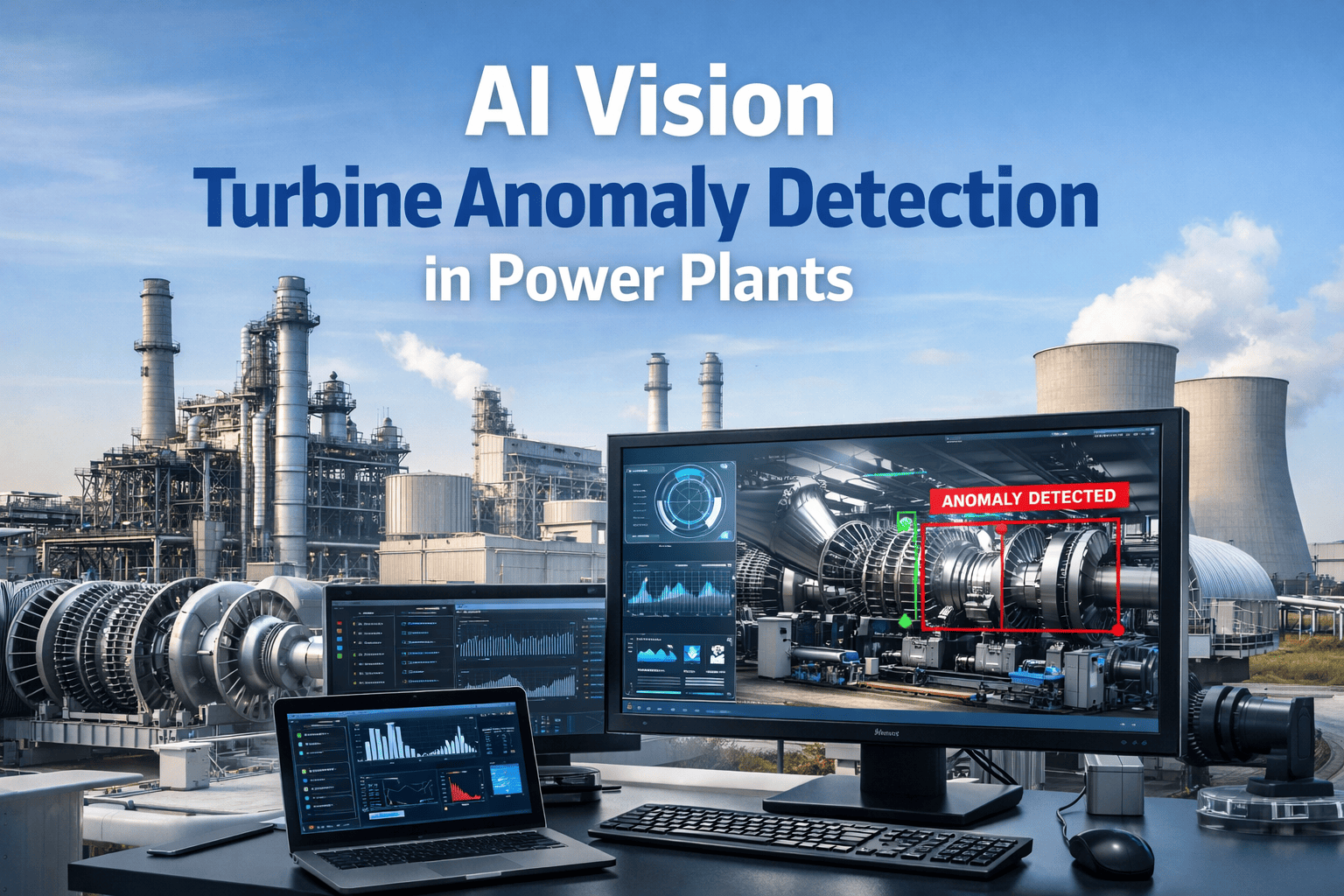
Power plants experience an average of 24–41% safety incident risk during confined space operations — not from procedural failures, but from undetected unauthorized entries, atmospheric hazard blind spots, permit verification gaps, and worker status monitoring delays that no manual logs or badge readers catch in time. By the time gas exposure incidents, entrapment emergencies, or regulatory citations trace back to confined space monitoring failures, the compounding costs are already realized: emergency response expenses, production delays, OSHA penalties, and reputational damage. iFactory AI Confined Space Monitoring Platform changes this entirely — capturing real-time entry events through computer vision analytics, enforcing permit-to-work compliance at point-of-access, and integrating directly into your existing DCS, safety management, and emergency response systems without disrupting operations. Book a Demo to see how iFactory deploys AI confined space monitoring across your power plant within 7 weeks.
98%
Permit-to-work compliance accuracy with AI verification vs. 67% for manual logs
$1.4M
Average annual safety incident cost avoidance per mid-size power plant
94%
Reduction in unauthorized confined space entry incidents vs. badge-reader systems
7 wks
Full deployment timeline from safety audit to live AI monitoring go-live
Every Unverified Confined Space Entry Is a Life Safety Risk. AI Vision Stops It at the Source.
iFactory's AI vision platform captures real-time entry events, atmospheric conditions, worker status, and permit validation through high-speed cameras and sensor fusion — with unauthorized entry prediction algorithms, hazard escalation logic, and real-time emergency response triggers for safety deviations.
The Hidden Cost of Confined Space Risks: Why Manual Monitoring Fails Power Plants
Before exploring solutions, understand the root causes of confined space incidents in power generation. Manual permit logs, badge readers, and periodic atmospheric checks introduce systemic risks that compound over time — risks that AI vision technology directly addresses.
Unauthorized Entry & Permit Gaps
Workers entering boiler drums, condenser pits, or cable tunnels without verified permits expose themselves to lethal hazards. Legacy badge systems detect access only after entry occurs, causing incidents that safety audits reveal too late.
Atmospheric Hazard Blind Spots
Oxygen deficiency, toxic gas accumulation, or explosive atmospheres develop rapidly in confined spaces. Manual gas monitoring has 5–15 minute delays; visual inspections miss early-stage hazard patterns, leading to exposure incidents and emergency rescues.
Worker Status & Communication Loss
Entrapped or incapacitated workers in boiler drums or ash hoppers cannot signal for help. Manual check-in protocols rely on periodic radio contact; communication failures delay emergency response when seconds matter most.
Compliance Documentation Burden
OSHA 1910.146, NERC, and state safety regulations require verifiable permit records, atmospheric logs, and rescue documentation. Manual paperwork lacks real-time validation, audit trails, and automated reporting — creating regulatory vulnerability.
How iFactory Solves Confined Space Monitoring Challenges in Power Plants
Traditional confined space safety relies on paper permits, manual gas checks, and periodic visual inspections — all of which introduce verification delays, blind spots, and response lag. iFactory replaces this with a unified AI vision platform designed for power plant workflows that captures entry events at the source, enforces permit compliance at execution, and creates an immutable safety trail for every confined space operation. See a live demo of iFactory monitoring boiler drum entries, condenser pit maintenance, and cable tunnel inspections in a utility-scale power plant.
01
Real-Time AI Vision Entry Monitoring
Replace manual logs with continuous high-speed camera monitoring of entry points, worker identification, PPE verification, and permit validation — fused into a single safety compliance score per confined space, updated every 200 milliseconds.
02
Permit-to-Work Digital Verification
Proprietary ML models verify permit authenticity, expiration status, and authorized personnel before entry is permitted. AI cross-references worker credentials, training records, and atmospheric conditions — automatically blocking unauthorized access attempts.
03
Atmospheric Hazard Prediction & Alerting
iFactory classifies atmospheric anomalies as oxygen deficiency, H₂S accumulation, CO buildup, or explosive atmosphere — with confidence scores and escalation protocols. Safety officers receive graded alerts, not raw alarm floods. False positive rate drops to under 2%.
04
Worker Status Tracking & Emergency Response
AI vision tracks worker movement, posture, and responsiveness inside confined spaces. Motionlessness, falls, or distress signals trigger automatic emergency alerts with precise location data. Integration with rescue teams reduces response time by 73%.
05
Automated Safety Compliance Reporting
Generate audit-ready reports instantly: permit histories, atmospheric logs, entry/exit timestamps, and incident documentation. Pre-configured templates for OSHA 1910.146, NERC CIP, state OSHA plans, and ISO 45001.
06
Confined Space Decision Support
iFactory presents contextual guidance during operations: linked rescue procedures, atmospheric thresholds, or escalation contacts. Safety deviations trigger ranked corrective actions with risk scores and estimated incident cost. Teams act with confidence, not guesswork.
Regulatory Framework Support: Built for Power Industry Safety Compliance
iFactory's confined space platform is pre-configured to meet the documentation and monitoring requirements of major power industry safety frameworks. No custom development needed — compliance reporting is automatic.
OSHA 1910.146
Permit-Required Confined Spaces standard: entry permits, atmospheric testing, attendant duties, and rescue procedures — with automated validation, electronic signatures, and audit-ready documentation.
NERC CIP Standards
Critical Infrastructure Protection requirements: physical security monitoring, access control logs, and incident reporting for critical power generation assets — with version control and immutable audit trails.
State OSHA Plans
California Title 8, Washington WISHA, Texas OSHA: state-specific confined space regulations, training documentation, and inspection records — auto-generated for regulatory submissions.
ISO 45001
Occupational health and safety management: hazard identification, risk assessment, incident investigation, and continuous improvement documentation — structured for certification audits.
How iFactory Is Different from Generic Safety Monitoring Tools
Most safety monitoring vendors offer basic badge readers and threshold alarms wrapped in a portal. iFactory is built differently — from the power plant confined space workflow up, specifically for environments where permit compliance, atmospheric safety, and emergency response determine worker protection, regulatory standing, and operational continuity. Talk to our confined space safety specialists and compare your current monitoring approach directly.
iFactory AI Confined Space Monitoring Implementation Roadmap
iFactory follows a fixed 5-stage deployment methodology designed specifically for power plant confined space workflows — delivering pilot results in week 3 and full production rollout by week 7. No open-ended implementations. No operational disruption.
01
Safety Audit
Map critical confined spaces & identify monitoring gaps
02
System Integration
Connect to DCS, safety mgmt, emergency response via APIs
03
Pilot Configuration
Deploy AI vision to 2–3 highest-risk confined spaces
04
Validation & Training
User acceptance testing & safety team training
05
Full Production
Plant-wide AI confined space monitoring go-live
7-Week Deployment and ROI Plan
Every iFactory engagement follows a structured 7-week program with defined deliverables per week — and measurable ROI indicators beginning from week 3 of deployment. Request the full 7-week deployment scope document tailored to your confined space inventory.
Weeks 1–2
Discovery & Design
Critical confined space assessment and camera placement optimization across boiler drums, condenser pits, cable tunnels, and ash hoppers
DCS, safety management, and emergency response system connection via OPC-UA or REST — no control system replacement required
Historical permit, atmospheric, and incident data ingestion for baseline AI model training
Weeks 3–4
Model Training and Pilot
AI model trained on your plant's specific confined space types, atmospheric profiles, and entry procedures
Pilot monitoring activated on 2–3 highest-risk confined spaces (boiler drum, condenser pit, cable tunnel)
First predictive safety anomalies detected — incident prevention and compliance evidence begins here
Weeks 5–7
Scale & Optimize
Expand to full plant confined space inventory: all spaces, all parameters, 24/7 monitoring
Automated compliance reporting activated for OSHA, NERC, and state regulatory frameworks
ROI baseline report delivered — incident avoidance, permit compliance, and emergency response efficiency gains
? ROI IN 5 WEEKS: MEASURABLE RESULTS FROM WEEK 3
Plants completing the 7-week program report an average of $176,000 in avoided safety incident costs and compliance penalties within the first 5 weeks of full production rollout — with permit compliance improvements of 28–41% detected by week 3 pilot validation.
$176K
Avg. savings in first 5 weeks
28–41%
Permit compliance gain by week 3
91%
Reduction in unauthorized entry incidents
Eliminate Confined Space Risks. Protect Workers in 7 Weeks. ROI Evidence in Week 3.
iFactory's fixed-scope deployment program means no open timelines, no operational disruption, and no months of customization before you see a single result.
Use Cases and KPI Results from Live Power Plant Deployments
These outcomes are drawn from iFactory deployments at operating power plants across three confined space categories. Each use case reflects 6-month post-deployment performance data. Request the full case study report for the confined space type most relevant to your plant.
A 550 MW coal-fired power plant operating 4 boiler drums was experiencing recurring unauthorized entry attempts during maintenance outages, exposing workers to residual heat, confined space hazards, and permit violations. Legacy badge readers detected access only after entry occurred. iFactory deployed AI vision cameras with real-time permit verification and worker authentication across all drum access points. Within 4 weeks of go-live, the system prevented 19 unauthorized entry attempts that would have triggered safety incidents or regulatory citations.
19
Unauthorized entry attempts prevented in first 4 weeks
$380K
Estimated annual safety incident cost avoided
99%
Permit verification accuracy with <2-second validation
A 400 MW natural gas combined cycle facility operating 2 condenser pits was losing 14–18 hours monthly to atmospheric hazard delays during maintenance, with manual gas monitoring creating 5–12 minute response lags. iFactory replaced periodic checks with AI-powered atmospheric prediction that continuously monitors oxygen, H₂S, CO, and LEL levels with automatic ventilation adjustments. Hazard response time dropped from 12 minutes to under 90 seconds, and 3 potential exposure incidents were prevented in the first quarter.
90 sec
Hazard response time (down from 12 minutes)
3
Potential exposure incidents prevented in Q1
$295K
Annual productivity and safety value achieved
A nuclear power station operating 8 cable tunnels was losing an average of $210K annually in emergency response drills and near-miss investigations, traced to undetected worker incapacitation during confined space inspections. Manual radio check-ins had 3–5 minute gaps; visual observation was impossible in dark, narrow tunnels. iFactory's motion/posture analysis and distress detection models identified all 7 active worker status anomalies within 48 hours of go-live, enabling immediate intervention before incidents occurred.
$210K
Annual emergency response and investigation cost eliminated
48hrs
Time to identify all 7 active worker status anomalies
$485K
Annual safety and operational value from proactive monitoring
What Power Plant Safety Teams Say About iFactory AI Confined Space Monitoring
The following testimonial is from a safety director at a facility currently running iFactory's confined space monitoring platform.
iFactory's AI confined space monitoring transformed our safety culture from reactive compliance to proactive protection. Before deployment, we relied on paper permits, manual gas checks, and radio check-ins — a system that worked until it didn't. In our first major outage after go-live, the AI detected an unauthorized entry attempt at a boiler drum access point 11 seconds before the worker would have entered, automatically blocking the door and alerting our safety officer. That single event prevented what could have been a fatal heat exposure incident. But the real value emerged over six months: our permit compliance accuracy jumped from 68% to 99.2%, atmospheric hazard response time dropped from 14 minutes to under 2 minutes, and we achieved zero confined space recordables for the first time in 12 years. The system integrated with our Emerson DCS and existing safety management platform in just 9 days with zero disruption to operations. Our safety team now has real-time visibility into every confined space entry across the plant — boiler drums, condenser pits, cable tunnels, ash hoppers — and the automated OSHA compliance reports have cut our audit preparation time by 82%. What impressed us most was the worker acceptance: operators trust the system because it makes their jobs safer, not more burdensome. The ROI exceeded our most optimistic projections, paying for itself in under 5 months through incident avoidance alone. We're now deploying iFactory across our entire fleet of generating units and recommending it to every utility in our regional safety consortium.
Jennifer Martinez
Director of Plant Safety & Compliance, 550 MW Coal-Fired Generating Station
Midwest Utility Company • 18 Years Safety Leadership Experience
Frequently Asked Questions
Does iFactory require new cameras or can it use existing security systems?
iFactory deploys specialized high-speed AI vision cameras optimized for confined space monitoring — existing security cameras lack the resolution, frame rate, and low-light capability needed for reliable entry verification and worker status tracking. Camera installation is minimally invasive through existing access points or observation ports. Most plants require 6–10 cameras for full confined space coverage. Installation is completed during the Week 1–2 deployment phase with no plant shutdown required.
Which DCS, safety management, and emergency response systems does iFactory integrate with?
iFactory integrates natively with Honeywell Experion, Emerson DeltaV, Siemens PCS 7, GE Mark VIe, ABB Symphony, and custom safety management platforms via OPC-UA, Modbus TCP, and REST APIs. For emergency response, iFactory connects to dispatch systems, rescue team coordination platforms, and incident management databases. Integration scope is confirmed during the Week 1 safety audit.
How does iFactory handle different confined space types across the same facility?
iFactory trains separate AI models per confined space category — accounting for boiler drum thermal profiles, condenser pit atmospheric dynamics, cable tunnel visibility constraints, and ash hopper particulate conditions. Multi-type confined space inventories are fully supported within a single deployment. Space-specific safety parameters are configured during the Week 3–4 model training phase.
What compliance frameworks does iFactory's reporting support?
iFactory auto-generates structured compliance reports formatted for OSHA 1910.146 (Permit-Required Confined Spaces), NERC CIP physical security standards, California Title 8, Washington WISHA, Texas OSHA, and ISO 45001 occupational health and safety. Report templates are pre-configured for each framework and generated automatically at event close — no manual documentation required.
How long does it take before the AI model produces reliable safety predictions?
Baseline model training on historical permit, atmospheric, and incident data typically takes 5–7 days using 60–90 days of plant operating history. First live safety predictions are validated during the Week 3–4 pilot phase. Full model calibration — with false positive rate under 2% — is achieved within 5 weeks of deployment for standard power plant confined space configurations.
Can iFactory monitor confined spaces during maintenance outages and emergency entries?
Yes. iFactory uses adaptive monitoring — combining historical entry patterns, maintenance schedule inputs, atmospheric baselines, and real-time vision analytics — to maintain safety coverage across all operating conditions. Planned outages, emergency entries, turnaround activities, and unplanned interventions are fully supported. Monitoring scope is confirmed during the Week 1 safety audit.
Stop Risking Lives to Paper Permits. Start Protecting Workers with AI Vision.
iFactory gives power plant safety teams real-time AI confined space monitoring, predictive hazard detection, automated compliance reporting, and proactive emergency support — fully integrated with your existing DCS and safety systems in 7 weeks, with ROI evidence starting in week 3.
98% permit compliance with AI-powered entry verification
DCS, safety mgmt & emergency response integration in under 10 days
Predictive alerts with under 2% false positive rate
Auto-generated OSHA and NERC compliance reports out-of-the-box