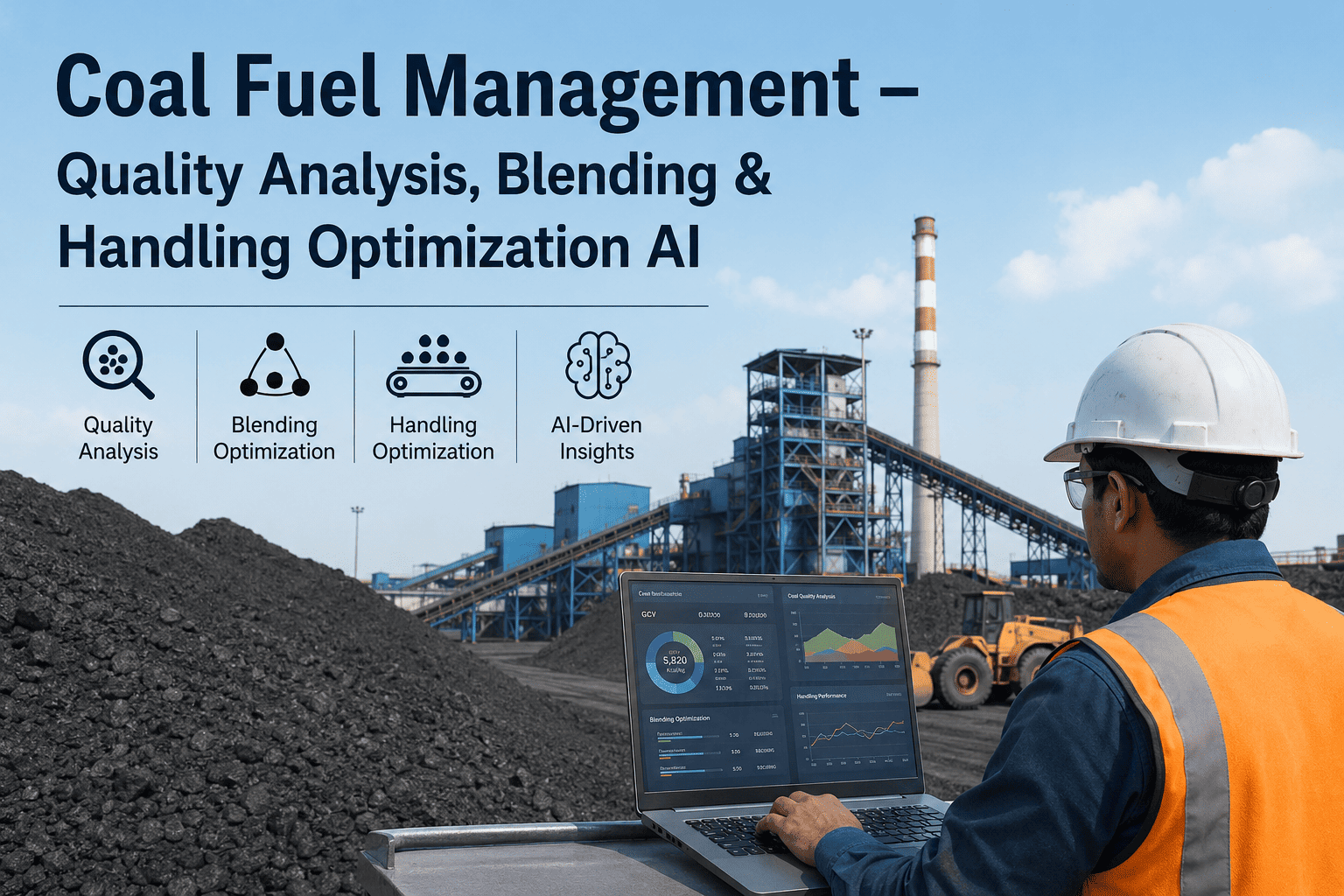
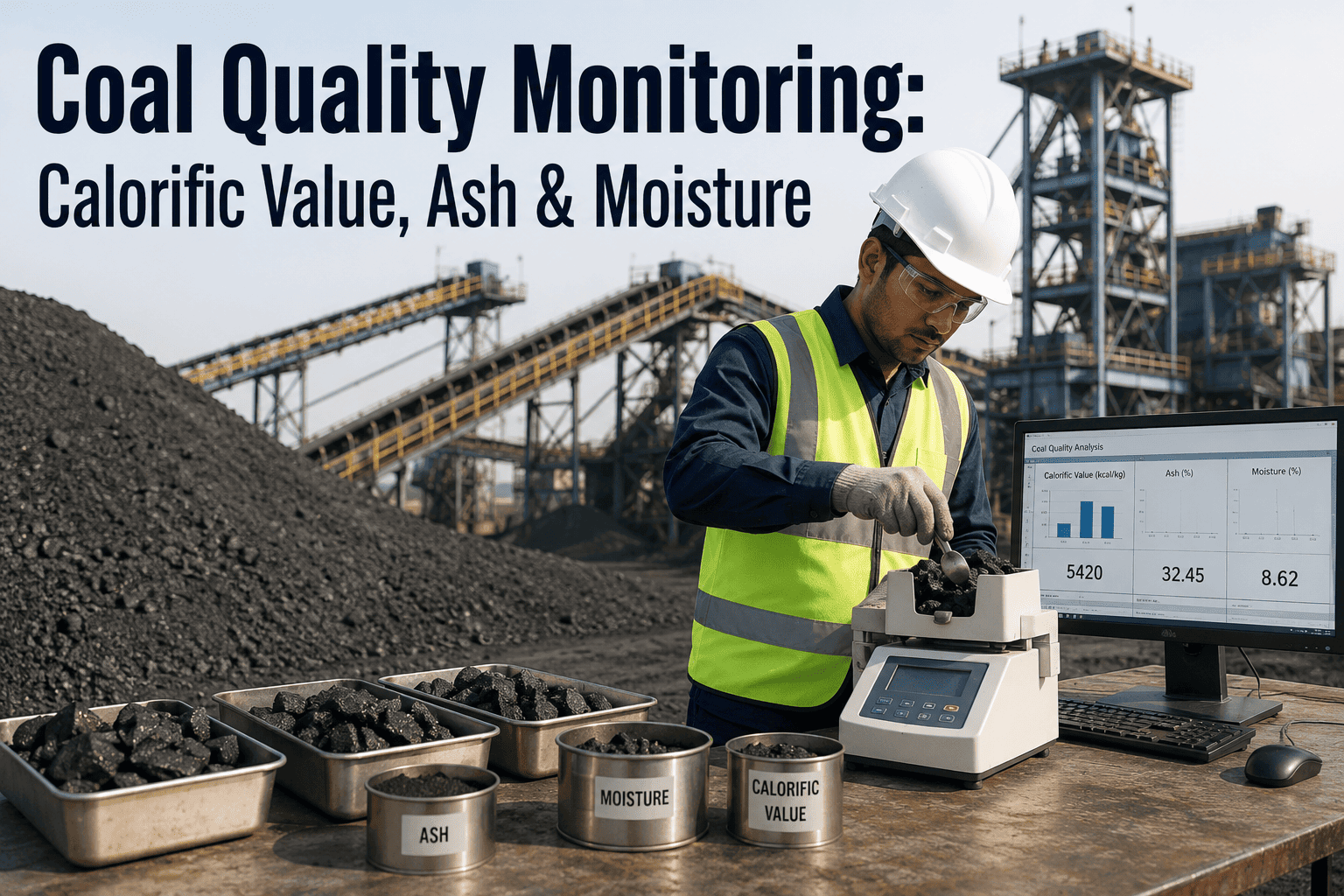
Every coal delivery that rolls into a thermal power plant carries a different chemical fingerprint — different moisture, different ash, different sulfur, different heating value. The boiler was designed for one specific coal profile, and every deviation from that profile costs money: too much ash and the waterwall tubes slag over, too much moisture and the flame temperature drops, too much sulfur and the scrubber chemistry falls out of range and the emissions permit is at risk. Most plants still manage this variability with grab samples sent to a lab that returns results hours or days after the coal has already been burned. AI-driven fuel management closes that gap by analyzing coal quality in real time, optimizing blend ratios continuously, and monitoring every conveyor, crusher, and stacker in the handling chain — book a demo to see it running against your own coal supply data.
Fuel Management · Coal Quality AI
AI-Powered Coal Quality Analysis, Blending and Handling Optimization
Analyze every ton of coal before it reaches the bunker, optimize blend ratios across multiple sources in real time, and keep every conveyor and crusher in the handling chain running without interruption.
14.7%
Fuel cost reduction validated at scale with AI-optimized blending
41%
Reduction in slagging incidence through predictive blend control
24/7
Continuous coal quality monitoring replacing periodic lab sampling
Six Parameters That Control Everything Downstream
Each coal quality parameter has a direct, measurable impact on boiler performance, maintenance cost, and regulatory compliance. When any one of them drifts outside the design envelope, the consequences cascade through the entire plant — from the furnace to the stack. AI tracks all six simultaneously and adjusts blend ratios before the deviation reaches the boiler.
Determines total energy output per ton. A 500 kcal/kg drop below design specification forces higher coal feed rates, increases flue gas volume, and reduces net generation efficiency.
Non-combustible residue that accumulates on waterwall tubes, superheaters, and economizers as slag and fouling deposits. High ash accelerates erosion, increases soot blowing frequency, and raises particulate emissions.
Drives SO2 emissions and flue gas desulfurization load. Excess sulfur also causes cold-end corrosion in air heaters and economizers, and limits how low the flue gas exit temperature can be set.
Absorbs heat during evaporation, reducing flame temperature and combustion stability. High moisture increases flue gas losses, degrades mill performance, and can cause bunker flow problems in wet conditions.
Controls ignition behavior and flame stability. Low volatile coal requires higher ignition temperatures and may need oil support burners, while excessively high volatiles can cause rapid pressure spikes and unstable combustion.
Determines slagging severity. Coal with low ash fusion temperatures produces molten deposits that bond to furnace surfaces, block heat transfer, and require expensive manual cleaning during outages.
The Blending Problem No Spreadsheet Can Solve
Most plants receive coal from two to five different sources — each with a different quality profile, a different price, and a different delivery schedule. The goal is to blend them into a mixture that hits the boiler's design specification at the lowest possible cost, without violating emissions limits, slagging thresholds, or contractual take-or-pay obligations. This is a multi-variable optimization problem that changes every time a new shipment arrives.
Source A
High CV, High Sulfur
Source C
Mid CV, Low Sulfur
Source D
Import, Variable Quality
AI Optimizer
Optimized Blend
CV: On-spec
Ash: Within limit
SO2: Compliant
Cost: Minimized
AI recalculates the optimal blend ratio every time new quality data arrives from the online analyzer, a shipment composition changes, a fuel price moves, or the plant's generation schedule shifts — adjusting stacker-reclaimer patterns and feeder rates to hit the target blend continuously.
A 1% improvement in boiler efficiency on a 500 MW coal unit saves hundreds of thousands of dollars per year in fuel cost alone. AI blend optimization delivers that improvement by keeping coal quality within the design envelope every hour, not just on the day the lab results come back.
What AI Does at Every Stage of the Fuel Chain
The system connects online coal analyzers, belt scales, handling equipment sensors, and boiler performance data into a single optimization loop — from the moment coal arrives at the unloading station to the moment it enters the pulverizer.
Online elemental analyzers using PGNAA or PFTNA technology scan coal on the conveyor belt in real time — measuring moisture, ash, sulfur, and calorific value before the coal reaches the stockyard. No waiting for lab results. Every ton is characterized as it arrives, and any off-spec delivery is flagged immediately for commercial penalty or blend adjustment.
Multi-objective algorithms calculate the lowest-cost blend ratio that simultaneously satisfies heating value targets, ash content limits, sulfur emission caps, and ash fusion temperature floors. The optimizer accounts for inventory levels at each stockpile, contractual take-or-pay volumes, and the plant's upcoming generation schedule — recalculating every time any input changes.
Vibration, temperature, and current sensors across crusher housings, conveyor drive pulleys, idler sets, and stacker-reclaimer gearboxes feed into predictive maintenance models. The system distinguishes normal operational vibration from bearing degradation signatures, flags belt mistracking before it causes spillage, and generates maintenance work orders before a failure interrupts coal flow to the bunkers.
Boiler performance data — flame temperature, flue gas oxygen, soot blower activation frequency, slag camera readings — feeds back into the blend optimizer as a closed loop. If slagging increases or flame stability degrades, the system traces the cause to a coal quality shift and adjusts the blend ratio before the problem escalates into a forced derate or tube failure.
Coal Handling Equipment the AI Keeps Running
A coal handling plant is a chain — and any single link failure stops fuel flow to the boiler. AI monitors every critical asset in the chain simultaneously, catching degradation patterns that walkdown inspections miss.
Conveyors
Belt condition, alignment switch trips, drive motor temperature, idler bearing vibration, and pulley lagging wear tracked across every conveyor section.
Crushers
Rotor vibration signatures, hammer/ring wear profiles, motor current draw, and output particle size distribution monitored to predict maintenance intervals.
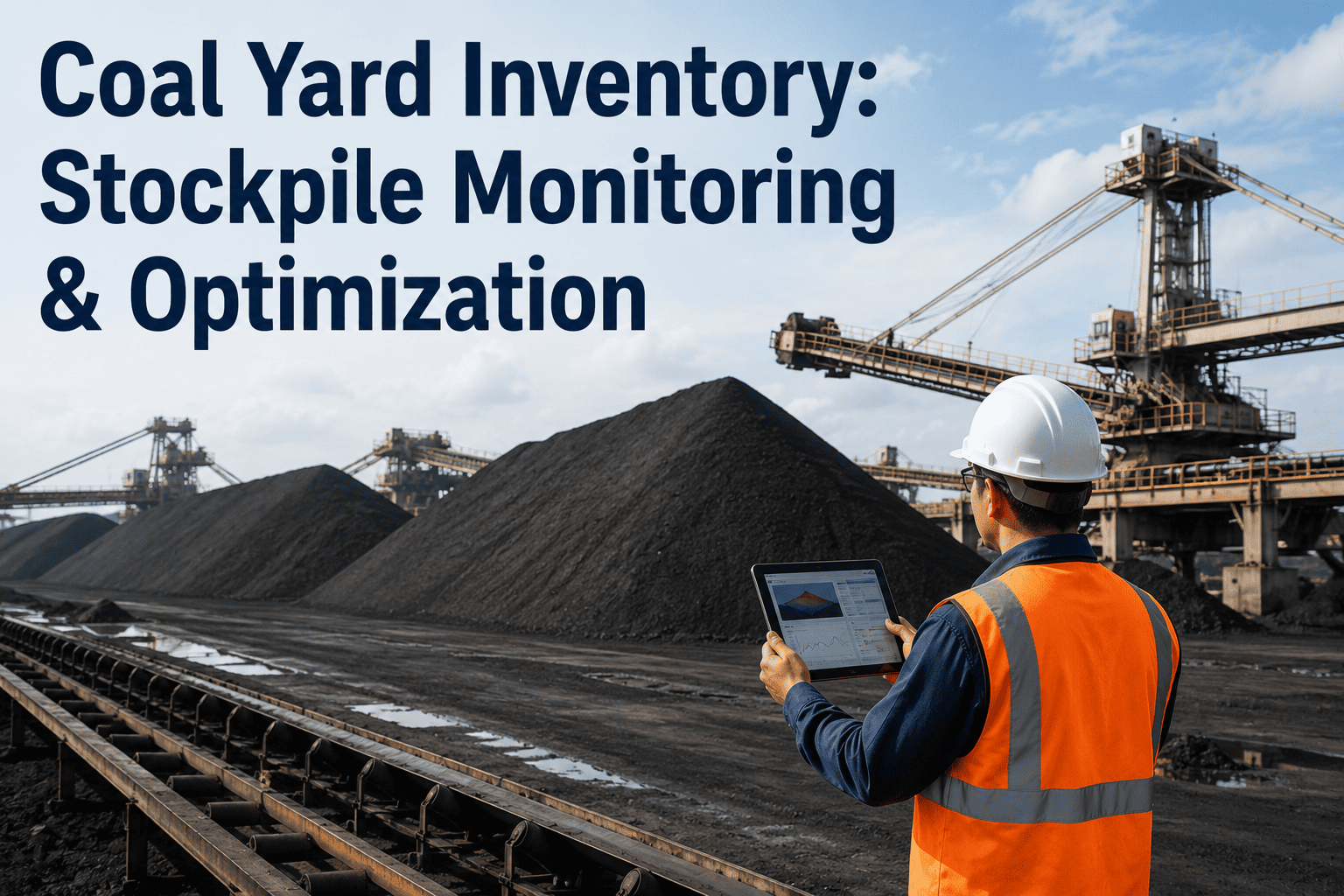
Stacker-Reclaimers
Slew drive gearbox condition, boom conveyor health, bucket wheel wear, and travel wheel bearing monitoring for these high-value mobile assets.
Coal Mills
Grinding element wear, classifier vane position, outlet temperature, and fineness tracking to maintain optimal pulverizer performance as coal hardness varies.
Bunker Systems
Level monitoring, rat-holing detection, moisture-induced bridging alerts, and feeder rate optimization to prevent fuel starvation at the boiler front.
Dust Suppression
Spray system pressure, nozzle condition, and dust concentration monitoring at transfer points to maintain environmental compliance and worker safety.
Validated Results from AI-Optimized Coal Operations
14.7%
Fuel Cost Reduction
Achieved through optimized blend ratios that minimize cost while maintaining boiler design specifications across all quality parameters.
41%
Slagging Reduction
Predictive ash fusion temperature management keeps slag deposits below intervention thresholds, extending waterwall cleaning intervals.
24.8%
Sulfur Reduction
Blend optimization targets sulfur content alongside cost, reducing FGD limestone consumption and SO2 stack emissions simultaneously.
6.9%
Heat Rate Gain
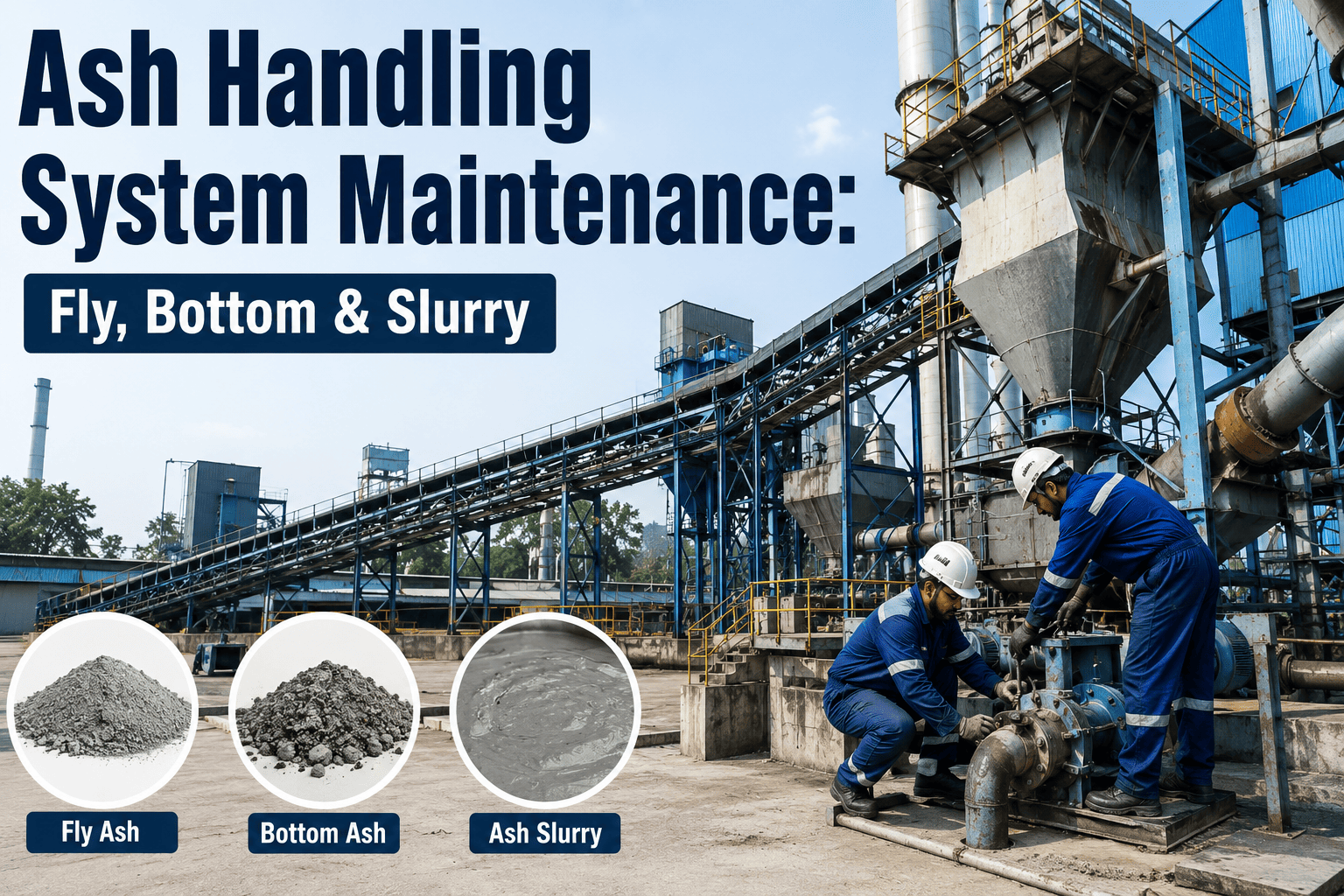
Consistent coal quality at the burner front improves combustion completeness and reduces unburned carbon in fly ash and bottom ash.
Turnkey AI Deployment — Hardware and Software, Shipped Ready
Every coal fuel management AI deployment ships as a pre-configured bundle: a rack-mounted NVIDIA AI server with all quality analysis, blend optimization, and handling monitoring software pre-loaded. Your team racks it, connects power and Ethernet, and the system begins ingesting data from your existing analyzers, belt scales, and SCADA within days.
Weeks 1-2
Site Assessment
Map coal sources, existing analyzers, handling equipment, and boiler control interfaces. Identify integration points for SCADA, historian, and DCS data feeds.
Weeks 3-6
Integration and Training
Rack the server, connect to plant systems. Train blend optimization models on historical coal quality, purchasing, and boiler performance data. Deploy handling sensors where gaps exist.
Weeks 7-12
Live Optimization
AI goes live in advisory mode, then transitions to closed-loop blend and handling recommendations. Operator training and 24/7 remote monitoring included throughout.
The lab just flagged a high-ash delivery from Source B. We have 4,000 tons sitting on the pad. What blend ratio should I use to stay within boiler spec?
Source B ash is reading 38.2% — above your 35% boiler limit. I recommend blending at 25% Source B with 45% Source A and 30% Source C. This brings the combined ash to 28.4%, keeps CV at 5,280 kcal/kg, and holds sulfur at 1.1%. I have updated the stacker-reclaimer queue. Approve to begin adjusted reclaim pattern.
1,000+
Industrial clients worldwide
99.9%
Platform uptime guarantee
6-12 Wks
Rack to live optimization
Expert Insight
The plants that struggle most with coal quality are not the ones receiving bad coal — they are the ones that find out too late. A grab sample sent to a lab tells you what the coal was six hours ago, not what is feeding the boiler right now. The shift from periodic sampling to continuous online analysis changes the entire operating paradigm: instead of reacting to a slagging event or an emissions exceedance after it happens, you are adjusting the blend in real time to prevent it. The plants I have seen adopt AI-optimized blending consistently report double-digit fuel cost savings, and almost all of them see a measurable drop in unplanned boiler cleaning outages within the first year.
Rajesh Sundaram — Combustion and Fuel Systems Consultant, 18 years advising coal-fired generators on quality optimization and emissions compliance
Frequently Asked Questions
How does the online coal analyzer work, and does it replace lab sampling entirely?
The system uses Prompt Gamma Neutron Activation Analysis (PGNAA) or Pulsed Fast Thermal Neutron Activation (PFTNA) technology to scan coal on the moving conveyor belt. Neutrons penetrate the coal stream and interact with elemental nuclei, producing gamma rays at characteristic energy levels that the analyzer reads to determine moisture, ash, sulfur, calorific value, and other parameters — all in real time, without stopping the belt or taking a physical sample. It does not fully replace laboratory analysis for contractual settlement or regulatory reporting, but it gives operations teams a continuous quality signal that the blend optimizer uses between lab results, catching quality shifts hours before a grab sample would.
Book a demo to see live analyzer data integrated with the blend optimization engine.
Can the system optimize blends from more than two or three coal sources?
Yes. The multi-objective optimization algorithm is designed to handle any number of coal sources simultaneously — typically two to six at most plants, but the system scales to handle more complex supply portfolios including imported coal with variable quality. For each source, the optimizer considers current quality readings, inventory on the stockyard, contractual take-or-pay obligations, delivered cost per ton, and the impact each source has on every target parameter including heating value, ash, sulfur, moisture, and ash fusion temperature. The output is a set of blend ratios and a reclaim pattern for the stacker-reclaimer that achieves the lowest-cost combination satisfying all constraints.
Contact support to discuss how the optimizer would work with your specific supply portfolio.
How does the system prevent slagging and fouling in the boiler?
Slagging occurs when ash particles melt and deposit on furnace surfaces, and the primary driver is ash fusion temperature — if the blended coal's ash melts at a temperature below the furnace operating zone, deposits form. The AI optimizer treats ash fusion temperature as a hard constraint in every blend calculation, ensuring the blended fuel stays above the critical threshold for the specific boiler design. It also monitors boiler-side signals including slag camera readings, soot blower activation frequency, and waterwall heat flux patterns to detect early slagging and feed that information back into the blend model. Plants using this approach have documented a 41% reduction in slagging incidence over conventional blending methods.
Book a demo to see the slagging prevention feedback loop running on a live boiler.
Does this integrate with our existing coal handling plant SCADA and DCS?
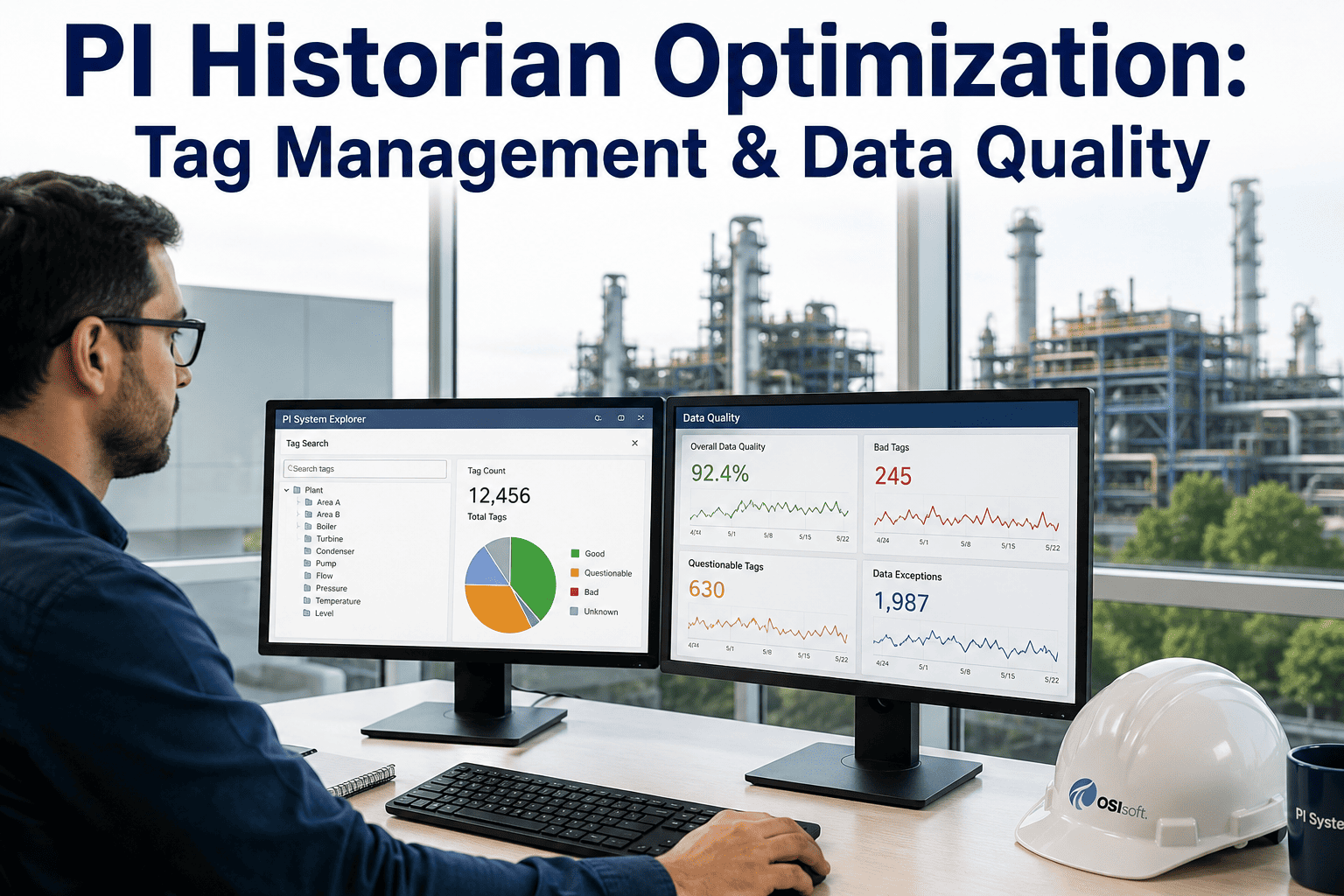
Yes. The platform connects to existing SCADA, DCS, and plant historian systems through standard industrial protocols including OPC-UA, Modbus TCP, and PI historian tags. It reads data from belt scales, online analyzers, handling equipment sensors, and boiler instrumentation without requiring replacement of any existing control hardware. For coal handling equipment monitoring, wireless vibration and temperature sensors can be added to crusher housings, conveyor drives, and stacker-reclaimer gearboxes to fill monitoring gaps — deployed during normal operations with no downtime required. The system outputs blend recommendations, handling alerts, and maintenance work orders to whatever platform your operations team already uses.
Contact support to review your current SCADA and DCS configuration for compatibility.
What ROI can we expect from AI-optimized coal fuel management?
Industrial validation at scale has documented a 14.7% reduction in fuel cost, a 41% reduction in slagging, a 24.8% reduction in sulfur content, and a 6.9% improvement in net heat rate. For a 500 MW coal-fired unit burning several million tons of coal per year, even single-digit percentage savings on fuel cost represent substantial annual value — typically measured in millions of dollars. Additional savings come from reduced soot blowing wear, fewer unplanned cleaning outages, lower FGD limestone consumption from better sulfur control, and extended equipment life from predictive handling maintenance. The turnkey deployment model means the system is live and generating returns within 6-12 weeks, not after a multi-year IT integration project.
Book a demo to build an ROI estimate using your plant's actual coal spend and quality history.
Stop Burning Money Along With the Coal
Turn coal quality from an uncontrolled variable into an optimized input — with AI that analyzes every ton, optimizes every blend, and monitors every piece of handling equipment in the chain.