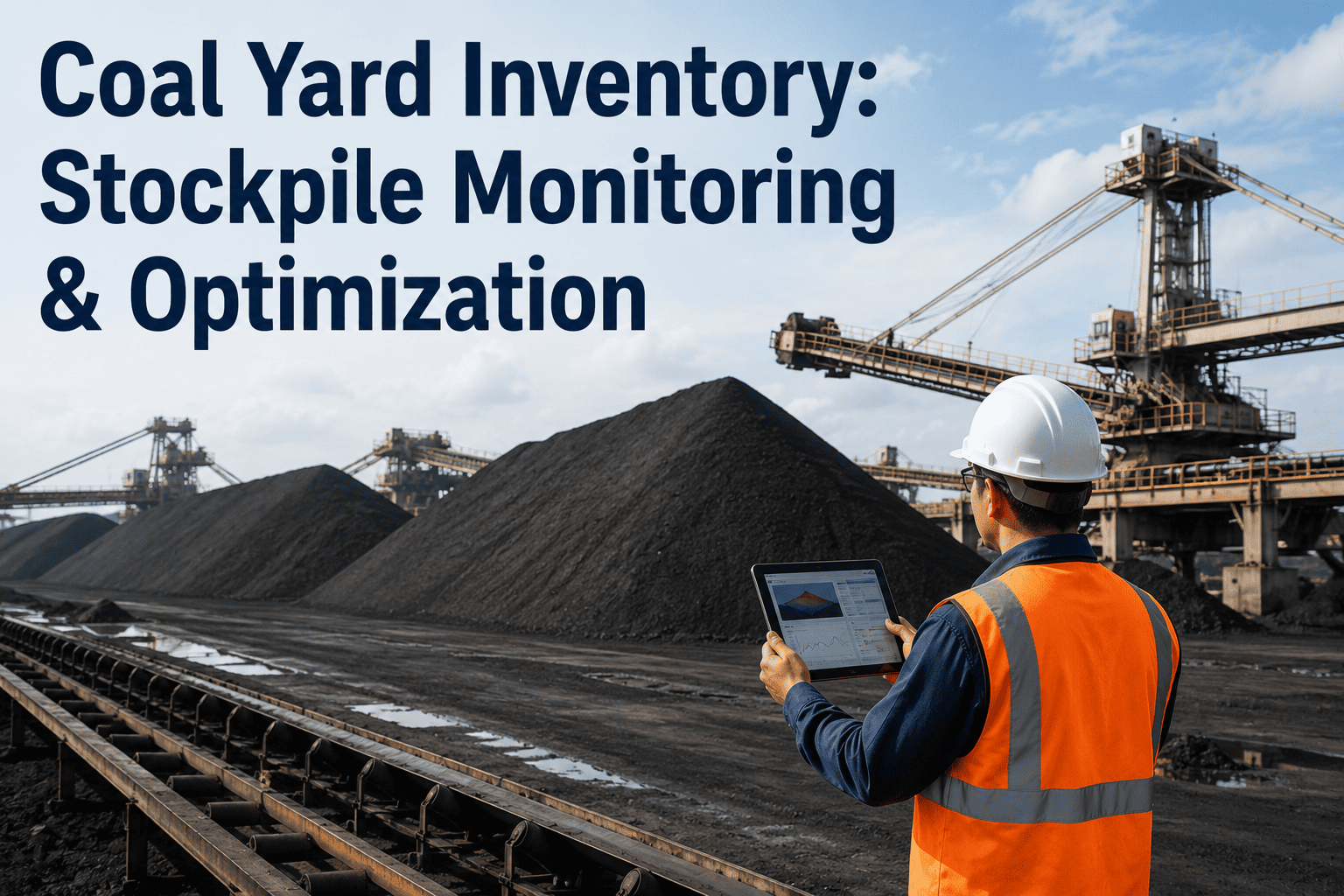
A coal yard is usually the single largest pile of unmeasured working capital on a power plant or steel plant site — often 50,000 to 800,000 tonnes sitting in the open, losing calorific value every week it stays there. Most yards still reconcile stock once a month, using a survey crew that takes three days to measure and two more to report. By the time the numbers land, the plant has already burned coal it thought it had. Teams that book a demo with iFactory leave with a measured view of their yard — pile by pile, age band by age band.
Stop Guessing What Is In Your Coal Yard — Measure It Weekly, Not Monthly
iFactory turns drone surveys, GPS pile tracking, thermal scans and quality sampling into one live coal yard ledger — tonnage, age, grade, GCV and hot-spot risk for every pile on site.
The Coal Yard Is Where Fuel Cost Quietly Leaks Away
Every plant tracks coal at the weighbridge and every plant tracks coal at the bunker. Almost nobody tracks it properly in between. That in-between — the yard — is where a fuel budget silently erodes through oxidation, moisture pickup, segregation, wind and water loss, misallocated reclaim, and stock that ages past the point where it burns the way the boiler was designed for. The scale of the exposure is easy to underestimate. General industry practice is to hold roughly two weeks of coal at a pit-head plant and 30 to 45 days at a plant located away from the mine, which typically means anywhere from 50,000 to 800,000 tonnes of coal on the ground at any moment. Utilities burning imported coal often stretch that further, buying opportunistically when prices dip and holding piles for six months or more. Each of those days has a cost attached, and almost none of it appears in a conventional plant KPI pack.
The regulatory benchmark is worth pausing on. Indian tariff regulations prescribe a maximum permissible calorific loss of 85 kcal/kg during in-plant storage, and the IEA Clean Coal Centre's assessment of supply-chain losses puts typical stockpile degradation at under 2% of calorific value — roughly 80 kcal/kg. Those are the numbers a well-run yard should be able to defend. The problem is that most yards cannot prove where they sit against that benchmark, because they do not know how old any given tonne of coal is, how long it has been exposed, or which pile it came from when it was reclaimed. Without pile-level age and provenance data, the entire loss discussion becomes an argument between the fuel team, the finance team and the supplier, settled by whoever has the loudest spreadsheet.
Six Places Coal Yard Value Actually Disappears
Coal yard losses are rarely one big event. They are six or seven small, continuous leaks that compound across a year and only become visible at annual stock-take, when the book number and the physical number refuse to agree. The ledger below is the pattern iFactory sees most often when a yard is instrumented for the first time — and each line is measurable the moment pile-level tracking exists.
Calorific Degradation From Coal Sitting Too Long
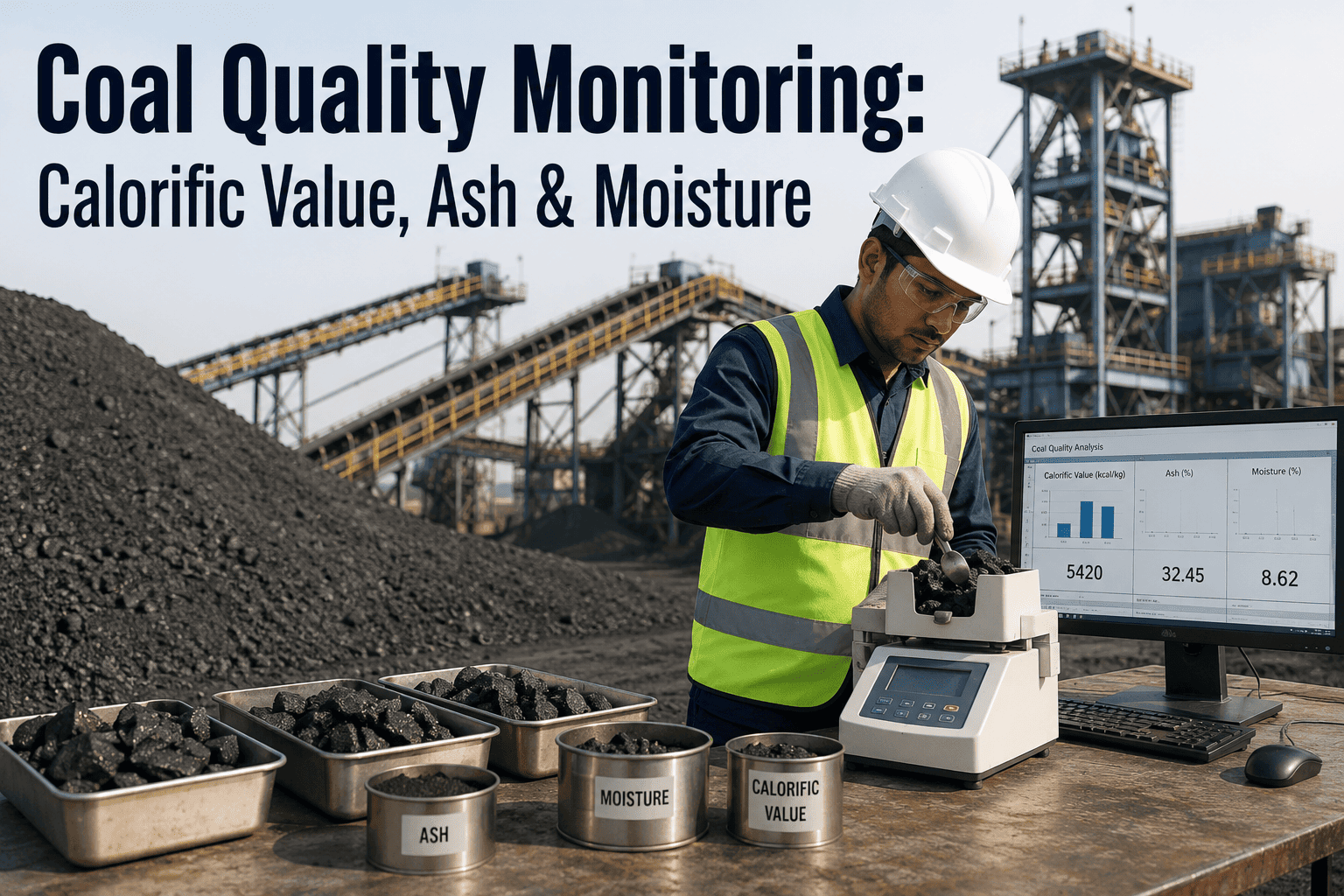
Coal begins low-temperature oxidation the moment it meets air. A documented open-air stockpile trial on Indian thermal coal recorded fixed carbon falling from 35.6% to 19.9%, elemental carbon from 46.6% to 28.6% and ash rising from 29.2% to 46.6% across 330 days of storage. Month-on-month GCV in the same trial dropped from 4,578 kcal/kg to 2,751 kcal/kg. Even a fraction of that on a live yard is a large fuel bill.
Measurement Variance Between Book and Physical Stock
Tape measurements, loader-bucket counting and infrequent manual total-station surveys deliver accuracy in the 5% to 15% variance band. On a 300,000-tonne yard that is a 15,000 to 45,000 tonne question nobody can answer with confidence, and it forces plants to carry buffer inventory purely to cover the uncertainty in their own numbers.
Spontaneous Combustion and Hot-Spot Events
A pile fire destroys fuel, triggers emergency reclaim, disrupts the burn plan and creates a safety and environmental incident at the same time. Because coal is a good insulator, deep-seated heating often produces no dramatic surface temperature — so operations that rely on visual checks are routinely blindsided by fires that had been developing for weeks.
Segregation and Blend Drift at the Reclaim Face
Chevron stacking pushes fines into the pile centre and coarse material to the surface and toe. If reclaim does not cut the full cross-section, the mill receives a size and quality profile that swings shift to shift — driving mill loading problems, unburnt carbon in ash and heat-rate variance that gets blamed on the boiler.
Broken FIFO — Old Coal That Never Leaves the Yard
Reclaim usually happens where the machine is, not where the oldest coal is. Without a digital yard map that flags pile age, dead corners accumulate coal that ages for six months or more while fresh receipts get burned first. That is the single most expensive habit in most coal yards, and the easiest one to fix.
Working Capital Locked in Uncertainty Buffer
When a plant cannot trust its own stock figure, it holds extra days of cover as insurance. Those extra days are cash tied up in a depreciating asset that also carries fire risk. Tighten measurement confidence and a meaningful slice of that buffer can be released without touching security-of-supply cover.
Read that list again and one thing stands out: five of the six leaks are not physical problems at all. They are information problems. The coal is behaving exactly as chemistry says it will — the failure is that nobody knows which pile is oldest, which pile is heating, which pile is off-spec, and how much of each is actually there. That is why yard instrumentation usually pays back faster than any equipment upgrade on the coal handling plant. Plants that book a demo with iFactory typically identify three of these six leaks as immediately measurable in their first survey cycle.
How Coal Ages: The Yard Aging Board
Coal quality is a function of time on the ground, and the decay is not linear. The first two weeks are relatively benign. Between one and two months, surface oxidation, moisture pickup and fines generation begin to bite. Past ninety days, both energy content and combustion behaviour change enough to be visible in mill performance and ash carbon. The aging board below is the mental model iFactory builds into a coal yard ledger — every pile carries an age band, and the band drives the reclaim priority. The retained-energy figures shown are indicative planning bands for open storage of typical thermal coal, not a substitute for your own lab sampling, but they frame the decision correctly: the cost of holding coal rises sharply the longer it sits.
The practical value of an aging board is that it converts a chemistry problem into a scheduling decision. Once every pile carries a survey date, a stack date and a sampled GCV, the reclaim plan can be written to burn the oldest acceptable coal first while still meeting the blend specification the boiler needs. That is the whole of FIFO discipline in a coal yard — not a warehouse rule imported into a stockyard, but a fuel-preservation strategy backed by measured pile age. Plants running this way stop discovering hundred-day-old coal in the far corner of the yard during the annual stock-take.
Spontaneous Combustion: Reading a Pile Before It Reads You
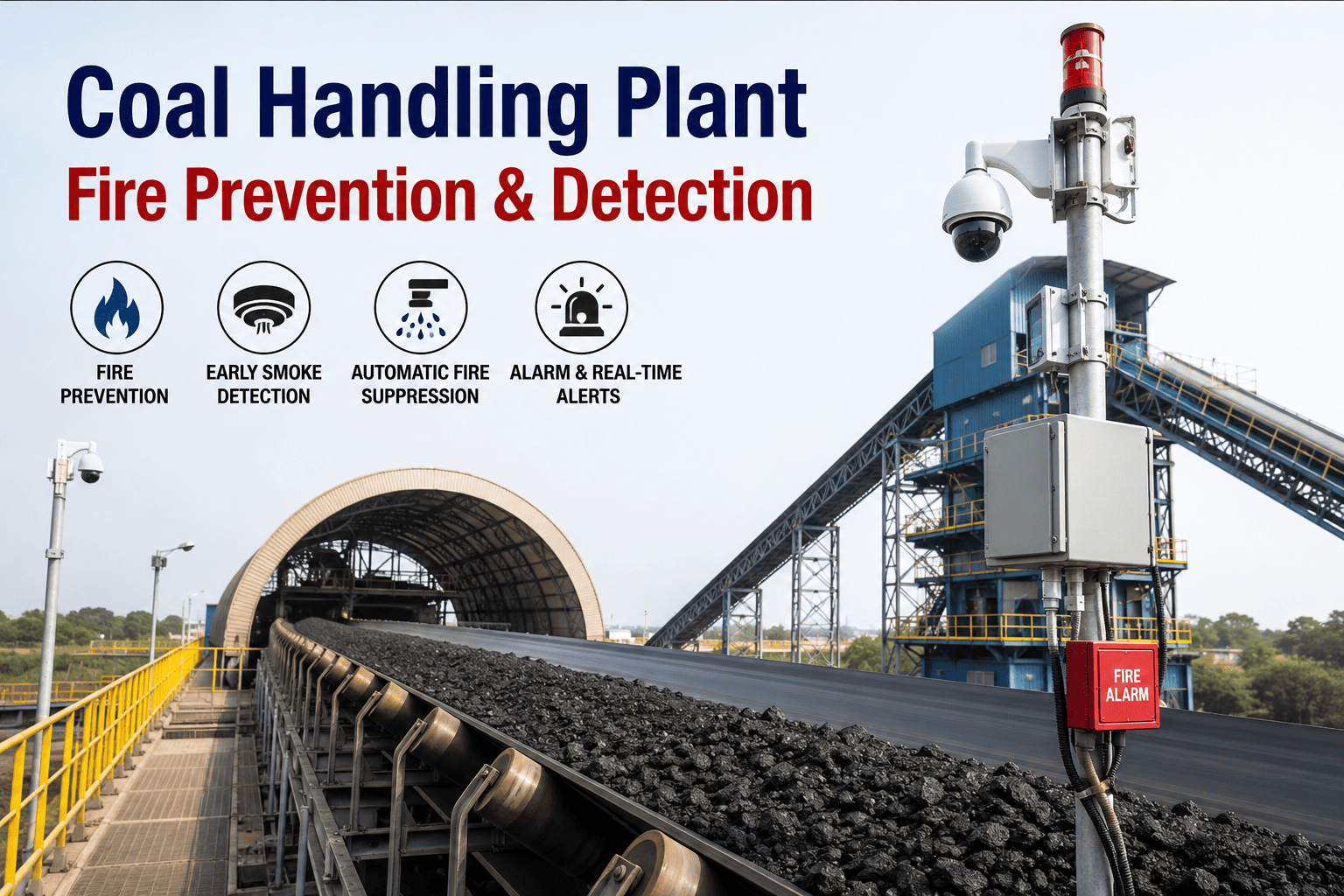
Every coal stockpile is a spontaneous combustion risk from the moment it is built, because low-temperature oxidation starts immediately on air contact and the reaction is exothermic. Heat accumulates in the pile interior — particularly in zones with moderate airflow, where oxygen reaches the coal but the heat cannot escape. Coal insulates well, so a deep-seated fire may show almost nothing on the surface until it is advanced. Thermal runaway sits in the 80 to 120°C band; by the time visible smoke appears, the event is already past the point of easy control. That is why threshold alarms alone are not enough. A pile climbing 2 to 3°C per day for two weeks may never trip a single high-temperature alarm, yet a combustion event is clearly under way. Trend detection, not threshold detection, is the discipline that catches these early.
Pile geometry decides how much of that risk you carry in the first place. Air must either circulate freely through a pile or be excluded from it — the dangerous condition is the middle state, where enough oxygen enters to feed oxidation but not enough airflow exists to carry heat away. That is why long-term piles are compacted in thin layers, typically around a foot or less, with smoothed and sealed surfaces to shed water and limit ingress. It is also why the windrow stacking method is preferred over chevron for coals prone to spontaneous combustion: windrow deposits material across the full pile width from multiple positions, which limits the coarse-material chimneys along the toe that chevron piles naturally create.
Crest and Surface Seal
Smoothed and rolled to shed rainwater and reduce oxygen ingress. A rough, uncompacted crest traps water, drives moisture into the pile and raises both handling and heating problems downstream.
Compacted Upper Lifts
Built in thin layers and rolled after each lift. Thin-layer compaction is the single most effective physical control against internal air circulation in long-term storage piles.
Core Heat Accumulation Zone
Where deep-seated heating develops. Surface thermal imaging alone will underread this zone, which is why probe temperature data and trend slope analysis matter alongside camera coverage.
Toe and Coarse Chimney
Segregation sends coarse lumps rolling to the pile toe, creating high-permeability paths that feed air into the pile. Windrow stacking and toe compaction both reduce this effect.
Prepared Base and Drainage
A firm, graded, drained base gives clean reference geometry for volume surveys and prevents the trapped-water layer that makes bottom-of-pile coal unmanageable at reclaim.
Give Every Pile in Your Yard a Tonnage, an Age and a Temperature Trend
iFactory combines drone volumetrics, GPS pile boundaries, thermal trend analytics and lab quality data into one coal yard ledger — then pushes the reclaim priority straight into your daily fuel plan.
Measurement Methods Compared: What Each One Really Delivers
The single biggest step change in coal yard inventory accuracy over the last five years has been the shift from occasional manual survey to routine aerial volumetrics. Drone photogrammetry can complete a large-yard survey and generate a volume report inside an hour, cover roughly a 1.2 km by 1 km area in a single flight, and be repeated weekly instead of monthly — which is what actually changes decisions, because a monthly number is a historical record while a weekly number is an operating input. The table below compares the methods most yards are choosing between today.
| Method | Typical Accuracy | Time for a Large Yard | Practical Frequency | Safety Exposure | Best Fit |
|---|---|---|---|---|---|
| Tape and visual estimate | Poor, wide variance | Hours per pile | Ad hoc | High — crew on pile | Emergency check only |
| Loader bucket counting | Poor, drifts over time | Continuous but indirect | Daily throughput | Moderate | Movement tracking, not stock |
| Total station survey | Good on regular piles | 2–3 days plus reporting | Monthly at best | High — crew on pile | Audit-grade spot checks |
| GPS walkover | Moderate, surface only | Half day to a day | Monthly | High — crew on pile | Small single-pile yards |
| Drone photogrammetry | High with ground control | Under an hour per flight | Weekly or better | Low — no pile access | Routine yard-wide inventory |
| Drone or ground LiDAR | High, works in low light | 1–2 hours | Weekly to monthly | Low | Dusty yards, steep faces |
| Scanner on stacker-reclaimer | High on scanned path | Continuous | Every machine pass | None — fixed asset | Automated stockyards |
A few practical cautions matter when you move to aerial volumetrics. High wind, standing water, highly reflective wet surfaces and congested yards all degrade data quality, and weak flight planning or missing ground control points introduce systematic error that looks like real inventory movement. The reference surface question is equally important — volume is always measured against an assumed base, so a yard with an undocumented, uneven or slowly rising base plane will produce confident numbers that are consistently wrong. Getting the base surveyed once, properly, is the cheapest accuracy investment a coal yard can make.
The second half of the accuracy problem is converting volume to tonnage. A cubic metre of coal is not a fixed mass: bulk density shifts with particle size distribution, compaction age, moisture content and how the pile was built. Yards that apply a single legacy density factor year-round inherit an error that no amount of survey precision can remove. The right practice is a density factor per pile, refreshed from sampling, adjusted for moisture and for compaction state, and versioned so a finance auditor can reproduce last quarter's tonnage from last quarter's assumptions.
Stacking Geometry Decides Blend Quality Before Reclaim Starts
How a pile is built determines how consistent the coal is when it comes back out. Blending effectiveness is closely related to the number of layers laid down and reclaimed simultaneously, which is why layered stacking beats cone-shell stacking whenever homogenisation matters. Each method carries a different trade-off between machine cost, segregation control and blending capability — and for coals prone to self-heating, the choice has a safety dimension too.
There is one more geometry decision that gets overlooked: how many piles you run. Blending needs at least two stockpiles in the yard so one can be under formation while the other is being reclaimed, and when two coals are blended the relative pile sizes should track the relative burn rates. Yards that try to blend from a single active pile end up blending in the bunker instead, which is far less controllable and shows up as heat-rate noise nobody can trace.
The Digital Yard Map: GPS Zones, Grades and Age in One View
Everything above becomes operational only when the yard has a digital map. iFactory divides the yard into GPS-fenced blocks, ties every receipt to the block it was stacked in, and carries grade, stack date, survey tonnage and last thermal reading against each one. Loader and dozer GPS traces confirm where material actually moved, so reclaim gets recorded against the correct block instead of being allocated by assumption at month end. The board below shows how a typical yard reads once it is mapped this way — the operator sees priority at a glance rather than reconstructing it from three separate spreadsheets.
Once this map exists, three things become possible that were not possible before. Reclaim can be sequenced by age rather than by machine convenience. Deliveries can be directed to the block that suits their grade and intended burn window instead of wherever there is space. And any variance between the surveyed tonnage and the book tonnage can be traced to a specific block with a specific movement history — which turns the monthly reconciliation meeting from a negotiation into a review. Teams that want to see this running against their own yard layout can book a demo and walk through a mapped example.
Coal Yard Maturity: Where Is Your Operation Today?
Most yards do not need to jump straight to a fully automated stockyard. The progression below is the path iFactory sees working in practice, and each level pays for the next. The useful question is not which level you would like to be at — it is which level your last stock-take proves you are actually at.
Manual and Retrospective
Monthly or quarterly survey by contracted crew. Stock figure lags by two to three weeks. Pile age is institutional memory, not data. Variance is written off without root cause. Hot spots found by sight or smell.
Surveyed and Documented
Drone volumetrics on a fixed weekly or fortnightly cycle with a properly surveyed base plane. Per-pile density factors from sampling. Stock figure is defensible to audit, and variance can be argued from evidence.
Mapped and Sequenced
GPS yard blocks, receipts tagged to blocks, loader and dozer movement traces, thermal trend monitoring per sector. FIFO reclaim sequence generated automatically and issued with the daily fuel plan.
Predictive and Integrated
Yard ledger feeds blend optimisation, boiler heat-rate models and procurement planning. Heating risk is forecast from trend slope and weather. Stock, quality and combustion performance are reconciled in one system.
The jump from Level 0 to Level 1 is usually the one with the fastest payback, because it costs relatively little and immediately removes the argument about what is on the ground. The jump from Level 1 to Level 2 is where fuel cost actually falls, because that is where FIFO becomes enforceable. Level 3 is where the yard stops being a cost centre to be defended and starts being an input into commercial decisions — when to buy, what to buy, and how long it can safely be held.
Coal Yard Governance Checklist: Twelve Controls Worth Auditing
Use this as a walk-the-yard checklist. Any item you cannot answer with data rather than opinion is a control gap, and control gaps in a coal yard convert directly into fuel cost, write-off risk or fire risk. Most plants score between five and seven on a first pass.
A control gap on any one of these is survivable. The trouble starts when three or four cluster together — for example, no age tagging, no fixed survey cycle and no trend-based thermal monitoring. That combination reliably produces the same story: a yard that looks fine until an annual stock-take, a large unexplained variance, and a pile fire in the corner nobody had walked in months. Fixing the cluster is far cheaper than absorbing the outcome.
Building the Business Case: Where the Value Comes From
The market context supports the investment case. Stockyard management systems were valued at roughly $118 million globally in 2025 with projected growth near 10% annually through 2033, driven specifically by automation and digitalisation spend in steel, mining and power generation. But the internal case is stronger than the market case, because coal yard value levers are unusually easy to quantify. The framework below is how iFactory structures a first-year business case for a mid-sized thermal plant — each line is measured from the plant's own data, not from a vendor benchmark.
| Value Lever | What Changes | How It Is Measured | Where It Lands |
|---|---|---|---|
| Calorific preservation | Oldest acceptable coal burned first, less coal past 90 days | Average pile age at reclaim, sampled GCV by age band | Fuel cost per unit generated |
| Variance reduction | Book and physical stock converge, variance traceable to a block | Monthly reconciliation gap as a percentage of closing stock | Inventory write-off line |
| Working capital release | Uncertainty buffer trimmed without cutting security cover | Days of cover held versus days of cover required | Cash tied up in fuel stock |
| Fire and hot-spot avoidance | Self-heating caught in the watch band instead of the runaway band | Count of sectors escalated, tonnes lost to heating events | Safety, environment and fuel loss |
| Blend stability | Consistent size and quality profile reaching the mills | Shift-to-shift variation in mill loading and ash carbon | Heat rate and auxiliary consumption |
| Survey labour and downtime | Aerial survey replaces multi-day crew mobilisation | Survey hours, crew days, yard access interruptions | Operating expense and safety exposure |
The important discipline is to baseline before you instrument. Record today's average pile age at reclaim, today's reconciliation variance, today's days of cover and today's count of thermal escalations — then measure the same four numbers ninety days after the yard is mapped. Those four figures make the business case self-evident to a finance team without any need to argue about vendor claims, and they are also the four numbers that tell you whether the yard discipline is actually being followed on the ground.
One final point that gets missed in most coal yard projects: the technology is the easy part. Drones, thermal cameras, GPS and analytics are all mature and readily available. What determines whether a yard programme succeeds is whether the reclaim sequence issued by the system is the sequence the dozer operator actually follows at 3 a.m. on a wet night. That is a workflow and accountability question, which is why iFactory delivers the yard ledger inside the same platform that carries work orders, shift handover and plant KPIs rather than as a standalone survey report that lands in an inbox.
Coal Yard Inventory Management: Frequently Asked Questions
How often should a coal stockpile be surveyed for inventory purposes?
Weekly is the practical target for an active yard, with monthly as the absolute minimum for any site holding more than a few weeks of cover. The reason is that a monthly survey is a historical record — it tells you what was true three weeks ago — while a weekly survey is an operating input that can still change the reclaim plan. Drone photogrammetry makes weekly realistic because a large yard can be flown and reported inside an hour rather than tying up a survey crew for three days. Yards holding aged coal or running active blending should also run a thermal scan cycle alongside the volume survey. If you want help setting a survey cadence around your own yard size and burn rate, book a demo with our team.
How much calorific value does coal actually lose in an open stockpile?
It depends heavily on coal rank, particle size, pile geometry, climate and time. Indian tariff regulations set a maximum permissible in-plant storage calorific loss of 85 kcal/kg, and the IEA Clean Coal Centre's supply-chain assessment puts typical stockpile degradation below 2% of calorific value, around 80 kcal/kg. Those figures describe well-managed short-cycle storage. Poorly managed long-term open storage looks very different — a documented 330-day open-air trial on Indian thermal coal recorded fixed carbon falling from 35.6% to 19.9%, ash rising from 29.2% to 46.6%, and severe GCV deterioration over the storage period. The gap between those two outcomes is almost entirely a function of pile age discipline and compaction quality.
What temperature indicates a coal pile is heading toward spontaneous combustion?
Thermal runaway occurs in the 80 to 120°C band, and by the time visible smoke appears the fire is generally past the point of easy control. But absolute temperature is the wrong primary signal. Because coal insulates well, a deep-seated fire may produce little surface heat, so the more reliable indicator is trend slope — a pile rising 2 to 3°C per day over a fortnight is developing a combustion event even if it never trips a fixed high-temperature alarm. Practical monitoring therefore combines surface thermal imaging with probe data and, critically, analyses the rate of change rather than only the threshold. Several markets also require coal to be below 60°C at loading, which makes the watch band commercially relevant as well as operationally.
Which stacking method is best for coal that is prone to self-heating?
Windrow is generally preferred over chevron for coals prone to spontaneous combustion. Windrow deposits material from multiple positions across the full width of the pile, which prevents the segregation pattern chevron creates — fines concentrated in the pile centre and coarse material on the surface and at the toe. Those coarse zones act as air paths that feed oxidation deep into the pile. Windrow does require a luffing and slewing stacker, so it carries higher machine cost. Alongside stacking method, the physical controls that matter most are thin-layer compaction with rolling after each lift, smoothed and sealed crests to shed water, and a properly drained base. Our team can review your current pile plan if you contact support.
Can coal yard inventory data integrate with our existing plant systems?
Yes. iFactory carries the coal yard ledger inside the same platform as work orders, shift handover, maintenance history and plant KPI reporting, so survey tonnage, pile age, quality sampling and thermal readings flow into the same place the operations team already works. That matters more than it sounds — standalone survey reports tend to arrive as PDFs that nobody actions, whereas a reclaim priority issued alongside the daily fuel plan gets followed. Integration typically covers weighbridge receipts, laboratory quality results, GPS traces from mobile equipment, thermal monitoring feeds and the existing ERP inventory record so that book and physical stock reconcile in one system rather than three.
Turn Your Coal Yard From an Estimate Into a Measured Asset
Weekly tonnage you can defend to audit, age bands that drive the reclaim sequence, thermal trends that catch self-heating in the watch band, and a variance figure that traces back to a specific block. See it running against your own yard layout.