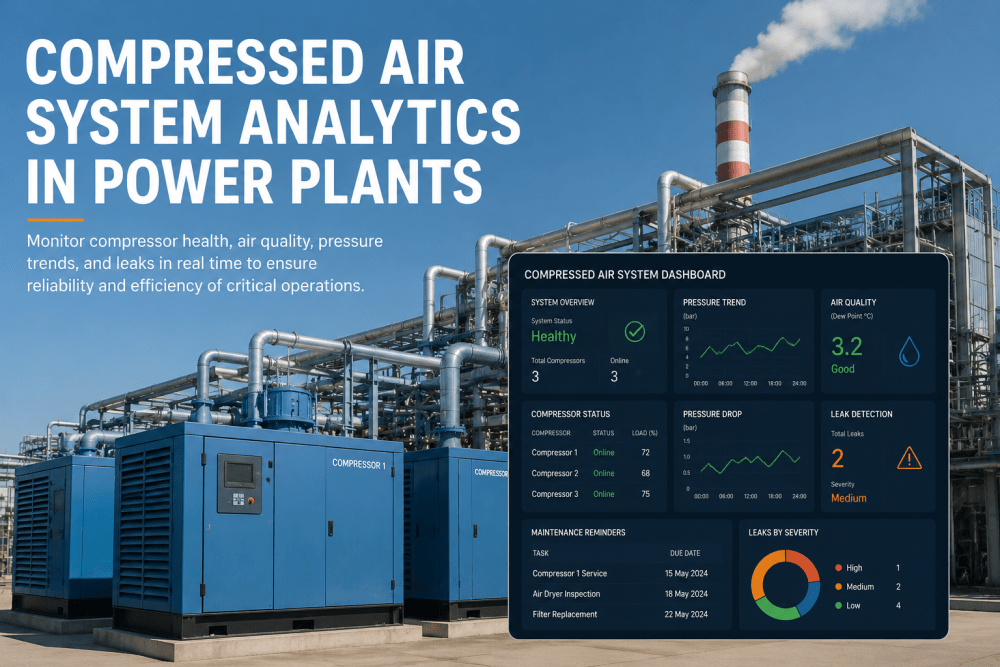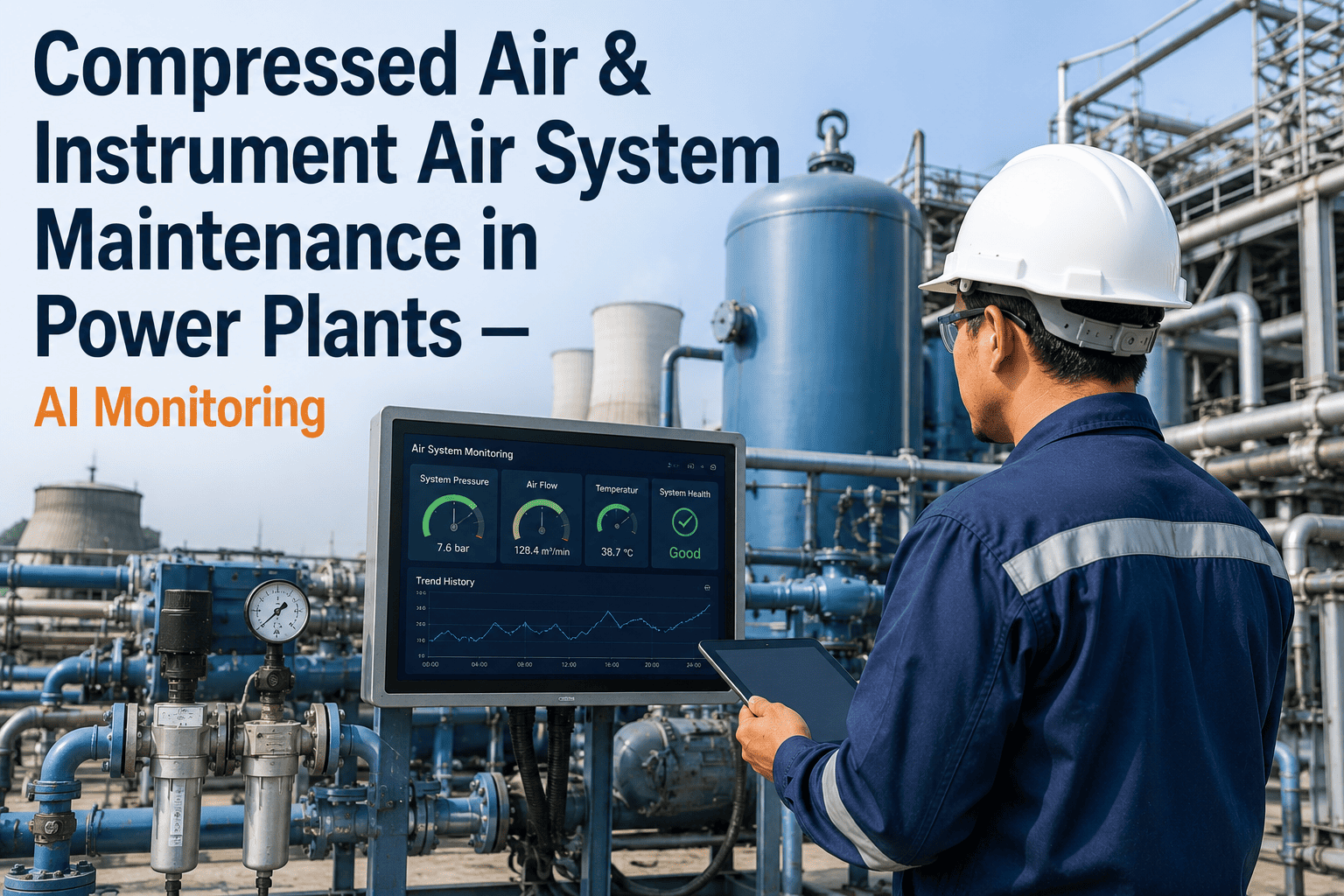
In modern power plants, the balance of plant (BoP) systems often operate in the shadows of main generation assets, yet their reliability directly dictates plant availability and safety. Among these, compressed air and instrument air systems are the unsung heroes, providing the pneumatic muscle for valve actuation, control logic, and safety interlocks. A single failure in instrument air quality or compressor health can cascade into unit trips, costly downtime, or even catastrophic safety events. Traditional maintenance approaches—reactive repairs or calendar-based overhauls—are no longer sufficient in an era of Industry 4.0 and smart manufacturing. This comprehensive guide delivers an enterprise-grade, data-driven methodology for optimizing compressed air and instrument air systems using AI-powered predictive analytics, real-time monitoring, and advanced diagnostic techniques. Whether you are a plant manager, maintenance director, or reliability engineer, you will gain actionable insights to slash energy costs, eliminate unplanned outages, and ensure the highest quality instrument air for critical controls. Book a Demo to see how iFactory's AI platform can transform your air system maintenance strategy.
AI-Driven Compressed Air & Instrument Air Optimization
Empower your maintenance team with real-time compressor health analytics, automated leak detection, and dew point monitoring to achieve 99.9% instrument air reliability.
Why Compressed Air & Instrument Air Systems Demand AI-Powered Maintenance
Compressed air systems typically account for 10-15% of a power plant's total electrical energy consumption, making them one of the largest operational cost centers. Instrument air, a subset of compressed air, must meet stringent purity standards—free of oil, moisture, and particulates—to prevent fouling of delicate pneumatic actuators and control valves. Traditional maintenance strategies often rely on manual inspections, periodic filter changes, and reactive repairs after a failure occurs. This approach is inherently inefficient: studies show that up to 30% of compressed air is lost through leaks, and undetected moisture ingress can cause corrosion in instrument air lines, leading to valve sticking and control instability. AI-powered monitoring transforms this landscape by providing continuous, real-time visibility into compressor performance, air quality, and system integrity. Machine learning models can predict compressor bearing failures weeks in advance, identify leak patterns before they escalate, and optimize dryer regeneration cycles to minimize energy waste. For enterprise facilities operating 24/7, the financial impact is substantial—a 10% improvement in compressed air efficiency can save hundreds of thousands of dollars annually while simultaneously increasing plant reliability.
Compressed Air System Components
- Air compressors (reciprocating, centrifugal, screw)
- Air dryers (refrigerated, desiccant, membrane)
- Filters (coalescing, particulate, activated carbon)
- Receivers and storage tanks
- Distribution piping network
- Condensate drains and traps
Instrument Air Quality Standards
- ISO 8573-1:2010 Class 1.2.1 (particle, water, oil)
- Pressure dew point below -40°C
- Oil content less than 0.01 mg/m³
- Particulate filtration down to 0.01 micron
- Continuous monitoring for compliance
- Automatic alerts for out-of-spec conditions
AI Implementation Roadmap for Air System Reliability
Sensor Deployment & Data Acquisition
Install IoT sensors on compressors, dryers, filters, and key distribution points to measure vibration, temperature, pressure, flow, dew point, and power consumption. Edge computing devices aggregate data at 1-second intervals for real-time analysis.
Baseline Modeling & Anomaly Detection
AI algorithms learn normal operating patterns for each asset. Statistical models and neural networks identify deviations such as increased vibration indicating bearing wear, rising discharge temperature suggesting valve issues, or fluctuating dew point pointing to dryer malfunction.
Predictive Maintenance & Prescriptive Alerts
Machine learning models forecast remaining useful life (RUL) for critical components. The system generates prioritized work orders with recommended actions—such as 'replace air filter within 72 hours' or 'schedule compressor overhaul in 2 weeks'—directly integrated with CMMS.
Continuous Optimization & Reporting
Dashboards display real-time KPIs: specific power (kW/CFM), system efficiency, leak loss percentage, and air quality compliance. AI continuously refines models based on new data, enabling adaptive control of dryer purge cycles and compressor sequencing to minimize energy use.
Transform Your Air System Maintenance Today
Stop reacting to failures. Predict them. Book a demo to see how iFactory's AI platform delivers measurable ROI in 90 days.
Advanced Leak Detection & Quantification Using AI
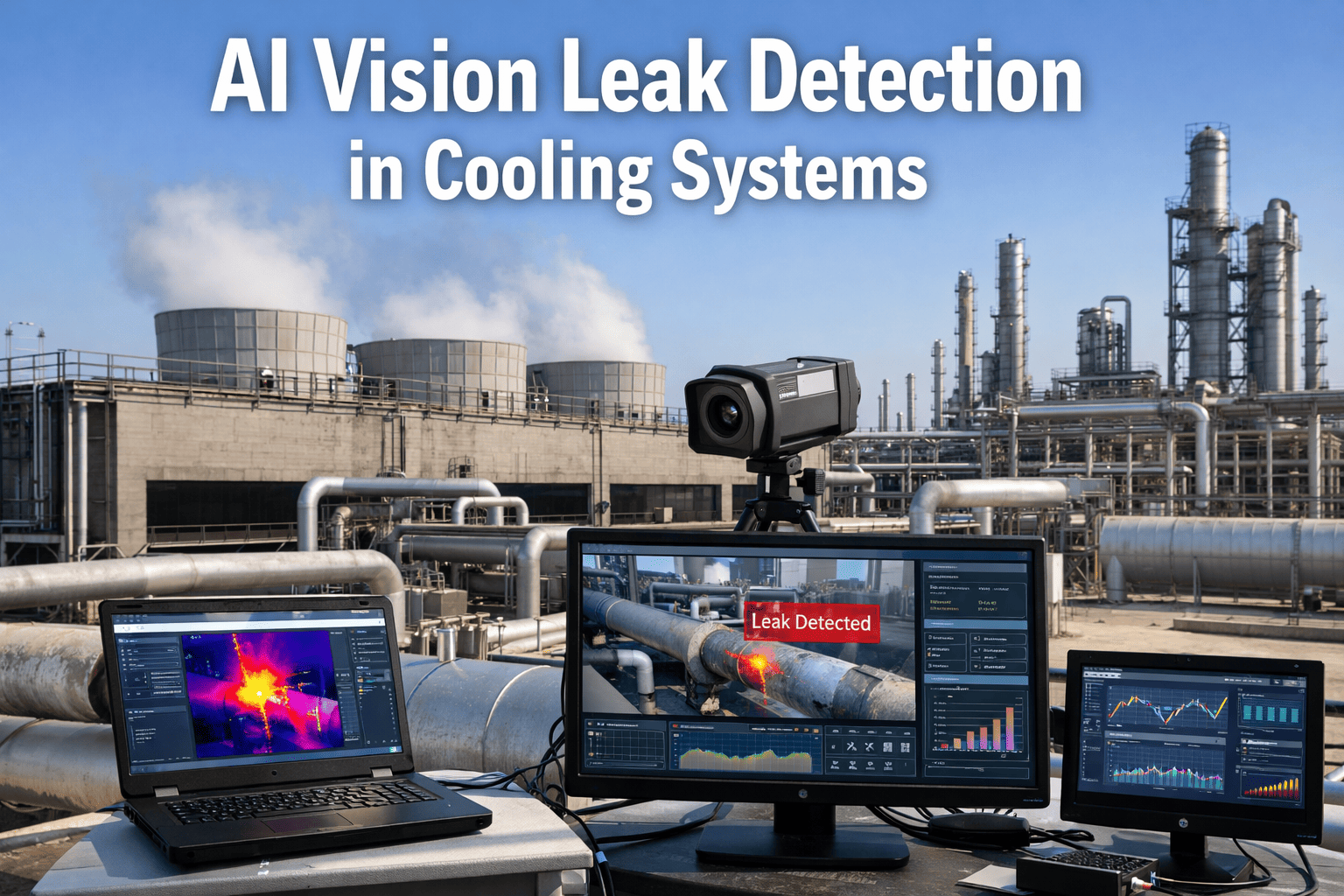
Compressed air leaks are the single largest source of energy waste in industrial facilities, often accounting for 20-30% of total compressor output. Traditional leak detection methods—such as ultrasonic guns and soap bubble tests—are labor-intensive, intermittent, and miss many small leaks that cumulatively represent significant losses. AI-powered leak detection transforms this process by analyzing continuous flow and pressure data to pinpoint leaks with surgical precision. The system uses machine learning algorithms to model the relationship between compressor output, system pressure, and demand. When a leak develops, the model detects an increase in flow without a corresponding increase in productive use. Advanced techniques include pressure decay analysis during off-hours, where the system isolates sections of the piping network and measures the rate of pressure drop to estimate leak size. For example, a 3mm hole at 7 bar pressure can leak 11 L/s, costing over $3,000 annually in electricity. The AI platform automatically generates a leak map with severity ratings, estimated cost impact, and recommended repair priority. This enables maintenance teams to shift from reactive leak hunting to proactive, data-driven repair campaigns, reducing leak losses to below 5% within months.
Beyond simple leak detection, AI can also identify the root causes of recurring leaks, such as improper piping support, thermal expansion stresses, or corrosive environments. By correlating leak events with operational data—like temperature cycles, vibration levels, and humidity—the system provides actionable insights for system redesign or material upgrades. For instrument air systems, even microscopic leaks can introduce moisture and contaminants, degrading air quality. AI monitoring ensures that any breach in the distribution network is detected and remediated before it affects critical control valves. The result is a self-healing air system that maintains optimal efficiency and purity with minimal human intervention.
Compressor Health Indicators
- Vibration spectrum analysis for bearing and gear faults
- Discharge temperature trending for valve wear
- Power consumption vs. flow ratio for efficiency loss
- Oil analysis for contamination and degradation
- Cooling system performance monitoring
Dew Point Monitoring Best Practices
- Install sensors at dryer outlet and critical use points
- Set alarm thresholds at -40°C for instrument air
- Correlate dew point with dryer regeneration cycles
- Monitor ambient temperature effects on system
- Use predictive models to schedule dryer maintenance
Energy Optimization Strategies
- Variable speed drive control for compressors
- Optimal sequencing of multiple compressors
- Heat recovery for preheating boiler feedwater
- Pressure reduction to minimum required levels
- Leak repair campaigns based on AI prioritization
Instrument Air Quality Monitoring Parameters
| Parameter | ISO 8573-1 Class | Typical Target | Monitoring Method |
|---|---|---|---|
| Solid Particles | Class 1 | < 0.1 micron, < 20,000 particles/m³ | Laser particle counter |
| Water Content | Class 2 | Pressure dew point ≤ -40°C | Chilled mirror hygrometer |
| Oil Content | Class 1 | < 0.01 mg/m³ | Photoionization detector |
| Microbiological | N/A | Sterile for critical applications | Biological sampling |
Compressor Failure Modes & AI Detection
Centrifugal compressors are prone to surge, bearing wear, and seal failures. AI models analyze vibration patterns to detect surge precursors 30 seconds in advance, allowing control systems to avoid trip events. Reciprocating compressors suffer from valve failures and ring wear; machine learning on cylinder pressure curves identifies these faults with 95% accuracy. Screw compressors experience bearing degradation and oil carryover; temperature and vibration trends provide early warning. By integrating AI with existing PLC/DCS systems, alerts are generated directly in the operator's console, enabling immediate corrective action.
Dryer Maintenance Optimization
Desiccant dryers consume significant purge air during regeneration, typically 15-20% of the dryer's rated flow. AI algorithms optimize regeneration cycles based on real-time dew point measurements and ambient conditions, reducing purge air consumption by up to 40%. The system also predicts desiccant degradation and recommends replacement before breakthrough occurs. For refrigerated dryers, AI monitors heat exchanger fouling and refrigerant pressure to schedule cleaning cycles, preventing moisture carryover that can compromise instrument air quality.
Case Study: AI-Driven Air System Transformation at a 500 MW Combined Cycle Plant
A major power plant in the southeastern United States implemented iFactory's AI monitoring platform across its compressed air and instrument air systems. The facility operated four 200 hp centrifugal compressors and two desiccant dryers, supplying air to over 1,200 pneumatic actuators and control valves. Prior to implementation, the plant experienced an average of 12 unplanned compressor outages per year, each lasting 4-6 hours, resulting in lost generation capacity of 5 MWh per event. Additionally, instrument air quality issues caused valve sticking in the gas turbine fuel gas skid, leading to combustion instability and two emergency trips annually.
After deploying AI sensors on all compressors, dryers, and 20 critical distribution points, the system identified several hidden issues within the first month: a failing bearing on compressor #3 (predicted 45 days before failure), a leaking drain trap on the receiver tank (losing 15 CFM), and a desiccant dryer with degraded media causing dew point excursions to -30°C. The AI platform generated prioritized work orders, and the maintenance team addressed each issue proactively. Over the next 12 months, unplanned compressor outages dropped to zero, instrument air quality compliance improved from 92% to 99.9%, and compressed air energy consumption decreased by 22%. The plant saved $180,000 in energy costs and avoided $2.1 million in potential lost generation revenue. The ROI on the AI investment was achieved in less than 6 months.
Frequently Asked Questions
How does AI improve compressed air leak detection compared to traditional methods?
Traditional leak detection relies on periodic manual inspections using ultrasonic detectors or soap solutions, which are time-consuming and can miss small leaks that cumulatively waste significant energy. AI-powered leak detection uses continuous monitoring of flow, pressure, and compressor run-time data to model system behavior. Machine learning algorithms detect deviations that indicate leaks, often identifying them within hours of occurrence. The system quantifies leak size and cost impact, prioritizing repairs based on severity. This approach reduces leak losses from 30% to under 5% within months, delivering rapid energy savings. For more details on implementation, contact our support team or book a demo to see the technology in action.
What is the recommended dew point for instrument air, and how does AI ensure compliance?
ISO 8573-1:2010 Class 2 requires a pressure dew point of -40°C or lower for instrument air systems, ensuring that no condensation occurs in pneumatic lines even under extreme temperature drops. AI monitoring systems use high-precision hygrometers at critical points—dryer outlet, main header, and near sensitive equipment—to measure dew point in real time. The AI platform correlates dew point with dryer performance metrics such as regeneration cycle timing, purge air consumption, and desiccant condition. If dew point begins to rise, the system alerts operators and can automatically adjust dryer settings or recommend maintenance. Predictive models forecast desiccant degradation weeks in advance, preventing quality excursions. For assistance with your specific system, visit our support page or schedule a consultation.
Can AI integrate with existing plant control systems (DCS/PLC) for compressed air monitoring?
Yes, AI monitoring platforms like iFactory are designed for seamless integration with existing DCS, PLC, and SCADA systems via standard communication protocols including Modbus TCP, OPC UA, and MQTT. The AI engine can ingest data from existing sensors as well as additional IoT devices deployed for enhanced coverage. Integration allows the AI to leverage historical data for model training and to push predictive alerts directly into operator consoles and CMMS systems. This non-disruptive approach minimizes capital expenditure while maximizing the value of existing instrumentation. For technical specifications and integration support, contact our team or book a demo to discuss your plant architecture.
What are the most common causes of compressor failure, and how does AI help prevent them?
Common compressor failure modes include bearing wear, valve degradation, seal leaks, and cooling system fouling. For centrifugal compressors, surge events can cause catastrophic damage. AI systems monitor vibration spectra, temperature trends, pressure ratios, and power consumption to detect early signs of these failures. Machine learning models trained on historical failure data can predict remaining useful life with high accuracy, giving maintenance teams weeks of lead time to plan interventions. For example, a rise in vibration at specific frequencies indicates bearing spalling, while increasing discharge temperature points to valve leakage. The AI platform generates specific recommendations—such as 'replace bearing in 300 operating hours'—and integrates with parts inventory and work order systems. To learn how AI can protect your compressors, visit our support page or book a demo.
How long does it take to see ROI from an AI-powered compressed air monitoring system?
Most enterprise facilities achieve a positive ROI within 6 to 12 months of deployment. The primary drivers are energy savings from leak reduction (typically 15-25% of compressed air costs), decreased unplanned maintenance costs (30-50% reduction), and improved instrument air reliability (reducing valve-related process upsets). In a typical 500 MW power plant, energy savings alone can exceed $150,000 annually. The iFactory platform's rapid deployment—often completed in 4-6 weeks—accelerates time-to-value. Ongoing model refinement continuously improves detection accuracy, driving further savings. For a detailed ROI analysis tailored to your plant, book a demo or contact our support team.
Ready to Optimize Your Compressed Air & Instrument Air Systems?
Join industry leaders who have reduced energy costs, eliminated unplanned outages, and achieved 99.9% instrument air quality with iFactory AI. Take the first step today.