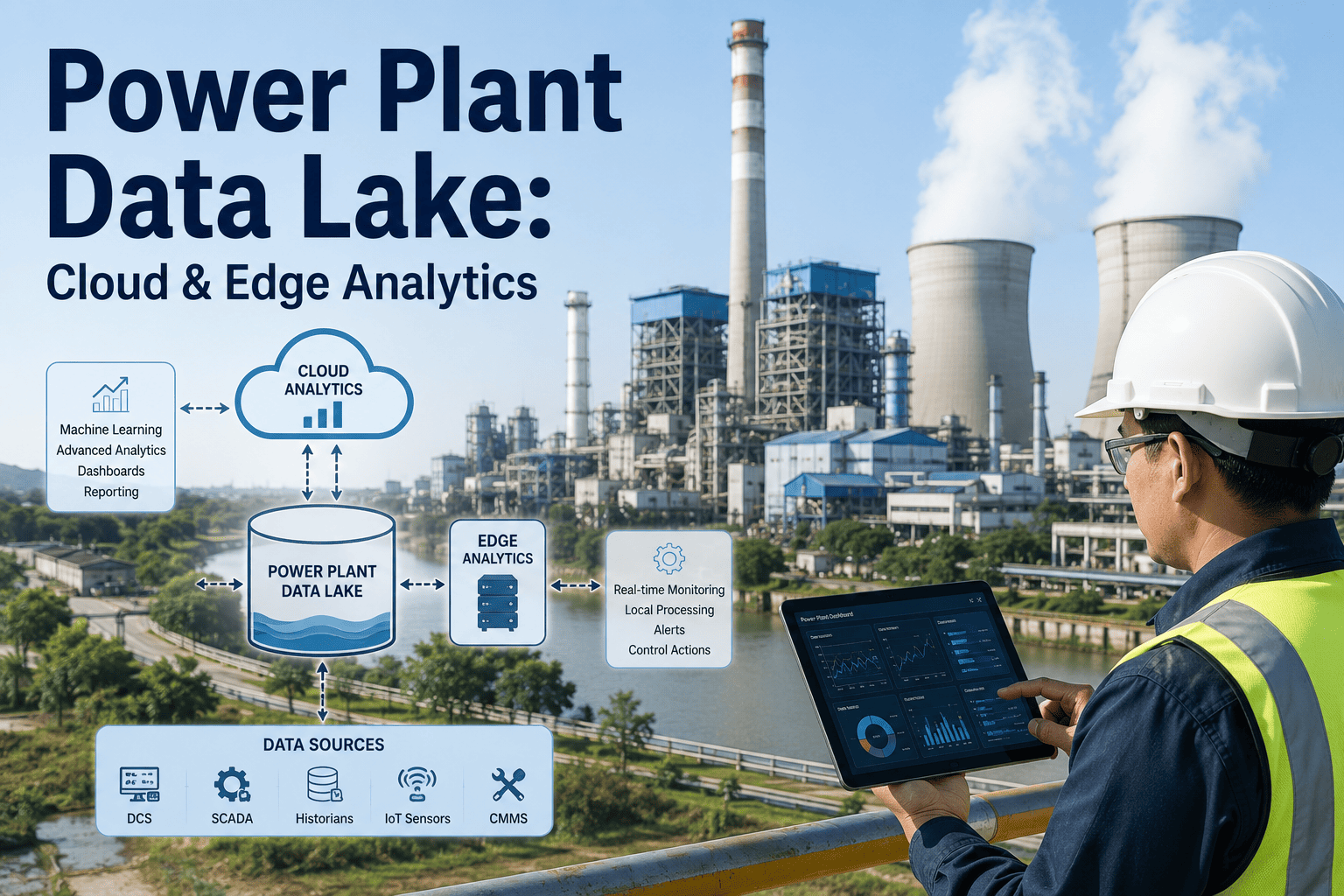
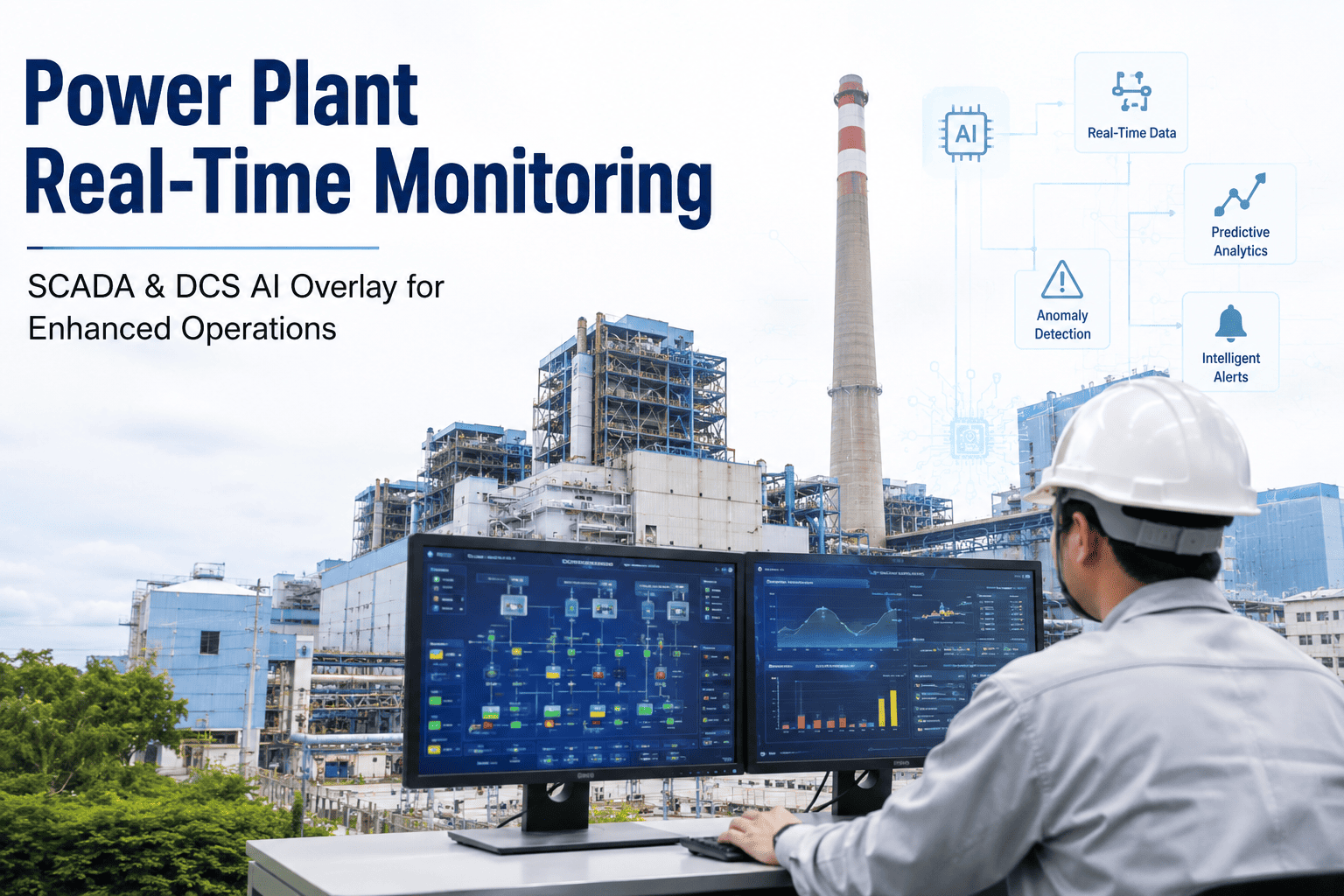
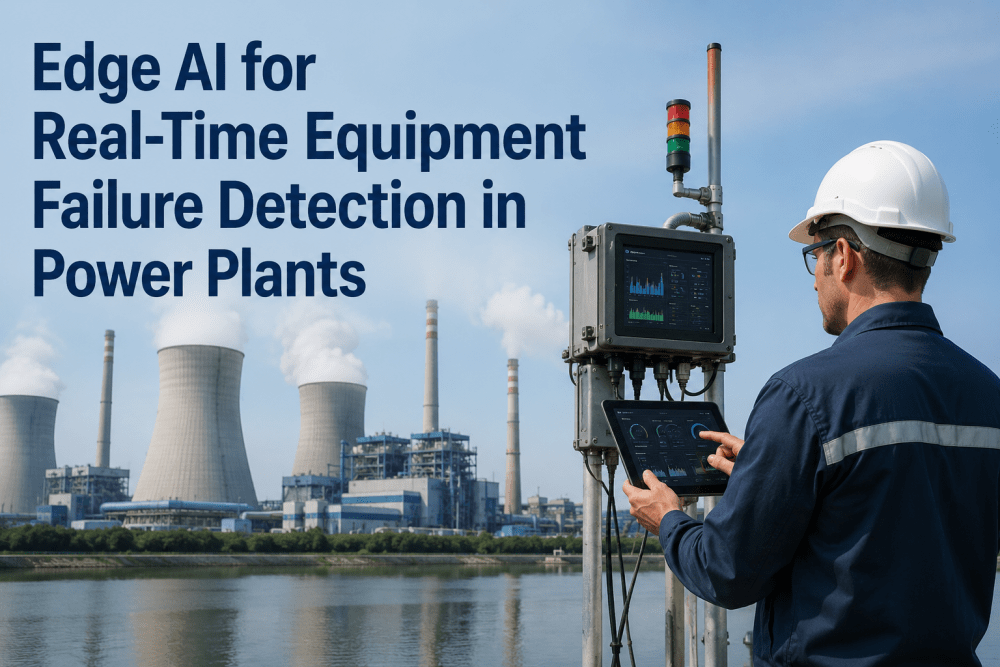
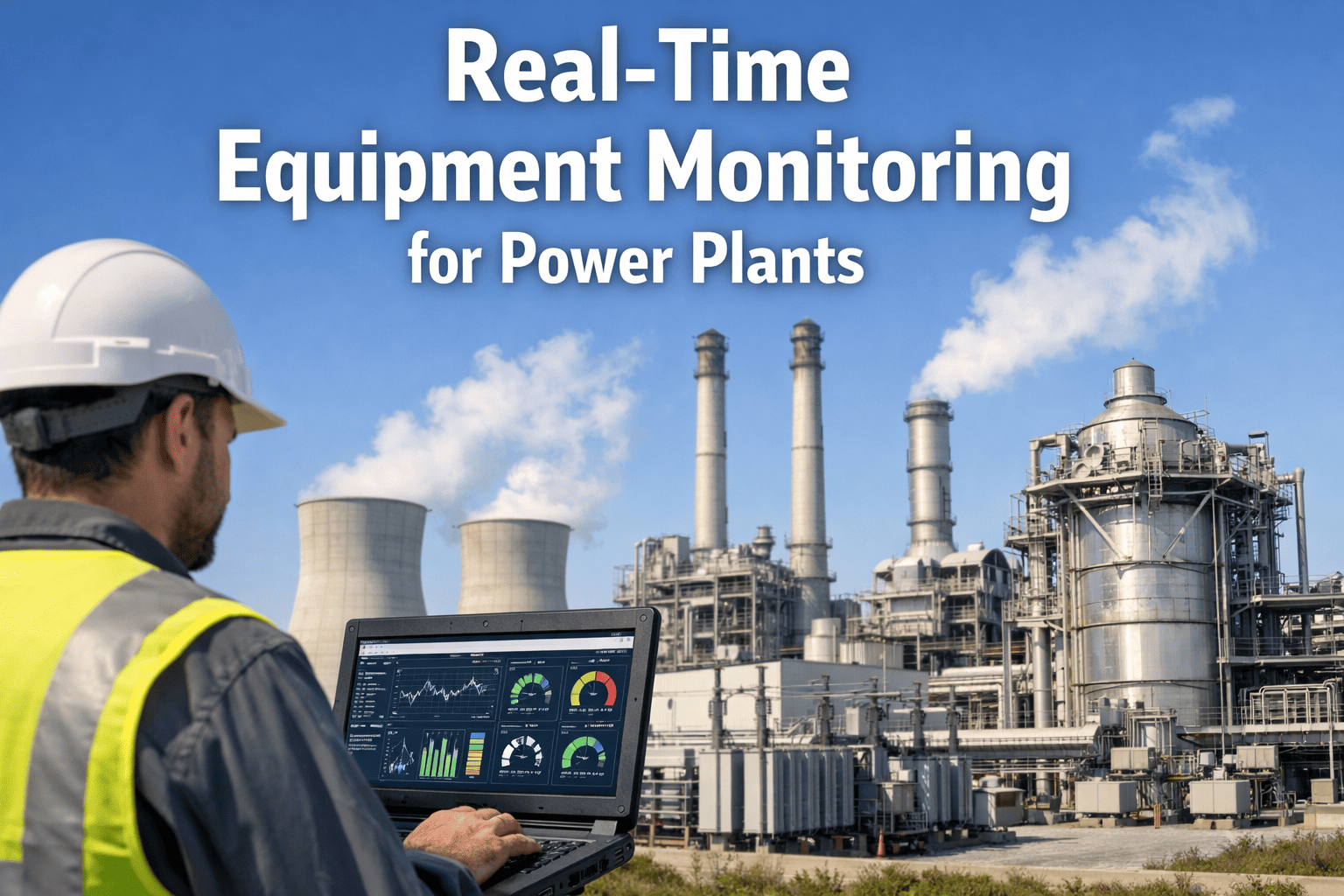
Power plants generate enormous volumes of sensor data every second — vibration readings, partial discharge signals, SCADA tags, thermal profiles, and protection relay events flowing continuously from turbines, generators, transformers, and switchgear across the facility. When that data has to travel to a centralized cloud server for processing before any decision gets made, the round trip typically adds 100 to 500 milliseconds of delay, and for a bearing failure or arc flash event that can propagate to irreversible damage in a fraction of a second, that delay is the difference between a protective action and a forced outage. Edge computing solves this by moving processing power to the substation, control room, and equipment skid itself, so the decision happens where the data is born. iFactory deploys this exact architecture across power generation facilities to turn raw sensor streams into local, real-time protective and predictive action.
Substation Edge
Turbine Floor
Control Room
Cloud Sync
Edge Computing for Power Plant Real-Time Data Processing
iFactory deploys local compute nodes at substations, turbine floors, and control rooms so protection, vibration, and process data are analyzed on-site in milliseconds — not routed to a distant server and back while equipment condition keeps changing underneath it.
100–500ms
Typical round-trip latency for cloud-only industrial data paths
5–45ms
Local processing window achievable with on-site edge compute
60–80%
Reduction in raw data volume sent upstream after edge filtering
300ms
Approximate window before a rotating asset fault becomes irreversible
The Latency Tax: What a Cloud-Only Architecture Actually Costs a Power Plant
Every millisecond a sensor packet spends traveling to a remote server and back is a millisecond the physical process keeps moving without anyone watching. That gap is not evenly distributed across a plant — it compounds fastest in the systems where the underlying physics changes quickest, and it compounds slowest in the systems that were designed for hourly or daily reporting. Understanding where the latency tax actually bites is the first step in deciding where edge compute delivers the highest return.
Protection Relay Trip Decisions
Overcurrent, differential, and arc flash protection logic that must isolate a fault before it propagates through the switchgear bus — cloud round trip is categorically too slow for this tier
Vibration and Bearing Anomaly Response
Rotating equipment condition monitoring where a developing fault can move from detectable to catastrophic within a few hundred milliseconds of sustained operation
Combustion and Emissions Trim Control
Fuel-air ratio and NOx trim adjustments that benefit from sub-second responsiveness but can tolerate brief queuing without safety consequence
Operator Dashboard and Trend Visualization
Human-facing displays where a few seconds of lag is imperceptible to plant operations, making this tier well suited for cloud aggregation
Minutes–Hours
Required Window
Fleet Benchmarking and Model Retraining
Cross-site comparisons, long-horizon degradation trending, and machine learning model refresh cycles where cloud-scale compute and historical depth matter more than speed
Edge, Fog, Cloud: The Three-Layer Architecture a Power Plant Actually Needs
The right answer is rarely "edge instead of cloud" — it is a layered architecture where each tier does the job it is actually suited for. Edge nodes sit closest to the sensor and handle anything with a millisecond-scale deadline. A fog layer, typically positioned at the substation or unit control room, aggregates data from multiple edge nodes and coordinates responses across a broader area. The cloud layer receives the filtered, contextualized output of both — handling historical analytics, cross-unit benchmarking, and the machine learning training runs that need scale rather than speed.
LAYER 1
Edge — Sensor and Equipment Level
Deadline: Milliseconds
Protection relay logic and arc flash isolation embedded directly on switchgear controllers
Vibration signature analysis running on a local processor mounted at the bearing housing
Partial discharge pattern recognition on generator winding sensors without a network hop
Local buffering that keeps monitoring functional through a network outage
LAYER 2
Fog — Substation and Unit Control Room
Deadline: Sub-second to Seconds
Aggregation of readings across dozens of edge nodes into a single coordinated view
Cross-asset correlation — linking a vibration trend on one unit to a load change on another
Protocol translation between legacy IEC 61850, DNP3, and Modbus devices and modern analytics tools
Local historian storage that survives a WAN link failure without losing operational data
LAYER 3
Cloud — Enterprise and Fleet Level
Deadline: Minutes to Hours
Fleet-wide benchmarking of equivalent assets across multiple plants in a generation portfolio
Machine learning model training on months or years of historical operating data
Enterprise reporting, regulatory recordkeeping, and long-term capacity planning dashboards
Model distribution back down to edge nodes once retraining improves detection accuracy
HANDOFF
What Moves Between Layers
Bandwidth: Filtered, Not Raw
Raw high-frequency waveform data stays local — only extracted features and alerts travel upstream
Edge nodes forward exceptions and summaries, not continuous full-resolution streams
Cloud sends updated detection models and thresholds back down on a scheduled cadence
Every layer keeps functioning independently if the layer above it becomes unreachable
Cloud-Only Processing vs Edge-Augmented Architecture: A Direct Comparison
The clearest way to evaluate whether a plant needs edge compute is to compare how the same operational scenario plays out under each architecture. The differences below are not marginal — they change what is operationally possible, not just how fast an existing dashboard refreshes.
Scroll to compare architectures
See a Live Edge Deployment on Your Plant's Data Streams
iFactory connects to your existing SCADA, historian, and sensor infrastructure to deploy edge processing at the substation and unit level without a rip-and-replace project. Local models run on your current network topology, calibrated to your equipment and your protection philosophy.
Operational Visibility Before and After Edge Deployment
Plant teams who have deployed edge compute consistently describe the change less as a speed improvement and more as a shift in what becomes operationally possible — decisions that used to wait for a shift report now happen while the condition is still developing.
Before Edge Compute
Vibration and thermal data queue behind the same WAN link as email, video, and enterprise traffic before reaching any analytics engine
A storm or fiber cut at a remote substation blinds monitoring entirely until connectivity is manually restored
Bandwidth caps force a choice between full-resolution sensor data and affordable network cost — most sites choose reduced resolution
Raw operational data leaves the plant boundary on every transmission cycle, widening the cybersecurity attack surface
Adding new sensors means re-evaluating central pipeline capacity and WAN bandwidth before rollout can begin
Protection and safety-critical logic must live on separate, isolated hardware with no shared visibility into broader plant analytics
After iFactory Edge Deployment
Time-critical analysis happens on local hardware within milliseconds, completely independent of enterprise network load
Local buffering and processing continue uninterrupted through a WAN outage, syncing the backlog automatically once restored
Full-resolution sensor data is analyzed locally at native fidelity — only the extracted insight travels upstream
Raw waveform and process data stay on-premise, with only aggregated summaries crossing the plant network perimeter
New sensors are absorbed at the edge node level without requiring central pipeline or WAN capacity changes
Fog-layer coordination gives protection-adjacent analytics shared visibility without compromising isolation requirements
Expert Perspective: What Plant Engineers Learn After Moving Processing to the Edge
When we first scoped this project, the conversation was entirely about latency numbers — how many milliseconds we could shave off the protection response chain. What we did not anticipate was how much the bandwidth relief would change our appetite for instrumentation. Once raw vibration and partial discharge data no longer had to travel across our WAN link to be useful, we stopped rationing which assets got high-resolution sensors. We went from monitoring our six largest rotating assets at full fidelity to monitoring every asset above a certain criticality threshold, because the marginal cost of adding a sensor stopped being a network capacity conversation and became a local hardware conversation instead. The resilience benefit mattered just as much during a regional storm event last year — three of our remote substations lost WAN connectivity for almost eleven hours, and protection and local analytics kept running the entire time because none of it depended on that link. We did not lose a single data point from that window once the backlog synced. That combination — better fidelity, lower bandwidth pressure, and continuity through outages — is what actually changed how we think about instrumentation budget going forward.
— Senior Controls Engineer, Combined-Cycle Generation Facility · 14 Years Power Plant Automation Experience · Led Edge Deployment Across Three Generating Units
Frequently Asked Questions
Q: Does deploying edge computing mean replacing our existing SCADA and historian systems?
No — edge computing is designed to sit alongside existing SCADA, DCS, and historian infrastructure rather than replace it. iFactory's edge nodes connect through standard industrial protocols including IEC 61850, DNP3, and Modbus, ingesting data from current instrumentation without requiring a rip-and-replace of control systems that are already validated and trusted. The edge layer adds a local processing tier in front of or alongside these systems, filtering and analyzing data before it reaches the historian, which often reduces the storage and query load on systems that were never sized for continuous high-frequency streams.
Contact our team to discuss integration with your specific control system vendor and version.
Q: What happens to protection and safety-critical logic if the edge processor itself fails?
Edge deployments for protection-adjacent analytics are architected with the same redundancy philosophy already standard in power plant protection schemes — hardware failure of an analytics node should never compromise the underlying protection relay logic, which typically remains on dedicated, independently certified hardware regardless of what analytics layer sits alongside it. iFactory's edge nodes are deployed as a supplementary intelligence layer that enhances visibility and predictive capability without becoming a single point of failure for safety-critical trip logic. Redundant edge hardware and automatic failover configurations are available for facilities where continuous analytics coverage during a hardware fault is a priority.
Q: How much bandwidth savings can we realistically expect after moving processing to the edge?
Bandwidth reduction depends heavily on how much raw high-frequency data your current architecture transmits, but plants moving from continuous raw waveform transmission to edge-filtered feature extraction commonly see the volume of data crossing the WAN link drop by more than half. The savings are largest for vibration, partial discharge, and acoustic monitoring use cases where raw sampling rates are high, and smaller for systems that were already transmitting low-frequency aggregated tags. During a deployment assessment, iFactory profiles your current data volumes by source to give you a facility-specific estimate before committing to hardware.
Q: Can edge nodes keep functioning if the connection to the central cloud platform goes down?
Yes — this is one of the core design goals of a properly layered edge architecture. Edge and fog-layer processing continue analyzing local sensor data and generating alerts independent of cloud connectivity, with results buffered locally and automatically synchronized once the link is restored. This matters most for remote substations and generating units in areas with intermittent fiber or cellular backhaul, where a cloud-only architecture would otherwise leave the facility blind during exactly the weather events that also raise equipment stress.
Book a Demo to see offline buffering and sync behavior in a live environment.
Q: How long does a typical edge computing deployment take at an operating power plant?
Deployment timelines vary with the number of substations and units in scope, but most single-unit or single-substation edge deployments are operational within four to six weeks from kickoff, including hardware installation, protocol integration, and initial model calibration against the facility's own operating data. Multi-unit or fleet-wide rollouts are typically phased, starting with the highest-criticality assets and expanding once the initial deployment has demonstrated stable performance under real operating conditions. The calibration period continues to refine detection thresholds for several weeks after go-live as the models adapt to the facility's specific noise and operating patterns.
Move Protection and Predictive Analytics as Close to Your Equipment as Physics Allows
iFactory deploys edge computing at your substations, control rooms, and equipment skids so time-critical decisions happen locally in milliseconds while your existing SCADA, historian, and cloud infrastructure keep doing what they already do well — turning your current instrumentation into a faster, more resilient, and more bandwidth-efficient monitoring architecture.