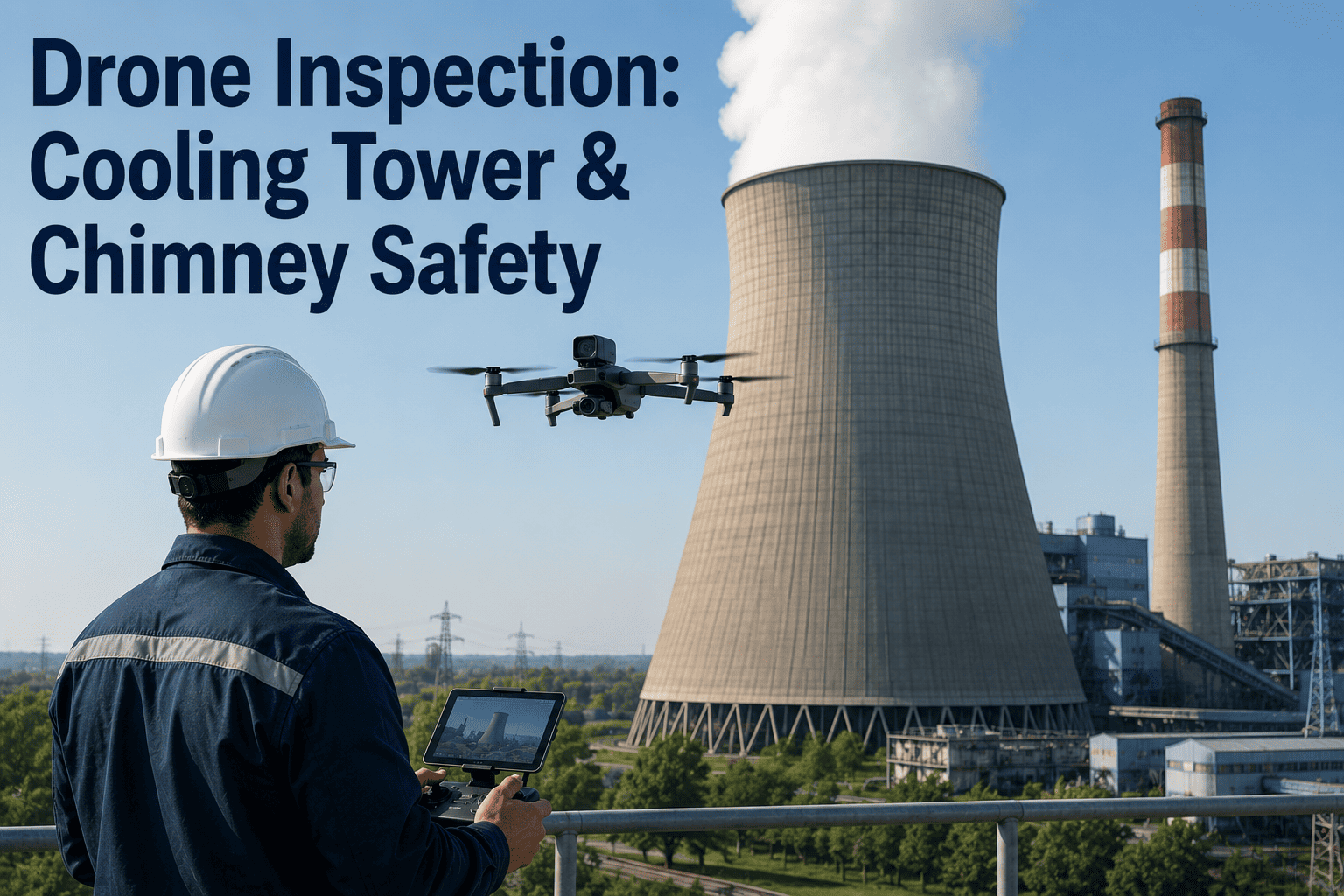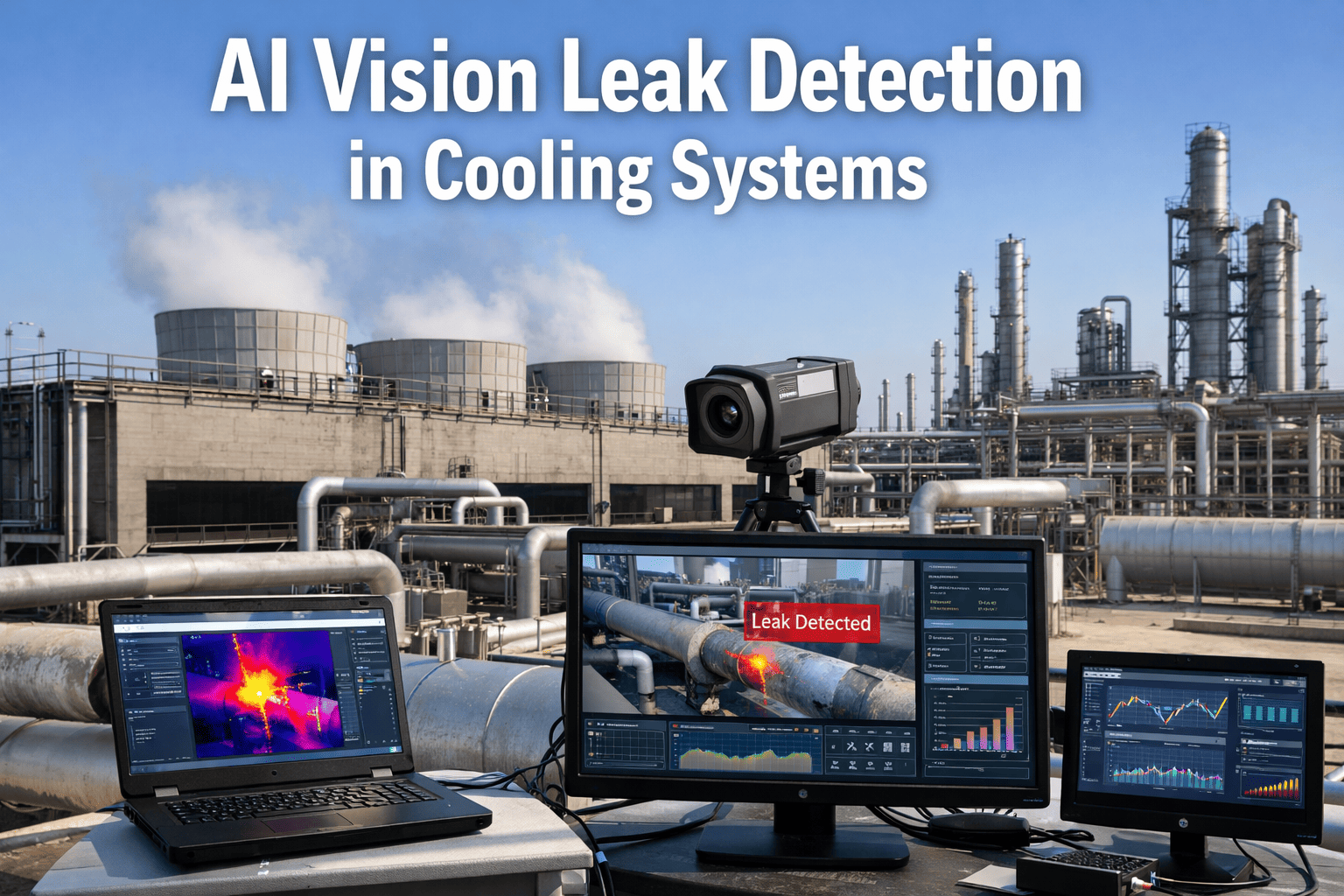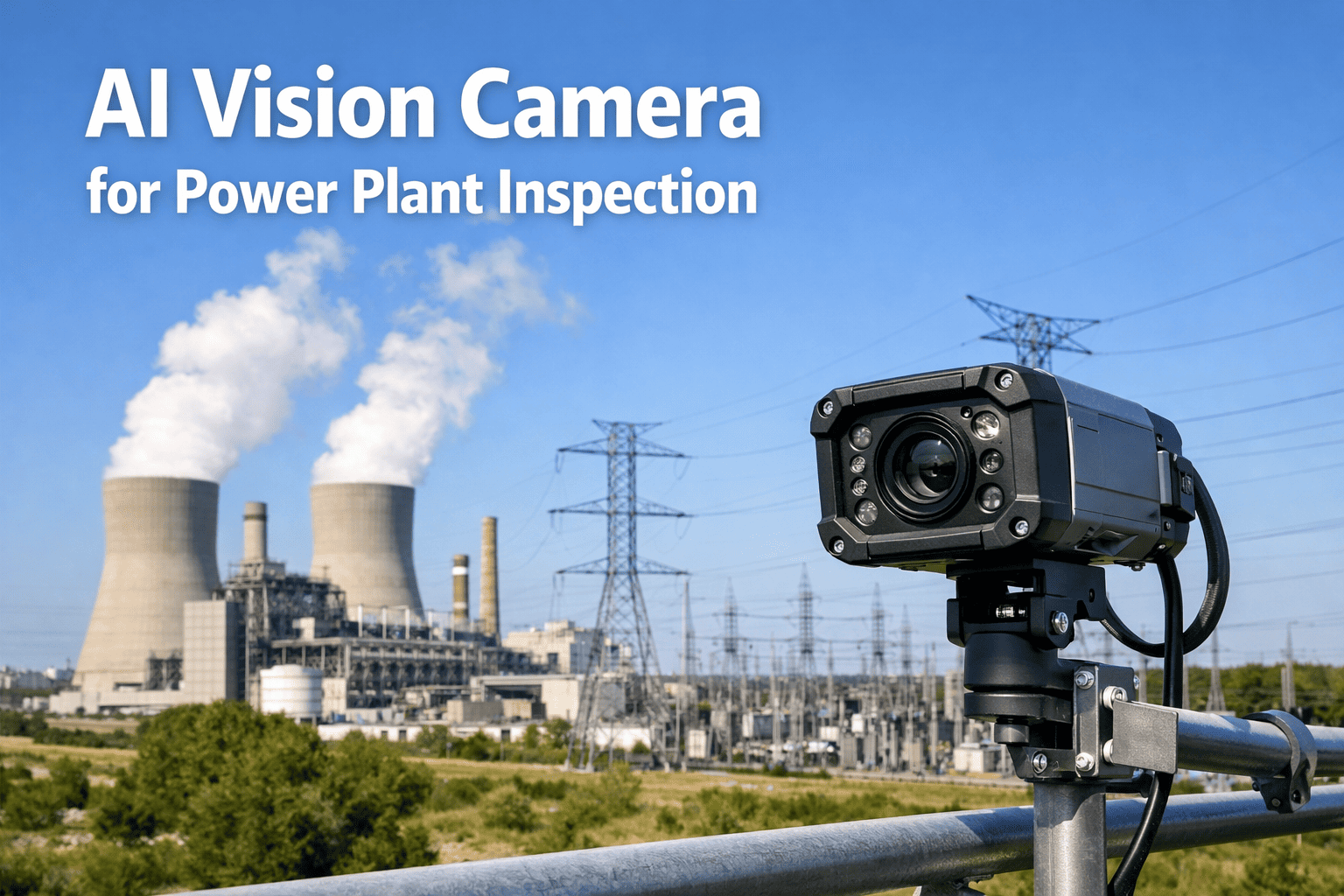
A boiler inspection that used to mean a scaffold crew, a shutdown window, and a week of rope-access photography now happens while the unit is fully online. Drones carrying thermal and RGB payloads fly the stack, the cooling tower shell, and the transmission structures on a repeatable schedule, and edge computing turns that footage into a classified defect the same day it's captured — no waiting for an engineer to scroll through gigabytes of raw video before anyone even knows there's a hot spot forming behind a switchgear panel.
See Every Stack, Cooling Tower, and Boiler Wall Without Sending a Crew Up There
AI-powered drone and thermal camera inspection, processed at the edge, turns aerial surveys into classified defects and work orders — without a shutdown, without scaffolding, and without a manual review bottleneck between the flight and the fix.
The Inspection Backlog That Every Power Plant Is Quietly Carrying
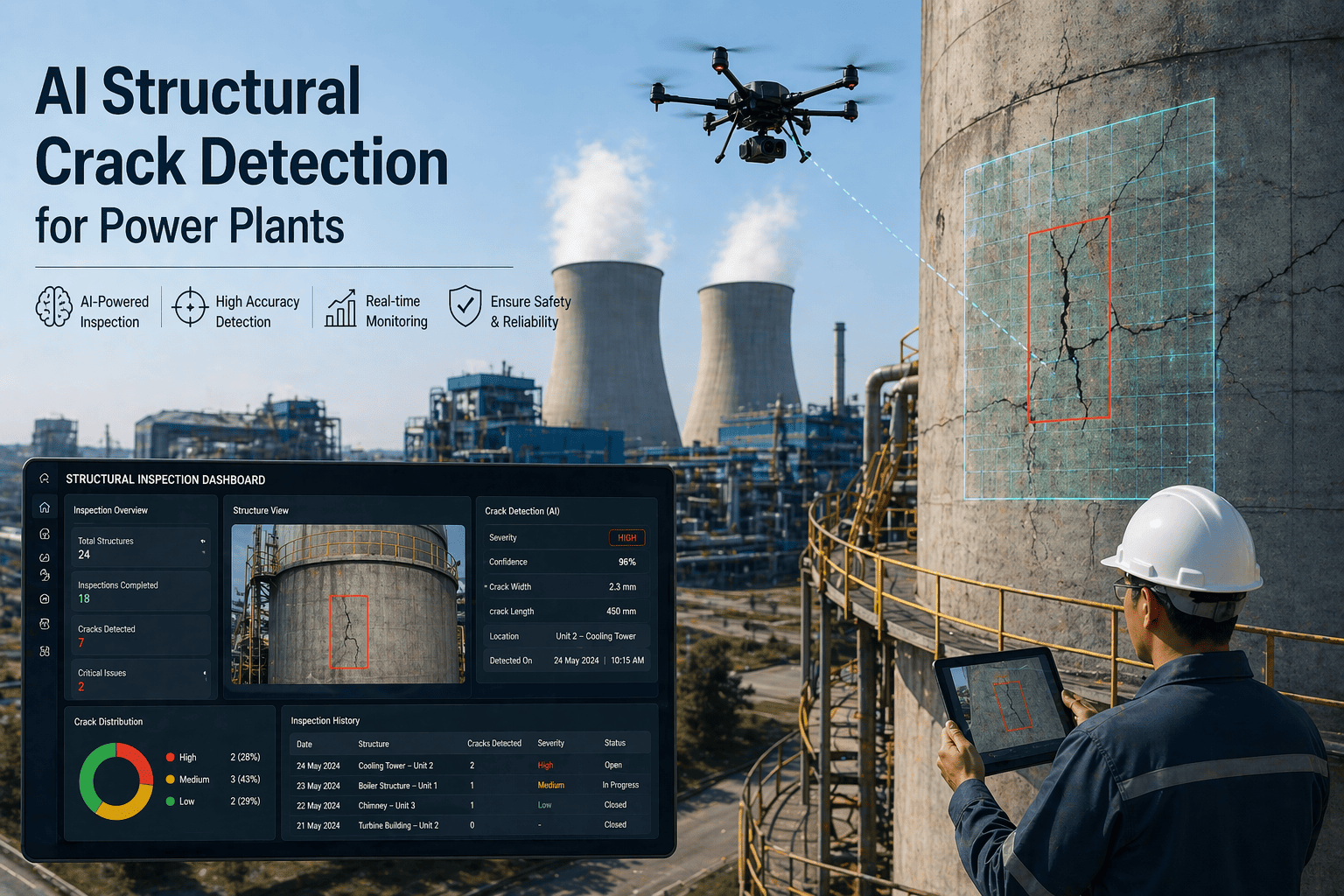
Structural and thermal inspection at a power plant has always meant a trade-off between coverage and cost. Rope access and scaffolding get an engineer close enough to see hairline cracks and corrosion, but only once or twice a year, and only on the structures that budget allows. Between those inspections, thermal cycling, moisture, and vibration keep working on the concrete, steel, and refractory the whole time — invisible until the next scheduled climb, or until a failure forces an unplanned one.
Autonomous drones equipped with thermal and high-resolution RGB sensors remove the coverage constraint entirely. A stack, cooling tower shell, or boiler exterior can be surveyed on a monthly or even weekly cadence, fully online, with no confined-space entry and no interruption to generation. The bottleneck shifts from "how often can we afford to inspect" to "how fast can we turn footage into an action" — which is exactly the problem edge computing and AI defect classification exist to solve.
Four Asset Classes, Four Different Defect Signatures
How a Thermal Anomaly Becomes a Maintenance Decision
Reading the Thermal Scale — Why Color Gradient Matters
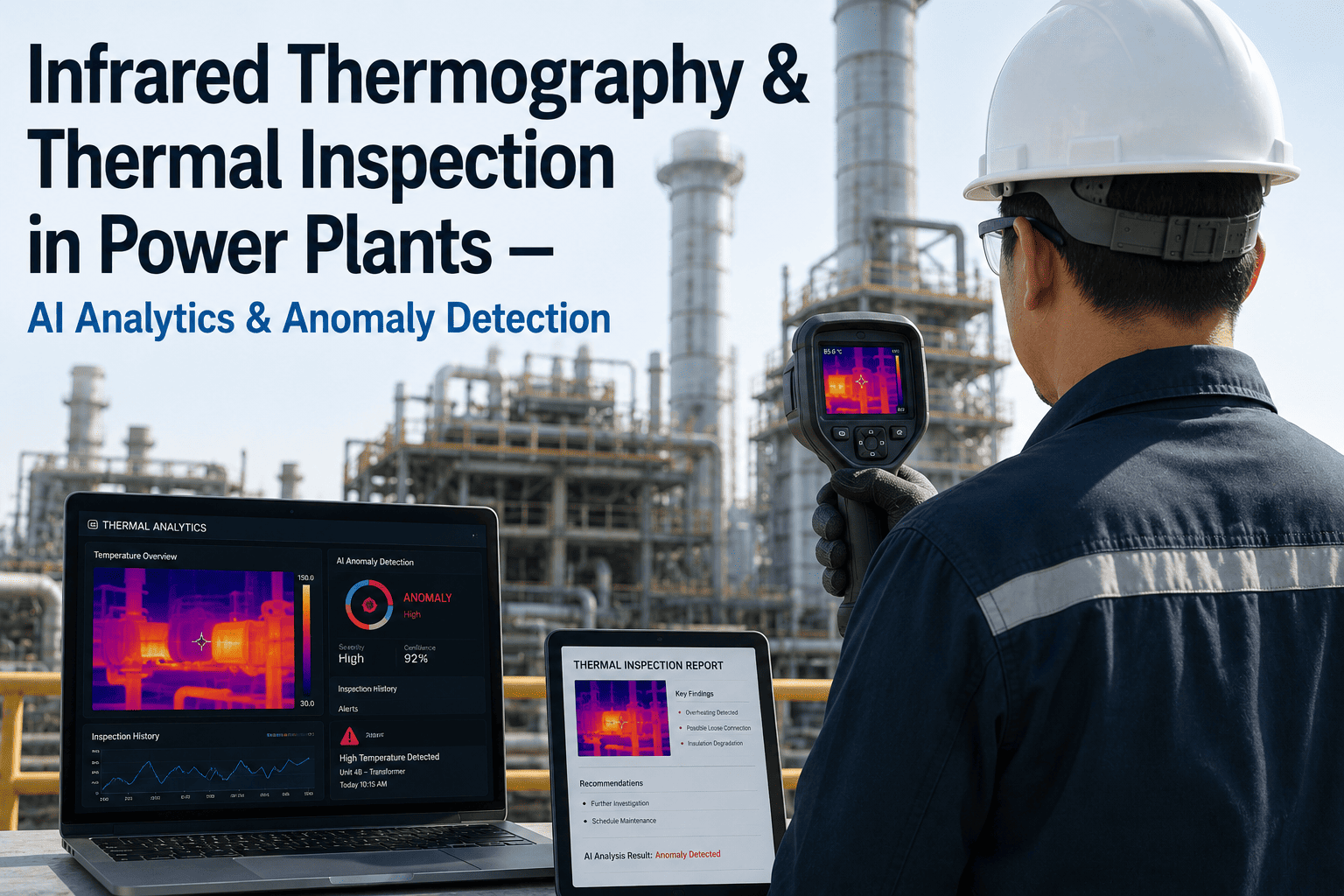
Thermal cameras convert infrared radiation into a color gradient, typically running from cool blue through to hot red, so a temperature differential invisible to the naked eye becomes immediately visible to a reviewer or a trained model. The value in power plant inspection is not the pretty image — it's that a hot spot in a switchgear panel, a refractory gap behind boiler casing, or lagging degradation on high-temperature pipework shows up as a color anomaly against its surroundings long before it shows up as a visible failure.
Severity thresholds are asset-specific rather than generic. A five-degree differential on a switchgear connection point means something very different from the same differential on a cooling tower shell, and the classification models are trained against the operating environment of thermal and gas generation facilities specifically, not generic industrial imagery. That specificity in training data is what determines whether an alert is a genuine early warning or noise a reliability team learns to ignore.
Curious what your stacks, cooling towers, and switchgear look like through an AI-classified thermal survey? A 30-minute session can walk through sample findings from facilities running this today.
Manual Inspection vs. AI-Driven Drone Inspection
| Factor | Manual Rope Access / Scaffold | AI-Driven Drone Inspection |
|---|---|---|
| Typical inspection frequency | Annually, sometimes less | Monthly or on-demand |
| Requires shutdown or confined-space entry | Often yes | No — captured during normal operation |
| Defect grading consistency | Subjective, inspector-dependent | Consistent AI classification against defect signatures |
| Time from finding to work order | Days to weeks, manual handoffs | Same-day, automatic linkage to asset record |
| Thermal anomaly detection | Rare, requires handheld thermal camera | Standard on every flight |
| Progression tracking over time | Difficult to compare across inspections | Automated progression modeling flight to flight |
Training Defect Signatures on Your Own Asset Mix, Not a Generic Library
The accuracy of any vision inspection programme lives or dies on how specific the training data is to the actual structures being inspected. A cooling tower shell built from natural-draft concrete in a humid coastal climate develops a different spalling and staining profile than a mechanical-draft steel structure in a dry inland site, and a model trained on generic industrial imagery will either miss the defects specific to your construction type or flag normal surface variation as a false positive. Deployment starts with a calibration pass against your specific stacks, cooling towers, and transmission structures, so the classification thresholds reflect what a real defect looks like on your assets rather than an average across unrelated facility types.
That calibration compounds in value across a multi-site fleet. Once a defect signature is validated at one facility — say, a specific spalling pattern on a natural-draft cooling tower shell — the model carries that learning to comparable structures at other sites in the fleet, shortening the calibration period for each subsequent facility. An operations team standardizing drone inspection across several plants typically sees the second and third site reach full classification accuracy faster than the first, simply because the model isn't starting from zero each time.
What Changes When the Handoff Stops Being Manual
The technology that gets the attention in drone inspection programmes is the flight hardware — the thermal payload, the flight time, the IP rating. The part that actually determines whether a programme delivers value is the handoff after the flight. Most facilities that adopt drone inspection get the imagery right and then lose the value in the same place every time: a pilot uploads footage, an engineer reviews it days later, a defect report gets emailed around, and a maintenance planner eventually creates a work order by hand. Every one of those handoffs is a delay, and some defects simply get missed in the volume of footage.
Linking inspection findings directly to asset records removes that chain. The moment a survey is processed, thermal hot spots, structural cracks, and corrosion patterns above a severity threshold generate a work order automatically, tagged to the correct asset, with the finding's location, severity score, and comparison to the prior inspection attached. A reliability engineer opens a ticket that already has the evidence in it, rather than opening a spreadsheet of flight coordinates and having to match it to a P&ID by hand.
Frequently Asked Questions
Can drones safely inspect a boiler or furnace while the unit is still hot?
Yes, though the approach depends on the specific zone. Specialized drones with thermal-rated frames and stabilized imaging can inspect cooled or controlled high-temperature environments, and most exterior structural and thermal surveys — stacks, cooling towers, casing, switchgear — are performed during normal operation with no interruption to generation at all. Internal boiler inspections that require entering the pressure vessel itself are typically scheduled for planned outages, using confined-space-rated drones that eliminate the need for scaffolding once the unit is down. The combination of pre-outage exterior thermal surveys and post-outage internal inspections gives a complete integrity picture without adding inspection days to a shutdown. Reach out through iFactory Support for guidance on which survey type fits which asset condition.
How accurate is AI defect classification compared to an experienced human inspector?
Vision models trained specifically on power plant asset-class defect signatures — rather than generic industrial imagery — consistently identify hairline cracks, spalling, delamination, and corrosion stage with accuracy in the high nineties, while also filtering out false positives like shadows, staining, and non-structural surface variation that often trip up less specialized systems. Where AI adds the most value over a human inspector is not raw detection accuracy but consistency and progression tracking: the model grades every flight against the same criteria, every time, and automatically compares this month's imagery to last month's to flag defects that are actively worsening rather than static. Human engineering review still validates findings above a severity threshold before major repair decisions are made.
Does this replace our existing inspection programme or work alongside it?
It's designed to work alongside your existing programme rather than replace scheduled outage-based inspections outright, at least initially. Drone and thermal inspection dramatically increases the frequency of coverage between major scheduled inspections, catching progression that would otherwise go undetected for months, and over time many facilities shift a portion of their scheduled manual inspection budget toward the higher-frequency automated programme once they see the coverage gap it closes. The transition is a facility-specific decision based on asset criticality and existing inspection contracts, not an all-or-nothing switch on day one.
What does the platform integrate with — do we need a new CMMS?
No new CMMS is required. Findings from drone and thermal survey processing link directly to asset records in your existing maintenance system, whether that's SAP PM, IBM Maximo, Infor EAM, or another platform already in use at the plant. The integration is built to generate a standard work order format your maintenance planners already recognize, populated with the defect classification, severity score, and location so the ticket is actionable the moment it's created. A short call can confirm compatibility with your specific CMMS version and configuration.
Who owns the drone footage and thermal imagery, and where is it stored?
Raw flight footage and thermal imagery remain your facility's data, processed either on-site through edge computing or within an agreed storage arrangement, depending on your data residency requirements. Processing at the edge means the volume of raw thermal and LiDAR data doesn't need to be shipped to a distant cloud region just to generate a classified finding, which also keeps sensitive site imagery from sitting indefinitely in third-party storage unless that's specifically what a facility wants for historical progression tracking. Retention periods and storage location are configured to match your facility's existing data governance policy rather than a fixed default. A 30-minute session can confirm the specific storage and retention setup available for your site.
Every month without aerial thermal coverage is another month of undetected progression on your stacks, cooling towers, and switchgear. See a live classification run on imagery similar to your own asset mix in a 30-minute session.