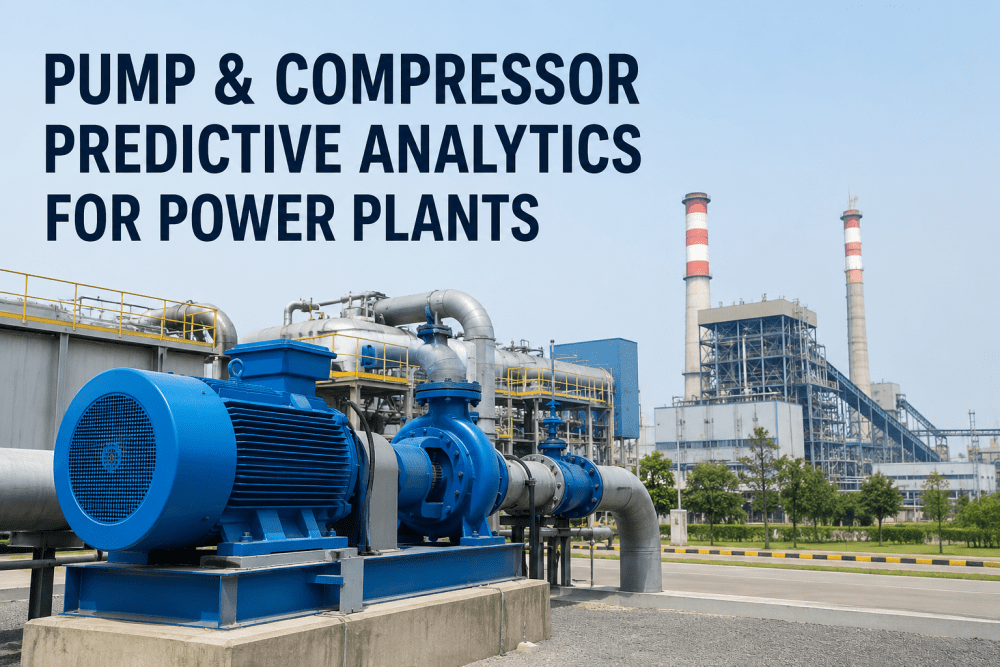
A single surge event on a centrifugal compressor can flex a rotor enough to shorten bearing life by years, and it usually happens with almost no warning on a standard control room trend. Power plants run three very different compressor families side by side — centrifugal, reciprocating, and screw — each feeding instrument air, fuel gas, or refrigeration systems that the rest of the plant quietly depends on. When one goes down unplanned, the ripple effect touches boiler controls, gas turbine fuel supply, or HVAC cooling load almost immediately. AI analytics trained on vibration, discharge pressure, and valve timing data catch the early drift toward surge, valve failure, and bearing wear long before a trip. See what continuous compressor analytics looks like against your own instrument air, fuel gas, and refrigeration fleet with a Book a Demo.
Compressor Maintenance in Power Plants
AI analytics for centrifugal, reciprocating, and screw compressors across instrument air, fuel gas, and refrigeration systems — built to predict surge conditions, valve failures, and bearing degradation before they trip the unit.
Why One Monitoring Approach Doesn't Fit Every Compressor
Centrifugal, reciprocating, and screw compressors fail in fundamentally different ways, so AI models are trained separately on each machine's own vibration signature, pressure behavior, and mechanical wear pattern.
Centrifugal
Surge and stall conditions dominate the failure profile. AI tracks discharge pressure oscillation, flow deviation, and rotor vibration to flag approach-to-surge before the anti-surge valve has to intervene.
Reciprocating
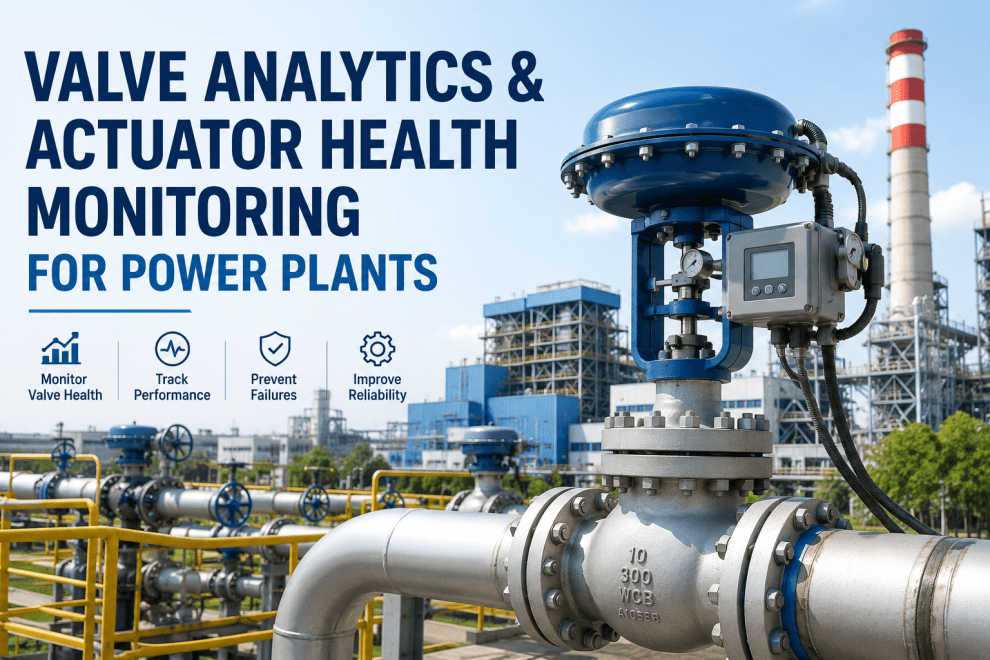
Valve failures and piston ring wear are the dominant issues. AI models crank-angle-resolved pressure and vibration to catch a leaking valve weeks before it causes a capacity loss or knock.
Screw
Rotor wear, bearing degradation, and oil carryover define the risk profile. AI trends discharge temperature, oil differential pressure, and vibration to catch rotor clearance loss early.
Five Checks Running Continuously Against Every Compressor
Surge Margin Tracking
Live distance from the surge line on centrifugal machines, trended continuously rather than checked at shift change.
Valve Condition
Crank-angle vibration and pressure signatures flag a leaking or cracked reciprocating valve before capacity loss shows up.
Bearing Health
Defect-frequency vibration trending across all three compressor families identifies wear well ahead of a temperature alarm.
Oil & Lubrication
Oil differential pressure and carryover trending on screw compressors catches filter loading and rotor clearance drift.
Thermal Trending
Discharge and interstage temperature trends reveal fouling, valve leakage, or cooling system degradation across all types.
Common Symptoms and What They Usually Mean
These are the pairings AI models learn to distinguish automatically, so an alert points a technician toward the right root cause instead of a generic vibration alarm.
| Observed Symptom | Likely Root Cause | Typical Machine Type |
|---|---|---|
| Discharge pressure oscillation | Approach to surge or partial blockage | Centrifugal |
| Capacity drop with normal speed | Leaking suction or discharge valve | Reciprocating |
| Rising discharge temperature | Rotor clearance loss or oil carryover | Screw |
| Knocking noise at low load | Worn piston rings or loose crosshead | Reciprocating |
| Rising bearing temperature | Lubrication breakdown or misalignment | All three types |
Reactive Compressor Maintenance vs. AI-Monitored Maintenance
Without Continuous Analytics
With AI-Monitored Maintenance
Stop Reacting to Compressor Trips
See how AI analytics reads your compressor fleet's own vibration, pressure, and thermal data continuously.
Systems That Depend on Compressor Uptime
Instrument Air Systems
Loss of instrument air can force a plant trip within minutes, making these compressors among the highest-consequence assets in the plant.
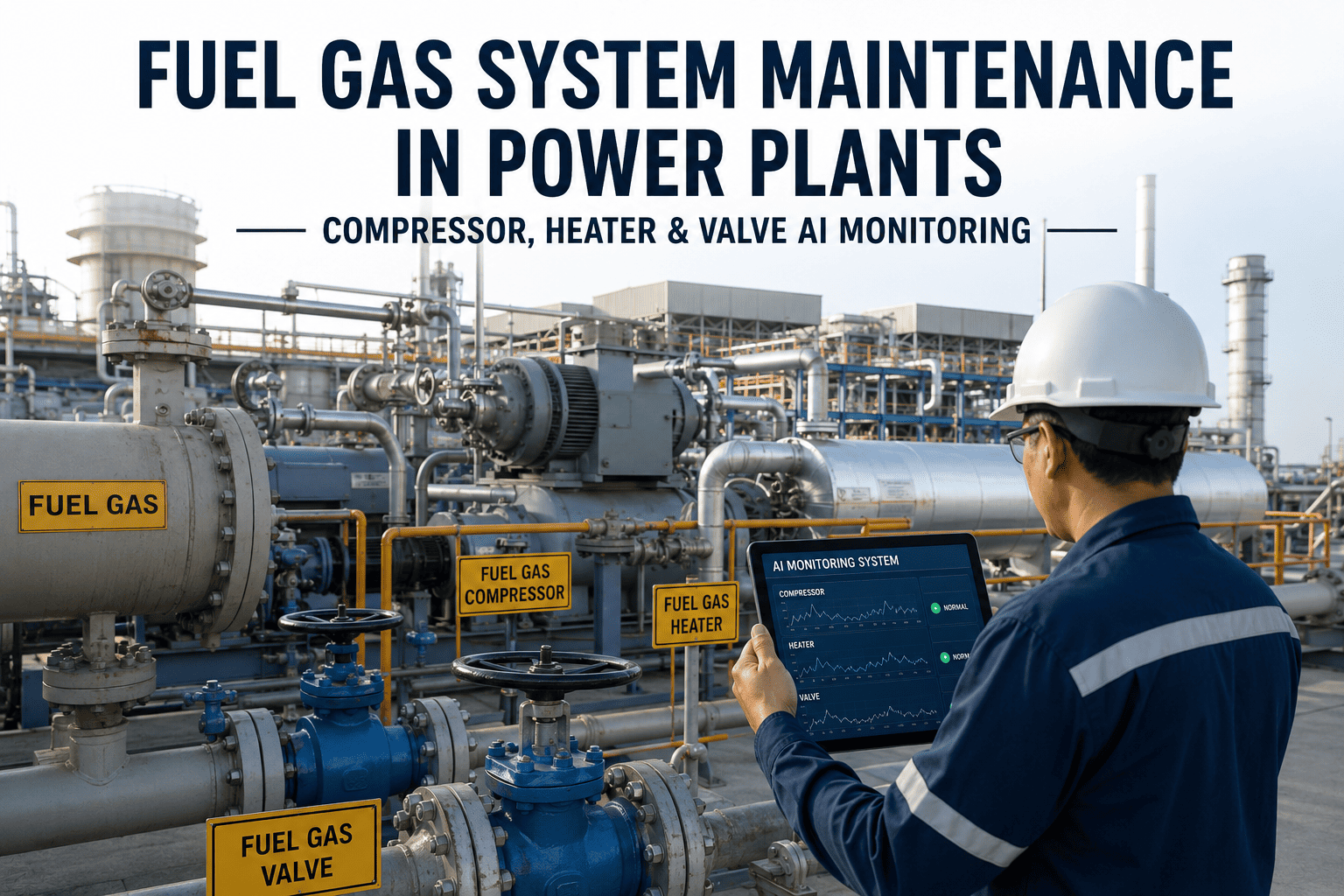
Fuel Gas Compression
Gas turbine fuel gas boosters where surge events risk flame instability and unplanned load reduction.
Refrigeration & HVAC
Screw compressors serving control room and switchgear cooling, where failure threatens electronics protection.
Combined-Cycle Plants
Multiple compressor types operating in parallel, where one unplanned outage cascades into others carrying extra load.
Coal-Fired Plants
Ash handling and soot blowing air compressors running continuously under dusty, high-wear conditions.
Renewable & Battery Sites
Auxiliary air and cooling compressors at solar and battery storage sites with limited on-site maintenance staff.
What Actually Drives Compressor Degradation
An alarm tells a technician something is wrong right now. Understanding the underlying driver is what stops the same failure from recurring every few months once the immediate repair is complete.
Process Upsets
Rapid demand swings push centrifugal compressors toward the surge line faster than manual anti-surge control can react.
Fouled Intercoolers
Reduced heat transfer raises discharge temperature across every compressor type, accelerating oil breakdown and rotor wear.
Contaminated Suction Gas
Liquid carryover or particulate in suction gas accelerates valve and piston ring wear on reciprocating machines.
Lubrication Drift
Gradual oil degradation or filter loading on screw compressors reduces rotor clearance protection long before an alarm fires.
Building the Business Case for Continuous Compressor Analytics
Maintenance managers pitching this internally usually need to translate monitoring into avoided cost. Three figures typically carry that conversation with plant leadership.
Avoided Unplanned Trips
A single avoided instrument air or fuel gas compressor trip can prevent a plant-wide load reduction or forced outage.
Extended Valve & Bearing Life
Catching valve and bearing degradation early reduces the frequency of full overhaul events across the compressor fleet.
Faster Root Cause Resolution
Trend history attached to every alert cuts investigation time after a trip, since the buildup is already documented.
Our instrument air compressor tripped twice in one quarter before we had continuous monitoring in place, and both times the root cause turned out to be a valve issue that had been building for weeks. Once we had vibration and pressure trending running continuously, the same valve pattern showed up as a flagged alert almost a month before it would have caused a capacity problem. We scheduled the valve replacement during a planned outage instead of losing instrument air mid-shift.
Frequently Asked Questions
Q: Can one platform really monitor centrifugal, reciprocating, and screw compressors together?
Yes, though the underlying models are trained separately for each machine type because their failure signatures are fundamentally different. A single dashboard can show surge margin on centrifugal units, valve condition on reciprocating machines, and rotor clearance trends on screw compressors side by side, giving a reliability team one place to check fleet-wide compressor health instead of three separate systems. Most plants run all three types somewhere in the balance-of-plant, so unified visibility is one of the more requested features. See it running against a mixed fleet with a Book a Demo.
Q: What data does the model need to start detecting surge and valve problems?
At minimum, vibration and discharge pressure data at a resolution fine enough to see oscillation patterns, along with basic process data like flow, speed, and suction conditions. For reciprocating machines, crank-angle-resolved pressure and vibration substantially improves valve fault detection accuracy but is not strictly required to get started. Most plants already have this instrumentation in the DCS or a dedicated vibration monitoring system, and the platform is built to ingest historian data rather than require new field instrumentation in most cases.
Q: How much warning do we actually get before a surge event or valve failure?
Warning time varies by failure mode, but surge margin degradation on centrifugal compressors is typically visible in trended data days to weeks before an anti-surge valve would need to intervene. Reciprocating valve leakage tends to show a gradual crank-angle vibration signature change over several weeks before capacity loss becomes noticeable to operations. The goal in both cases is to move the intervention window from an unplanned trip response to a planned maintenance activity scheduled around production needs.
Q: Does this replace our existing vibration monitoring vendor or DCS alarms?
No, it sits on top of existing instrumentation and typically complements rather than replaces a vibration monitoring vendor or the DCS alarm system already in place. Where DCS alarms are built around fixed thresholds that trigger only once a limit is breached, the AI layer trends the same underlying signals over time to catch gradual drift long before a threshold alarm would fire. Reach out through Support Contact to discuss how this integrates with your current monitoring stack.
Q: How long does a typical compressor monitoring deployment take?
A focused pilot on a handful of critical compressors can be live within four to six weeks, covering historian connection, baseline model training on your specific machines, and alert configuration. Fleet-wide rollout across every compressor type in the plant typically phases in over two to three months, prioritized by consequence of failure. Meaningful trend-based findings are usually visible within the first few weeks of live data as the models calibrate to your specific equipment's normal operating envelope.
See Your Compressor Fleet's Real Condition
Book a walkthrough of AI analytics running against centrifugal, reciprocating, and screw compressors in your own plant.