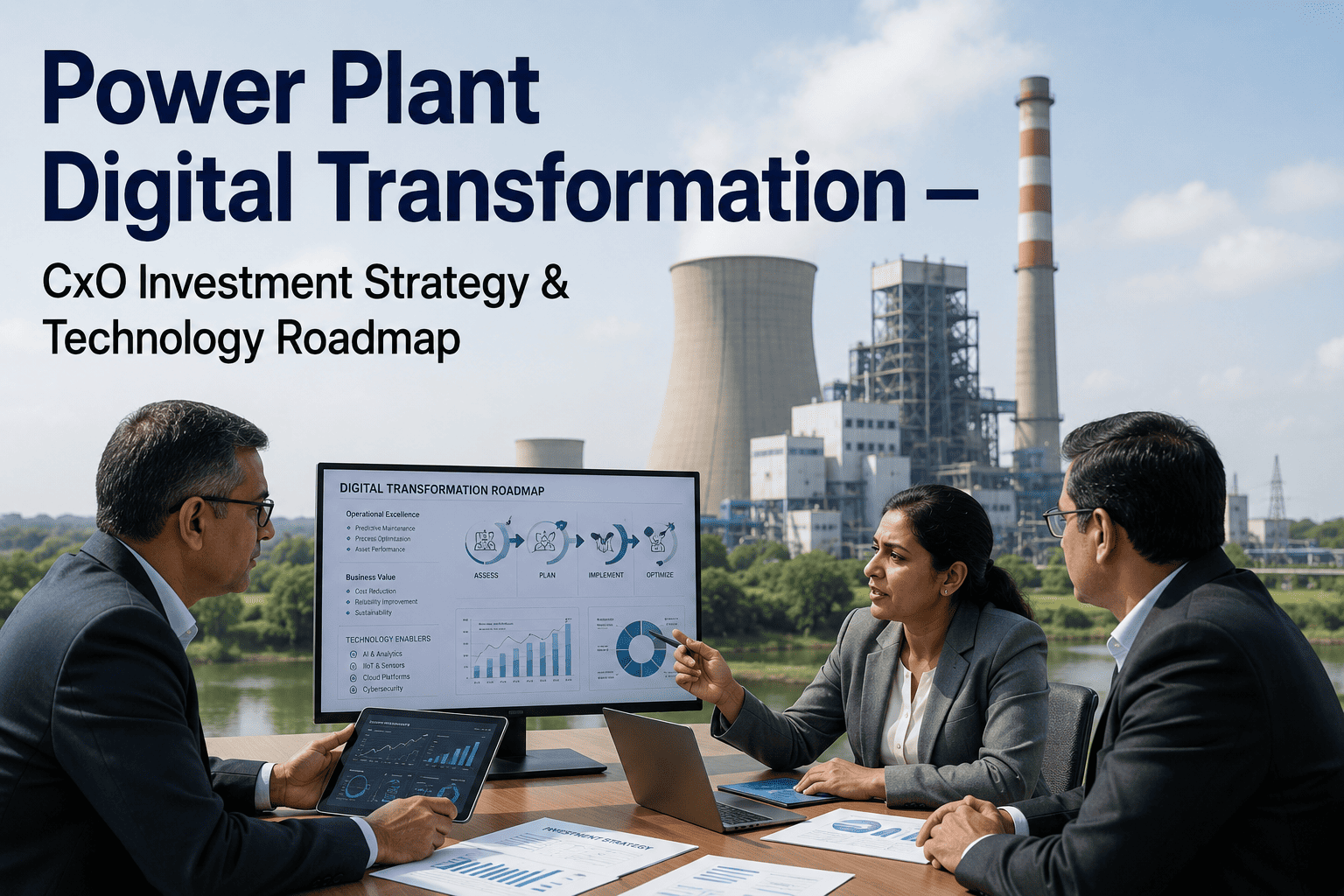
Ask five plant executives what "digital transformation" means and you'll get five different answers — a new SCADA screen, a predictive maintenance pilot, a data lake nobody queries, a dashboard built for a board meeting and never opened again. The problem isn't a lack of technology options; it's that most transformation budgets get allocated project by project instead of against a single reliability and decarbonization thesis. The plants seeing real returns treat digital investment as a portfolio, not a shopping list. Book a demo to see how that portfolio approach looks in practice.
A CxO Framework for Power Plant Digital Investment
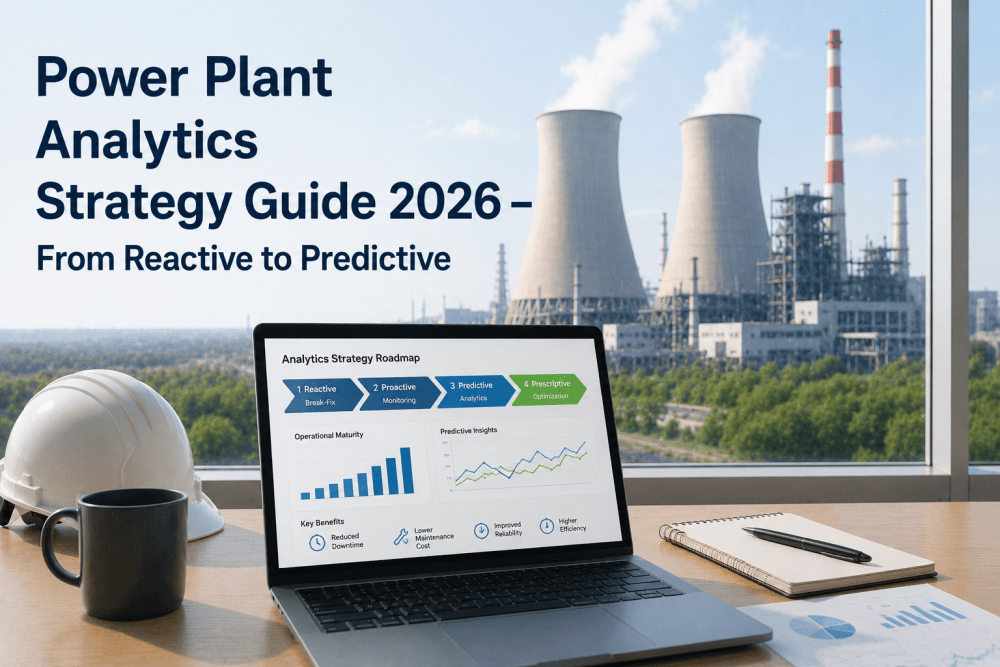
Predictive maintenance, digital twin, and AI analytics only pay off when they're sequenced against reliability targets, regulatory exposure, and decarbonization commitments — not funded as isolated pilots competing for the same budget line.
Why Project-by-Project Funding Keeps Failing
When digital initiatives compete individually for capital, each one has to justify its own standalone ROI, which pushes teams toward the easiest-to-measure wins rather than the highest-leverage ones. A vibration monitoring pilot gets funded because the payback math is simple, while a fleet-wide data infrastructure investment that would make every future initiative faster gets deferred year after year because it doesn't have a clean, isolated ROI story. The result is a portfolio of disconnected point solutions that never compound into the reliability and efficiency gains the original business case promised.
The Investment Priority Matrix
Rather than ranking initiatives purely on cost or purely on impact, the most effective CxO-level reviews plot both at once. This surfaces the investments that look modest on a spreadsheet but unlock disproportionate downstream value, and it flags the expensive, flashy projects that sound impressive in a board deck but return relatively little.
High Impact / Lower Cost
Predictive maintenance on critical rotating equipment, AI-based anomaly detection on existing sensor data — fund these first.
High Impact / Higher Cost
Fleet-wide digital twin deployment, integrated data infrastructure — fund these second, once quick wins build internal trust.
Lower Impact / Lower Cost
Single-site dashboards, isolated reporting tools — useful, but shouldn't consume scarce transformation budget or attention.
Lower Impact / Higher Cost
Custom-built platforms duplicating what mature vendors already offer — the most common source of stalled, over-budget projects.
Aligning Investment With What Boards Actually Ask About
Reliability
forced outage rate and maintenance cost per megawatt, the two metrics boards track most closely
Compliance
audit readiness and regulatory exposure, increasingly tied directly to digital data quality
Decarbonization
progress against emissions and efficiency targets that digital tools can accelerate or stall
Build the Case for Your Board
See How a Reliability-Led Roadmap Is Structured
Walk through a working example of how predictive maintenance, digital twin, and AI analytics investments sequence together.
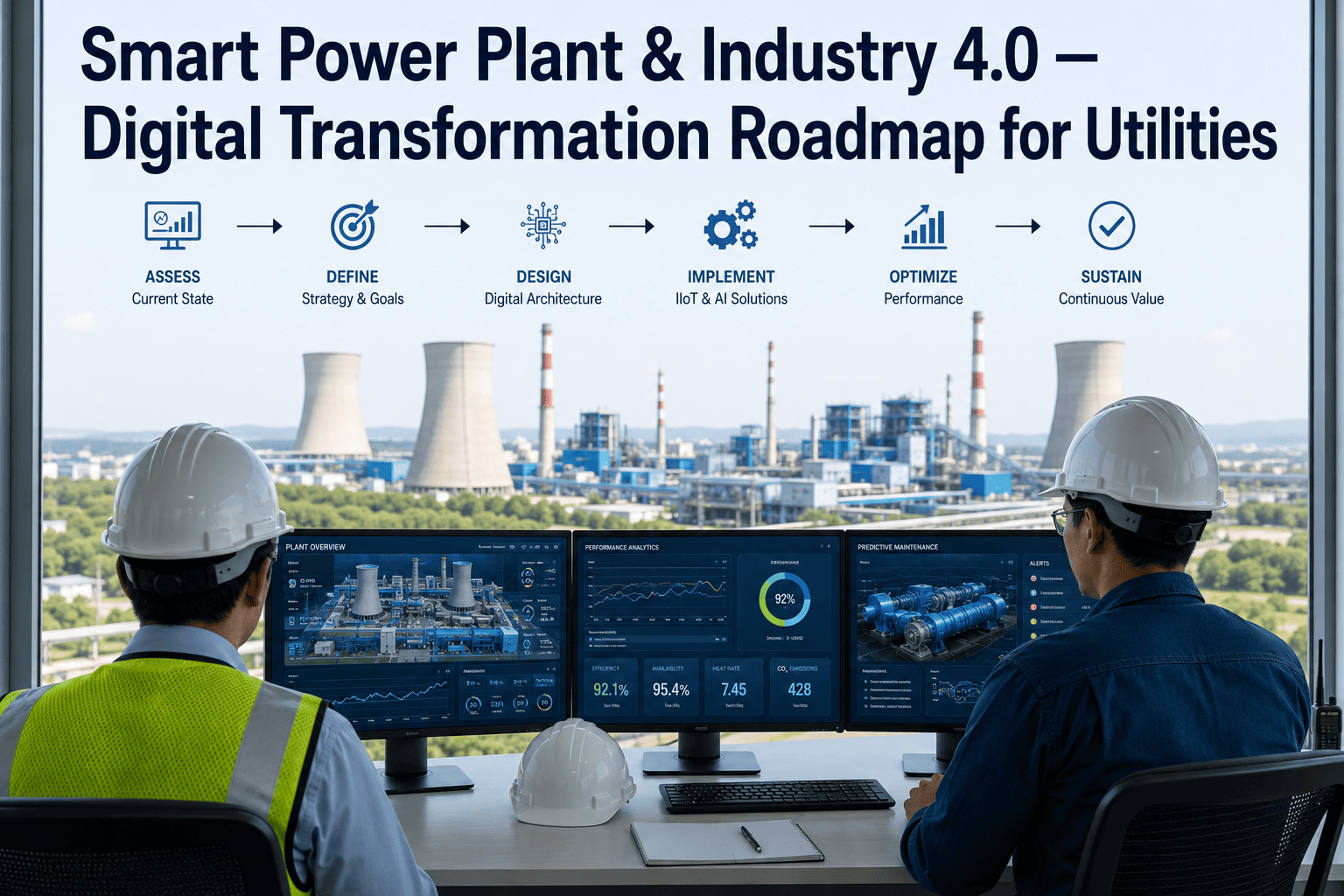
A Phased Roadmap That Compounds Instead of Competing
Phase 1 — Foundation
Connect existing sensor and historian data into a single accessible platform, without yet building new AI capability.
Phase 2 — Predictive Maintenance
Deploy AI-based failure prediction on the highest-criticality assets first, generating measurable quick wins.
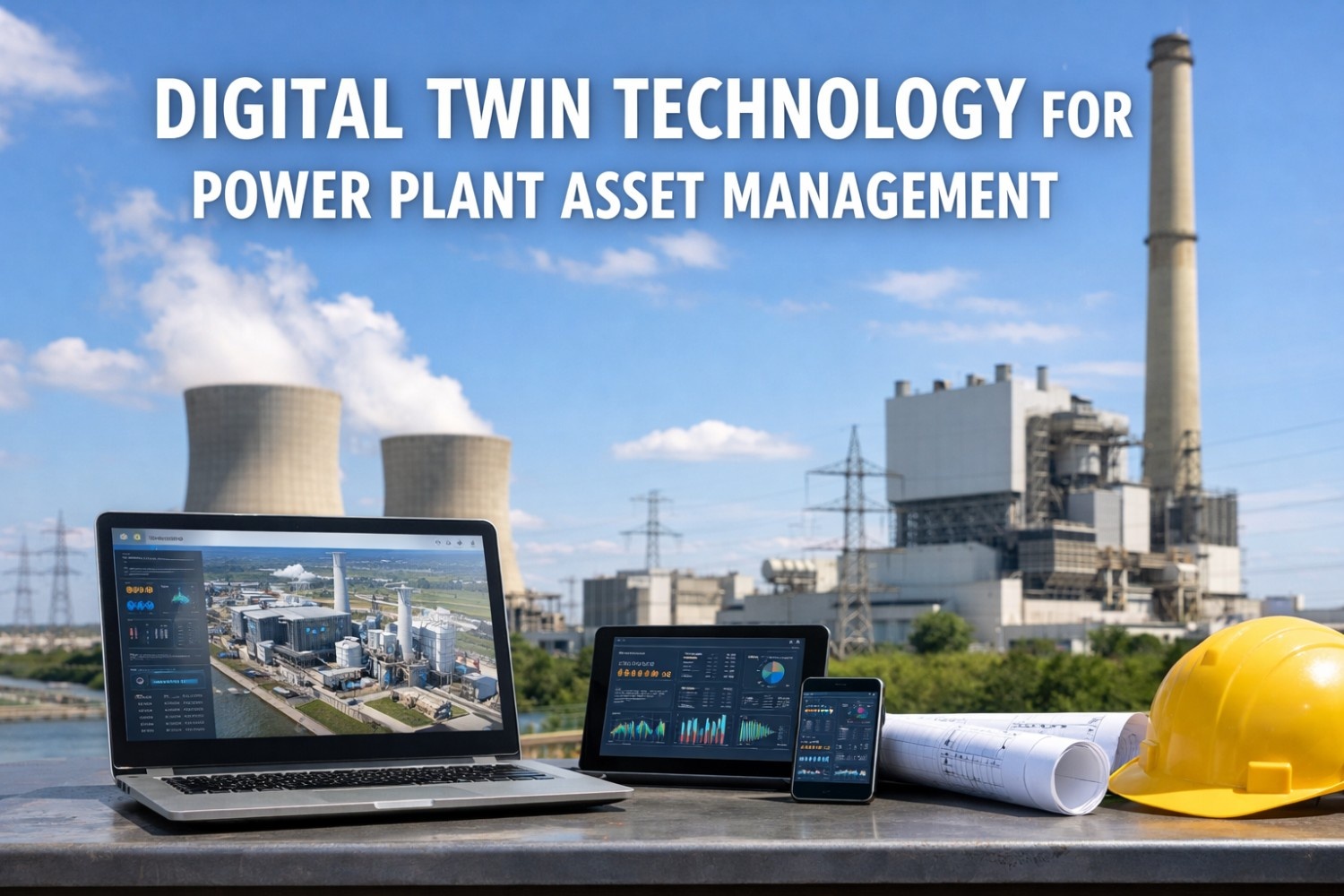
Phase 3 — Digital Twin Expansion
Extend modeling to a fleet-wide digital twin, using trust built in Phase 2 to justify the larger investment.
Phase 4 — Continuous Optimization
Shift from reactive prediction to ongoing setpoint and dispatch optimization across the full portfolio.
Sizing Each Phase Relative to the Others
Boards rarely need exact figures at the point of approving a roadmap direction — what they need is a realistic sense of relative scale, so later budget requests don't feel like they're coming out of nowhere. Foundation work is almost always the smallest line item relative to what follows, which is exactly why it gets skipped when budgets are tight, even though skipping it undermines everything built on top of it. Predictive maintenance on critical assets is typically the first phase that requires a meaningful, board-visible commitment, but it's also the phase most likely to pay for itself within the same fiscal year through avoided forced outages. Digital twin expansion and continuous optimization are larger, multi-year commitments that should only be approved once the earlier phases have produced a credible internal track record.
Phase 1
smallest relative spend, highest downstream leverage — most commonly the phase that gets skipped
Phase 2
first board-visible commitment, usually self-funding within the same fiscal year
Phase 3-4
largest multi-year spend, approved only after earlier phases build a track record
Governance: Who Should Actually Own This Roadmap
One of the most common reasons a digital roadmap stalls has nothing to do with technology at all — it's unclear ownership. When a COO sponsors the initiative but an IT director controls the budget and individual plant managers control the data access, initiatives get stuck in approval loops that have nothing to do with technical merit. The operators who move fastest typically designate a single accountable executive, often the COO or a VP of Operations, who owns the roadmap's outcomes end to end, with IT and plant leadership acting as implementation partners rather than independent approval gates. That single point of accountability is also what makes it possible to report a consistent set of metrics to the board across every phase, instead of each function reporting its own version of progress.
Where Transformation Budgets Commonly Go Wrong
| Mistake | Why It Happens | What to Do Instead |
| Funding pilots with no scale-up plan |
Easier to approve a small trial than a fleet commitment |
Approve pilots only with a defined scale-up budget attached |
| Building custom instead of buying |
Assumption that plant needs are too unique for vendors |
Benchmark build-vs-buy cost and time honestly upfront |
| Measuring each project in isolation |
Simpler to report, but hides compounding value |
Track a shared reliability and cost baseline across projects |
| Skipping data foundation work |
Doesn't produce a visible demo on its own |
Treat data infrastructure as phase one, not an afterthought |
Frequently Asked Questions
How should we present digital transformation ROI to the board?
Tie every initiative back to the same two or three metrics the board already tracks — typically forced outage rate, maintenance cost per megawatt, and compliance audit readiness — rather than introducing new, project-specific metrics for each initiative. This makes it possible to show a running trend line across multiple years of investment instead of a series of disconnected one-off wins.
Ask about board-ready reporting formats in a demo.
Should we start with predictive maintenance or a digital twin?
Predictive maintenance on critical assets almost always comes first, because it delivers measurable results in months and builds the internal trust needed to justify a larger digital twin investment later. Starting with a fleet-wide digital twin before proving value on a smaller scale is one of the more common ways transformation budgets stall out.
How do we decide between building a custom platform and buying an existing one?
Honestly compare the total cost and timeline of custom development, including the ongoing maintenance burden, against a vendor platform already built on industrial data from comparable assets. Most build-versus-buy decisions look closer once the true cost of maintaining custom software over five years is factored in rather than just the initial build estimate.
What's the biggest risk in sequencing these investments wrong?
Funding a flashy, expensive digital twin initiative before the underlying data foundation is solid usually means the model runs on incomplete or inconsistent data, undermining trust in the whole program. Sequencing foundation work first, even though it's less visible, protects the credibility of every initiative that follows.
Contact support to review your current data foundation.
How long does a full digital transformation roadmap typically take?
Most plants move through the foundation and predictive maintenance phases within the first year, with digital twin expansion and continuous optimization following over the next one to two years depending on fleet size and data readiness. A phased approach means value is delivered continuously rather than waiting years for a single big-bang outcome.
Stop Funding Disconnected Pilots
Build a Digital Investment Roadmap That Compounds
See how predictive maintenance, digital twin, and optimization investments can be sequenced against your actual reliability targets.