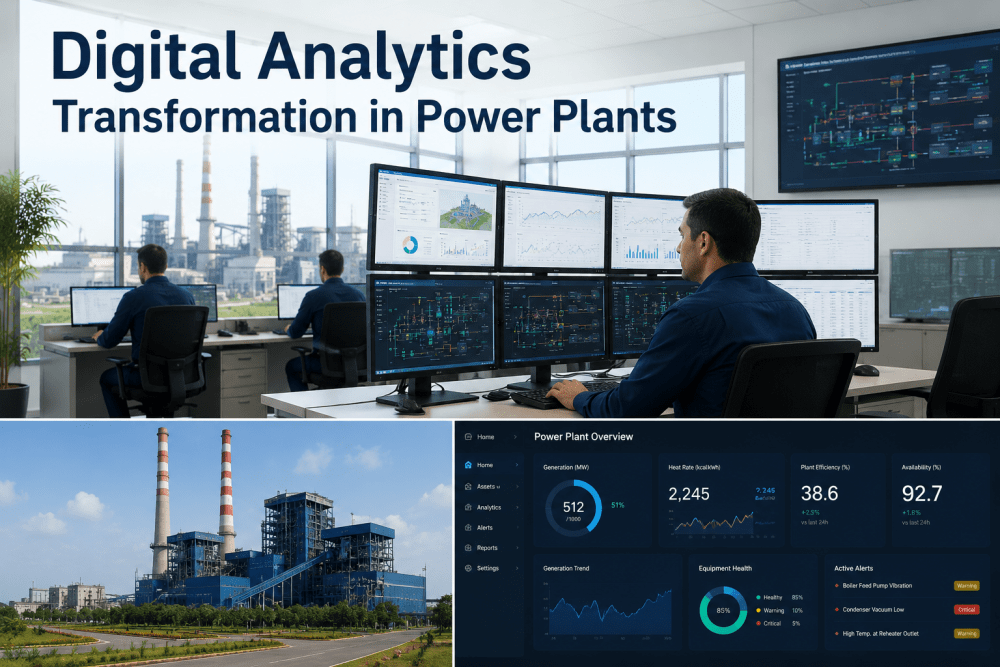
Most utilities did not build their digital transformation strategy from a blank page — they built it on top of a DCS installed a decade ago, a historian nobody has fully indexed, and a SCADA layer that was never designed to talk to an AI model. The result is a plant that generates enormous volumes of operational data without a coherent path to turning that data into predictive maintenance, performance optimization, or compliance reporting. A smart plant transformation does not mean ripping out that infrastructure — it means connecting it. iFactory AI integrates directly with DCS, SCADA, and historian systems already running in your facility to build the unified intelligence layer that Industry 4.0 roadmaps promise but rarely deliver on schedule — Book a Demo to see how the connection actually works.
Smart Plant · Industry 4.0 · Digital Transformation
Smart Power Plant & Industry 4.0 Digital Transformation Roadmap
Connect DCS, SCADA, historian, and AI analytics into one unified platform — without replacing the control infrastructure you already trust.
60–70%
Of utility operational data currently sits unused in historians without analytics applied
18–24 mo
Typical duration of a full Industry 4.0 rollout when phased correctly across a fleet
4 systems
Average number of disconnected platforms — DCS, SCADA, historian, CMMS — a smart plant layer must unify
30%+
Reduction in unplanned downtime reported by utilities after completing a phased digital transformation
Why Industry 4.0 Roadmaps Stall in Power Generation
The phrase "digital transformation" has become so broad in utility circles that it often means nothing more than a slide deck with a five-year timeline attached. The projects that actually deliver results start narrower — they identify the specific systems that need to talk to each other, the specific decisions that better data would improve, and the specific operational costs that fragmented systems are currently creating. A DCS optimized purely for real-time control, a SCADA layer built for supervisory alarms, and a historian designed for long-term storage were never architected to feed a predictive maintenance model or a performance optimization engine. Bridging that gap is an integration problem before it is an AI problem.
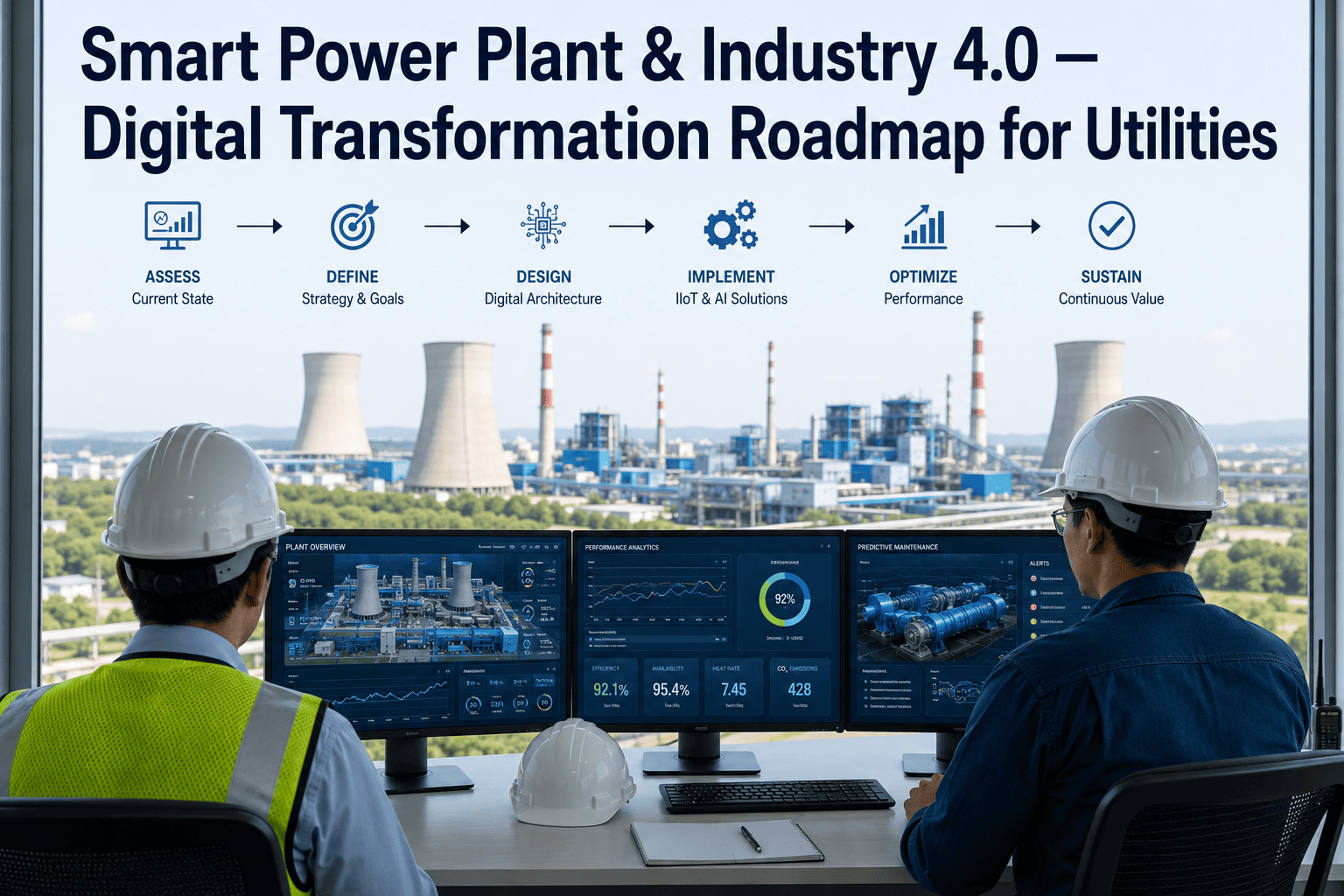
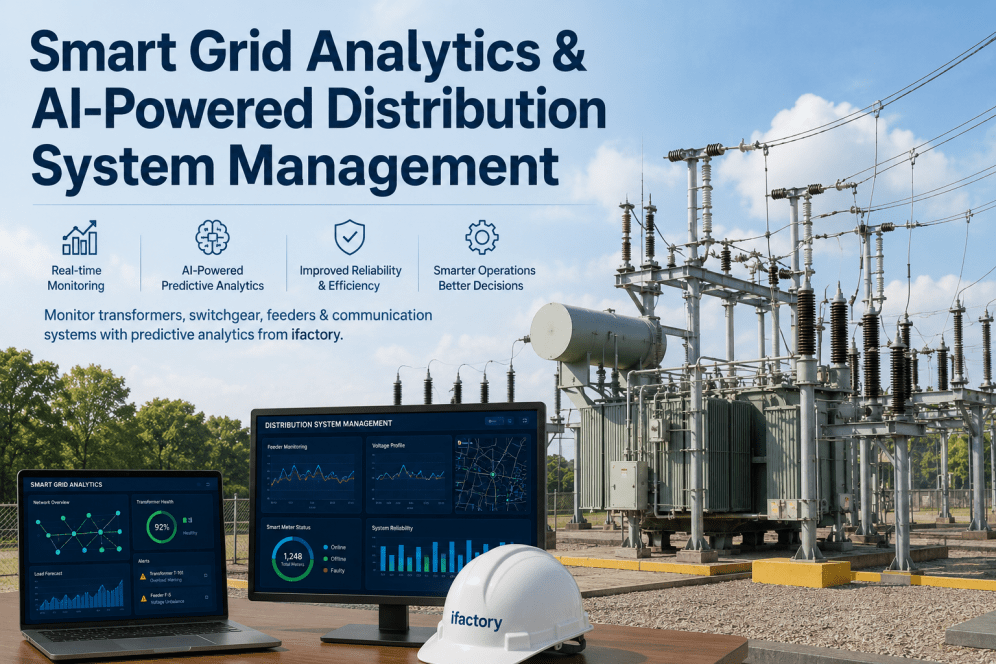
iFactory AI's platform is built around that reality. Rather than asking a utility to replace its DCS or SCADA investment, the platform connects to these systems as they exist today, pulls historian data into a structured analytics layer, and applies AI models — predictive maintenance, performance benchmarking, anomaly detection — on top of infrastructure that operations teams already know how to run. The roadmap below reflects the phased sequence that has proven most reliable across utility deployments.
The Four-Phase Smart Plant Transformation Roadmap
Phase 1
Data Foundation & System Integration
Connect DCS, SCADA, and historian systems into a unified data layer. Establish data quality validation, tag mapping, and a single source of truth for operational data across the fleet. This phase typically runs 6–10 weeks per facility and requires no changes to existing control system configuration.
Phase 2
Visibility & Real-Time Monitoring
Deploy dashboards and alerting on top of the unified data layer, giving operations and maintenance teams a consolidated view of asset health, performance KPIs, and compliance metrics that previously required manually cross-referencing multiple systems.
Phase 3
Predictive Analytics & AI Models
Layer predictive maintenance, failure detection, and performance optimization models onto the historical and live data. Models are trained and validated against each facility's actual equipment history rather than generic industry benchmarks.
Phase 4
Fleet-Wide Optimization & Scaling
Extend the validated platform configuration across additional facilities in the fleet, applying learnings and model refinements from the initial deployment to accelerate rollout at each subsequent site.
Map Your Facility's Digital Transformation Roadmap
iFactory AI works with your operations and IT teams to sequence a smart plant rollout that fits your existing DCS, SCADA, and historian architecture — not a generic template.
What Changes Before and After a Smart Plant Layer Is In Place
Before Integration
Operations teams check the DCS for real-time status, log into SCADA separately for alarm history, and pull historian reports manually when a performance question comes up. Maintenance decisions are based on calendar schedules because nobody has time to reconcile three systems into a single risk picture. Compliance reporting is assembled by hand each quarter from exports across multiple platforms.
After Integration
A single dashboard reflects DCS status, SCADA alarms, and historian trends side by side, with AI models flagging which assets need attention this week and why. Maintenance schedules shift toward evidence-based timing. Compliance data is continuously validated and exportable on demand rather than assembled manually at quarter end.
Integration Compatibility Across Common Utility Systems
| System Type |
Common Platforms |
Integration Approach |
Typical Setup Time |
| DCS |
Emerson Ovation, Honeywell Experion, ABB Symphony |
Read-only OPC connection; no control logic modification |
2–4 weeks |
| SCADA |
GE iFIX, Wonderware, Ignition |
API or historian-mediated data extraction |
2–3 weeks |
| Historian |
OSIsoft PI, Wonderware Historian, AspenTech |
Direct historian connector with tag mapping |
1–3 weeks |
| CMMS |
Maximo, SAP PM, Infor EAM |
Bi-directional work order sync |
2–4 weeks |
Frequently Asked Questions
Do we need to replace our existing DCS or SCADA system to become a smart plant?
No. iFactory AI's platform is designed to integrate with the control and supervisory systems already running in your facility rather than replace them. The platform connects through standard interfaces such as OPC and historian connectors to read operational data without modifying control logic or requiring downtime for the integration itself. This approach protects the operations team's existing investment and institutional knowledge in the current control architecture while adding an analytics and AI layer on top of it.
Book a Demo to review the specific integration path for your DCS and SCADA vendors.
How long does a full digital transformation rollout take for a multi-facility utility?
A phased rollout across a fleet typically takes 18 to 24 months from initial data integration to fleet-wide optimization, though individual facilities can see value from Phase 1 and Phase 2 work within the first 8 to 10 weeks. The timeline depends heavily on the number of facilities, the diversity of control systems across the fleet, and how much historical data quality remediation is needed before predictive models can be trained reliably. Utilities that start with a single pilot facility and use the validated configuration to accelerate subsequent rollouts generally complete fleet-wide deployment faster than those attempting simultaneous rollout across all sites.
What is the difference between a data historian and a smart plant analytics platform?
A data historian is designed primarily for long-term storage and retrieval of time-series operational data — it archives what happened but does not interpret it. A smart plant analytics platform sits on top of the historian and applies predictive maintenance models, performance benchmarking, and anomaly detection to that stored data, turning archived tags into actionable maintenance and operations recommendations. iFactory AI's platform is built to work with your existing historian rather than replace it, treating the historian as the data source that feeds continuous AI analysis.
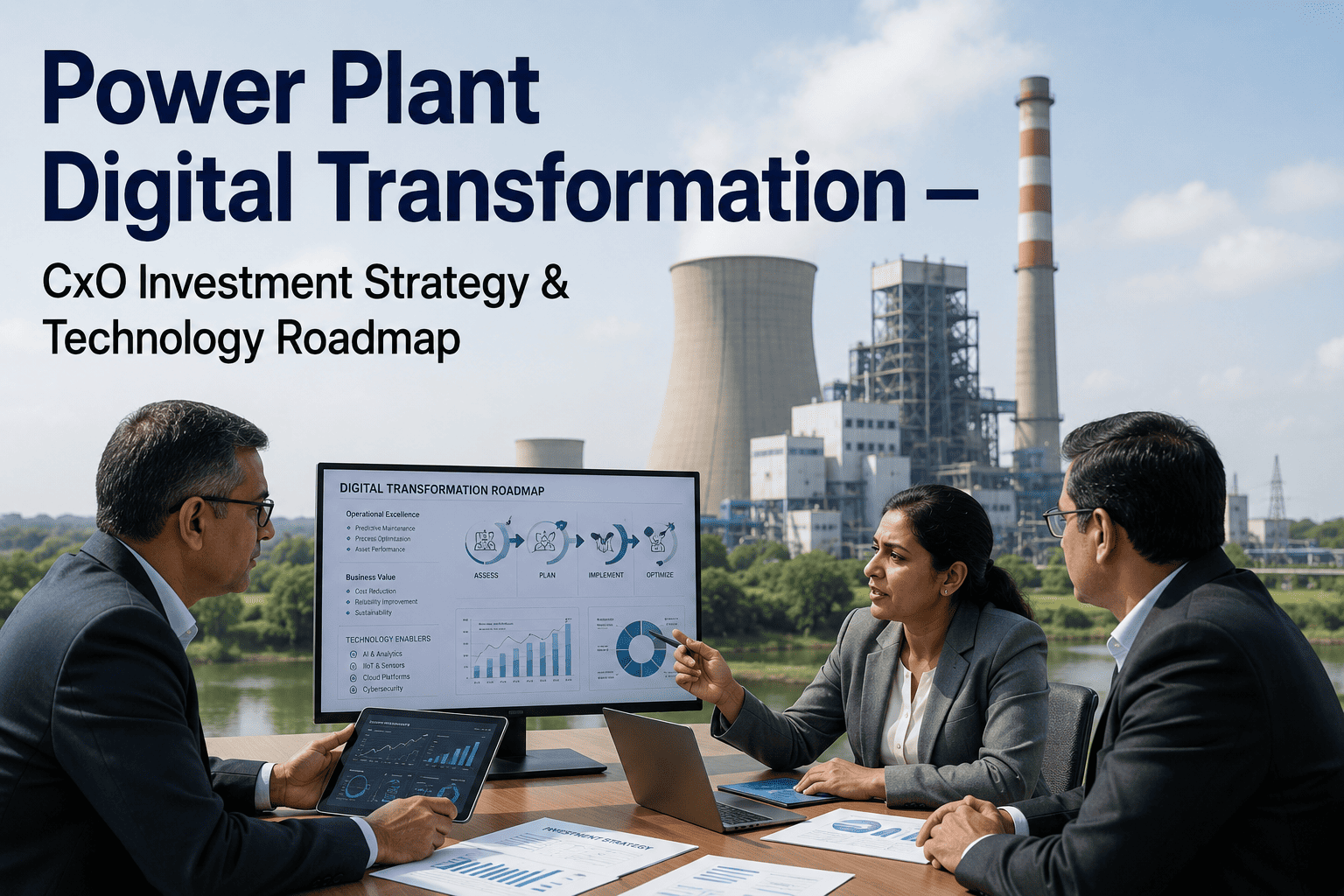
How do we justify the investment in a smart plant platform to executive leadership?
The strongest justification typically comes from quantifying the cost of the current disconnected-systems approach: hours spent manually reconciling data across DCS, SCADA, and historian platforms, the frequency and cost of unplanned outages that earlier detection could have prevented, and the labor cost of manually assembling compliance reports each quarter. Utilities that have completed phased transformations report unplanned downtime reductions of 30 percent or more, which for most fleets translates directly into a measurable production and cost impact well within the first year of full deployment.
Contact Support for a benchmark comparison relevant to your fleet size.
Where should we start if we have limited budget for a full transformation this year?
Start with Phase 1 and Phase 2 on your highest-risk facility — data integration and unified visibility deliver value quickly and require the smallest budget commitment, while also validating the integration approach before any predictive AI investment is made. Many utilities use the results from this initial phase, including quantified time savings and early risk detections, to build the internal case for funding Phase 3 predictive analytics and eventual fleet-wide scaling in a subsequent budget cycle.
Turn Fragmented Plant Systems Into One Intelligence Layer
iFactory AI connects DCS, SCADA, historian, and CMMS data into a single platform built for predictive maintenance, performance optimization, and compliance — without replacing the systems you already run.