A 2-degree angular alignment error sounds trivial until it quietly destroys a coupling and two bearing sets over eighteen months of continuous running. Power plant drive trains almost never fail from one dramatic event — they fail from months of rising vibration, shifting oil chemistry, and a coupling that drifted out of tolerance long before anyone noticed. Reliability teams that catch gear mesh degradation and coupling wear at the earliest stage turn nine-figure forced outages into four-hour borescope inspections scheduled around the existing outage calendar. AI-powered condition monitoring reads exactly those signals continuously, fusing vibration, oil, thermal, and alignment data into one coherent picture of drive train health. See how continuous alignment and wear monitoring runs against your own turbine and auxiliary gearboxes with a Book a Demo.
Gearbox & Coupling Maintenance in Power Plants
Continuous AI-powered alignment verification, vibration analysis, and oil debris monitoring for turbine drive trains and rotating auxiliaries — built to catch gear tooth wear and coupling degradation while repairs are still routine.
Four Stages Between a Healthy Gearbox and an Emergency Rebuild
Gearbox and coupling failures develop through predictable, measurable stages long before a trip occurs. Each stage has a distinct signature in vibration, oil, and temperature data — and a very different repair bill attached to it.
Early Wear Signals
Subtle bearing spall frequencies and slight oil particle count increases appear. Machine runs normally. Repair scope: filter change or partial oil change.
Progressive Degradation
Vibration amplitude climbs across multiple frequencies, oil temperature rises noticeably, and alignment drift accelerates bearing wear. Repair cost: $80K-$300K if caught here.
Critical Warning
Spalled material circulates through the oil system, clearances widen, and coupling movement becomes visible on alignment checks. A planned outage is still possible.
Catastrophic Failure
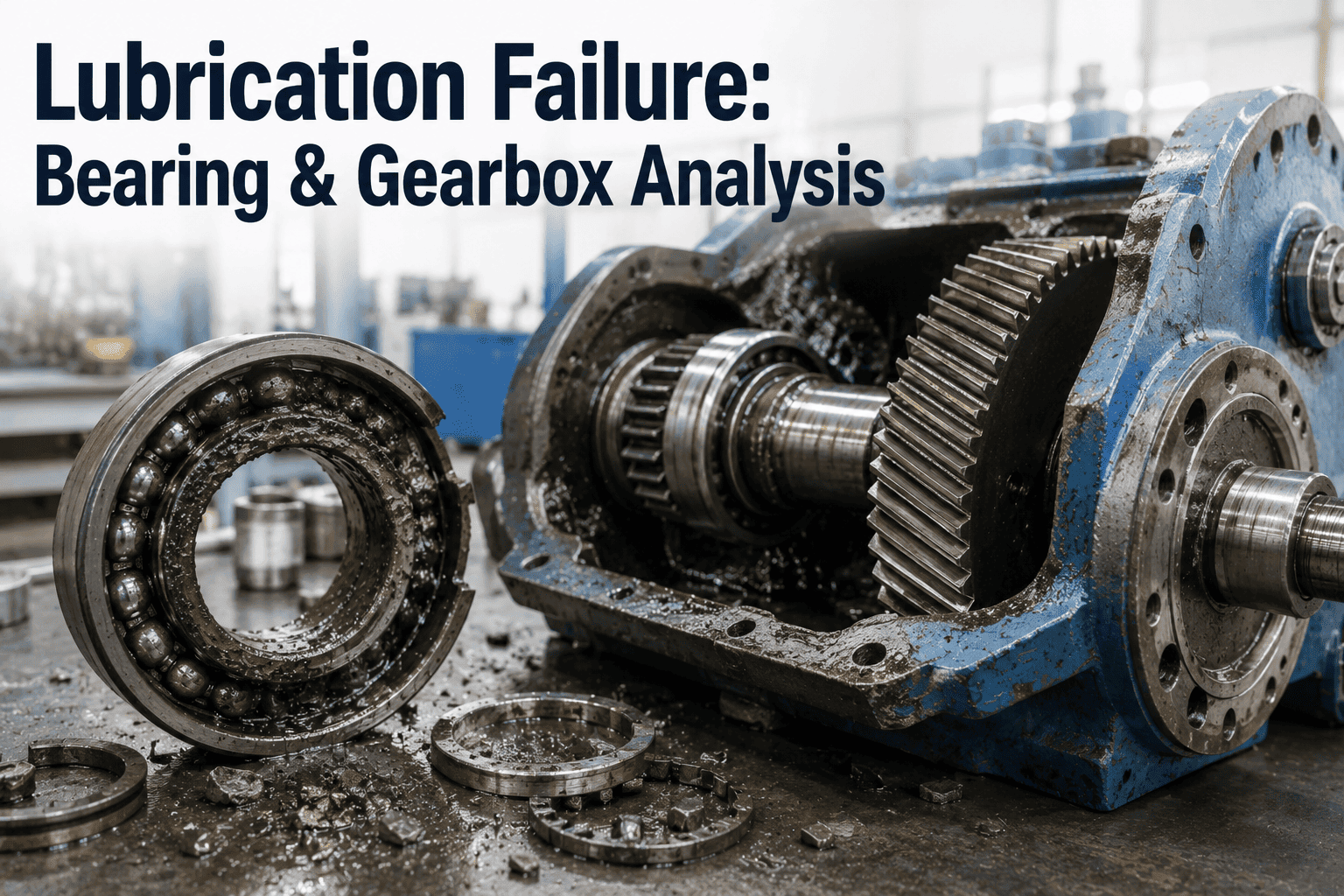
Bearing seizure, gear tooth fracture, or shaft failure causes uncontrolled stoppage. Secondary damage often exceeds primary failure cost by 5 to 10 times. Total cost: $500K-$3M+.
Six Signals Fused Into One Drive Train Health Score
No single sensor tells the whole story. AI monitoring combines these six inputs into a single equipment health index so reliability teams stop reacting to isolated alarms and start acting on trends.
Vibration Analysis
Gear mesh frequency and bearing defect frequency trends flag imbalance, misalignment, and spalling months ahead.
Oil Analysis
Particle count, viscosity, and water content trended over time to catch contamination before metal-to-metal contact starts.
Thermal Monitoring
Bearing and housing temperature trends reveal friction, lubrication breakdown, or overload before damage accelerates.
Laser Alignment Data
Radial and angular alignment readings compared against tolerance to flag drift on input-output shafts and couplings.
Acoustic & Ultrasound
High-frequency emission monitoring detects early-stage bearing and gear tooth damage well before it appears in standard vibration bands.
Equipment Health Index
All five inputs combine into one trending score per gearbox and coupling, ranked by remaining useful life and repair urgency.
Alignment Tolerance Thresholds AI Monitoring Checks Against
These are the tolerance bands most drive train alignment programs are built around. AI monitoring compares live laser and vibration-derived alignment data against these thresholds automatically, rather than waiting for the next scheduled check.
| Parameter | Acceptable | Monitor Closely | Correct Immediately |
|---|---|---|---|
| Radial (offset) alignment | Under 0.05mm | 0.05mm to 0.1mm | Over 0.1mm |
| Angular alignment | Under 1.0° | 1.0° to 1.5° | Over 1.5° |
| Oil water content | Under 0.1% | 0.1% to 0.3% | Over 0.3% |
| Oil particle count (ISO) | Under 17/15/12 | 17/15/12 to 19/17/14 | Over 19/17/14 |
| Bearing temperature rise | Under 10°C above baseline | 10-20°C above baseline | Over 20°C above baseline |
Why Gearboxes and Couplings Need Separate Monitoring Logic
Gearbox Failure Modes
Coupling Failure Modes
How Monitoring Data Becomes a Scheduled Repair
Continuous Data Capture
Vibration, oil, thermal, and alignment sensors stream condition data around the clock across every monitored gearbox and coupling.
Trend Detection
AI models trend each signal against baseline and flag deviations that match known failure signatures rather than one-off noise.
Severity Ranking
Remaining useful life estimates convert raw anomalies into a ranked priority list a reliability engineer can act on immediately.
Work Order Generation
The CMMS integration opens a work order, checks spares availability, and schedules the repair against the outage calendar.
Turn Vibration and Oil Data Into Scheduled Work Orders
Connect your existing sensors and CMMS to AI-fused drive train monitoring and see gearbox and coupling health scored automatically.
Drive Trains Across the Plant That Benefit From Continuous Monitoring
Steam Turbine Gear Drives
Reduction gearboxes between turbine and generator shafts, where misalignment translates directly into generator bearing stress.
Gas Turbine Auxiliary Drives
Lube oil pump and cooling fan gearboxes that run continuously and rarely get standalone inspection attention.
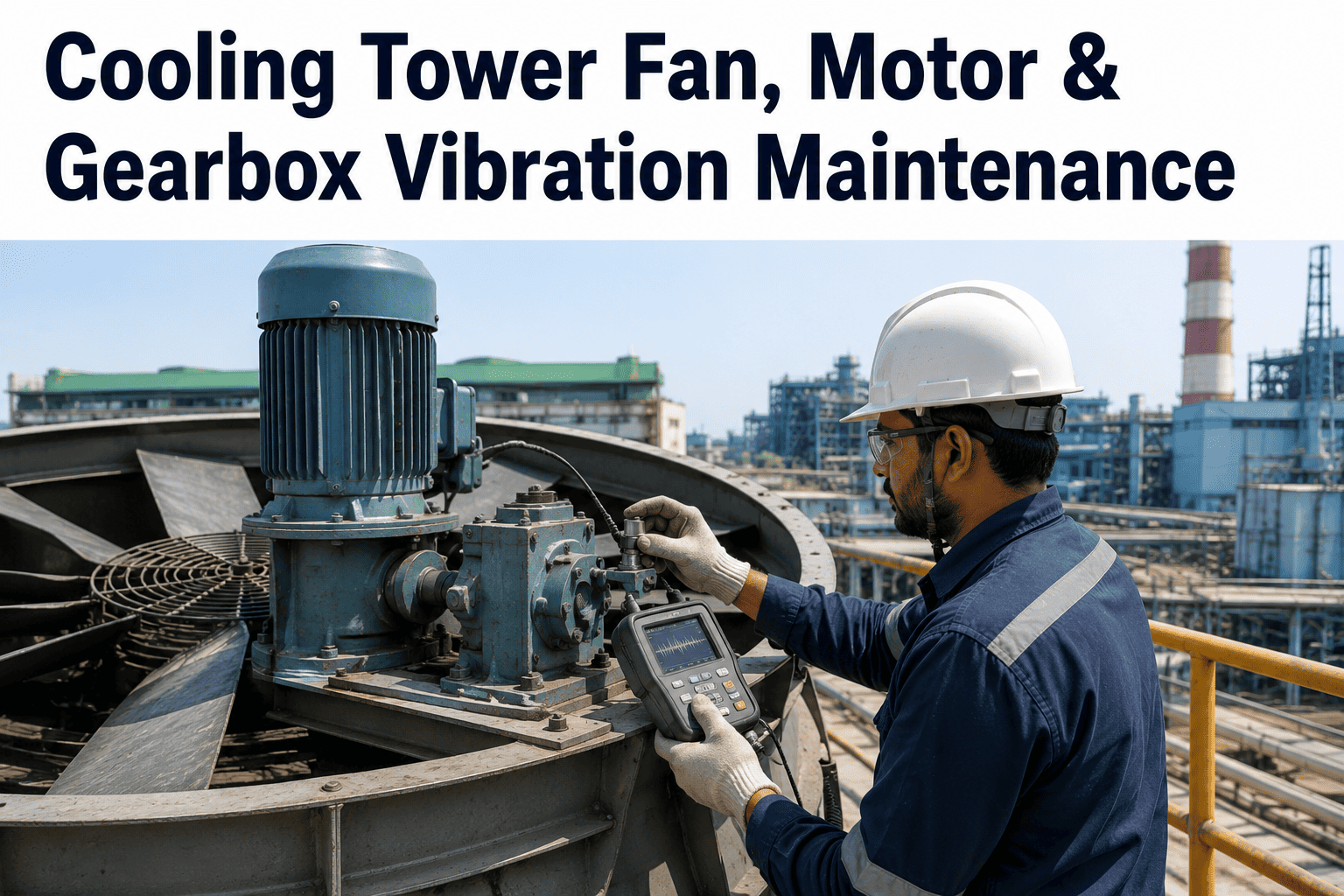
Cooling Tower Fan Gearboxes
Right-angle gearboxes exposed to moisture ingress and thermal cycling, a leading cause of premature bearing wear.
Coal & Fuel Handling Drives
Conveyor and crusher gearboxes under variable load where shock loading accelerates gear tooth fatigue.
Balance-of-Plant Pump Couplings
Feedwater and condensate pump couplings where alignment drift is a leading indicator of downstream seal failure.
Renewable Asset Gearboxes
Wind turbine and battery auxiliary gearboxes where remote monitoring replaces costly on-site inspection visits.
What Actually Causes Chronic Misalignment
Alignment drift is rarely a one-time event. Left unaddressed, the same root cause keeps reintroducing the same failure pattern every few months, which is why identifying the underlying driver matters as much as catching the drift itself.
Thermal Growth
Shafts and housings expand differently as temperature rises from cold start to full load, shifting alignment that was correct at ambient conditions.
Foundation Settling
Concrete foundations shift slowly over years of vibration and load cycling, gradually pulling baseplates out of the tolerance they were set to.
Soft Foot Conditions
A machine foot that doesn't sit flat on the baseplate distorts the frame when bolted down, undoing an otherwise correct alignment job.
Piping Strain
Connected piping that isn't properly supported transmits load into the pump or gearbox casing, pulling the shaft out of true alignment.
Building the Business Case for Continuous Drive Train Monitoring
Reliability engineers pitching this internally usually need to answer one question from finance: what does the current approach actually cost when it goes wrong, versus what continuous monitoring costs to run. Three figures tend to carry that conversation.
Avoided Emergency Rebuilds
A single catastrophic gearbox failure caught at Stage 1 instead of Stage 4 can avoid $500K-$3M in emergency repair and production loss costs.
Extended Component Life
Correcting alignment drift early extends bearing and coupling service life, reducing the frequency of planned replacements across the fleet.
Reduced Inspection Labor
Continuous monitoring reduces the need for frequent manual vibration rounds and walk-down alignment checks on stable, healthy machines.
We used to plan a full gearbox teardown every two years regardless of actual condition, because that was the only way we felt confident about avoiding a forced outage. Continuous alignment and vibration monitoring changed that math completely. We now open a gearbox when the data says to, not when the calendar says to, and our last three planned interventions were scoped from monitoring trends instead of guesswork. Two of those would have been missed entirely under the old inspection interval.
Frequently Asked Questions
Q: Does AI monitoring replace laser alignment checks and scheduled oil sampling?
No, it does not replace either activity, and both remain part of a sound mechanical integrity program. What changes is the frequency and context: instead of a laser alignment check every twelve months and an oil sample every quarter, the platform trends vibration-derived alignment indicators and oil condition proxies continuously between those scheduled activities, so drift is caught within weeks rather than at the next calendar date. Reliability teams typically keep their existing lab and laser alignment vendor and use the AI layer to decide when an out-of-cycle check is worth calling. Walk through how this fits your existing PM schedule with a Book a Demo.
Q: What sensors are required, and do we need to instrument every gearbox in the plant?
Most plants already have some combination of vibration transmitters, temperature sensors, and periodic oil sampling in place on critical drive trains, and the platform is built to ingest that existing data rather than require a full rip-and-replace of instrumentation. For gearboxes without permanent sensors, portable vibration and oil sampling routes can feed the same trending models on a walk-around schedule. Coverage decisions are typically prioritized by criticality — main turbine gear drives and balance-of-plant assets with a history of failures come first, with lower-criticality auxiliaries added afterward.
Q: How early can the platform actually detect a developing gearbox or coupling problem?
Detection timing depends on the failure mode, but bearing defect frequencies in vibration data and rising particle counts in oil analysis typically appear weeks to months before a fault becomes severe enough to threaten the machine. Coupling misalignment drift is usually visible in trended 2x running-speed vibration components well before bolt loosening or element cracking becomes physically apparent on a walk-down inspection. The goal is consistently to move interventions from the critical warning stage back to the early wear signal stage, where repair scope and cost are dramatically smaller.
Q: Can this integrate with our existing CMMS so work orders generate automatically?
Yes, integration with common CMMS platforms is a core part of deployment, and it is what turns a monitoring dashboard into an actual maintenance workflow rather than another screen someone has to remember to check. When a gearbox or coupling health score crosses a defined threshold, a work order is generated automatically with the relevant condition data attached, spares availability checked, and the recommended repair window suggested against the plant's outage calendar. Reach out through Support Contact to review your specific CMMS integration requirements.
Q: What does a typical rollout look like for a plant with dozens of gearboxes and couplings?
Deployment usually starts with a criticality assessment to rank every gearbox and coupling by consequence of failure and current data availability, followed by sensor gap-filling on the highest-priority assets. Historical vibration and oil data is loaded to establish baselines, and live monitoring begins with a calibration period before automated alerting is fully trusted for scheduling decisions. Most plants see the first meaningful trend-based finding within the first month of live data, with full-fleet coverage phased in over subsequent months based on criticality ranking.
Stop Guessing When to Open a Gearbox
See AI-fused vibration, oil, thermal, and alignment monitoring scored against your own drive trains and couplings, live.