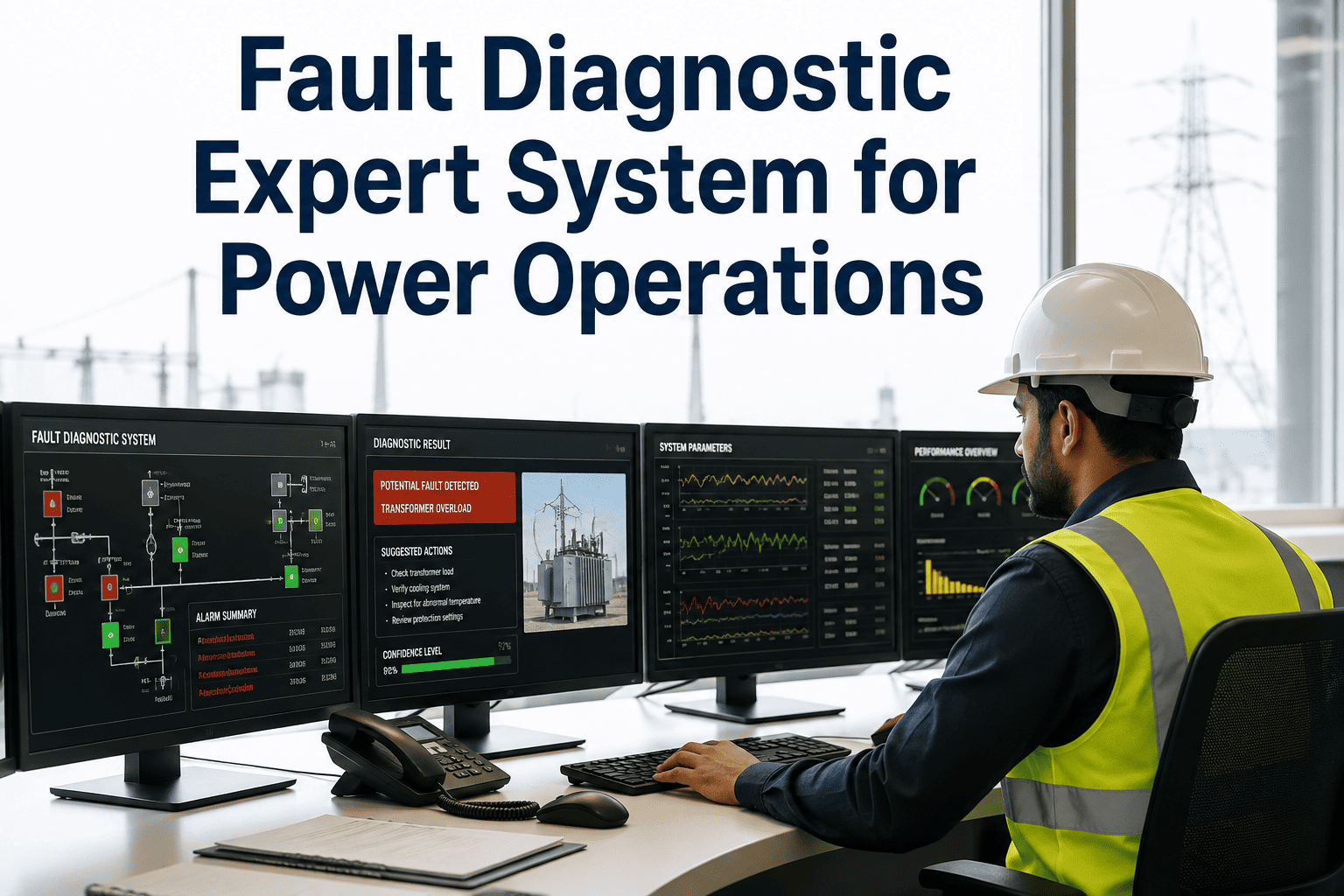
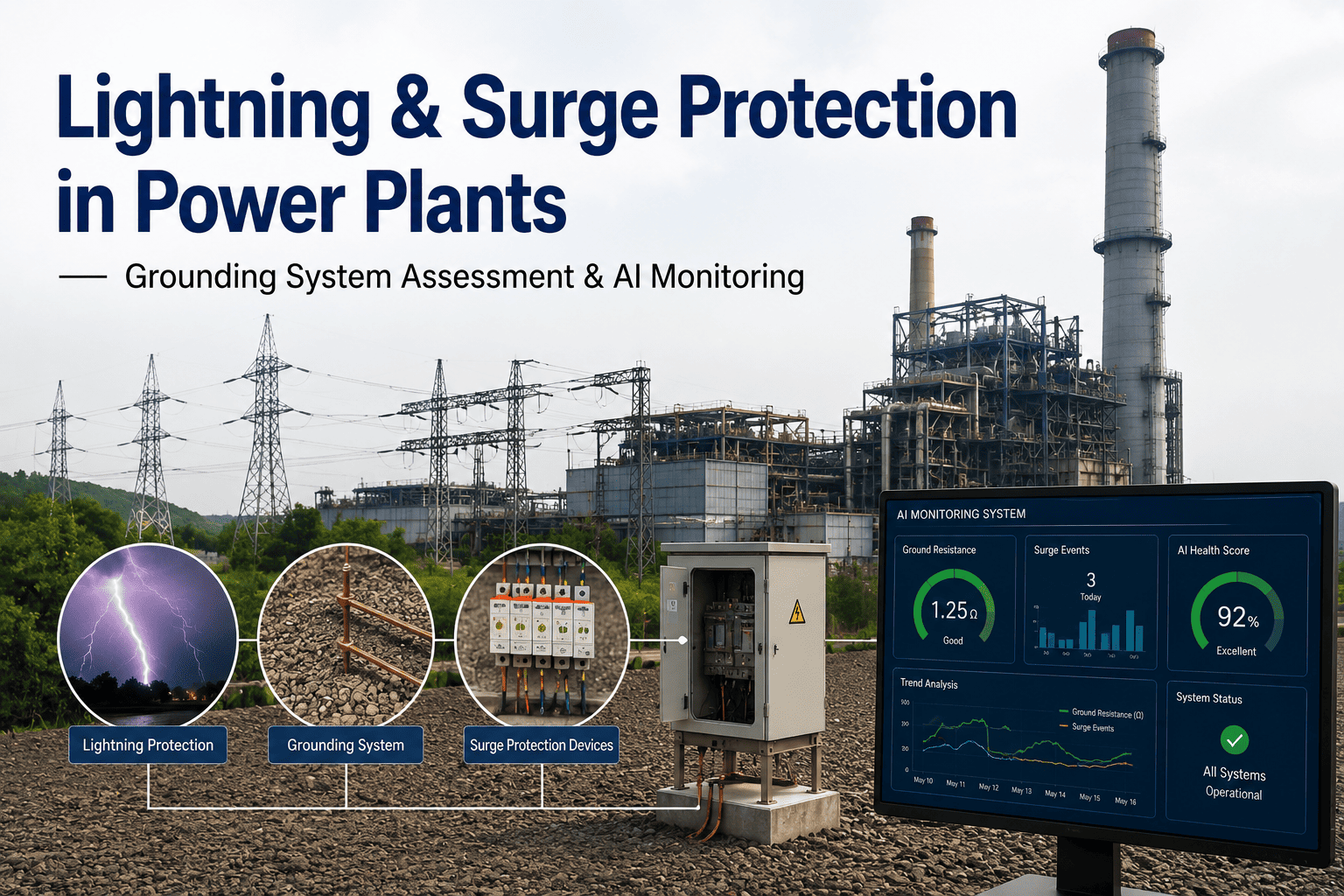
A protective relay that never trips is not a resting asset — it is an untested one. Relays, station batteries, trip coils, and lockout devices exist to act during the one moment nothing else in the plant can stop a fault from spreading, and NERC's PRC-005 standard exists precisely because that moment is where most protection systems have never actually been proven. A relay coordinated correctly on paper five years ago may now trip too slowly, too fast, or in the wrong sequence relative to a backup device, and a fixed testing calendar has no way to catch that drift between visits. Talk to start verifying your protection system continuously.
Verify fault clearing times, correct trip sequences, and reliable backup protection across every voltage level, with AI-powered coordination checks between full testing cycles.
Every Component NERC PRC-005 Requires You to Maintain
A protection system is only as reliable as its weakest linked component, which is why PRC-005 treats relays, batteries, sensing devices, and control wiring as one program rather than six separate maintenance schedules.
Electromechanical, solid-state, and microprocessor-based relays all require verification that settings, pickups, and time delays still match the coordination study.
Batteries powering relays and breaker trip coils are required to be on a time-based maintenance program, since a weak battery can leave a correctly set relay unable to actually trip.
Voltage and current sensing devices feed every relay decision, and drift in their accuracy quietly shifts every downstream trip calculation without an obvious symptom.
Trip wiring and auxiliary devices, including lockout relays, carry the actual trip signal from the relay to the breaker, and a fault here defeats an otherwise perfectly set protection scheme.
Teleprotection links coordinate tripping between remote ends of a line, and a degraded channel can silently undermine the coordination the whole scheme depends on.
Fault pressure relays on transformers detect the rapid gas or oil pressure change that signals an internal fault, and their sensing mechanism must be verified as operable on its own schedule.
The Trip Sequence a Coordination Study Is Built to Protect
Protection coordination is about more than any single relay working correctly — it is about the entire sequence holding together exactly as designed, every time.
A fault occurs, and the primary relay closest to it detects the abnormal current or impedance signature first.
The primary relay trips its breaker within its designed time delay, clearing the fault before it can spread further.
If the primary relay or breaker fails to clear the fault, a backup relay — set with a deliberately longer time delay — trips instead.
Generator-owned and transmission-owned protection systems must stay coordinated with each other so a fault clears without unnecessarily disconnecting generation from the grid.
Time-Based vs. Performance-Based Maintenance Programs
| Factor | Time-Based Program | Performance-Based Program |
|---|---|---|
| Testing trigger | Fixed calendar interval regardless of condition | Continuous monitoring data extends or shortens intervals |
| Station batteries | Required regardless of approach chosen | Still required on a time-based schedule |
| Drift detection between tests | Not visible until the next scheduled test | Flagged as soon as monitored data shows deviation |
| Documentation burden | Manual test records per interval | Continuous automated compliance logging |
| Minimum population requirement | Not applicable | Typically requires a documented segment of 60 or more components |
Watch iFactory Catch a Relay Setting Drifting Out of Coordination
In a 30-minute session, we walk through real protection system data — trip time trending, backup coordination checks, and the automated documentation that keeps your PSMP audit-ready between full test cycles.
What Happens When Relay Coordination Drifts Unnoticed
A relay that trips slower than its coordination study assumes lets a fault persist longer, increasing equipment damage and the risk of a cascading disturbance.
If primary and backup relays are not properly time-graded relative to each other, a backup device can trip before the primary gets a chance to clear the fault first, disconnecting more of the system than necessary.
Poor coordination between generator-owned and transmission-owned protection can disconnect generating units from the grid for faults that should have cleared without their involvement.
A correctly set relay is useless if the DC supply behind it cannot deliver enough current to the trip coil at the moment it is needed.
A deficiency found during testing that is not corrected within the maintenance interval becomes a documented compliance gap that follow-up corrective action must eventually close.
Frequently Asked Questions
PRC-005 covers protective relays of any technology, the station DC supply that powers them, protective communication systems like teleprotection links, current and voltage sensing devices, and the control circuitry that carries trip signals to breakers. Sudden pressure relaying on transformers is addressed under a closely related section of the same standard. Talk to map your existing components against the standard.
Yes, but it requires establishing a documented technical justification, typically including a defined component segment with a minimum population, along with monitoring data that demonstrates the components are performing reliably between extended intervals. Station batteries remain on a time-based schedule regardless of which approach you use elsewhere.
Coordination requires that impedance reaches, overcurrent pickups, and time delays across both generator-owned and transmission-owned protection systems are evaluated together, not independently, since a change on either side can disrupt coordination on the other. Book a demo to see how coordination drift gets flagged automatically.
It is any deficiency found during a maintenance activity that keeps a component from meeting its intended performance and cannot be corrected within the normal maintenance interval, which then requires documented follow-up corrective action. Continuous monitoring helps surface these issues earlier, giving more time to resolve them before the next audit cycle.
Rather than waiting for the next scheduled test to reveal a problem, continuous monitoring tracks relay trip timing, DC supply health, and communication channel status against their expected baselines, flagging drift the moment it appears. This turns a multi-year testing gap into continuous assurance that your protection system will perform exactly as your coordination study intended. Talk to support to start monitoring between test cycles today.
iFactory AI Coordination Verification for Protective Relay Systems
iFactory connects to your existing relays, station DC supply, and SCADA infrastructure to give maintenance managers continuous confidence that fault clearing times, trip sequences, and backup protection stay exactly as your coordination study intended, between every scheduled test.