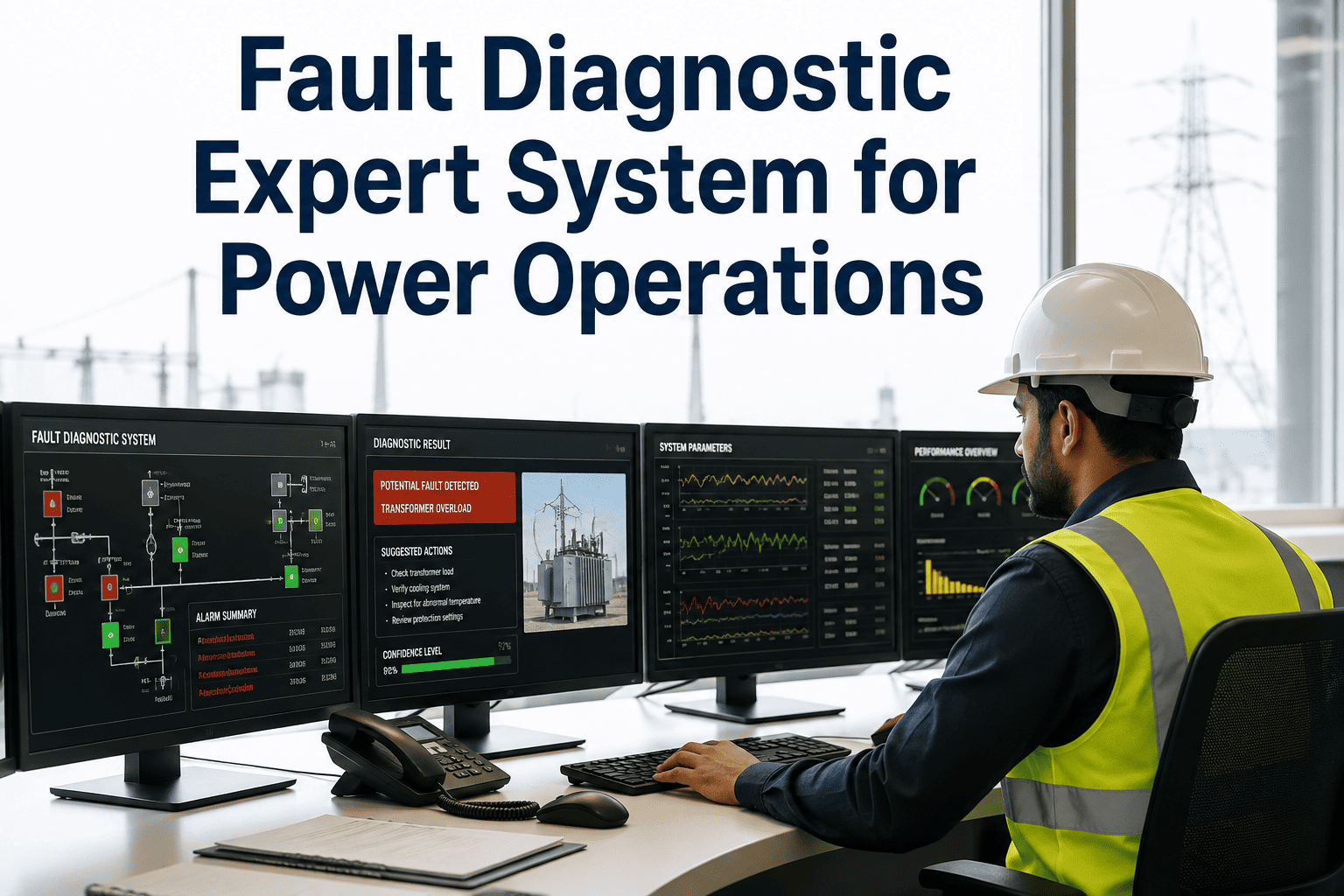
When a turbine bearing temperature creeps upward at 2 a.m., the DCS fires an alarm, and a lone control room operator is left staring at a trend line trying to decide whether this is a sensor glitch, a lubrication problem, or the early signature of a bearing failure that could take the unit offline for weeks. Most plants have no structured way to turn that raw symptom into a ranked list of likely causes and a recommended action, so the decision falls on whoever happens to be on shift and however much experience they carry in their head. A fault diagnostic expert system exists to close exactly that gap, encoding decades of engineering knowledge and live plant data into a reasoning engine that maps symptoms to causes automatically. See how a fault diagnostic expert system works inside your control room when you book a demo.
From Raw Alarm to Ranked Diagnosis in Under a Minute
A fault diagnostic expert system sits between your alarm stream and your operators, translating symptoms into probable causes and recommended next steps before a minor deviation becomes a forced outage.
An Alarm Tells You Something Is Wrong. It Never Tells You Why.
A high vibration alarm, a low flow alarm, and a rising differential pressure alarm can all point back to the same underlying failure, or to three completely unrelated ones, and the DCS has no built-in logic to tell an operator which is which. Plants that rely purely on threshold alarms end up training operators to memorize patterns through years of tribal experience, and that experience walks out the door every time someone retires or transfers sites. A diagnostic expert system captures that reasoning permanently, so the plant's collective troubleshooting knowledge survives staff turnover instead of disappearing with it. This matters most during shift changes, staffing shortages, and the first six months after a major retirement wave, exactly the moments when a plant's diagnostic capability is otherwise at its weakest. Every fault that gets diagnosed by a senior operator today and never gets documented anywhere becomes tribal knowledge that the next generation of operators has to relearn the hard way, usually during an actual emergency rather than a training session.
None of these gaps reflect a lack of effort from control room staff, they reflect the simple reality that no human can hold every documented failure mode for every piece of equipment in working memory while also managing the dozens of other responsibilities that come with running a shift.
The Fault Categories Where Diagnostic Ambiguity Costs the Most
Not every fault benefits equally from expert system diagnosis. The categories below represent the failure types where the gap between symptom and cause is widest, and where a wrong initial guess by an operator carries the highest downstream cost in wasted maintenance hours or unnecessary unit trips. Plants that are just starting a diagnostic expert system rollout often get the best early return by focusing their first knowledge-capture effort on whichever of these categories has generated the most repeat work orders or the most contentious root-cause disagreements between operations and maintenance over the past year, since that history is a strong signal of where ambiguity is currently costing the most.
Rule-Based Logic and AI Pattern Recognition Work Best Together
Pure rule-based expert systems are transparent and auditable, following explicit if-then logic that engineers can inspect and trust, but they only catch failure modes someone has already documented. Pure machine learning models can surface novel patterns in sensor data that no engineer ever wrote a rule for, but they can behave as a black box that operators are reluctant to act on without an explanation. iFactory blends both approaches so every diagnosis comes with a rule-based justification an operator can verify plus an AI-driven confidence score built from actual plant history. This hybrid design matters because control room culture tends to reward caution, and an operator who cannot explain why they took an action based on a system recommendation is unlikely to keep trusting that system after the first ambiguous call, regardless of how statistically accurate the underlying model actually is. Pairing the two approaches also means the plant is never fully dependent on either one; if a rare fault occurs that has never been documented in a rule, the AI layer can still flag an anomaly worth investigating, and if the AI model is still early in its learning curve for a newly commissioned unit, the rule library already provides a reliable baseline of diagnostic coverage from day one.
How a Diagnostic Tree Turns One Alarm Into a Ranked Cause List
The diagnostic tree is the backbone of the expert system, structuring plant knowledge as a branching path from an observed symptom down through intermediate conditions to a specific probable cause. The example below shows a simplified path for a feedwater pump discharge pressure deviation, one of the most common ambiguous symptoms in a power plant.
Each branch point in the tree pulls live data automatically instead of requiring an operator to manually check every parameter, and the system presents the surviving branches ranked by how often they have historically matched this exact symptom pattern at your specific plant. In a manual troubleshooting scenario, an operator would need to physically walk down or remotely check three or four separate parameters in sequence, cross-reference them against a mental model built from years of experience, and still risk missing a branch entirely if the fault presents atypically. The diagnostic tree collapses that entire sequence into a single automated pass that completes in the time it takes to load a screen, and it never forgets to check a branch simply because the shift is busy or the fault looks superficially like something more familiar.
The Metrics That Prove Diagnostic Value Beyond Anecdote
A diagnostic expert system earns its place in the control room only if it measurably improves outcomes, and plants that track the right metrics from day one build the case for expanding coverage far faster than those relying on operator anecdotes alone. Three metrics matter most: how often the top-ranked cause matches the confirmed root cause, how much time elapses between symptom onset and correct diagnosis, and how much unplanned downtime the plant avoids by catching a developing fault before it escalates into a trip.
These metrics also give reliability engineers a defensible way to prioritize which systems to bring into the diagnostic engine next, since the systems with the lowest top-cause match rate today are usually the ones where operator judgment alone is struggling the most, and therefore the ones where an expert system will deliver the largest measurable improvement.
Stop Diagnosing Faults From Memory
iFactory encodes your plant's documented failure modes and historical data into a diagnostic engine that gives every operator, not just your most experienced one, a ranked cause and recommended action.
Where the Expert System Sits Relative to Your DCS and Historian
A diagnostic expert system does not replace your control system or historian, it sits alongside them, consuming live tags and historical trends without requiring any changes to existing control logic. This layered approach means the diagnostic engine can be deployed and validated in read-only mode before a single advisory notification ever reaches an operator screen. Because the platform reads data rather than writing setpoints or control commands back into the DCS, the cybersecurity and change-management burden associated with deployment is substantially lighter than a typical control system modification, which is often the deciding factor for plants that have historically been cautious about adding new software near operational technology. The same architecture also means the diagnostic engine can pull in maintenance work order history from a CMMS, giving the reasoning layer access to confirmed past root causes rather than relying purely on sensor data in isolation.
What an Operator Actually Sees When a Fault Is Diagnosed
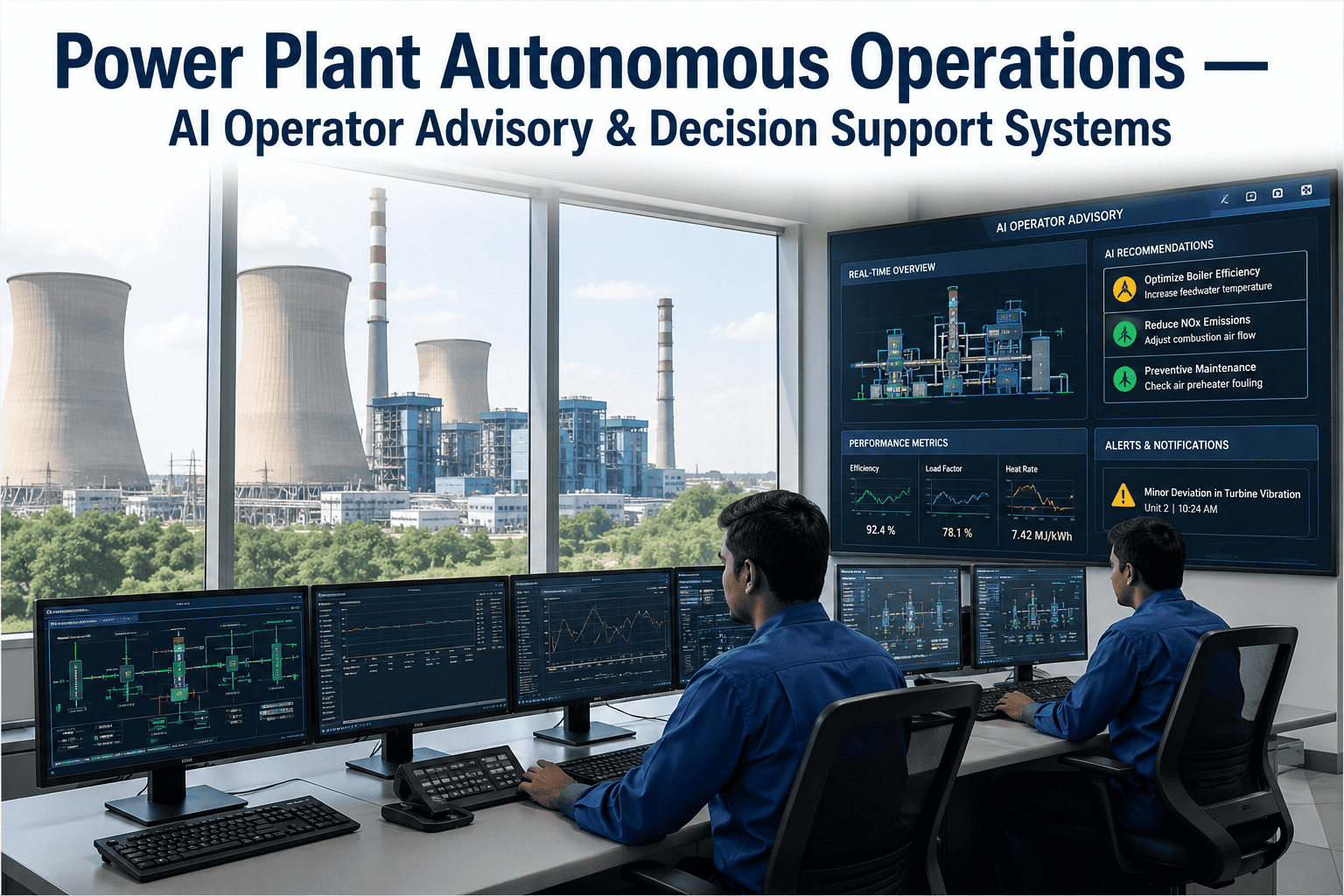
The goal of the advisory notification is speed and clarity during a moment when an operator is already managing competing priorities, so the interface is designed to answer three questions immediately: what is likely wrong, how confident is the system, and what should happen next. Notifications are deliberately kept short and scannable rather than presenting a dense technical report, because an operator mid-transient does not have time to read a paragraph before deciding on an action, and every extra second spent parsing an advisory is a second not spent responding to the actual condition on the unit.
Expert System Diagnosis Versus Traditional Troubleshooting
The table below summarizes the practical difference between relying on operator experience alone and layering an expert system on top of your existing alarm and historian infrastructure.
| Factor | Traditional Troubleshooting | Expert System Diagnosis |
|---|---|---|
| Speed to probable cause | 15-30 minutes, experience dependent | Seconds to a few minutes |
| Consistency across shifts | Varies widely by operator tenure | Same reasoning applied every time |
| Knowledge retention | Lost when experienced staff leave | Captured permanently in rule library |
| Coverage of rare faults | Limited to what the shift has seen before | Includes documented but rarely encountered modes |
| Improves over time | Only through individual experience | Learns from every confirmed root cause plant-wide |
A Realistic Path From Pilot Unit to Fleet-Wide Diagnostics
Plants that see the fastest return on a diagnostic expert system tend to start narrow and prove value before expanding, rather than trying to encode every possible fault across every unit on day one. The phased approach below reflects how most successful deployments actually progress, starting with a single high-value system and expanding once operators are actively relying on the advisories in daily decisions.
Reliability engineers and plant managers evaluating this kind of rollout should expect the heaviest lift in Phase 1, since knowledge capture is inherently a human-driven exercise that benefits from structured interviews rather than a one-time documentation dump. Plants that budget adequate time for this phase consistently see stronger long-term adoption than those that rush straight to Phase 3.
What Plant Teams Ask Before Deploying a Diagnostic Expert System
Give Every Operator Your Best Troubleshooter's Instincts
iFactory's fault diagnostic expert system turns raw alarms into ranked causes and recommended actions in real time, so diagnosis no longer depends on who happens to be on shift. Book a demo and see it running against a fault scenario from your plant.