Pressure vessels operating in power plants face relentless exposure to high temperatures, corrosive environments, and cyclic loading conditions that silently degrade wall thickness over time. A single undetected thinning event can cascade into catastrophic failure, forcing emergency shutdowns, endangering personnel, and costing millions in lost generation. API 510 provides the authoritative framework for pressure vessel inspection, yet many facilities still rely on rigid time-based schedules that either over-inspect low-risk equipment or dangerously under-inspect high-risk assets. Shifting to a risk-based inspection strategy transforms how plants allocate maintenance resources, targeting critical degradation mechanisms with precision rather than calendar assumptions. Book a Demo to see how iFactory's AI platform automates your API 510 compliance and remaining life calculations.
Eliminate Guesswork from Pressure Vessel Inspection
Move beyond calendar-based inspections. Deploy AI-driven API 510 risk assessment that pinpoints exactly where and when to inspect your critical pressure equipment.
Why Risk-Based Inspection Outperforms Time-Based Schedules
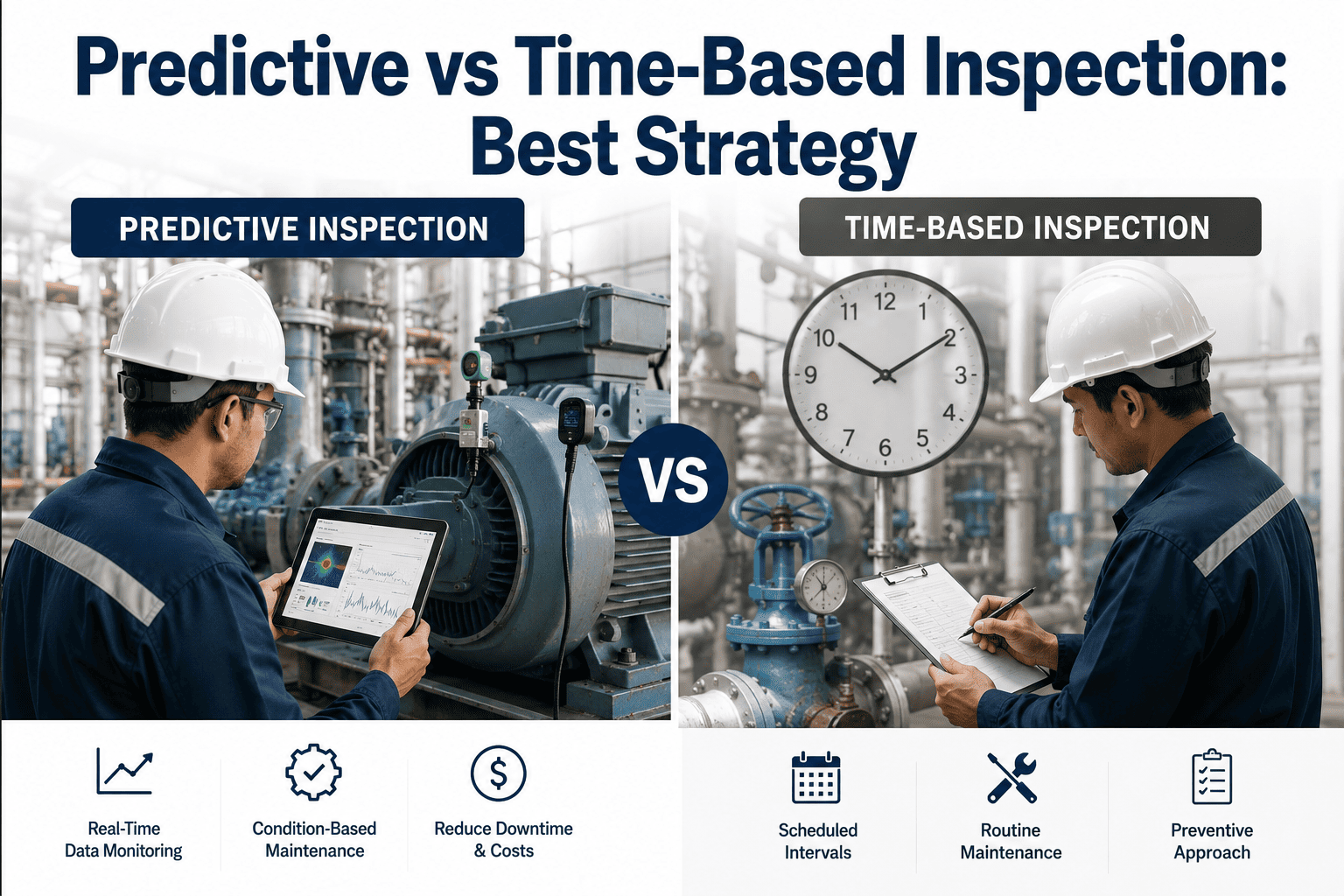
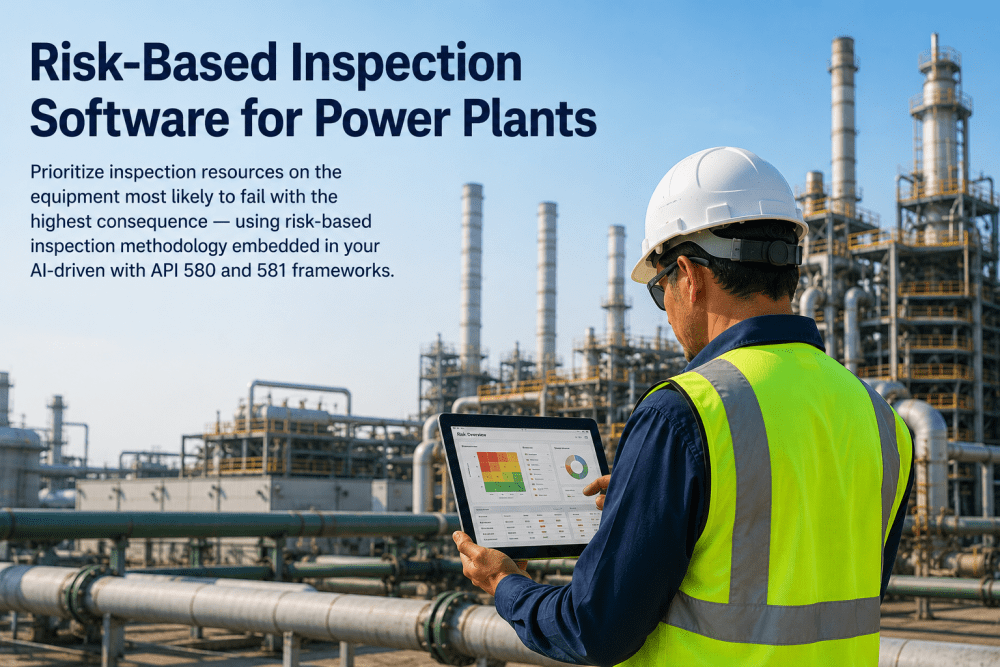
Traditional API 510 inspections follow fixed intervals, typically half the remaining life or a maximum of 10 years. This approach treats every vessel identically regardless of its operating conditions, corrosion environment, or failure consequence. A boiler drum in a base-load coal plant experiences fundamentally different degradation than a flash drum in a cycling combined-cycle unit, yet time-based schedules apply the same inspection logic. Risk-based inspection under API 580 and API 581, integrated with API 510, calculates a probability of failure and consequence of failure for each vessel, producing a risk ranking that drives inspection prioritization. Plants that adopt RBI typically reduce overall inspection volume by 25 to 40 percent while increasing inspection effectiveness on the top 20 percent of critical equipment.
High Consequence Vessels
Boiler drums, superheater headers, and high-pressure separators where failure results in forced outage, personnel safety risk, or environmental release. These vessels receive the most frequent NDE and thickness monitoring attention under a risk-based program.
Priority 1 - Frequent InspectionMedium Consequence Vessels
Low-pressure feedwater heaters, condensate receivers, and process drums where failure causes production loss but limited safety or environmental impact. Inspection intervals are optimized based on actual corrosion rates rather than worst-case assumptions.
Priority 2 - Condition-BasedLow Consequence Vessels
Storage tanks, buffer vessels, and non-critical piping components where failure has minimal operational impact. These vessels can safely extend inspection intervals, freeing resources for high-risk equipment that demands closer attention.
Priority 3 - Extended IntervalAPI 510 Time-Based vs. Risk-Based Approach
| Inspection Parameter | Time-Based (Traditional) | Risk-Based (Optimized) |
|---|---|---|
| Interval Determination | Half remaining life or 10 years max | Risk score drives interval length |
| Corrosion Rate Input | Conservative estimate or previous interval | AI-predicted rate from continuous data |
| Thickness Data Frequency | At each inspection shutdown only | Continuous online monitoring enabled |
| MAWP Recalculation | Manual per API 510 Section 8 | Automated with real-time thickness |
| Resource Allocation | Spread equally across all vessels | Concentrated on highest risk units |
| Unplanned Shutdown Risk | Moderate to High | Significantly Reduced |
Corrosion Rate Determination: A Data-Driven Process
API 510 requires corrosion rate determination to calculate remaining life and set inspection intervals. The traditional method uses two thickness readings separated by time, but this produces a single average rate that masks acceleration or deceleration of corrosion. AI-powered platforms transform this into a continuous, dynamic calculation.
Historical Thickness Collection
Gather all previous thickness measurement reports, UT scan data, and inspection records for each vessel circuit. Minimum two data points are required, but more points improve accuracy significantly.
Trending Analysis
Plot thickness versus time for each monitoring location. AI algorithms identify linear, parabolic, or step-change corrosion patterns that manual analysis often misses, especially in locations with intermittent exposure.
Short-Term vs. Long-Term Rate
API 510 distinguishes between short-term corrosion rate from the most recent interval and long-term rate over vessel life. The more conservative of the two is used for remaining life calculation unless technically justified otherwise.
Predictive Rate Modeling
AI models incorporate process variables like temperature, pressure, flow rate, and chemical treatment to forecast future corrosion rates, enabling proactive inspection planning before thickness reaches minimum allowed values.
Remaining Life Calculation Under API 510
The remaining life of a pressure vessel component is calculated using the formula: Remaining Life equals Actual Thickness minus Minimum Required Thickness divided by Corrosion Rate. While the math appears straightforward, each variable carries significant uncertainty. The actual thickness depends on measurement accuracy, location selection, and statistical treatment of multiple readings. The minimum required thickness is calculated per the original code of construction using current MAWP, joint efficiency, and material allowable stress. The corrosion rate is the most variable input. Small errors in corrosion rate, say 0.001 inches per year, can shift remaining life estimates by years for low-corrosion services. iFactory's platform reduces this uncertainty by using machine learning models that continuously update corrosion rate estimates as new thickness data, process conditions, and operating logs become available, providing a confidence interval around each remaining life prediction rather than a single point estimate.
Remaining Life Formula Breakdown
Most recent UT measurement at the thinnest point in the circuit, verified with statistical analysis across multiple readings at each TML.
Calculated per construction code using current MAWP, joint efficiency, and allowable stress at the design temperature of the vessel.
AI-predicted rate in mils per year, using the more conservative of short-term and long-term trends with confidence intervals.
Dynamic output updated continuously as new thickness data or process changes are detected by the AI analytics platform.
Automate Your API 510 Remaining Life Calculations
Stop manual spreadsheet calculations. Let AI compute corrosion rates, remaining life, and MAWP for every vessel in your fleet with confidence intervals.
MAWP Recalculation: When and How Often
Maximum Allowable Working Pressure must be recalculated whenever the actual thickness of a pressure vessel component falls below the original design thickness minus the corrosion allowance. API 510 Section 8 provides the methodology, requiring recalculation using the current thickness, original joint efficiency, and applicable code formulas. Many plants defer MAWP recalculation until an inspection reveals significant thinning, but this reactive approach can miss gradual degradation in services with slow but steady corrosion. A risk-based approach triggers MAWP recalculation automatically when thickness monitoring data indicates that the remaining corrosion allowance has been consumed beyond a defined threshold, typically 50 to 75 percent. This proactive recalculation ensures that operating pressure is always within the validated limits of the current vessel condition, preventing overpressure events on thinned components. At one 600 MW power plant, automated MAWP tracking identified a superheater header section that had degraded below its original MAWP, prompting a pressure reduction that prevented a potential failure during peak demand.
Inspection Interval Optimization
API 510 allows intervals up to half the remaining calculated life or 10 years, whichever is less. With AI-driven corrosion rate prediction, remaining life estimates become more accurate, often allowing longer intervals for low-risk vessels while tightening intervals for accelerating degradation. This dynamic interval setting eliminates both unnecessary inspections and dangerous gaps in coverage across your vessel fleet.
NDE Technique Selection
Risk-based strategies match NDE methods to the degradation mechanism. Ultrasonic thickness testing suits general corrosion, while phased array UT or guided wave testing detects localized thinning. AI analyzes historical inspection results to recommend the most effective and efficient NDE technique for each vessel circuit, reducing inspection time by 20 to 35 percent without compromising detection capability.
Thickness Monitoring Locations
API 510 requires sufficient thickness measurement locations to characterize corrosion patterns. AI algorithms analyze historical TML data to identify under-monitored zones, recommend additional locations in high-degradation areas, and eliminate redundant locations in stable zones, optimizing the inspection scope for maximum coverage with minimum effort and cost.
Frequently Asked Questions
How does API 510 define the inspection interval for pressure vessels?
API 510 specifies that the inspection interval shall not exceed half the estimated remaining life of the vessel or 10 years, whichever is less. The remaining life is calculated using the current corrosion rate and the difference between actual thickness and minimum required thickness. However, if the remaining life exceeds 10 years, the maximum interval remains capped at 10 years unless a risk-based assessment per API 580 justifies an extension. iFactory's AI platform automates this calculation for every vessel, flagging approaching interval deadlines and recommending adjustments based on updated corrosion data. To learn how automated interval tracking works in practice, book a demo.
What is the difference between short-term and long-term corrosion rate in API 510?
API 510 distinguishes between the long-term corrosion rate, calculated from the initial thickness measurement to the most recent one over the entire service life, and the short-term corrosion rate, calculated from the two most recent thickness measurements. The short-term rate may be higher or lower than the long-term rate depending on changes in process conditions, chemical treatment, or operating mode. API 510 requires using the more conservative rate for remaining life calculations unless a technical justification supports using the long-term rate. AI platforms track both rates simultaneously and alert engineers when a significant divergence occurs, indicating a change in the corrosion environment.
Can risk-based inspection extend the API 510 maximum 10-year interval?
Under certain conditions, yes. API 510 Section 6.4 allows extension beyond the half-remaining-life or 10-year maximum when a formal risk-based inspection analysis per API 580 and API 581 is performed. The RBI assessment must demonstrate that the risk of extending the interval is acceptable, considering both the probability of failure and the consequence of failure. This typically requires comprehensive thickness data, demonstrated stable corrosion rates, and low consequence classification. Regulatory bodies may have additional requirements, so plant-specific approval is essential. iFactory's platform generates the required risk documentation and supports the RBI case with data-driven evidence. For guidance on your specific regulatory environment, contact our support team.
How does AI improve thickness monitoring accuracy compared to manual methods?
Manual thickness monitoring relies on periodic UT measurements taken during outages, producing discrete data points that may miss rapid corrosion events between inspections. AI-powered monitoring integrates continuous thickness data from fixed sensors, online corrosion probes, and process parameter correlations to detect thickness changes in near real-time. Machine learning models also identify measurement outliers, correct for sensor drift, and statistically analyze TML data to distinguish between genuine corrosion and measurement noise. This results in corrosion rate estimates with 95 percent confidence intervals, compared to the wide uncertainty bands typical of manual two-point calculations used in traditional API 510 programs.
What happens when a vessel's remaining life reaches zero under API 510?
When the calculated remaining life reaches zero, the vessel has theoretically degraded to its minimum required thickness and can no longer sustain the current MAWP with the established corrosion allowance. At this point, API 510 requires several actions: the MAWP must be recalculated based on actual thickness, operating pressure may need to be reduced, the corrosion rate must be re-evaluated, and a re-rating or repair assessment must be performed. If the actual thickness has fallen below the minimum required thickness, the vessel must be repaired, replaced, or pressure-reduced immediately. AI platforms provide early warnings as remaining life approaches zero, typically at 12, 6, and 3 months, giving engineering teams adequate time to plan repairs or replacements without emergency scheduling. To see how predictive alerts work in practice, schedule a consultation.
Take Control of Your Pressure Vessel Integrity
Stop relying on spreadsheets and conservative assumptions. Deploy AI-driven API 510 compliance that protects your plant, your people, and your bottom line.