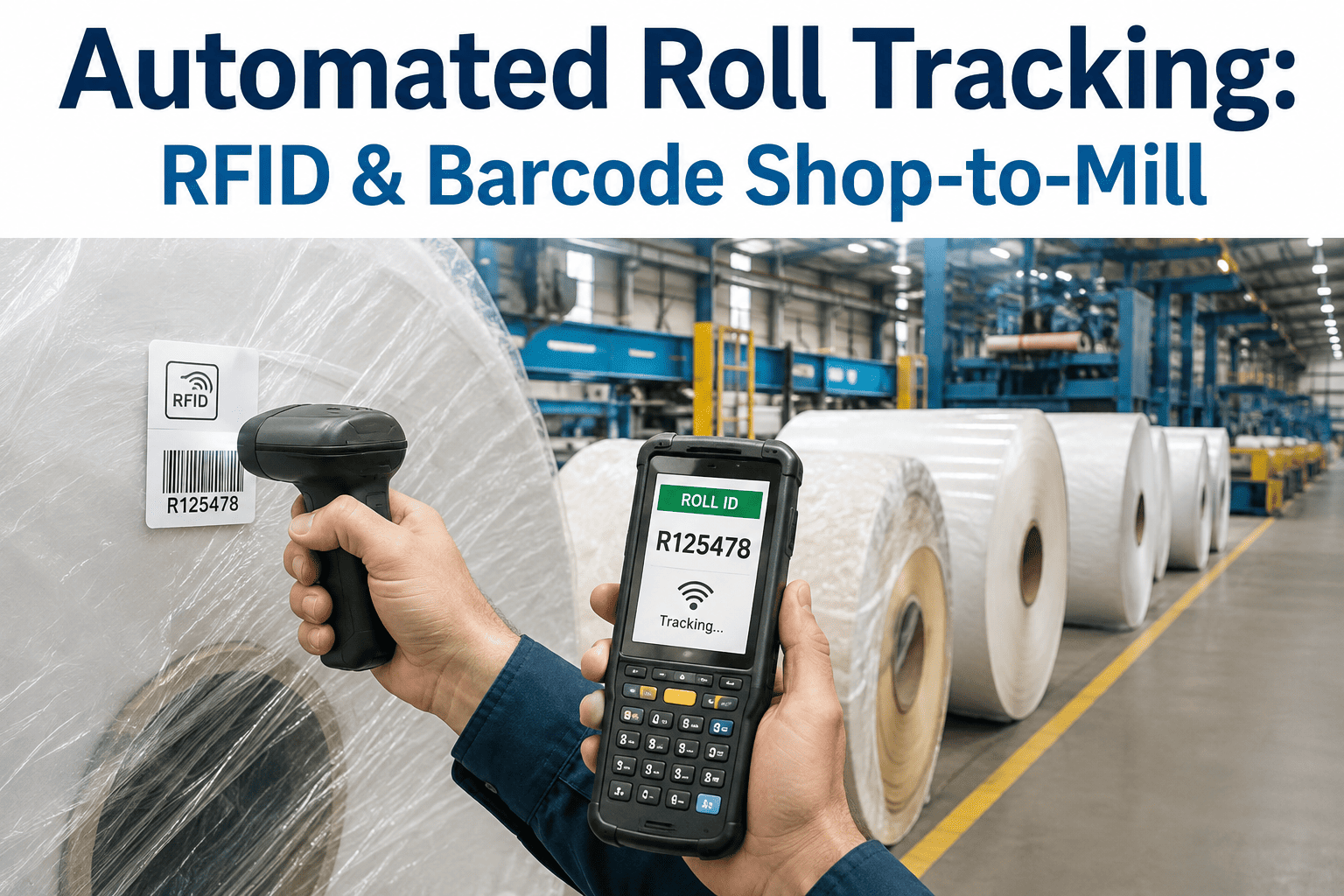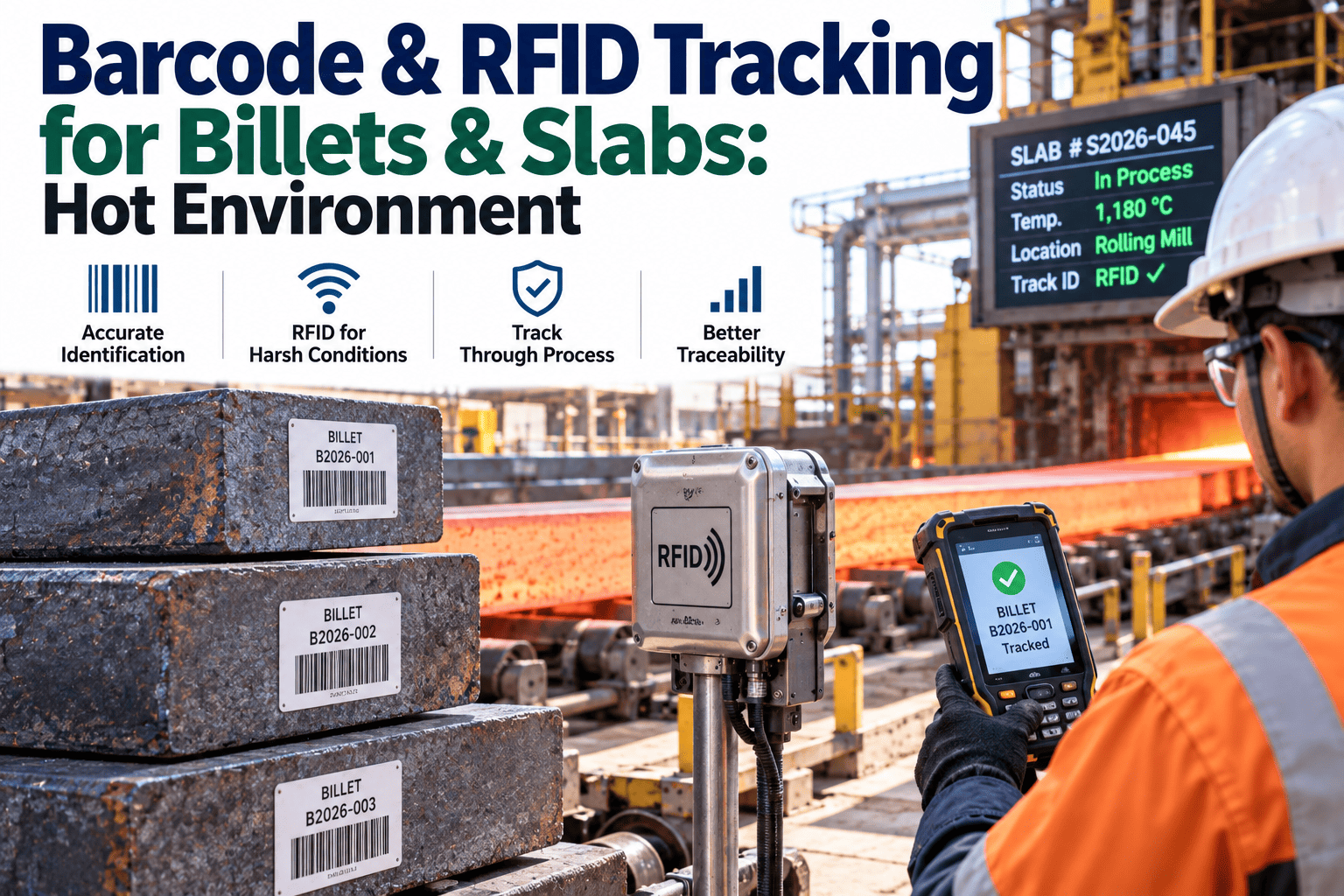
A billet coming off the reheating furnace can carry surface temperatures well past what a standard barcode label or an off-the-shelf RFID tag was ever built to survive, which is exactly why so many hot-product tracking systems fail right at the point where tracking matters most. A label that melts, chars, or loses its adhesive bond before the product cools enough to handle normally leaves a tracking gap right in the middle of the process, forcing a return to manual identification at the one stage where automated tracking would save the most time. Matching the right tag technology to the actual temperature a product carries at each tracking point isn't a minor spec detail — it's the difference between a system that works and one that quietly stops working the moment product gets hot. See which tracking technology actually survives your hottest process points.
Most Tracking Technology Fails Exactly Where Steel Gets Hot
A standard barcode label or RFID tag rarely survives reheating furnace or hot-rolling temperatures. Matching tag technology to actual process temperature is what keeps tracking continuous.
surface temperature a billet can carry directly out of a reheating furnace before rolling
the typical number of different identification technologies needed to cover a plant's full temperature range
the tracking continuity target across every process step, from cold yard storage through the hottest points in the mill
Tag Technology and Maximum Operating Temperature
Each identification technology has a hard ceiling on the temperature it can survive, which is exactly why matching the right one to each process point matters.
Standard Adhesive Barcode
Metal RFID Tag
Laser-Etched Barcode
Ceramic High-Temp RFID
Match the Right Technology to Every Process Point
iFactory maps your plant's temperature profile at every tracking point to show exactly which identification technology keeps tracking continuous through your hottest process steps.
What Makes Hot Environment Tracking Actually Work
Beyond just surviving the heat, a few additional factors determine whether a tracking system holds up under real production conditions.
Heat-Resistant Tag Construction
Ceramic substrates and laser-etched marking survive direct exposure to furnace and rolling temperatures without the adhesive failure that dooms standard labels.
High-Temperature Scanning
Scanning equipment positioned near hot process points needs its own thermal protection and often relies on longer-range reading to avoid direct heat exposure.
Automated Identity Handoff
As product moves between tracking zones with different tag technologies, identity has to transfer automatically rather than requiring a manual re-scan at each boundary.
Process Point and Recommended Technology
Different stages of a steel plant call for different identification technology based on the temperature and handling conditions at that specific point.
What Changes When Tracking Survives the Whole Process
Figures reflect typical outcomes within the first year after matching identification technology correctly to each process point's temperature profile.
A Plant Manager's View on Hot Environment Tracking
We went through two rounds of standard RFID tags that simply didn't survive going through the reheating furnace before we realized we needed a completely different technology for that specific point in the process, not just a more durable version of what we were already using. Once we matched ceramic tags to the furnace exit and kept standard barcodes for the cold yard, the whole tracking chain finally stopped breaking in the middle.
The Bottom Line on Hot Environment Product Tracking
A tracking system is only as strong as its weakest point, and for a steel plant that weak point is almost always wherever product temperature exceeds what the installed tag technology was actually built to survive. Matching the right identification method — standard barcode, metal RFID, laser-etched marking, or ceramic high-temperature RFID — to each specific process point's actual temperature is what keeps a plant's tracking chain continuous from cold yard to finished product instead of breaking exactly where automated tracking would matter most.
Frequently Asked Questions
How is a laser-etched barcode actually applied to a hot product?
Laser etching marks the code directly into the metal surface rather than applying an adhesive label, which is what allows it to survive temperatures that would destroy a standard printed label, though the mark still needs to remain legible to a scanner positioned to read it safely from an appropriate distance. Book a review to see how this applies to your specific process temperatures.
Can a single tag technology cover the entire plant instead of switching between multiple types?
Using a single high-temperature technology throughout is possible but usually more expensive than necessary, since cold and moderate-temperature zones don't need the same durability as a furnace exit point, which is why most plants use a mix of technologies matched to each zone's actual conditions rather than over-specifying everywhere.
How does identity transfer between different tag types as product moves through the plant?
A product's identity record is maintained in the tracking system independent of which physical tag technology is currently attached, so when a billet moves from a metal RFID zone to a laser-etched zone, the system links the new mark back to the same underlying product record rather than treating it as a new, unrelated item.
What happens if a tag does fail despite being matched to the right temperature range?
Even well-matched tags occasionally fail from unusual handling or an unexpected temperature excursion, so most systems include a fallback identification method, such as visual inspection combined with process sequence data, to maintain traceability continuity even when a specific tag reading fails.
Does scanning equipment near hot process points need special protection too?
Yes — scanners positioned near furnace exits or hot rolling lines typically need thermal shielding, cooling, or increased read distance to protect the equipment itself, which is a separate engineering consideration from the tag technology choice but equally important for reliable reading at high-temperature points. Talk to a specialist about equipment protection requirements for your specific hot zones.
Stop Losing Tracking at Your Hottest Process Points
Book a 30-minute assessment. iFactory maps your plant's temperature profile and shows exactly which tracking technology fits each stage of your process.