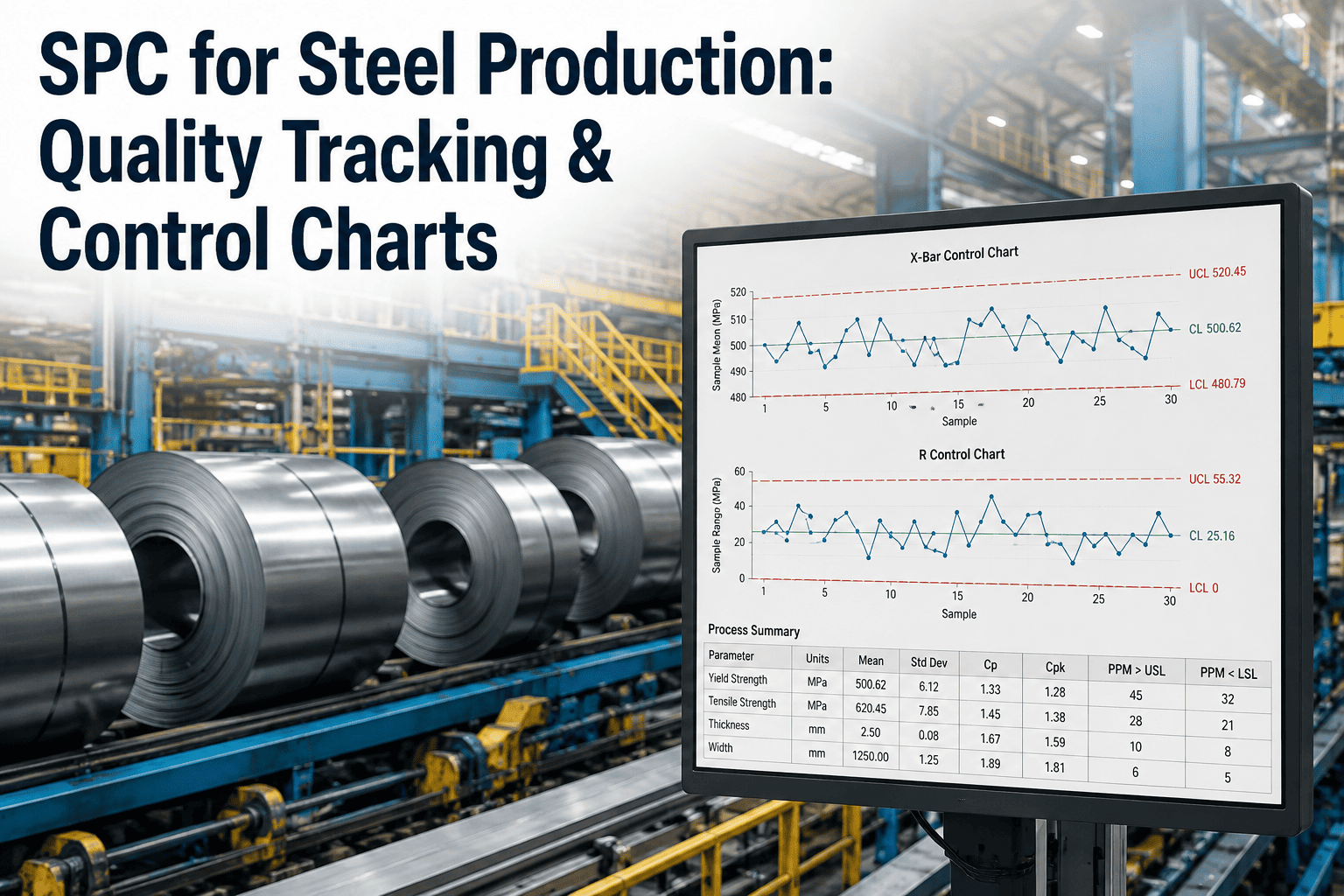
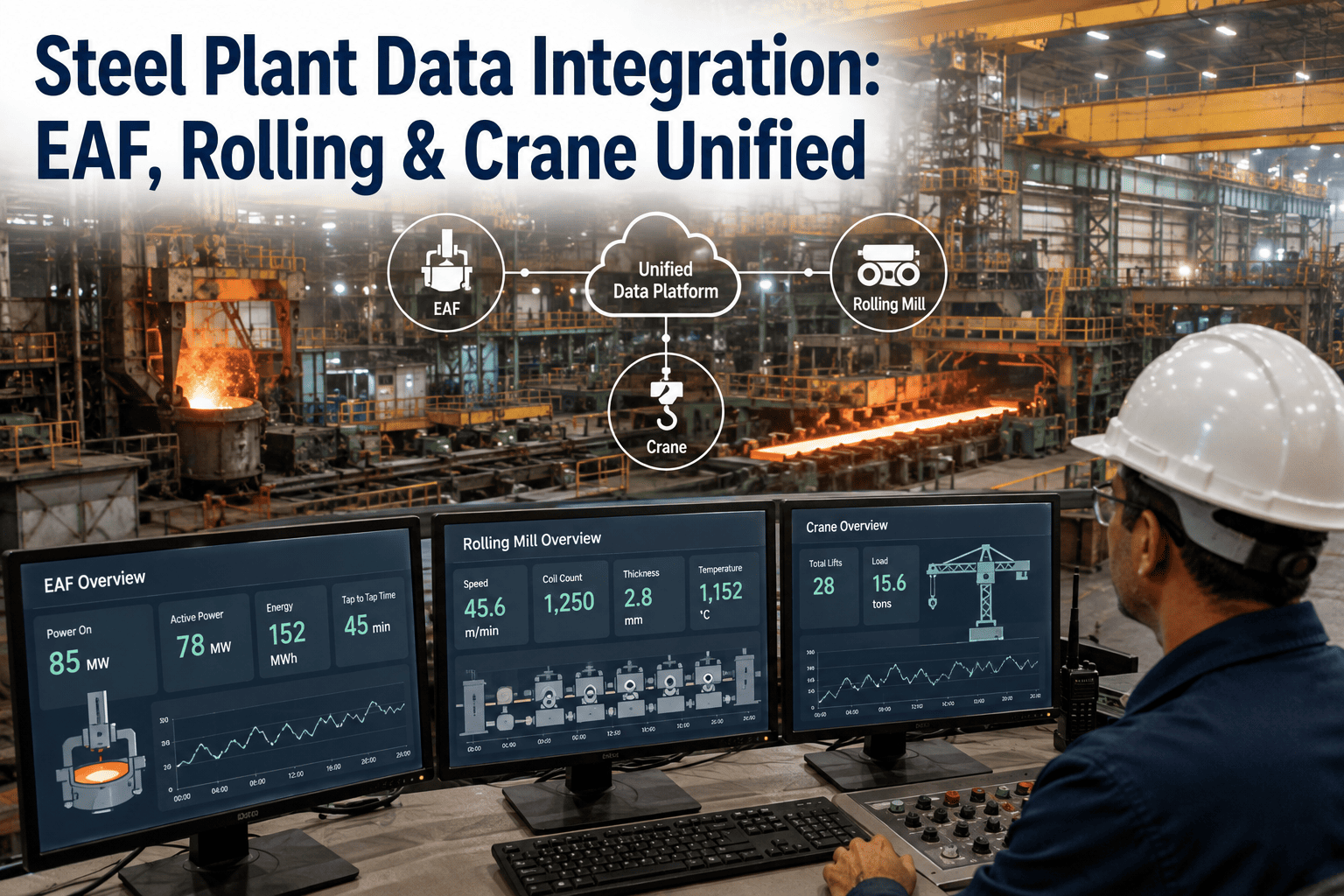
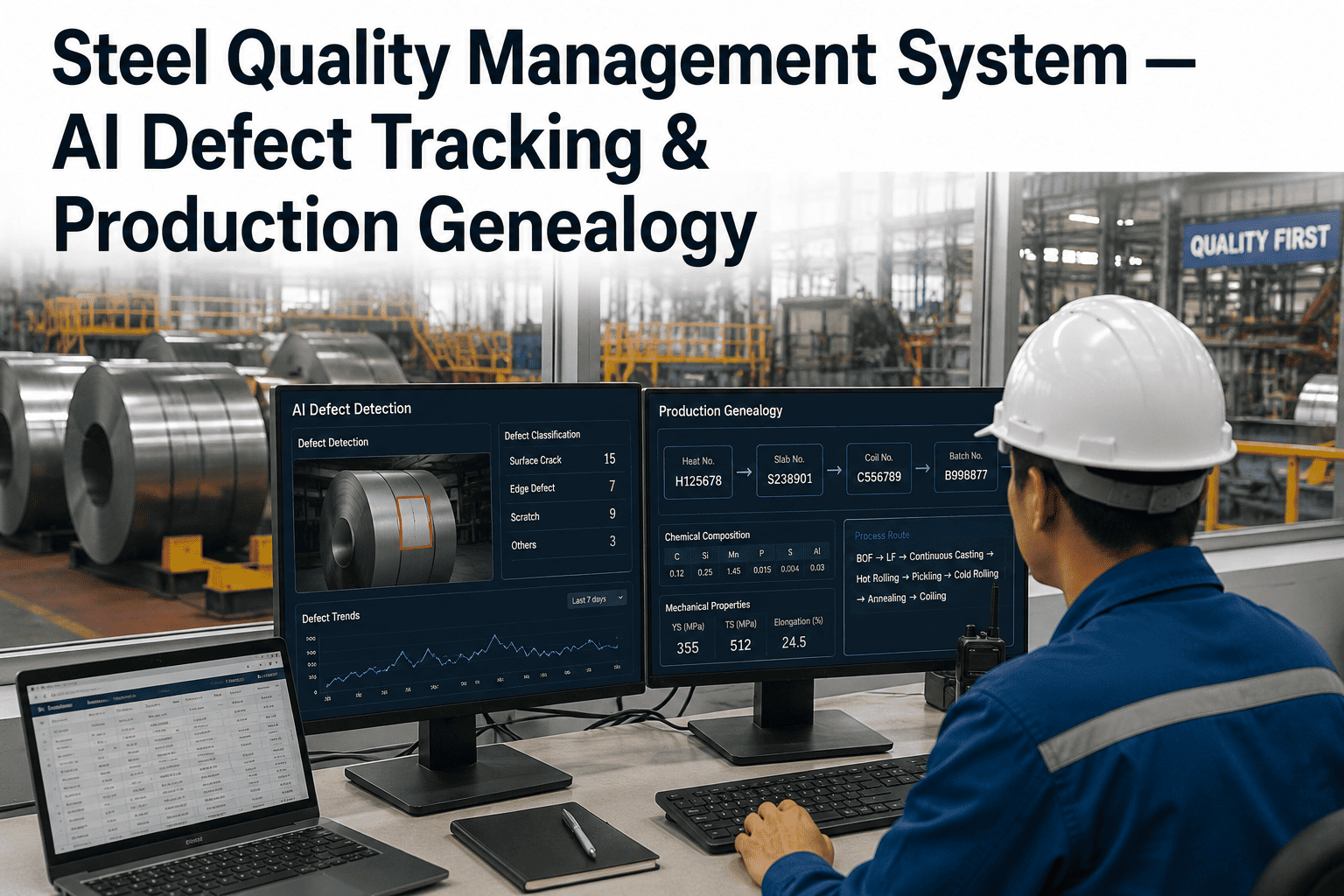
A steel plant's automation hierarchy has a well-defined gap right where it matters most: Level 1 controls the equipment, Level 3 runs the business, and the layer in between — the one that's supposed to connect production data to material flow to quality results in real time — is often a patchwork of spreadsheets and manual handoffs standing in for a real Level 2 MES. Without it, an EAF's tap chemistry, a CCM's casting parameters, and a rolling mill's dimensional results all live in separate systems that nobody has connected, which means tracing a coil's full production history means chasing down data from three or four different places and hoping the timestamps line up. A proper Level 2 MES closes that gap by sitting exactly where it belongs, translating equipment-level data into the material flow and quality record the rest of the plant actually needs. See what a connected Level 2 layer would do for your plant's data.
The Missing Middle Layer Between Your Equipment and Your Business Systems
Level 1 controls the machines. Level 3 runs the business. A real Level 2 MES connects material flow, process data, and quality across every step in between.
the typical number of disconnected data sources a steel plant relies on without a unifying Level 2 MES
the data latency Level 2 MES is designed to deliver, replacing end-of-shift or next-day reporting cycles
the typical production chain a Level 2 MES ties together into a single continuous material and quality record
Where Level 2 Sits in the Automation Hierarchy
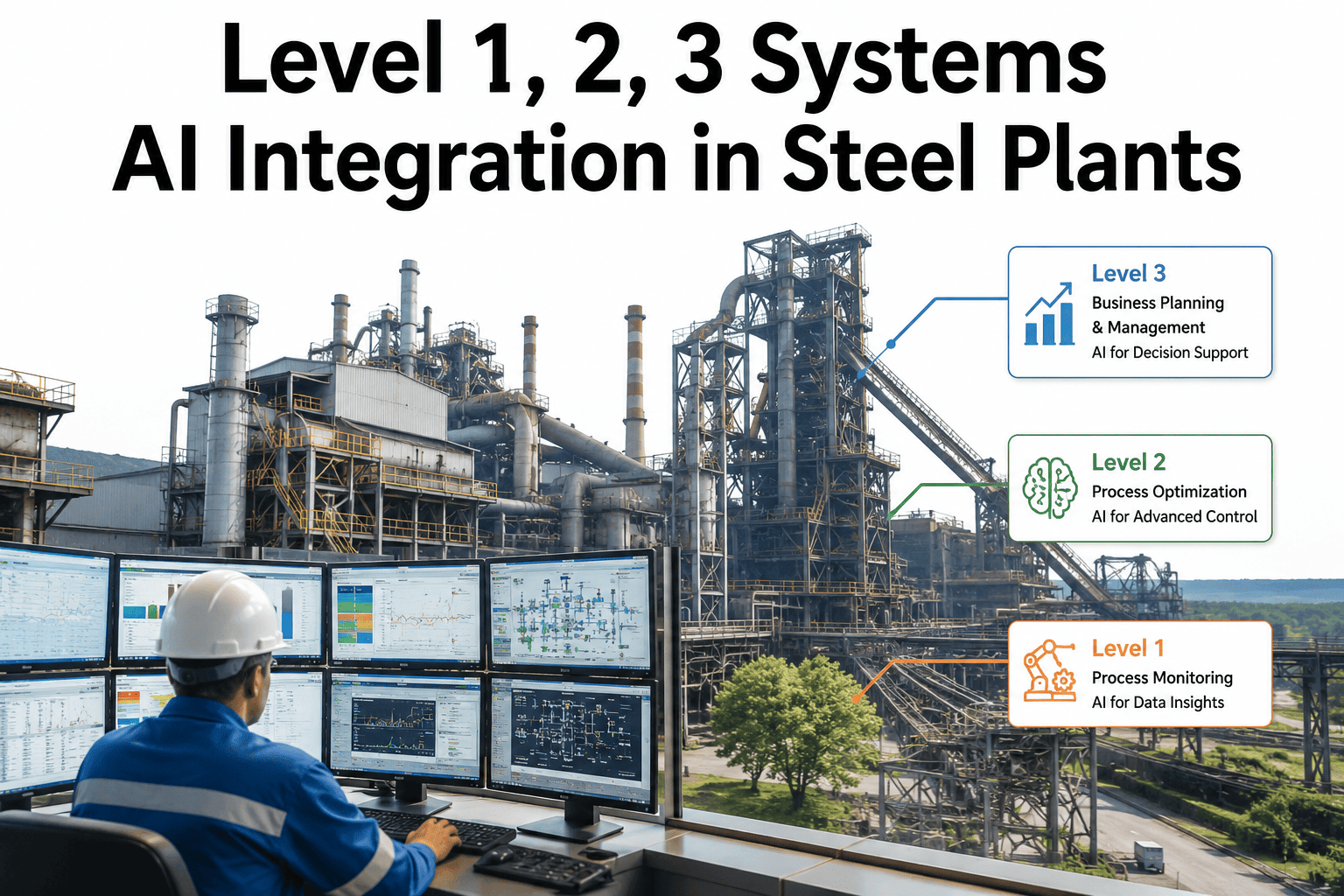
Each level of the automation hierarchy has a distinct job, and the plant only functions as a connected whole when all three are actually talking to each other.
Level 3 — Business Systems
ERP, order management, and financial planning systems that need accurate production and material data to plan and report against.
Level 2 — Manufacturing Execution
Material flow tracking, process data aggregation, and quality integration across EAF, CCM, reheating, and rolling — the layer that turns equipment data into a coherent production record.
Level 1 — Equipment & Control
PLCs and equipment controllers running the EAF, CCM, reheating furnace, and rolling mill, generating raw process data at the machine level.
Map the Gaps in Your Current Automation Layer
iFactory reviews your existing Level 1 and Level 3 systems to show exactly what a Level 2 MES layer would need to connect for a complete production and quality record.
What a Level 2 MES Actually Does Across the Plant
Three core functions define what separates a real MES layer from a collection of disconnected reports.
Material Flow Tracking
Every heat, billet, and coil is tracked continuously as it moves through EAF, CCM, reheating, and rolling, maintaining a single identity through the entire process.
Process Data Aggregation
Equipment-level data from each process step is collected and normalized into a consistent format, replacing separate systems with disconnected data formats.
Quality Integration
Process and test data from every stage feed into a unified quality record, linking final product quality back to the specific process conditions that produced it.
Without Level 2 vs. With Level 2
The practical difference between operating without a real Level 2 layer and operating with one shows up clearly in how long common data tasks actually take.
What Changes When Level 2 Actually Connects the Plant
Figures reflect typical outcomes within the first year after implementing a Level 2 MES layer connecting EAF, CCM, reheating, and rolling data.
An Operations Director's View on Level 2 MES
Before we had a real Level 2 layer, tracing a coil's history meant pulling casting data from one system, rolling data from another, and quality results from a third, then manually matching them by timestamp and hoping nothing got missed. Once everything flowed through a connected MES layer, that same trace became an automatic lookup, and it changed how quickly we could respond to both internal quality questions and customer inquiries.
The Bottom Line on Level 2 MES for Steel Plants
A steel plant without a real Level 2 layer is running with a gap exactly where continuous material and quality tracking matters most, forcing manual reconciliation across systems that were never designed to talk to each other. Implementing Level 2 MES doesn't replace Level 1 equipment control or Level 3 business systems — it connects them, turning fragmented process data into a single, continuous production and quality record.
Frequently Asked Questions
What's the actual difference between Level 1, Level 2, and Level 3 systems?
Level 1 refers to the PLCs and controllers running individual equipment like an EAF or rolling mill stand, Level 3 refers to business systems like ERP that plan and report at the enterprise level, and Level 2 MES sits between the two, translating raw equipment data into the material flow, process, and quality information the rest of the plant actually needs. Book a review to see where your current systems fall in this hierarchy.
Does implementing Level 2 MES require replacing existing Level 1 equipment controls?
No — Level 2 MES is designed to connect to existing Level 1 equipment controls and pull data from them, not replace them, since the equipment-level automation already in place typically continues operating exactly as it does today while the MES layer adds the missing connective and reporting layer above it.
How long does a typical Level 2 MES implementation take?
Timelines vary significantly based on how many process areas need to be connected and how much existing data infrastructure already exists, but most implementations phase in by process area, starting with the highest-value connection points like CCM-to-rolling traceability before expanding to the full production chain.
Can Level 2 MES data feed directly into quality certificates and compliance reporting?
Yes — since Level 2 MES aggregates process and quality data from across the production chain, that same data becomes the natural source for generating quality certificates and compliance documentation automatically, rather than requiring a separate manual data pull for each certificate or report.
What's the most common starting point for plants implementing Level 2 for the first time?
Many steel plants start with CCM-to-rolling material flow and quality integration, since that connection point often has the highest immediate value for defect correlation and certificate generation, before expanding backward to EAF process data and forward to shipping and customer documentation. Talk to a specialist about sequencing an implementation for your specific plant layout.
Connect What Your Equipment and Your ERP Can't Talk About
Book a 30-minute assessment. iFactory reviews your current automation hierarchy and shows exactly where a Level 2 MES layer would close the gap.