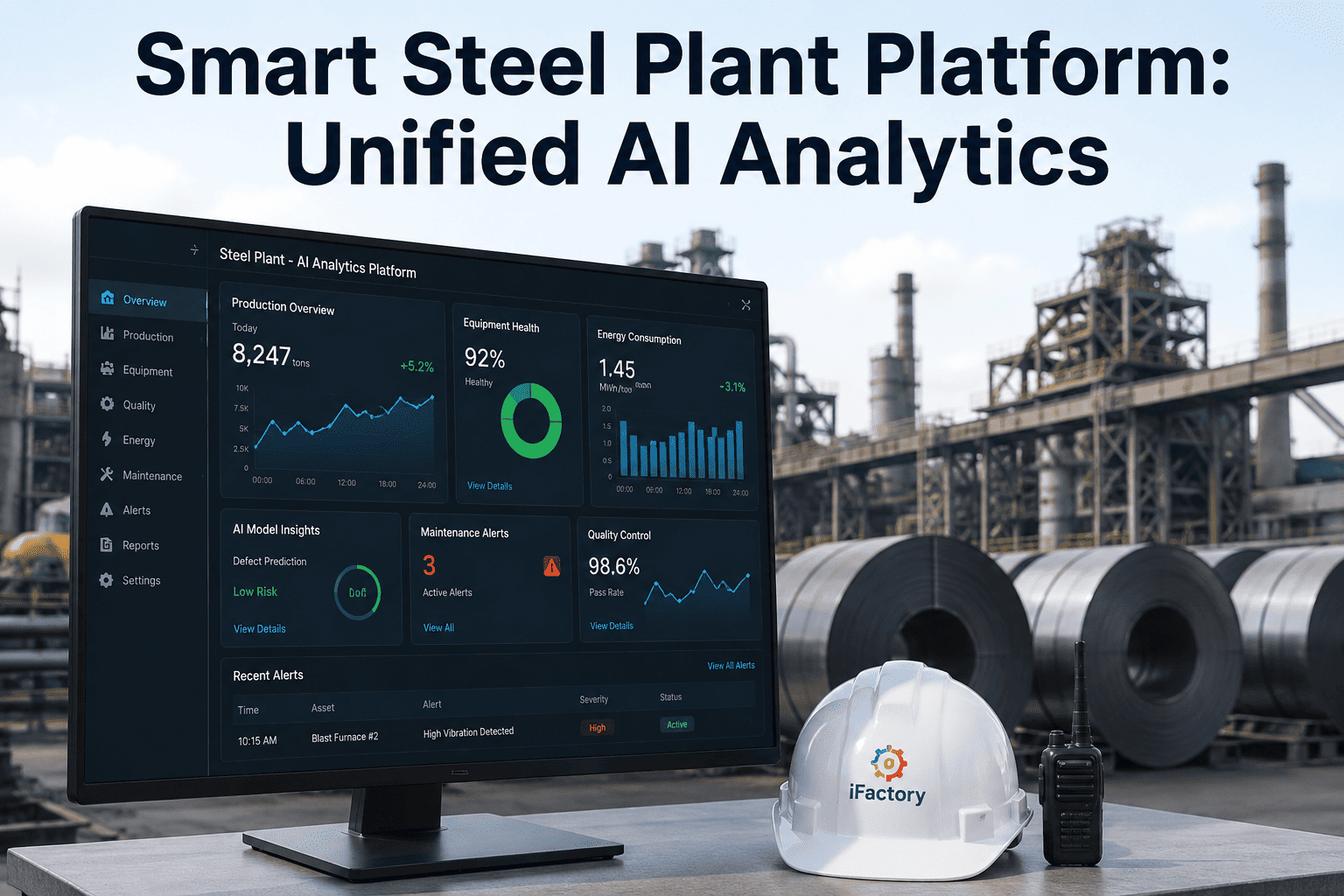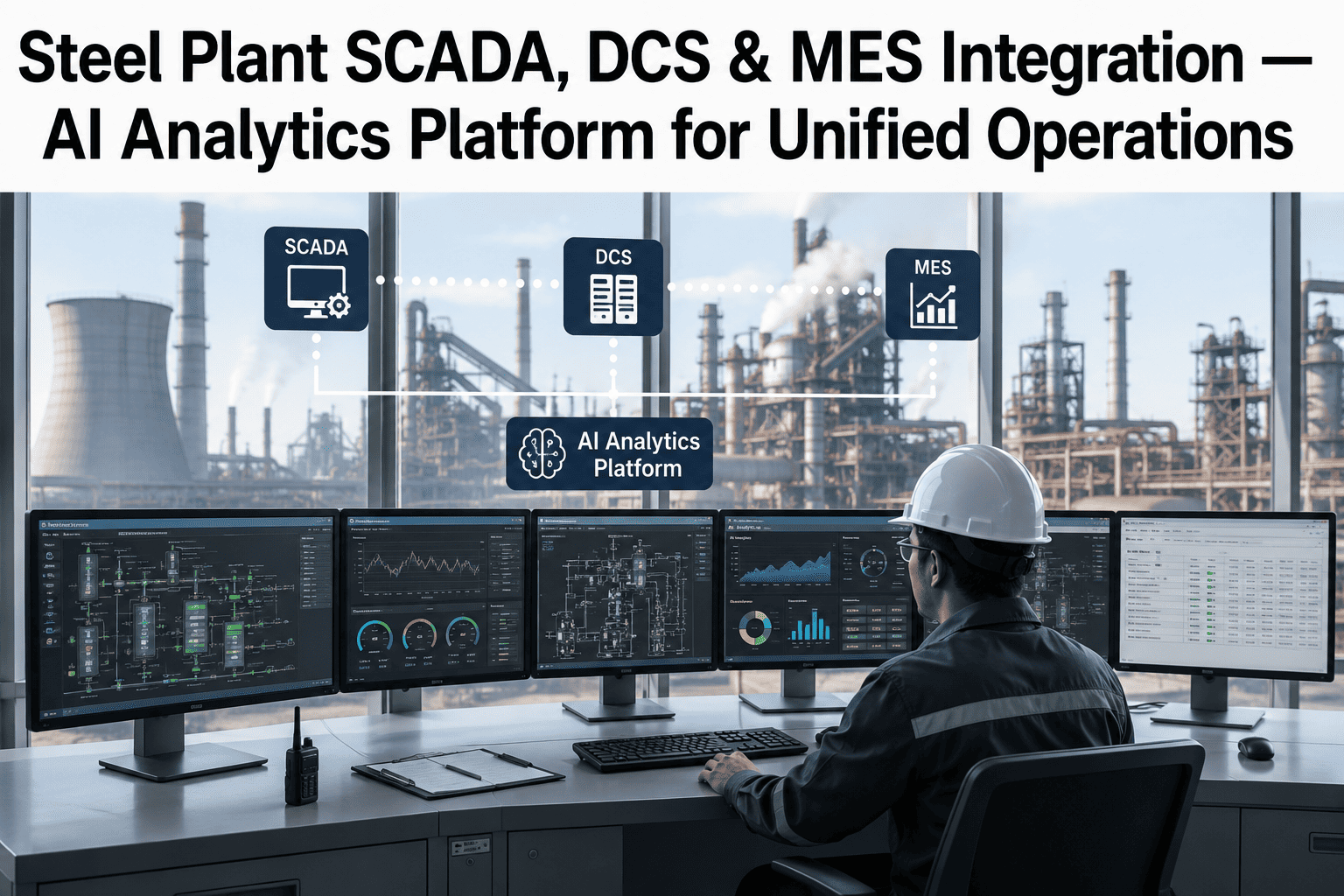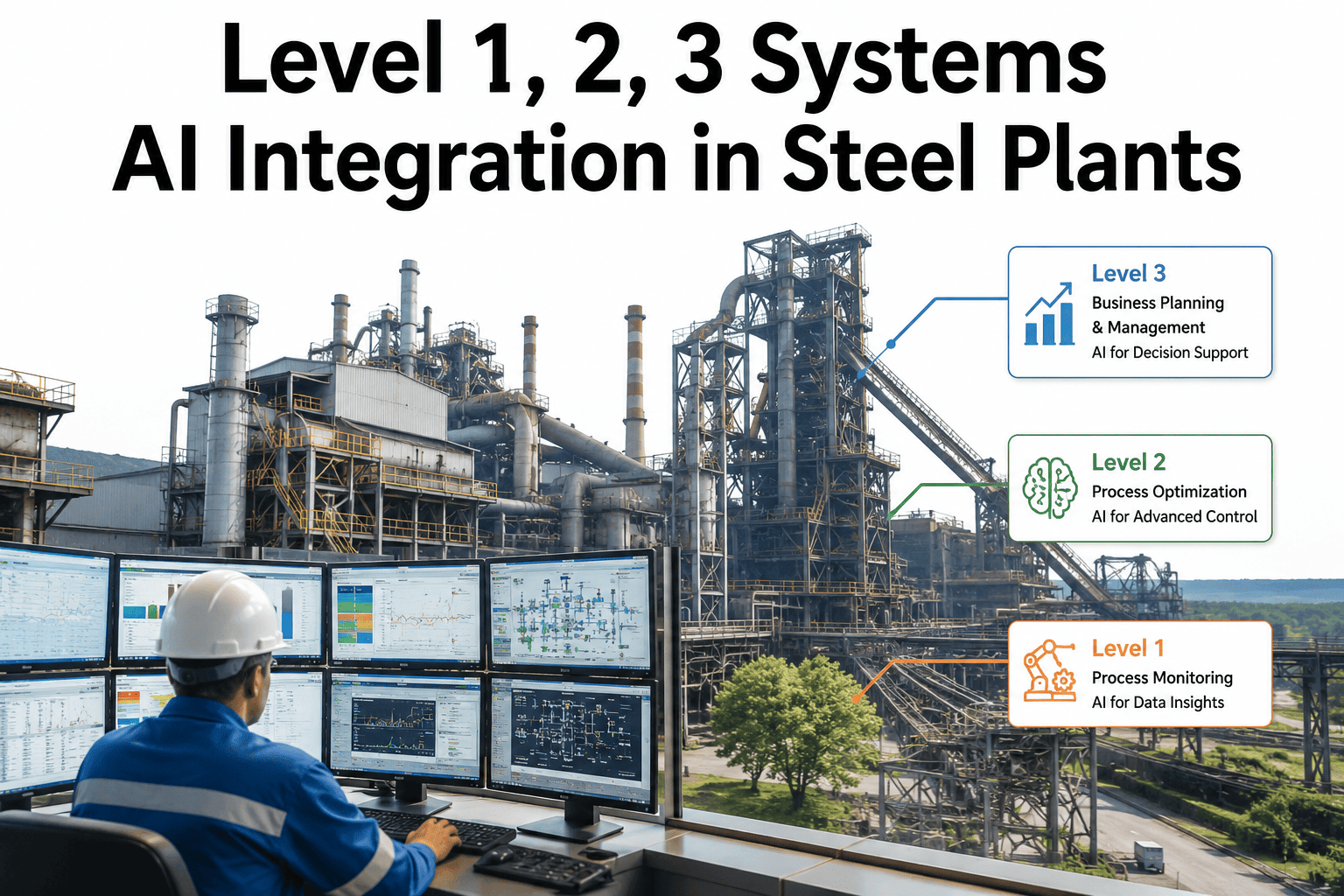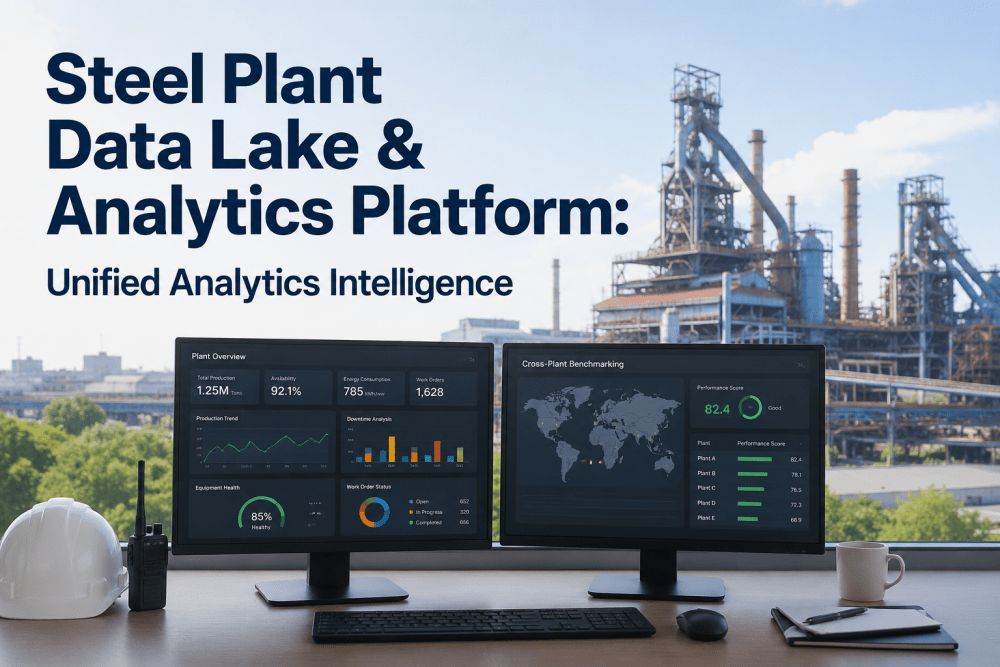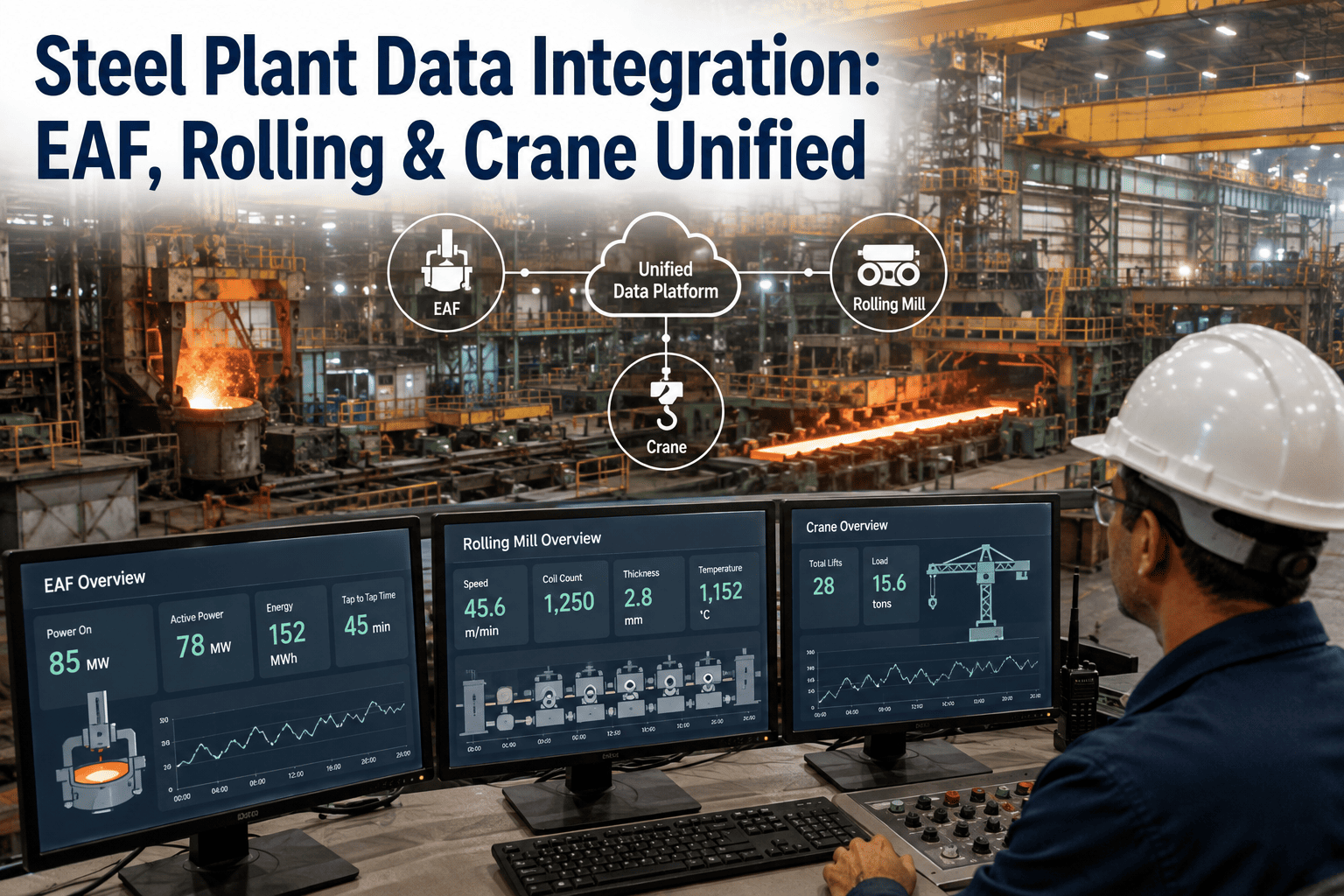
The EAF's Level 2 system knows exactly how much power went into the last heat. The roll shop's spreadsheet knows which work rolls are due for regrinding. The crane's PLC knows its motor hours and load cycles. None of these systems know about each other — and when a rolling delay traces back to a crane waiting on a scrap bucket that a scheduling system three buildings away had no visibility into, nobody finds out until the shift report gets written by hand. iFactory's unified data layer connects EAF, rolling mill, roll shop, crane, and refractory systems into one queryable model — without replacing any of the department-level systems already running. What makes this particularly frustrating in steel manufacturing specifically is how much genuine data richness already exists at the department level. A modern EAF Level 2 optimizer captures far more process detail than most plant managers realize — electrode position, power curve, chemistry trending, all at high frequency. The rolling mill's automation captures equally rich data on force, speed, and temperature. None of this is a data-generation problem. It's a data-connection problem, and those are solved completely differently.
Five Systems. Five Databases. Zero Systems That Talk to Each Other.
Every department in an integrated steel plant runs its own historian, its own PLC data, its own spreadsheet of record — each one internally coherent and well-maintained, none of them connected to the others. Cross-system questions that should take seconds take hours of manual reconciliation, if anyone attempts them at all.
Why Steel Plant Data Ends Up This Fragmented in the First Place, Structurally
Data fragmentation in an integrated steel plant isn't an accident of poor planning — it's the predictable outcome of how these systems get purchased and deployed. The EAF's Level 2 automation was specified and commissioned by the melt shop's process engineers, built around metallurgical models specific to electric arc melting. The rolling mill's system was specified by a different team, on a different timeline, optimized for pass scheduling and mill force control. The roll shop tracks regrind cycles in whatever tool its own supervisor adopted, often a spreadsheet, because nobody upstream ever asked it to integrate with anything. Each department solved its own problem well — the fragmentation is a side effect of every department doing exactly what it was supposed to do, in isolation.
This isn't unique to steel, but steel plants experience it more acutely than most manufacturing sectors because of how physically and organizationally distinct each production stage is. A melt shop, a caster, a hot mill, and a cold mill aren't just different process steps — they're frequently different buildings, different shift supervisors, different capital budgets, and different vendor relationships. The physical separation reinforces the organizational separation, and the organizational separation reinforces the data separation, in a loop that no single department has the mandate or incentive to break on its own.
This pattern is consistent enough that it has a name in the wider manufacturing literature: the OT-versus-IT divide, where operational technology teams prioritize uptime and process stability above all else, while any integration or standardization effort gets treated as risk to a system that's working. A plant floor engineer who has kept a Level 2 caster model tuned for a decade has little incentive to expose that system to a new integration layer that might introduce instability — and that caution, while individually rational, is exactly what perpetuates the silo at the plant level.
EAF / Level 2 Automation
Electrode consumption, power profile, chemistry, and tap-to-tap timing live in the furnace's Level 2 optimizer — rich, high-frequency data that rarely leaves the melt shop's own systems, even though downstream rolling schedules depend directly on what comes out of this furnace. A furnace that ran a marginal chemistry adjustment on a given heat has effectively made a decision that constrains what the rolling mill can safely do with that steel three steps later — a decision the mill team has no visibility into unless someone manually flags it.
Rolling Mill Systems
Pass schedules, roll force, speed, and temperature profiles determine finished product quality — and they depend heavily on the metallurgical history of the steel arriving from upstream, a connection that's frequently invisible without manual heat-tracking that most plants simply don't have the staff time to perform consistently, shift after shift, heat after heat.
Roll Shop
Work roll regrind cycles, inventory, and wear patterns directly affect rolling mill output quality — but roll shop scheduling frequently runs independently of the mill's actual production schedule, creating avoidable mismatches between roll availability and rolling demand that show up as unplanned downtime rather than a scheduling coordination problem.
Crane / Material Handling
Overhead cranes move scrap, ladles, and coils between every other system on this list — meaning crane availability is a genuine constraint on melt shop and rolling schedules, yet crane maintenance and load data usually live in a separate system entirely disconnected from the production scheduling that depends on them being available at the right moment.
A Rolling Delay Traced Back to a Crane Nobody Was Watching Is a Data Problem, Not a Crane Problem
iFactory connects EAF, rolling, roll shop, crane, and refractory data into one model — so a cross-department bottleneck shows up as a pattern, not a mystery someone reconstructs after the fact.
What Fragmented Steel Plant Data Actually Costs — Beyond the Obvious Inefficiency
The direct cost of data fragmentation is easy to underestimate because it rarely shows up as a single dramatic failure — it shows up as hundreds of small, cumulative inefficiencies that never get attributed to their actual root cause. Deloitte research on integrated versus siloed operational systems has found businesses running integrated systems save meaningfully on operational costs compared to those working with fragmented data — a gap that compounds across every department boundary a plant has to cross.
The mechanism behind that gap is straightforward once you see it directly: a quality defect that originates in furnace chemistry doesn't announce itself as a furnace problem when it surfaces three process steps later in the rolling mill. Without a connected data model, the rolling mill team investigates rolling parameters, finds nothing conclusive, and the defect gets logged as an unexplained quality event — never traced back to the melt shop condition that actually caused it. McKinsey's broader manufacturing analytics research has found that manufacturers effectively leveraging their operational data reduce unplanned downtime substantially and see meaningful productivity gains — value that's specifically unlocked by connecting data across systems, not by any single department's tool working harder in isolation.
The various headline figures cited for the total cost of data silos across industry — some reports put a global number in the trillions — should be treated with appropriate skepticism, since tracing several of these figures back to their original source reveals unclear or disputed provenance. What's more reliably documented, and more useful for a steel plant specifically, is the pattern rather than a single dollar figure: fragmented data consistently correlates with slower root-cause investigation, harder multi-site benchmarking, and AI or predictive maintenance initiatives that stall because the clean, unified historical data they require simply doesn't exist yet.
| Fragmentation Pattern | What Goes Undetected | Where It Surfaces Instead |
|---|---|---|
| EAF chemistry not linked to rolling quality | Heat-specific quality risk carried forward from melting | Unexplained rolling defect, investigated as a mill problem |
| Roll shop schedule independent of mill schedule | Roll availability mismatched to actual rolling demand | Unplanned mill downtime waiting on a regrind |
| Crane data disconnected from production scheduling | Crane availability as a genuine production constraint | Delay logged as "material handling," root cause never traced |
| Refractory wear tracked separately from campaign planning | Predictable end-of-campaign risk building over time | Reactive refractory failure treated as an unexpected event |
Why a Shared Identifier Is the Single Highest-Leverage Piece of This Entire Problem
Every technical integration challenge in this article ultimately reduces to one deceptively simple requirement: every system needs to agree on what a heat number, a coil ID, or an asset tag actually refers to. Without that shared identifier, connecting five systems' data doesn't produce a coherent picture — it produces five separate datasets sitting next to each other, technically accessible but practically uncorrelated, because nothing tells the unified layer that "Heat 48291" in the EAF system and "Coil C-77042" in the rolling mill system describe the same physical material at two different points in its production journey.
This is why heat and coil tracking discipline matters more to a successful integration project than almost any other single factor. A plant where heat numbers are consistently recorded and carried forward at every handoff — from tap to caster to reheat to mill — has already done the hardest part of the integration work, even before any software gets involved. A plant where that discipline breaks down at any single handoff point will find that even a technically sophisticated unified data layer can't fully bridge the gap, because the connective tissue between records simply doesn't exist in the underlying data.
A Unified Steel Plant Data Layer Doesn't Mean Replacing Every Department System
The most persistent misconception about fixing data fragmentation is that it requires ripping out every department's existing system and replacing it with one monolithic platform. That approach is both unrealistic and unnecessary — the EAF's Level 2 optimizer, the roll shop's inventory tool, and the crane's PLC data all continue doing their specific jobs well. What's missing isn't a replacement for any of them; it's a layer above all of them that reads from each system, structures the data consistently, and makes cross-system queries possible without forcing any department to give up the tool built specifically for its process.
This distinction between "replace" and "connect" is worth making explicit early in any integration conversation, because it directly addresses the OT team's legitimate concern about disrupting a stable system. A read-only connection to a Level 2 optimizer's data export doesn't touch the optimizer's control logic, doesn't require downtime to implement, and doesn't put the melt shop's core process control at any additional risk. Framing the project this way — additive rather than disruptive — is frequently the difference between an integration effort that gets approved quickly and one that stalls in review for months over concerns that were never actually applicable to a read-only architecture.
Inventory what each system already exposes
Most Level 2 systems, historians, and even spreadsheet-based tracking already have some form of export or API — the first step is cataloging what's accessible without modification, not assuming new instrumentation is required everywhere.
Establish a consistent identifier across systems
A heat number, a coil ID, an asset tag — something that lets a record in the EAF system, the rolling mill system, and the quality system all be recognized as referring to the same physical material or asset.
Build the connective layer above existing systems, not instead of them
Read-only connections through OPC-UA, MQTT, or historian exports let the unified layer ingest data without disrupting any department's existing operational tool.
Prioritize the cross-system questions that matter most first
Rather than attempting full plant-wide integration on day one, start with the specific cross-department questions that currently require the most manual reconciliation — heat-to-defect tracing is a common high-value starting point.
Expand system by system as value is demonstrated
Each additional department connected into the unified layer compounds the value of the ones already connected — the crane data becomes more useful once it can be correlated against the production schedule it constrains.
Common Mistakes That Undermine Steel Plant Data Integration Projects on the Floor
Every integrated steel plant I've worked with had the same starting point: five or six departments, each running a system that was genuinely excellent at its specific job, none of them aware the others existed. The fix was never about which system to rip out — it was about building the connective layer that let a heat number mean the same thing in the melt shop's data and the rolling mill's data. Once that's in place, questions that used to take a week of phone calls take a query.
Frequently Asked Questions About Steel Plant Data Integration
Do we need to replace our EAF Level 2 system or rolling mill automation to integrate our plant data?
No — a unified data layer is designed to sit above existing department-level systems, reading from them through standard interfaces like OPC-UA, MQTT, or historian exports, rather than replacing the specialized tools that each department already relies on. Your EAF's Level 2 optimizer and your rolling mill's process automation continue running exactly as they do today.
This matters because replacing a well-tuned Level 2 system carries real operational risk and cost that most plants have no appetite for — the integration approach that succeeds is the one that respects existing investment rather than asking a plant to start over. Book a demo to see how iFactory connects to existing EAF and rolling systems without disrupting them.
Where should we start if we want to integrate data across EAF, rolling, and crane systems?
Rather than attempting a full plant-wide integration immediately, most successful projects start with a single, high-value cross-department question that currently requires significant manual reconciliation — heat-to-defect tracing between the melt shop and rolling mill is a common and valuable starting point, since quality issues that originate in furnace chemistry are notoriously hard to trace once the material has moved downstream.
Proving value on one focused connection builds both the technical foundation and the organizational trust needed to expand to additional systems like the roll shop and crane data. Book a demo to discuss which cross-system question would deliver the most immediate value for your specific plant configuration.
How do you connect a crane's PLC data to a production scheduling system that was never designed to see it?
Most modern crane systems, including automated overhead crane platforms, already expose load cycle, position, and motor hour data through standard industrial protocols — the technical connection is usually more accessible than the organizational recognition that crane availability is actually a production constraint worth tracking alongside furnace and mill schedules. The integration challenge is less about extracting the data and more about building the correlation that shows when crane availability, not furnace or mill capacity, is the actual bottleneck in a given shift.
Once that correlation exists, crane scheduling can be planned alongside melt shop and rolling schedules rather than treated as an assumed-available resource. iFactory's support team can walk through what data your specific crane systems already expose.
Our roll shop still runs on a spreadsheet — can that realistically be integrated with everything else?
Yes, and this is a more common starting condition than plants often expect — many roll shops track regrind cycles, inventory, and wear history in a spreadsheet precisely because nobody upstream ever required integration with a broader system. A spreadsheet with structured, consistent data is actually easier to bring into a unified layer than an inconsistently formatted legacy system, since the data itself is usually clean even if the tooling around it is basic.
The practical path is establishing a consistent roll identifier that matches how the rolling mill references the same roll, then building a connection that reads the spreadsheet data on a defined schedule until a more automated capture method is justified. Book a demo to see how spreadsheet-based department data gets incorporated into a unified model.
How long does a steel plant data integration project typically take?
Timeline depends heavily on scope — a focused integration connecting two or three systems around a specific, high-value question can move considerably faster than an attempt to connect every department simultaneously, which is exactly why starting narrow is the recommended approach rather than a compromise. Read-only integration through standard protocols also moves faster than any project requiring changes to existing control systems, since it avoids the change-control and validation overhead that a control modification would trigger.
Plants that start with one well-scoped connection and expand incrementally tend to see working value within a matter of months, with full multi-department integration built out over a longer horizon as each connection proves itself. Book a demo to get a realistic timeline estimate based on your specific system inventory.
Connect EAF, Rolling, Roll Shop, Crane, and Refractory Data Into One Model
iFactory reads from your existing department-level systems and builds the unified data layer that makes cross-system questions answerable in seconds — without replacing a single tool your teams already rely on or disrupting the process control that keeps your plant running.