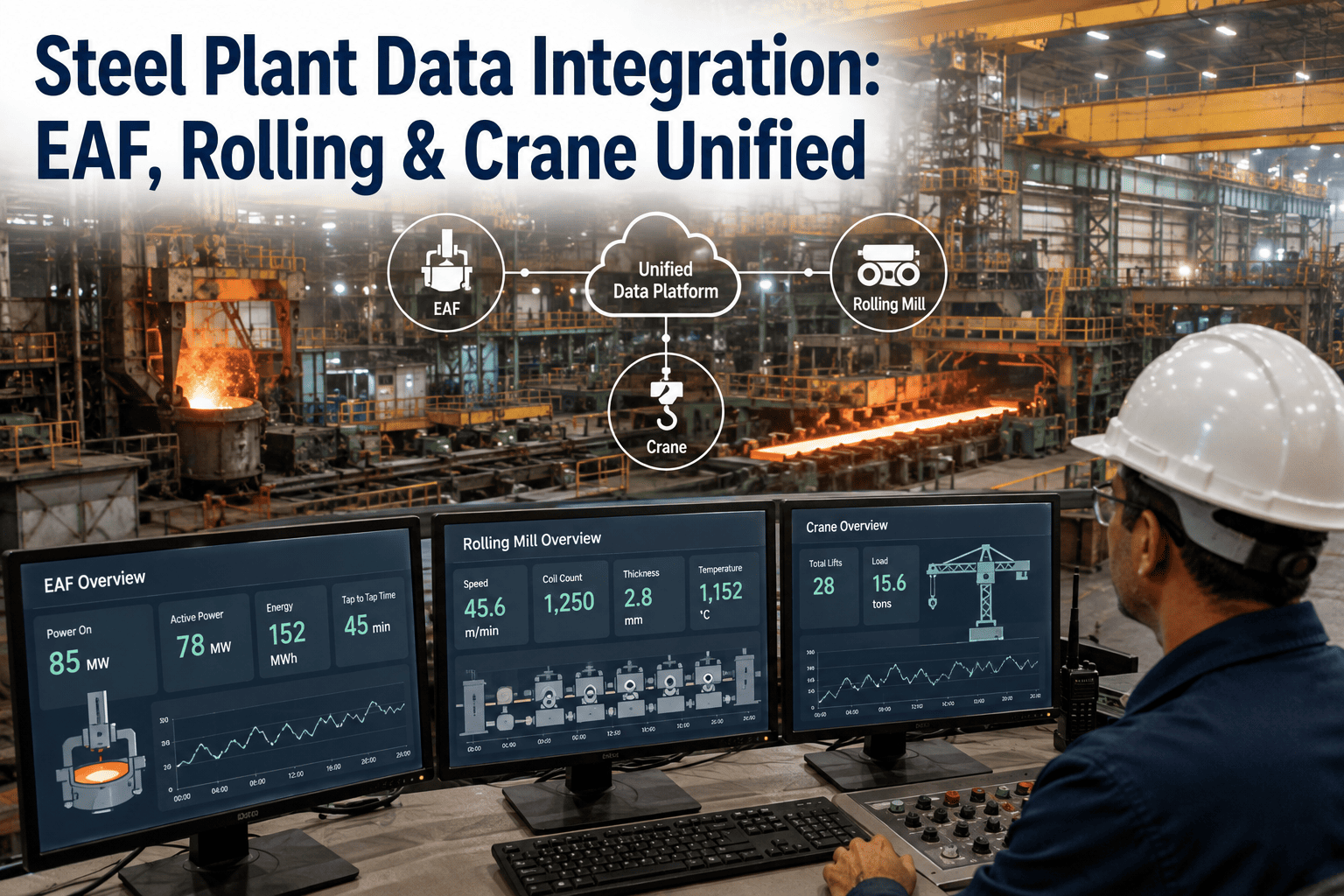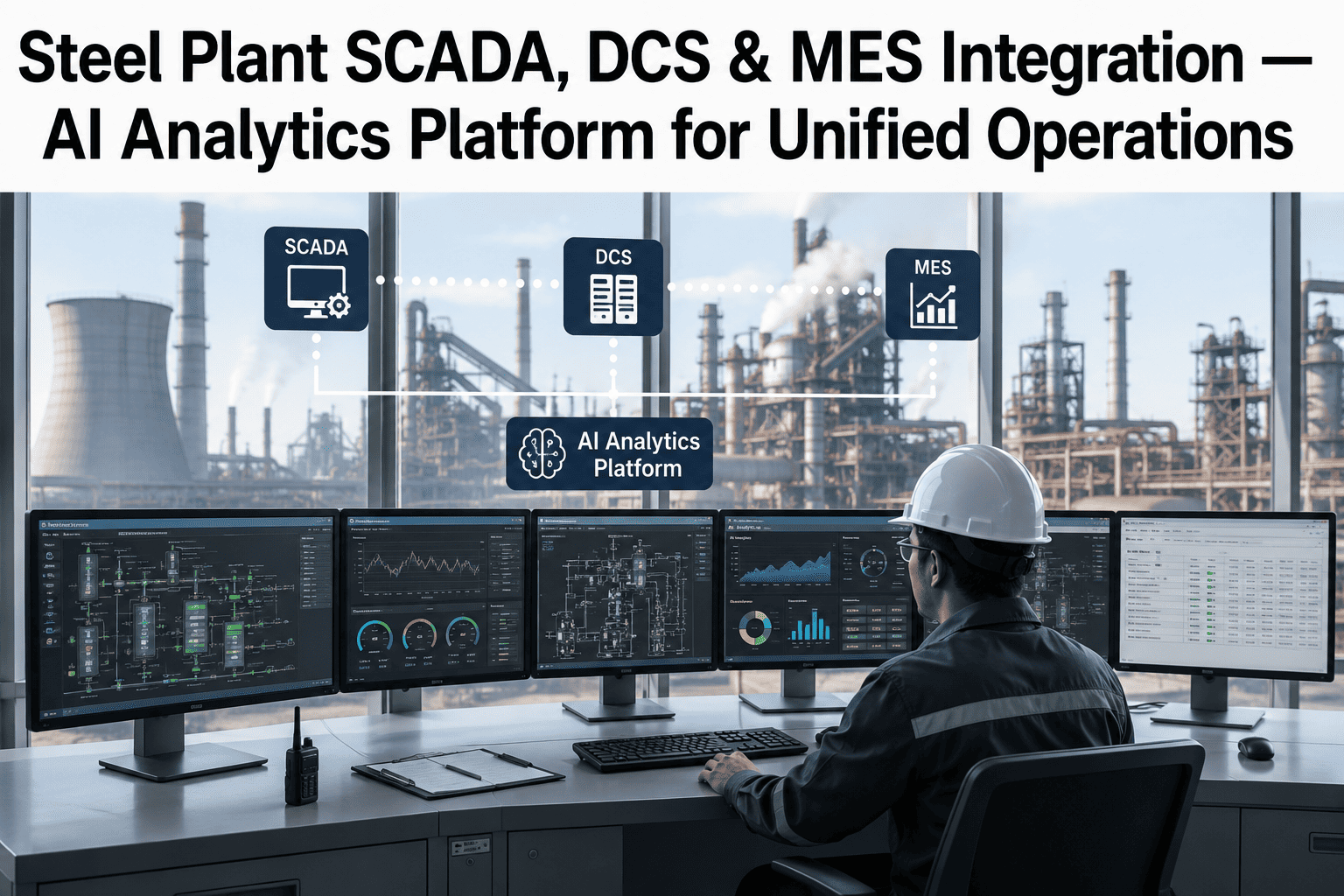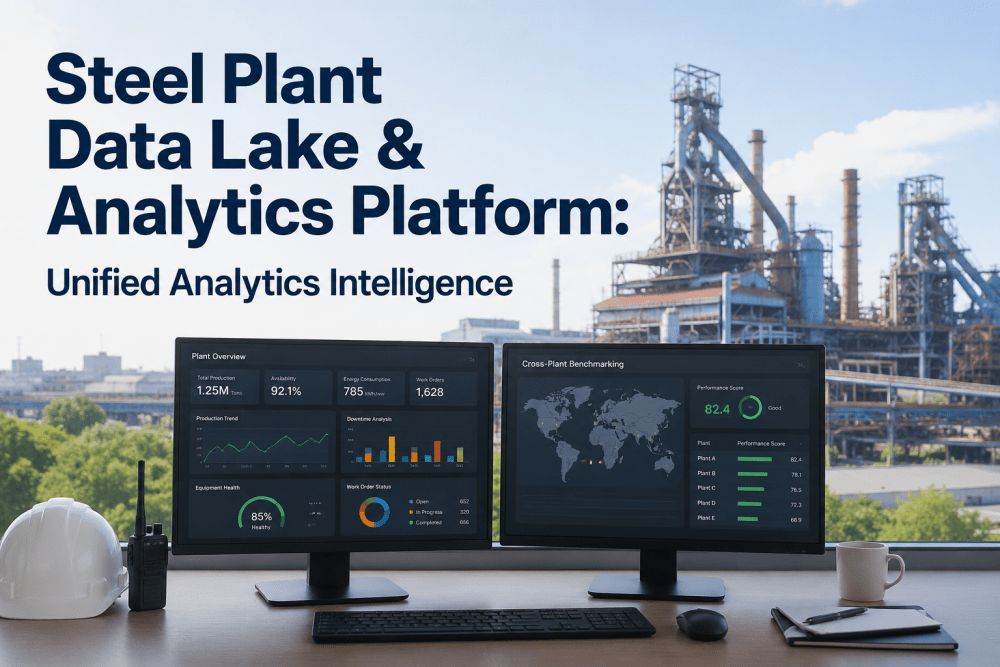
Ask five people in the same steel plant what the true cause of last week's yield dip was and you will likely get five different answers, one blaming the caster, one blaming raw material quality, one blaming a rolling mill setting, one blaming maintenance timing, and one who genuinely does not know because their system never showed them the other four perspectives. That is not a knowledge problem, it is a data fragmentation problem, and it is the reason so many steel plants sit on years of historian data without ever turning it into a decision anyone trusts. A unified platform that connects casting, rolling, quality, and maintenance data into one AI-ready layer changes that conversation entirely, and the fastest way to see what that looks like against your own plant data is to book a demo with our team.
Your Plant Already Has the Data, It Just Never Learned How to Talk to Itself
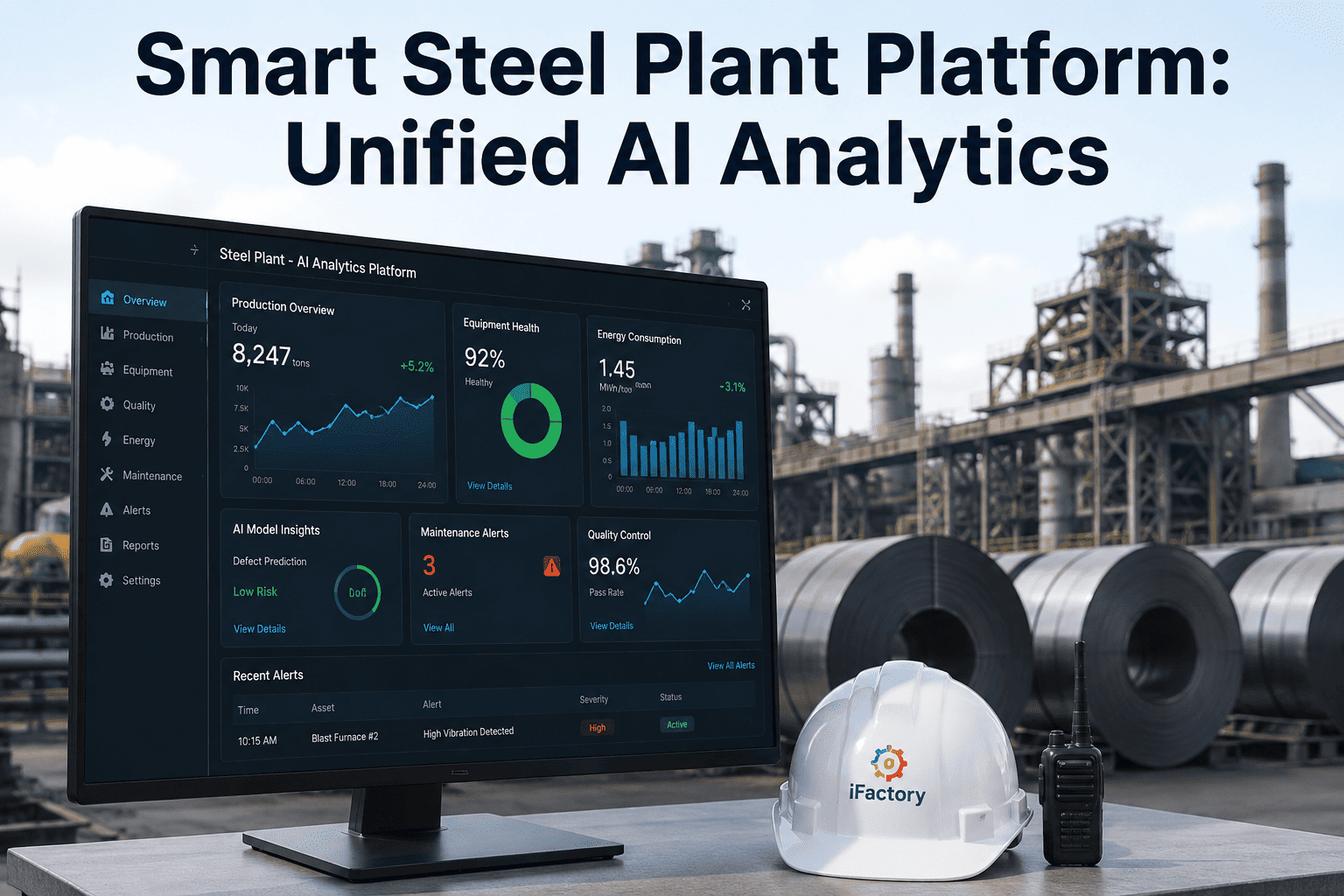
iFactory unifies casting, rolling, quality, and maintenance data into a single AI-ready layer, turning years of disconnected historian records into predictive models and decision support your teams can actually act on during a shift, not weeks after the fact.
Why Steel Plants Sit on Years of Data They Have Never Actually Used
Casting data lives in one historian, rolling mill data in another, quality lab results in a LIMS system, and maintenance records in a CMMS that nobody outside the maintenance department opens regularly. Each system does its individual job well, but none of them were built with the others in mind, which means the questions that matter most, like whether a specific caster setting is quietly driving downstream rolling defects, require someone to manually export, align, and cross-reference data from systems that were never designed to be compared.
That manual reconciliation is slow enough that by the time an answer emerges, the production run that caused the problem is long finished and the insight arrives too late to prevent a repeat. A unified platform removes that lag by ingesting data from every source into one consistent structure, so cross-system questions can be asked and answered in the time it takes to load a dashboard rather than the time it takes to compile a report.
Four Layers That Turn Disconnected Records Into a Working Platform
Unifying data is not simply piping every system into one database, it requires a structure that makes the combined data usable for both people and predictive models. iFactory's approach to a smart steel platform is built around four distinct layers, each solving a specific part of the fragmentation problem described above.
How Cross-System Data Turns Into a Predictive Model That Actually Helps
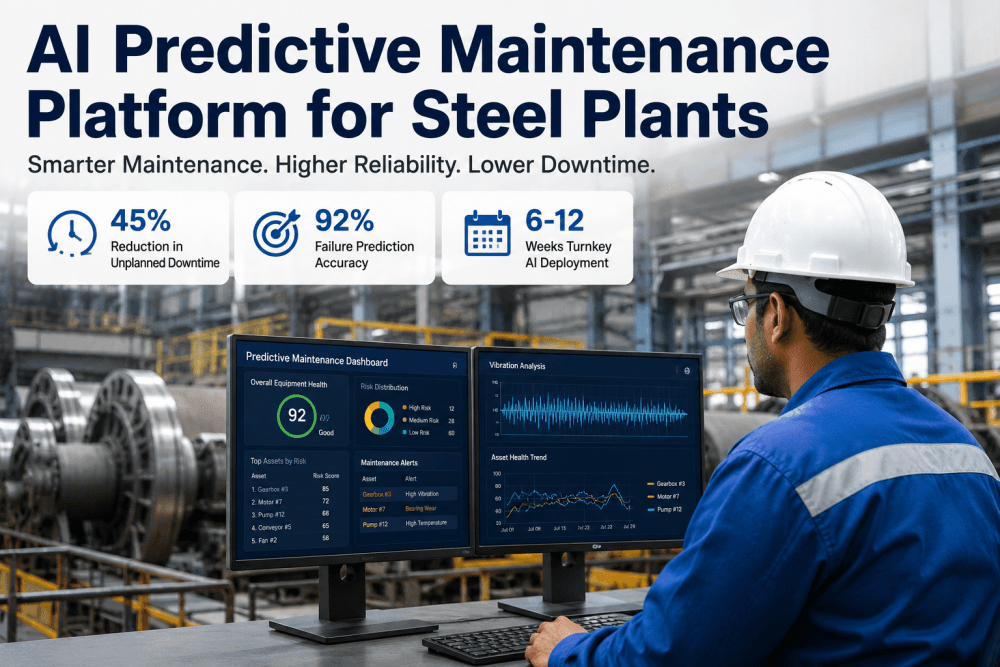
A predictive model is only as useful as the data feeding it, and a model trained on casting data alone will always miss the downstream rolling or quality context that often explains the root cause of a defect. Once casting, rolling, quality, and maintenance data share a common structure, a model can be trained to recognize combinations of conditions across all four domains that historically preceded a specific outcome, whether that outcome is a surface defect, a yield loss, or an unplanned equipment failure.
The practical value shows up well before a defect occurs. A model trained this way can flag an emerging risk pattern in near real time, giving an operator or supervisor the chance to adjust a setting before the affected heat or coil reaches the point where the defect becomes unavoidable, turning what used to be a retrospective root cause investigation into a live, preventable alert.
See Cross-System Predictive Models Built on Your Own Plant Data
iFactory connects to the casting, rolling, quality, and maintenance systems you already run, without requiring a replacement of existing plant infrastructure.
What Changes When Four Systems Become One Data Layer
| Question | Fragmented Systems | Unified Platform |
|---|---|---|
| What caused this week's yield dip? | Manual export and cross-reference across systems, takes days | Traced automatically through the shared heat or coil ID |
| Is a caster setting affecting downstream quality? | Rarely investigated, the connection is not visible | Surfaced by predictive models trained across both domains |
| Which maintenance event caused this defect? | Requires manually matching timestamps across two systems | Linked automatically through contextualized time-aligned data |
| Can we predict this before it happens again? | Nearly impossible without a combined dataset | Modeled directly from historical cross-system patterns |
A Realistic Path to a Unified Platform Without a Full Rip and Replace
The plants that succeed with this kind of platform rarely attempt to unify every system at once. Starting with the two systems most likely to reveal a valuable connection, often casting and quality, or rolling and maintenance, produces a working proof of value faster and builds the internal case for expanding the same approach across the rest of the plant.
The Practical Difference a Unified Platform Makes
Questions Plant Leaders Ask Before Unifying Their Data
Turn Years of Disconnected Data Into a Platform That Predicts, Not Just Reports
iFactory unifies casting, rolling, quality, and maintenance data into one AI-ready layer built for the decisions your plant makes every shift.