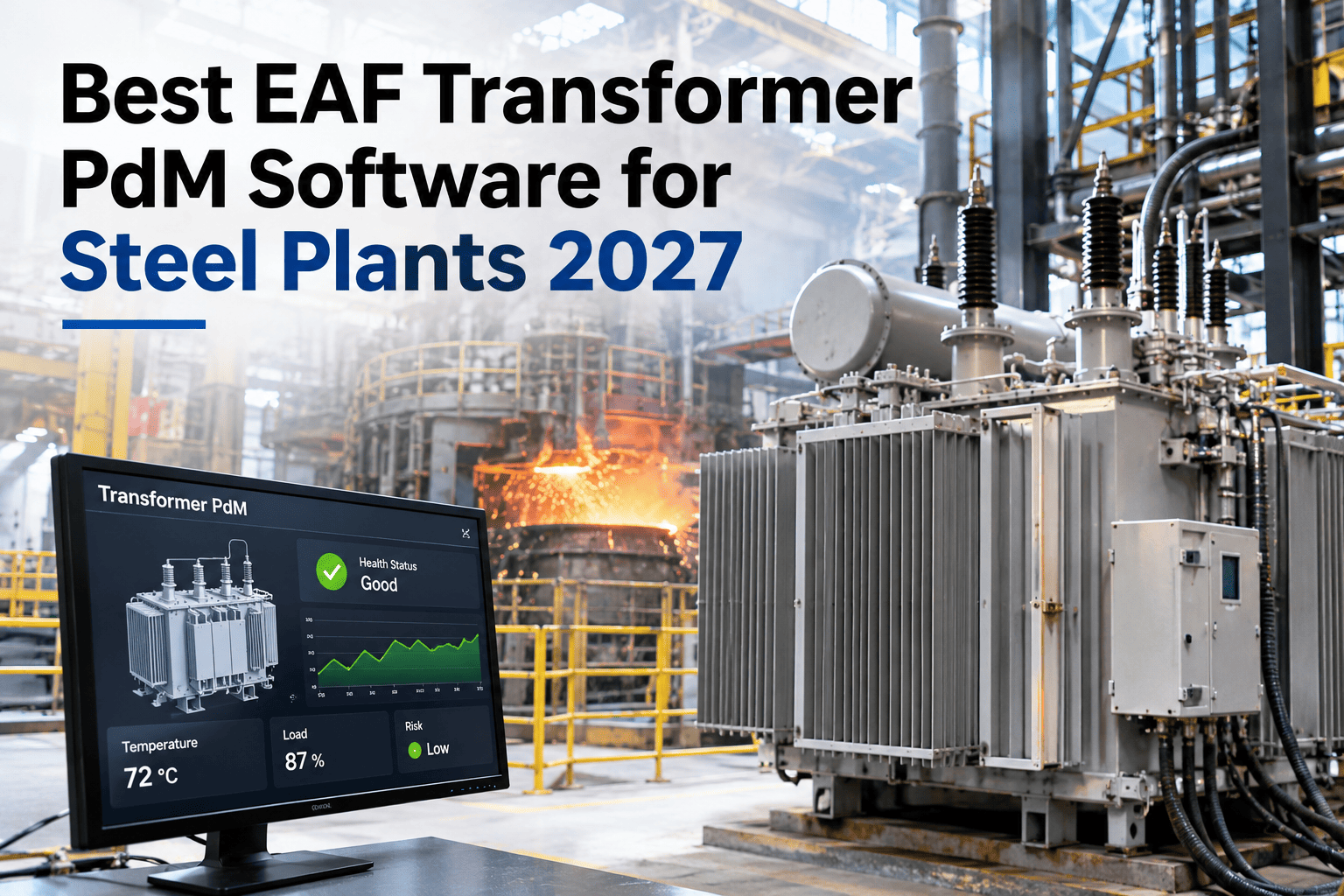
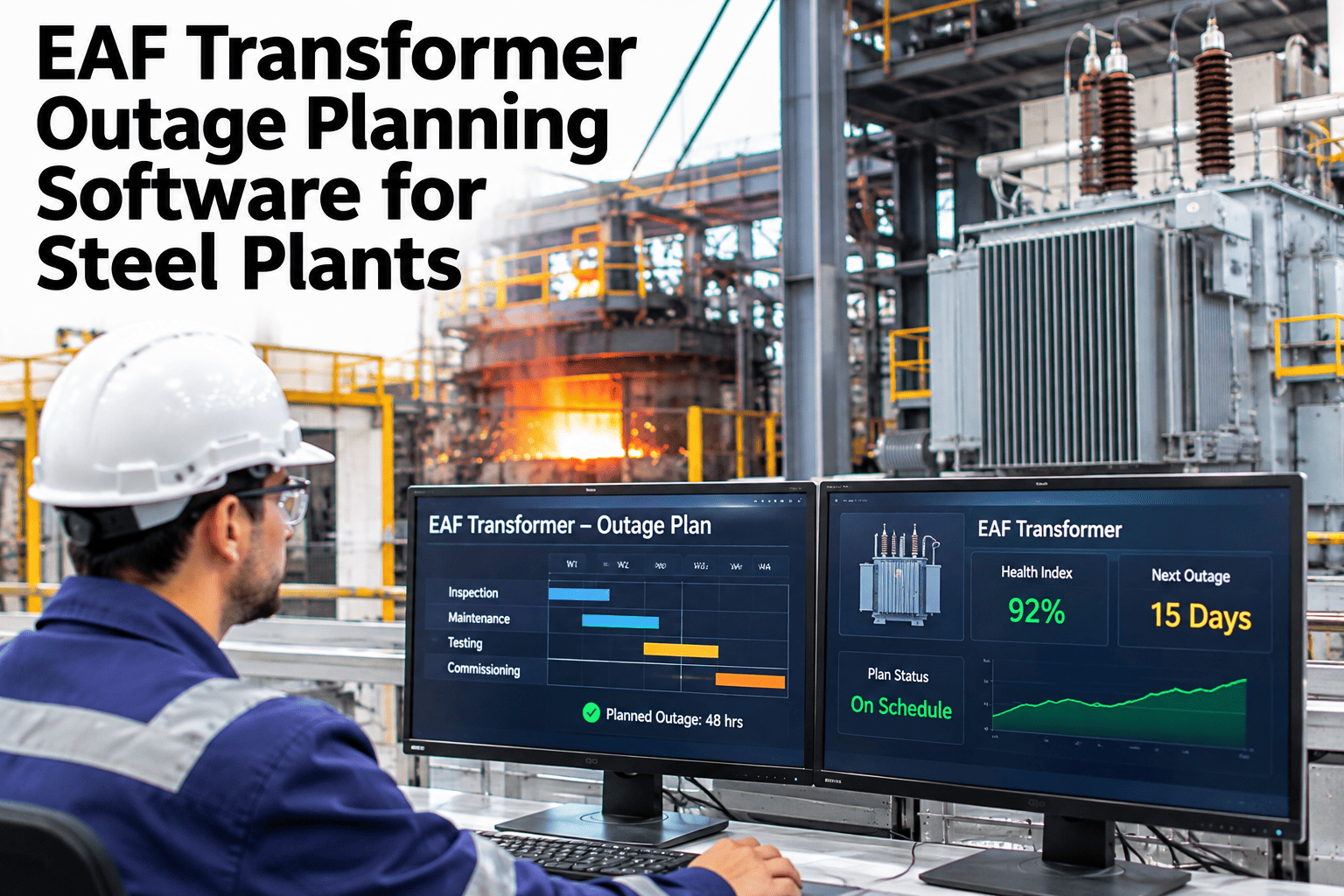
An EAF furnace transformer takes a punishing daily cycle of extreme current swings, harmonic loading and thermal stress that a standard power transformer never sees, which is exactly why a generic transformer monitoring approach catches faults months later than one built specifically around dissolved gas, thermal and electrical anomaly signatures unique to furnace duty. Catching a developing fault months before failure turns an unplanned furnace outage into a scheduled one. iFactory AI, an on-premise AI platform for manufacturing, builds this monitoring around a plant's own transformer fleet, and electrical teams can see their own EAF transformer data checked against these fault signatures with our team.
EAF Transformer PdM, 2027
Catch a Furnace Transformer Fault Months Before Failure
The best EAF transformer PdM software for steel plants combines dissolved gas, thermal and electrical anomaly detection, built for the unique stress of furnace duty.
Why furnace duty is different
Why an EAF Transformer Ages Differently Than a Standard One
A standard distribution or power transformer sees relatively steady load. An EAF furnace transformer sees repeated, extreme current swings every time an arc strikes or a scrap pile shifts, along with harmonic distortion from the arc itself, which together age the insulation and stress the windings in a pattern that generic transformer monitoring, built around steady-load assumptions, simply isn't tuned to catch early.
Three monitoring pillars
What EAF-Specific Monitoring Actually Covers
Dissolved gas analysis
Gas concentrations in the oil reveal developing internal faults.
Thermal monitoring
Winding and oil temperatures tracked against load-normalized targets.
Electrical anomaly detection
Current and voltage signatures checked for developing winding or insulation issues.
From signal to warning
How a Developing Fault Gets Flagged Months Early
1
Continuous monitoring
Gas, thermal and electrical signals are tracked around the clock.
2
Baseline comparison
Current readings are compared against this transformer's own established baseline.
3
Trend identified
A slow drift away from baseline is caught long before it becomes a fault signature.
4
Early warning issued
The electrical team gets months of lead time instead of a sudden failure.
See Your Own Transformer Fleet Baselined
Share your EAF transformer fleet details, and iFactory AI will show how monitoring would be set up around their own operating history.
Generic vs furnace-specific
Generic Transformer Monitoring Against EAF-Specific Monitoring
Generic monitoring
Built around steady-load assumptions
Harmonic and cyclic stress patterns look like noise
A developing fault is caught late, if at all
EAF-specific monitoring
Built around furnace duty cycles from the start
Harmonic and cyclic stress is the expected pattern, not noise
A developing fault is caught months before failure
A composite scenario
The Fault That Generic Monitoring Would Have Missed
Picture a furnace transformer whose dissolved gas levels began a slow, steady climb over several months, the kind of gradual drift that a threshold built for a steady-load transformer would likely dismiss as normal variation given how much the readings already swing with each furnace cycle. Because the monitoring was built around this specific transformer's own furnace-duty baseline, the gradual upward trend stood out clearly against its established pattern, distinct from the day-to-day cyclic swings the model already expected to see.
The trend pointed to a developing insulation issue, confirmed on inspection during a planned outage scheduled months later, well before it progressed to a fault that would have taken the furnace down unplanned and put the transformer itself at risk of a far more serious and expensive failure.
Why baselines matter
Why Every Transformer Needs Its Own Baseline, Not a Shared One
Two EAF transformers of the same model running at two different plants can have meaningfully different normal operating signatures depending on scrap mix, furnace size and local grid conditions, which means a shared generic baseline risks either missing a real fault on one unit or flagging a false alarm on another. Building each transformer's monitoring around its own established history is what keeps the early warning both sensitive enough to catch a real fault and specific enough not to cry wolf constantly.
Who relies on it
The Same Monitoring, Used by Three Roles
1
Electrical reliability engineer
Gets months of lead time to plan an inspection instead of reacting to a sudden failure.
2
Maintenance planner
Schedules a transformer outage around production needs, not around an emergency.
3
Plant manager
Avoids an unplanned furnace outage that would have capped output for days or weeks.
Common mistakes
Mistakes That Undercut EAF Transformer Monitoring
1
Applying generic transformer thresholds
Furnace duty cycles look abnormal against a steady-load standard, generating false alarms or masked real ones.
2
Monitoring only one signal type
Gas, thermal and electrical signals each catch fault types the others miss.
3
No load normalization
Comparing readings across different load levels without adjustment misreads normal variation as a fault.
Expert review
What an Electrical Reliability Engineer Would Check First
The monitoring is only as good as its baseline. Confirm thresholds are built from this specific transformer's own operating history under furnace duty, not a generic power transformer standard.
Watch for
Alarm thresholds copied directly from a standard transformer monitoring guideline.
Do next
Start with your oldest or highest-duty transformer for the clearest early signal.
FAQ
What Steel Plants Ask About EAF Transformer PdM
How far in advance can a developing fault actually be caught?
Many developing faults, such as gradual insulation degradation, can be flagged months ahead of failure once a reliable baseline is established, though the exact lead time depends on the specific fault mode.
Ask about typical lead times for your transformers.
Do we need new sensors installed, or can this use existing equipment?
Many plants already have online DGA and temperature monitoring installed, in which case this builds on that existing data; plants without it would need sensor installation as a first step.
Ask about your current sensor setup.
How long does it take to establish a reliable baseline for a transformer?
A baseline needs enough operating history to capture the full range of normal furnace duty cycles, typically several months of continuous data across varying scrap mixes and loads.
Discuss baseline timing for your fleet.
Can this monitor multiple transformers across different furnaces at once?
Yes, each transformer gets its own baseline and monitoring profile, so a fleet of furnace transformers can all be tracked from one shared platform without being compared against each other inappropriately.
Ask about monitoring your full fleet.
How does this connect to our existing electrical maintenance program?
Early warnings typically feed into the same work order and planning system your electrical team already uses, so a flagged issue becomes a scheduled inspection rather than a separate parallel process.
Ask how this fits your maintenance program.
Months of warning, not a sudden outage
Monitor Your Furnace Transformers the Way Furnace Duty Demands
Book a session with iFactory AI to see EAF-specific transformer monitoring built around your own fleet.